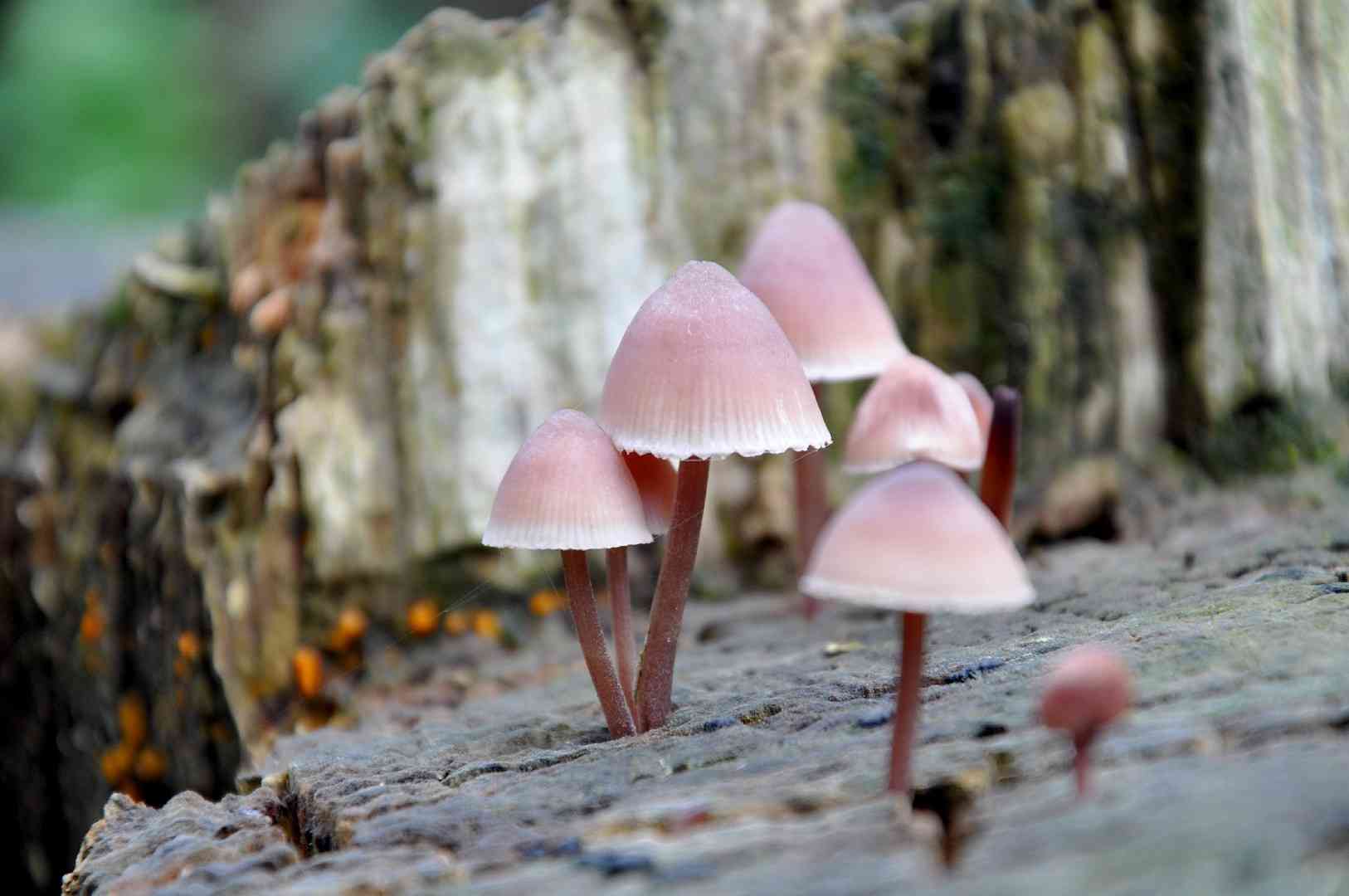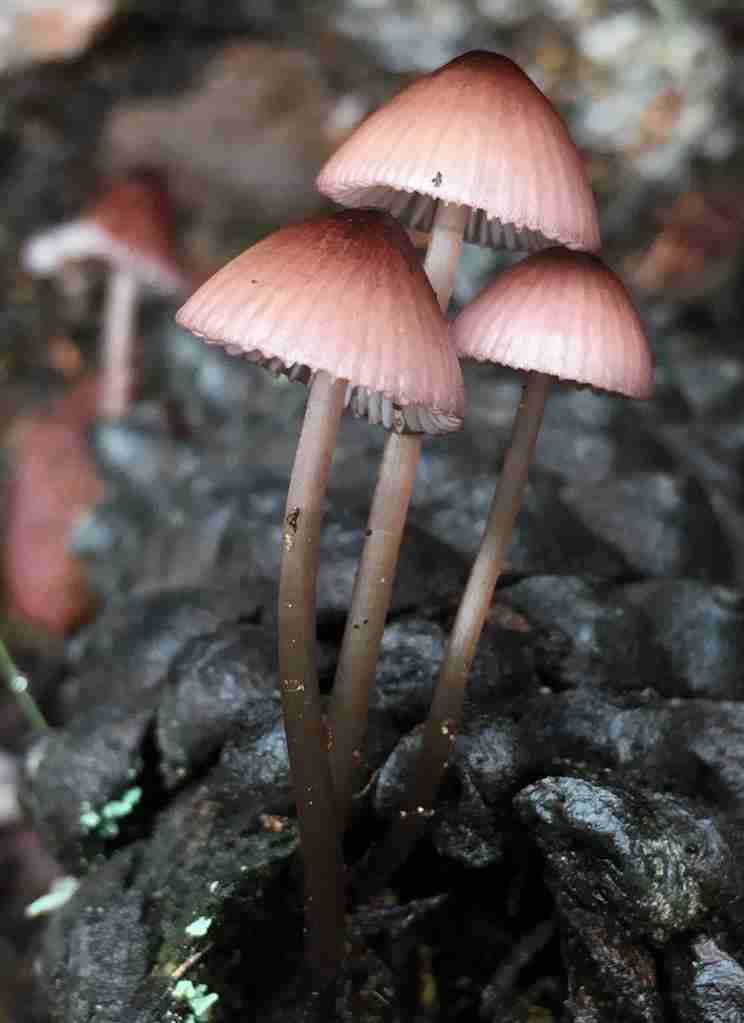
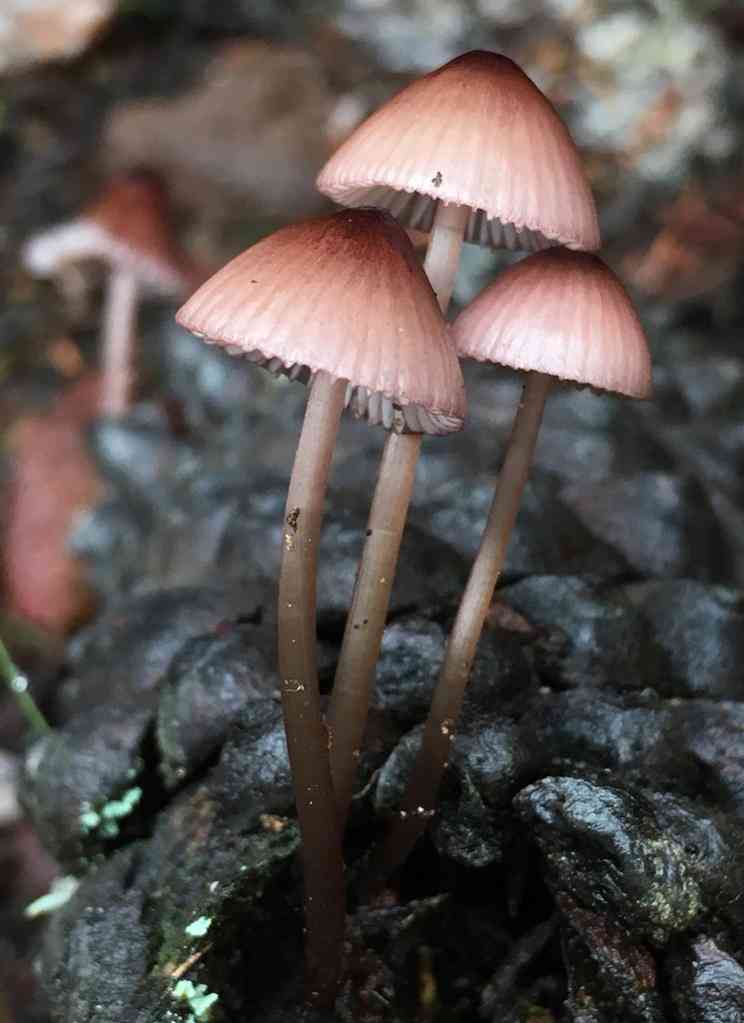
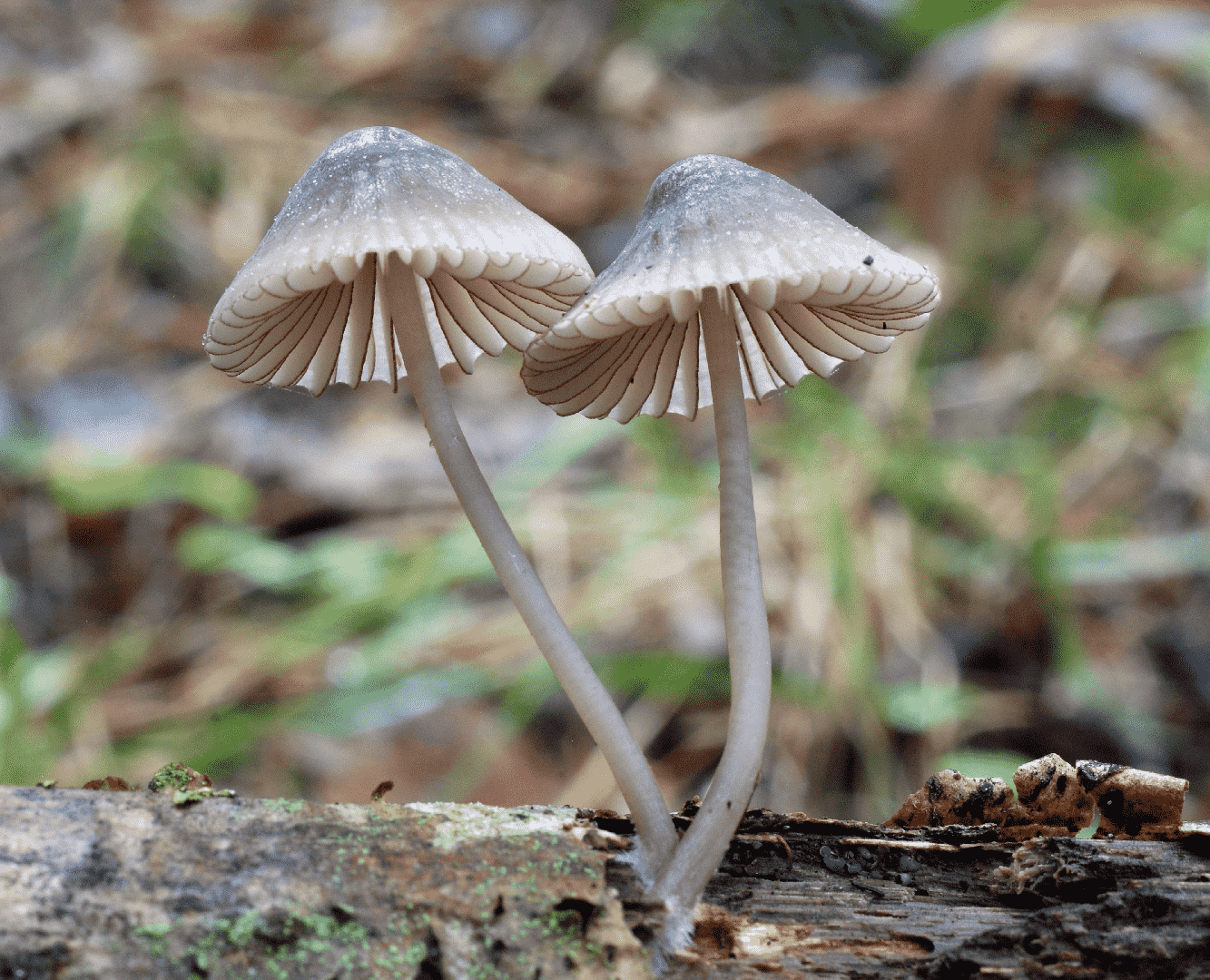
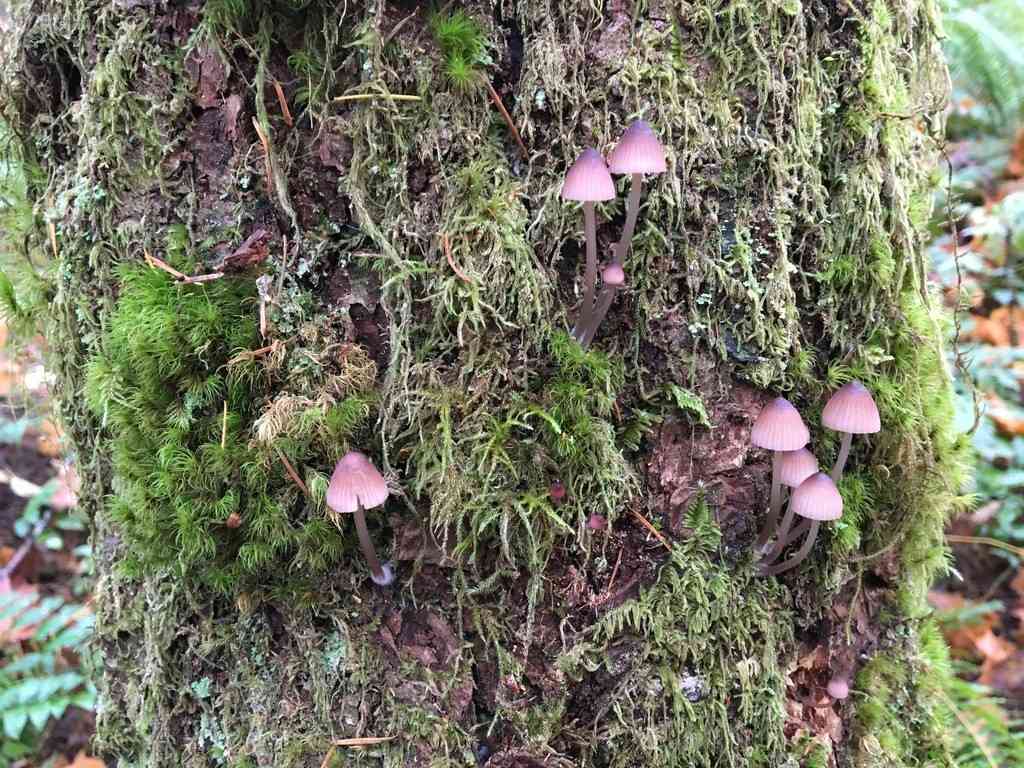
Purple edge bonnet
Mycena purpureofusca
A species of Bonnets.
Commonly found adorning fallen pinecones, these delightful little mushrooms typically emerge either individually or in groups. Due to their diminutive size and delicate structure, purple edge bonnets are not suitable for consumption. Researchers are currently examining an enzyme derived from this mushroom for its potential application in the detoxification of industrial dyes.
In This Article
Attributes of Purple edge bonnet
Cap Diameter
1 - 3 cm
Height
4 - 10 cm
Cap
Cap 5 - 25 mm across; conical to bell-shaped, flat; dark-purple, lilac-brown; surface smooth
Cap Shape
Bell-shaped, Central Bump
Cap Surfaces
Smooth, Visible lines or stripes
Gills
Adnate; moderately broad, close to crowded; white, pallid to pale grey, vinaceous-purple
Gill Attachment
Attached
Stem
Stem 3 - 10 cm long, 1 - 3 mm thick; tubular; pale vinaceous-brown
Stem Shapes
Cylindrical
Stem Surfaces
Smooth
Flesh
Thin and pliant; similar to cartilage; purplish-gray, pale lilac to white
Ring
Ringless
Spore Print Color
White
Odor
Mildly mushroomy but not distinctive.
Body Color
BrownYellowPurple
Flesh Bruises
The flesh or milk does not discolor when bruised or cut.
Growth Form
Scattered, Gregarious
Nutrient Gathering
Saprophytic
Substrate
Dead Woods, Leaf or Needle Litter
You can find Purple edge bonnet by these plants
Spruces, Pines
Occurence Habitats
Coniferous Woodland
Endangered Species
No
Scientific Classification of Purple edge bonnet
Phylum
Club fungi
Class
Mushroom-forming fungi
Order
Gilled fungi
Family
Bonnet mushrooms
Genus
Bonnets
Toxicity and Edibility of Purple edge bonnet
Is Purple edge bonnet Toxic?
Toxicity information is not available for this mushroom. Always consult with an expert before consuming any wild mushrooms.