Beechleaf bonnet
Mycena capillaris
A species of Bonnets.
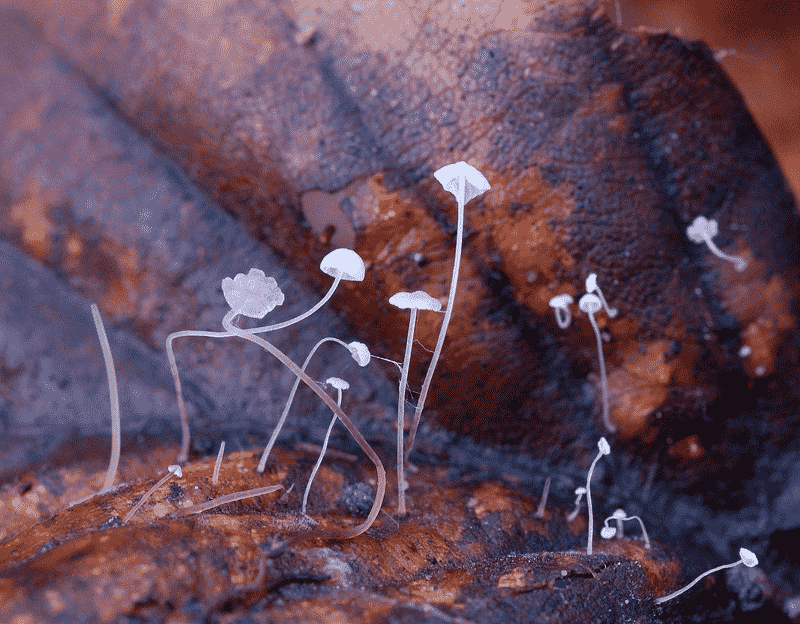
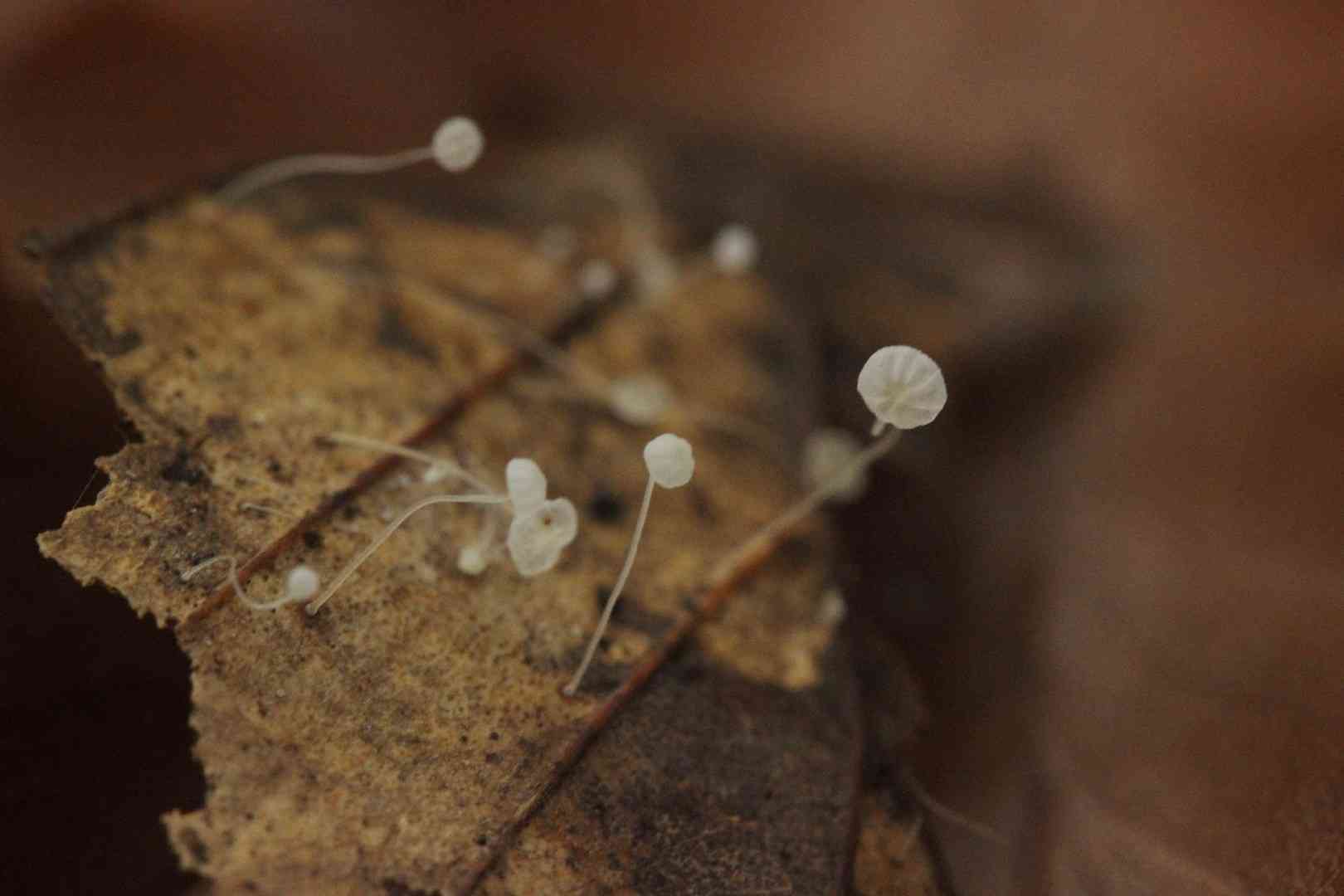
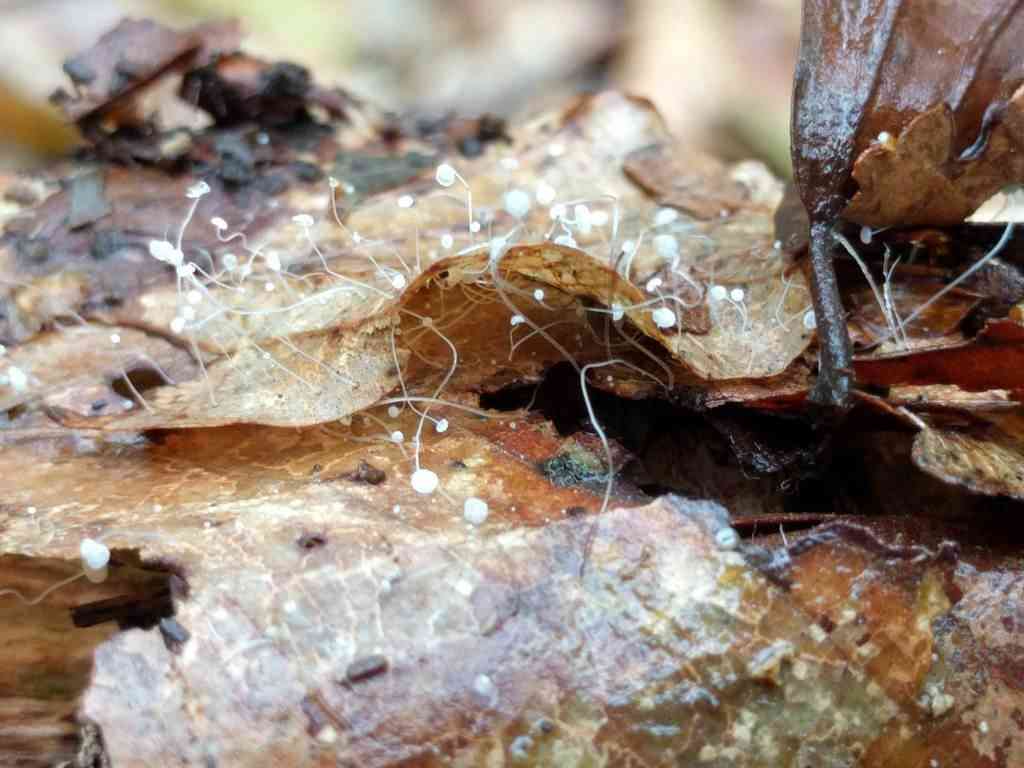
The Beechleaf Bonnet is a diminutive fungus frequently observed in clusters on deteriorating timber, especially that of beech trees. It features thin stalks and fragile, sometimes translucent caps, making its presence most apparent during humid conditions. Despite its delicate appearance, this fungus is vital to forest ecosystems as it aids in the breakdown of dead wood.
In This Article
Attributes of Beechleaf bonnet
Cap Diameter
1 - 3 mm
Height
1 - 6 cm
Cap
Cap 1 - 3 mm across; hemispherical or conical to convex; whitish grey to white; pruinose, glabrescent, sulcate, translucent-striate
Cap Shape
Bell-shaped, Depressed
Cap Surfaces
Smooth, Visible lines or stripes
Gills
Adnexed to adnate; very narrow to fairly broad; whitish grey to white
Gill Attachment
Free to Attached
Stem
Stem 2 - 4 cm x 0.3 mm; flexuous; blackish or dark grey to grey-brown, soon watery white; shiny
Stem Shapes
Cylindrical
Flesh
Little to none
Ring
Ringless
Spore Print Color
White
Odor
Mildly mushroomy but not distinctive.
Body Color
BrownBlackGrayWhite
Flesh Bruises
The flesh or milk does not discolor when bruised or cut.
Growth Form
Gregarious, Scattered, Solitary
Nutrient Gathering
Saprophytic
Substrate
On wood
You can find Beechleaf bonnet by these plants
American beech, European beech, Willows
Species Status
Common in the area where beech occurs
Endangered Species
No
Scientific Classification of Beechleaf bonnet
Phylum
Club fungi
Class
Mushroom-forming fungi
Order
Gilled fungi
Family
Bonnet mushrooms
Genus
Bonnets
Toxicity and Edibility of Beechleaf bonnet
Is Beechleaf bonnet Toxic?
Toxicity information is not available for this mushroom. Always consult with an expert before consuming any wild mushrooms.

