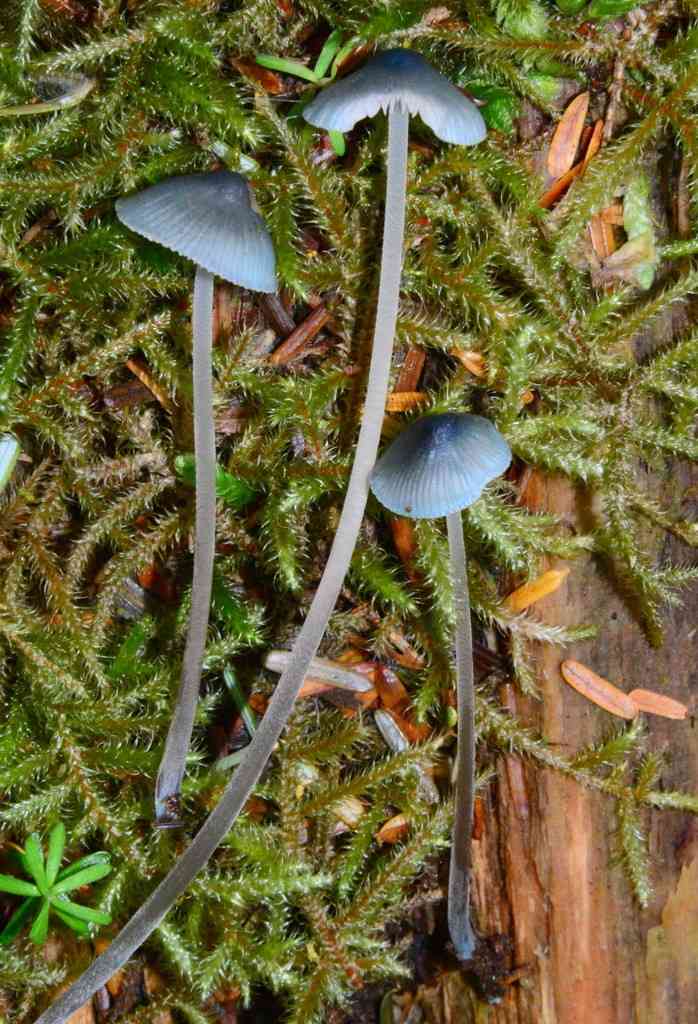
Coldfoot bonnet
Mycena amicta
A species of Bonnets.
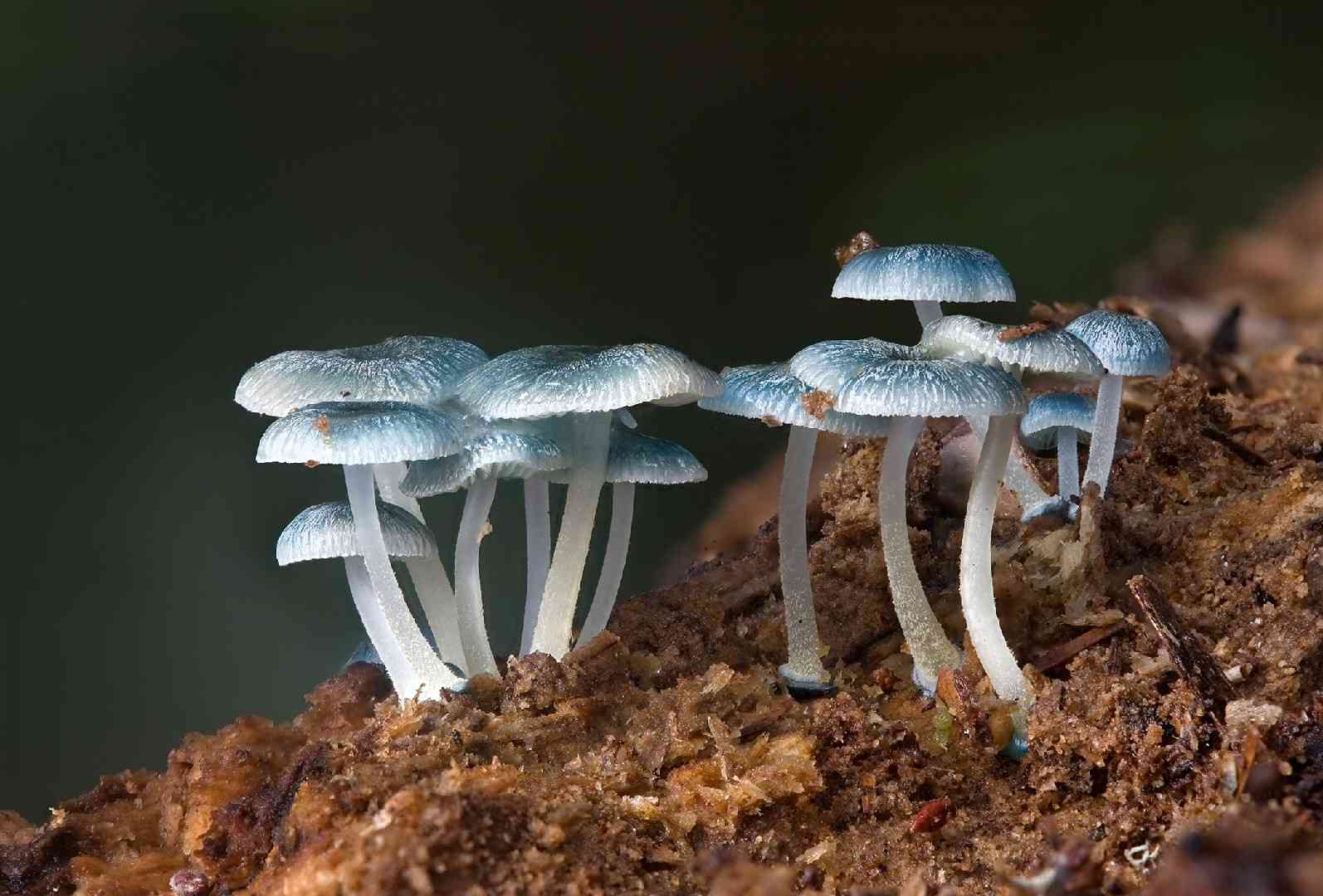
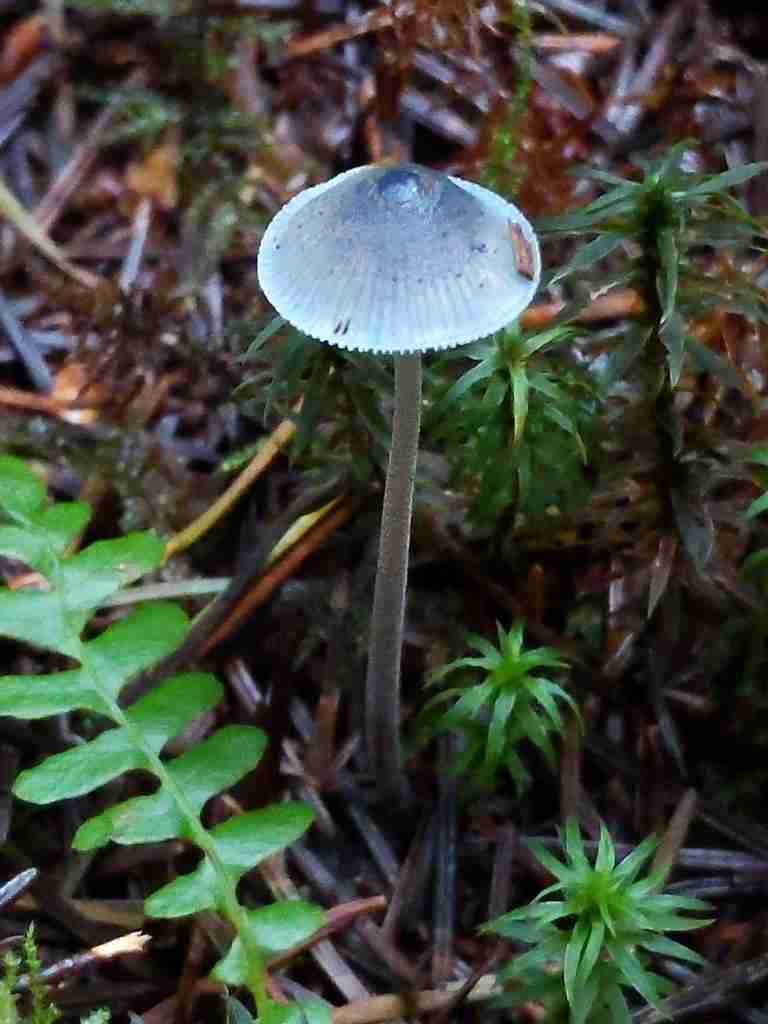
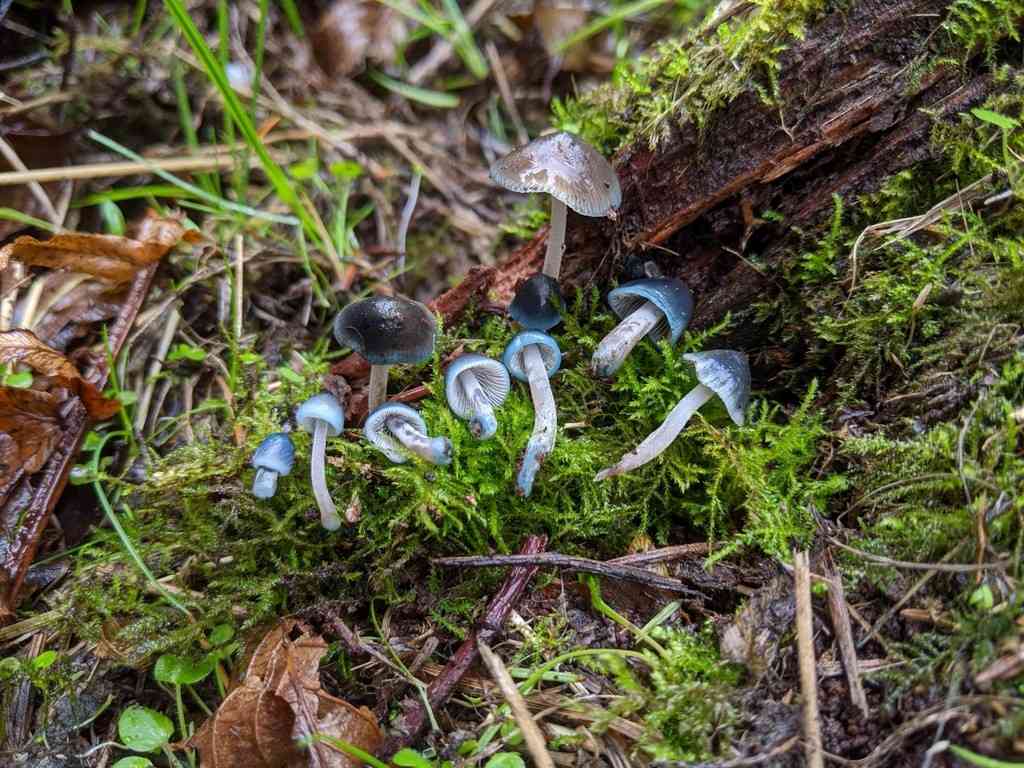
The coldfoot bonnet's conical cap provides a clue to its age; it starts pointed but flattens over time as the mushroom grows. While it exhibits a vibrant blue hue in its youth, this color diminishes as the mushroom reaches maturity. This species flourishes on decaying coniferous and broadleaf wood.
In This Article
Attributes of Coldfoot bonnet
Cap Diameter
1 - 2 cm
Height
4 - 10 cm
Cap
Cap up to 1.5 cm; conical, flattened; grey-brown to grey; subviscid when moist, hygrophanous, translucent-striate
Cap Shape
Bell-shaped, Central Bump
Cap Surfaces
Visible lines or stripes, Slimy or slightly sticky
Gills
Ascending-adnate; close, narrow; whitish, pale-grey
Gill Attachment
Attached
Stem
3 - 7 cm long, 1 - 3 mm thick; equal, hollow, tubular; greyish-brown to greyish-tan; moist
Stem Shapes
Cylindrical
Stem Surfaces
Smooth to slightly fibrous
Flesh
Thin; cartilaginous; pallid
Ring
Ringless
Spore Print Color
White
Odor
Mildly mushroomy but not distinctive.
Body Color
BrownBlue
Flesh Bruises
The flesh or milk does not discolor when bruised or cut.
Growth Form
Solitary, Scattered
Nutrient Gathering
Saprophytic
Substrate
Dead Woods
You can find Coldfoot bonnet by these plants
Pines, Spruces, European beech
Occurence Habitats
Coniferous Woodland
Species Status
Occasional, inconspicuous
Endangered Species
No
Scientific Classification of Coldfoot bonnet
Phylum
Club fungi
Class
Mushroom-forming fungi
Order
Gilled fungi
Family
Bonnet mushrooms
Genus
Bonnets
Toxicity and Edibility of Coldfoot bonnet
Is Coldfoot bonnet Toxic?
Toxicity information is not available for this mushroom. Always consult with an expert before consuming any wild mushrooms.