

Common cavalier
Melanoleuca polioleuca
A species of Cavaliers.
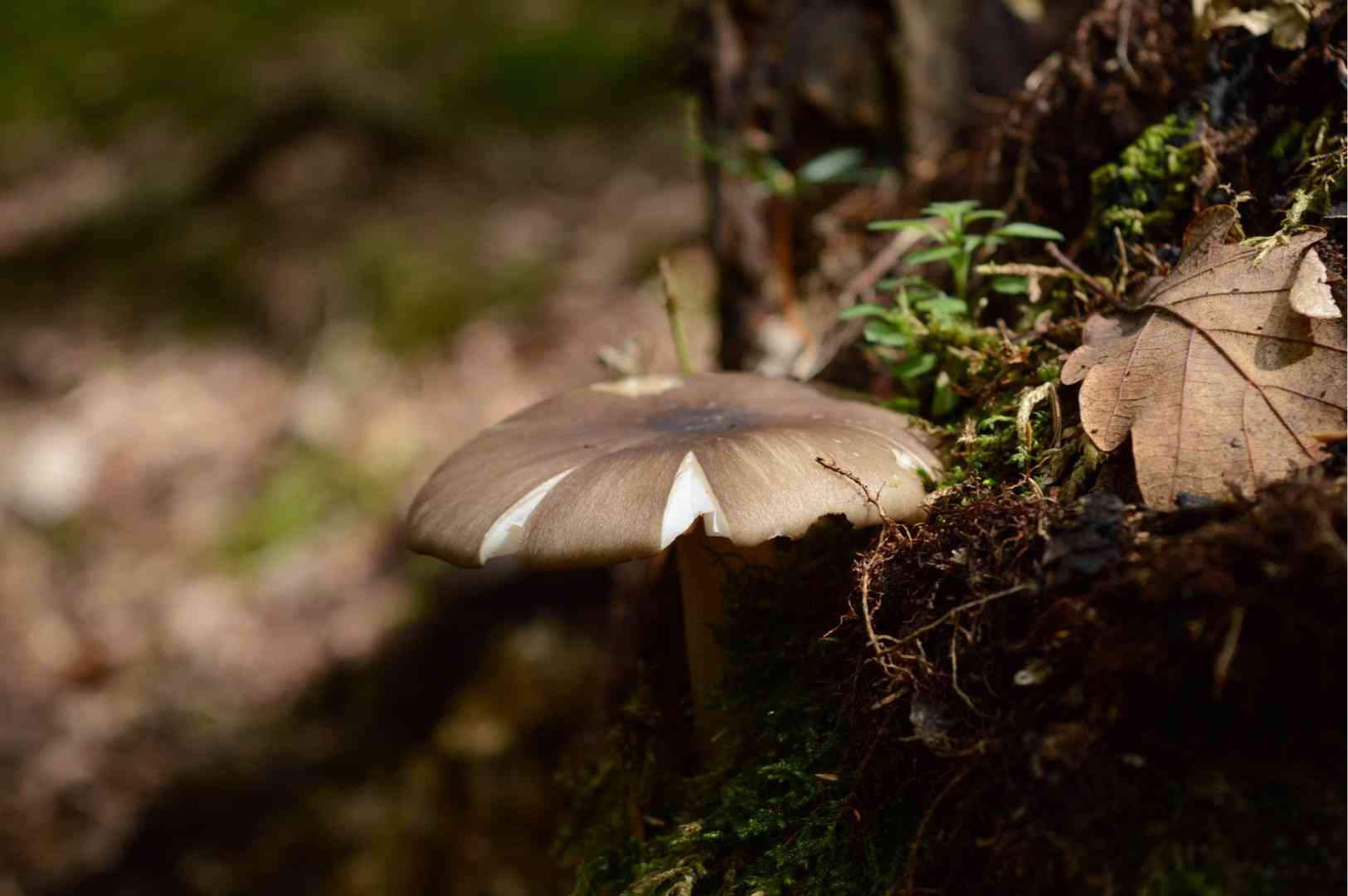
The common cavalier (Melanoleuca polioleuca) is a type of saprobic fungus, meaning it feeds on decaying organic matter such as wood. This species can be found across both Europe and North America, inhabiting deciduous forests and conifer stands. Interestingly, it also adapts to human-modified environments like parks and lawns. Its scientific nomenclature reflects its appearance, derived from Ancient Greek terms that denote black, gray, and white hues.
In This Article
Attributes of Common cavalier
Cap Diameter
3 - 9 cm
Height
8 - 20 cm
Cap
Cap 4 - 8 cm across; convex to flat; dark grey-brown; surface smooth
Cap Shape
Convex, Flat, Depressed, Central Bump
Cap Surfaces
Smooth, Slimy or slightly sticky
Gills
Sinuate; white to creamy-grey
Gill Attachment
Notched
Stem
Stem 4 - 10 cm long, 5 - 10 mm thick; white, grey-brown; with fibrils
Stem Shapes
Club Shaped
Stem Surfaces
Fibrillose
Flesh
White, chraceous to ochre-brown
Ring
Ringless
Spore Print Color
Very pale cream
Odor
Faintly mealy, not particularly distinctive.
Body Color
BrownGrayWhite
Flesh Bruises
The flesh or milk does not discolor when bruised or cut.
Growth Form
Scattered, Gregarious
Nutrient Gathering
Saprophytic
Substrate
On soil, Leaf or Needle Litter
You can find Common cavalier by these plants
Oaks, Pines, Spruces
Occurence Habitats
Deciduous Woodland, Mixed Woodland
Species Status
Widespread and fairly common
Endangered Species
No
Scientific Classification of Common cavalier
Phylum
Club fungi
Class
Mushroom-forming fungi
Order
Gilled fungi
Family
Pale-spore mushrooms
Genus
Cavaliers
Toxicity and Edibility of Common cavalier
Is Common cavalier Toxic?
Toxicity information is not available for this mushroom. Always consult with an expert before consuming any wild mushrooms.