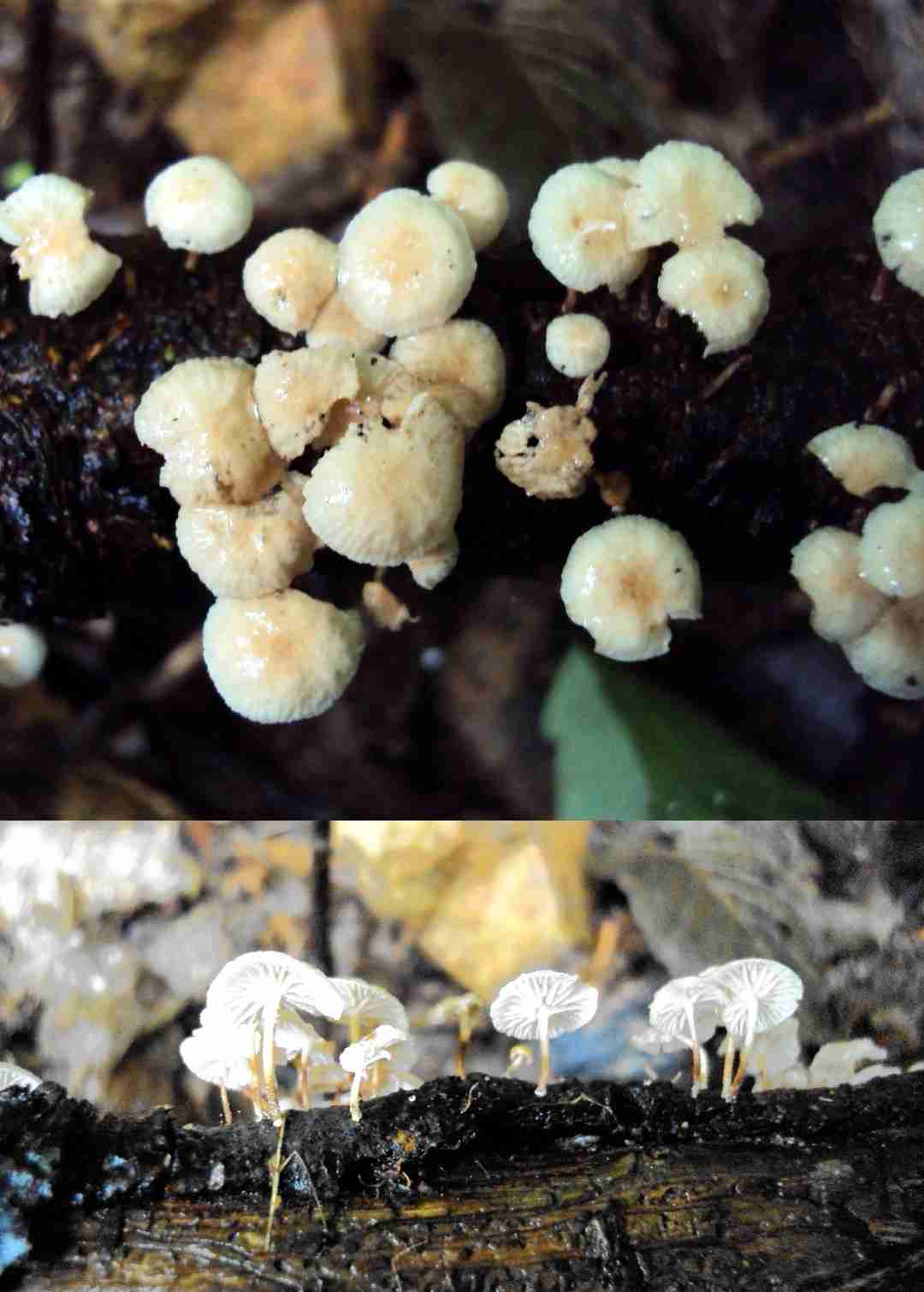
Twig parachute
Marasmiellus ramealis
A species of Parachutes.
The twig parachute fungus is characterized by its slender, wiry stalk and typically convex cap. This small mushroom thrives on decaying wood, recognized for its remarkable ability to rehydrate and spring back to life swiftly after periods of dryness. It belongs to a broader family of fungi prevalent in forest environments, where it plays a vital role in decomposing and cycling organic matter.
In This Article
Attributes of Twig parachute
Cap Diameter
0 - 20 mm
Height
1 - 3 cm
Cap
Cap 3 - 15 mm across; convex to flat; white, pale cream; margin radially wrinkled
Cap Shape
Convex, Flat
Cap Surfaces
Visible lines or stripes
Gills
Adnate; distant; pinkish-white to ochre
Gill Attachment
Attached
Stem
Stem 5 - 20 mm long, 1 mm thick; white, brown
Stem Shapes
Cylindrical
Stem Surfaces
Smooth to slightly fibrous
Flesh
Thin; white to cream
Ring
Ringless
Spore Print Color
White
Odor
Faint, nondescript mushroom scent.
Body Color
BrownWhiteCream
Flesh Bruises
The flesh or milk does not discolor when bruised or cut.
Growth Form
Scattered, Gregarious
Nutrient Gathering
Saprophytic
Substrate
Dead Woods
Occurence Habitats
Coniferous Woodland, Deciduous Woodland
Species Status
Very common
Endangered Species
No
Scientific Classification of Twig parachute
Phylum
Club fungi
Class
Mushroom-forming fungi
Order
Gilled fungi
Family
Marasmiaceae
Genus
Parachutes
Toxicity and Edibility of Twig parachute
Is Twig parachute Toxic?
Toxicity information is not available for this mushroom. Always consult with an expert before consuming any wild mushrooms.

