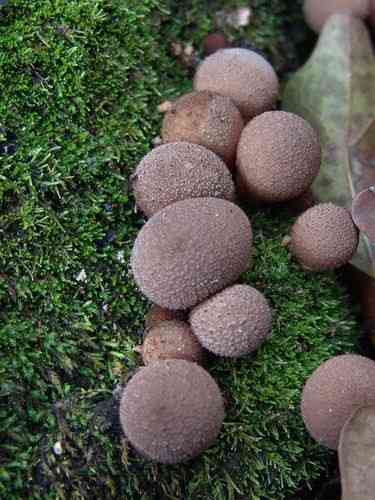
Dusky puffball
Lycoperdon nigrescens
A species of Lycoperdon.
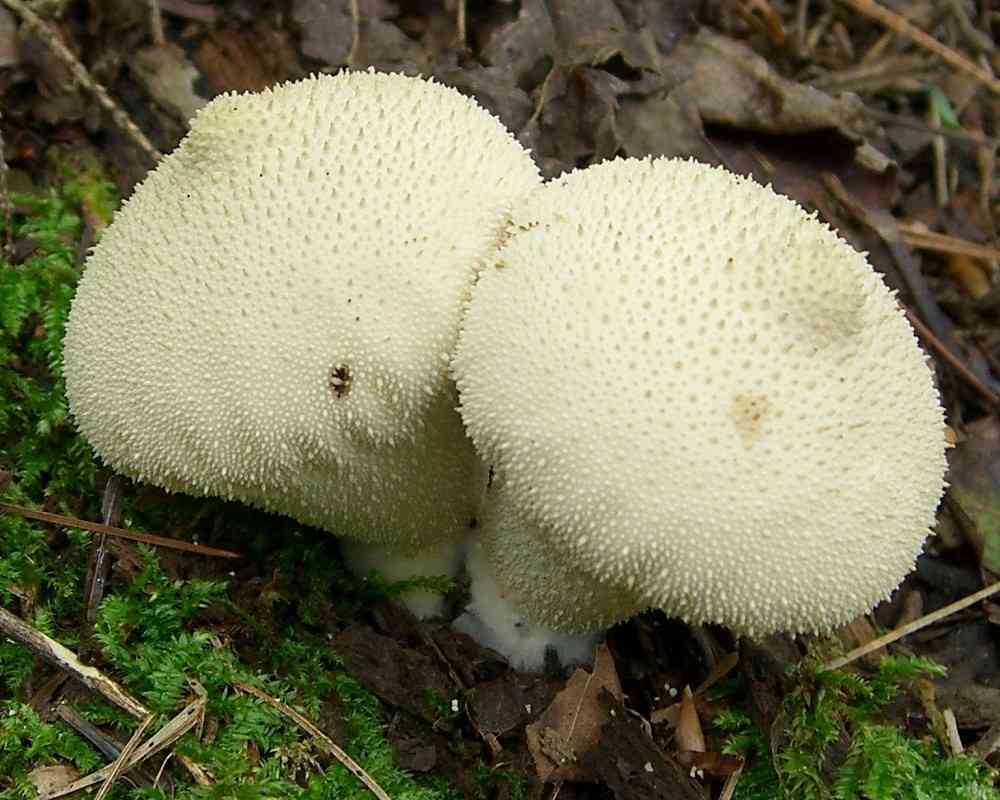
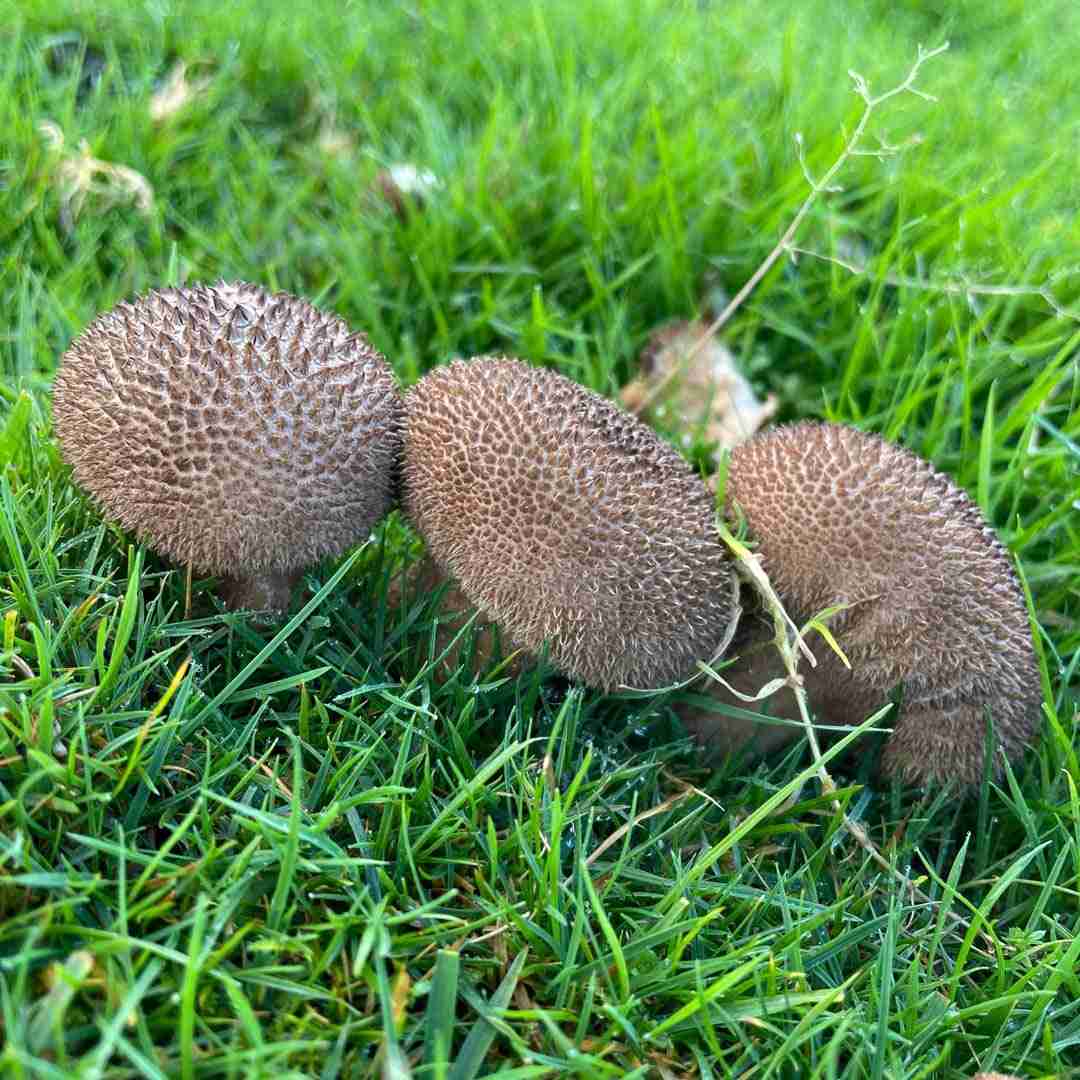
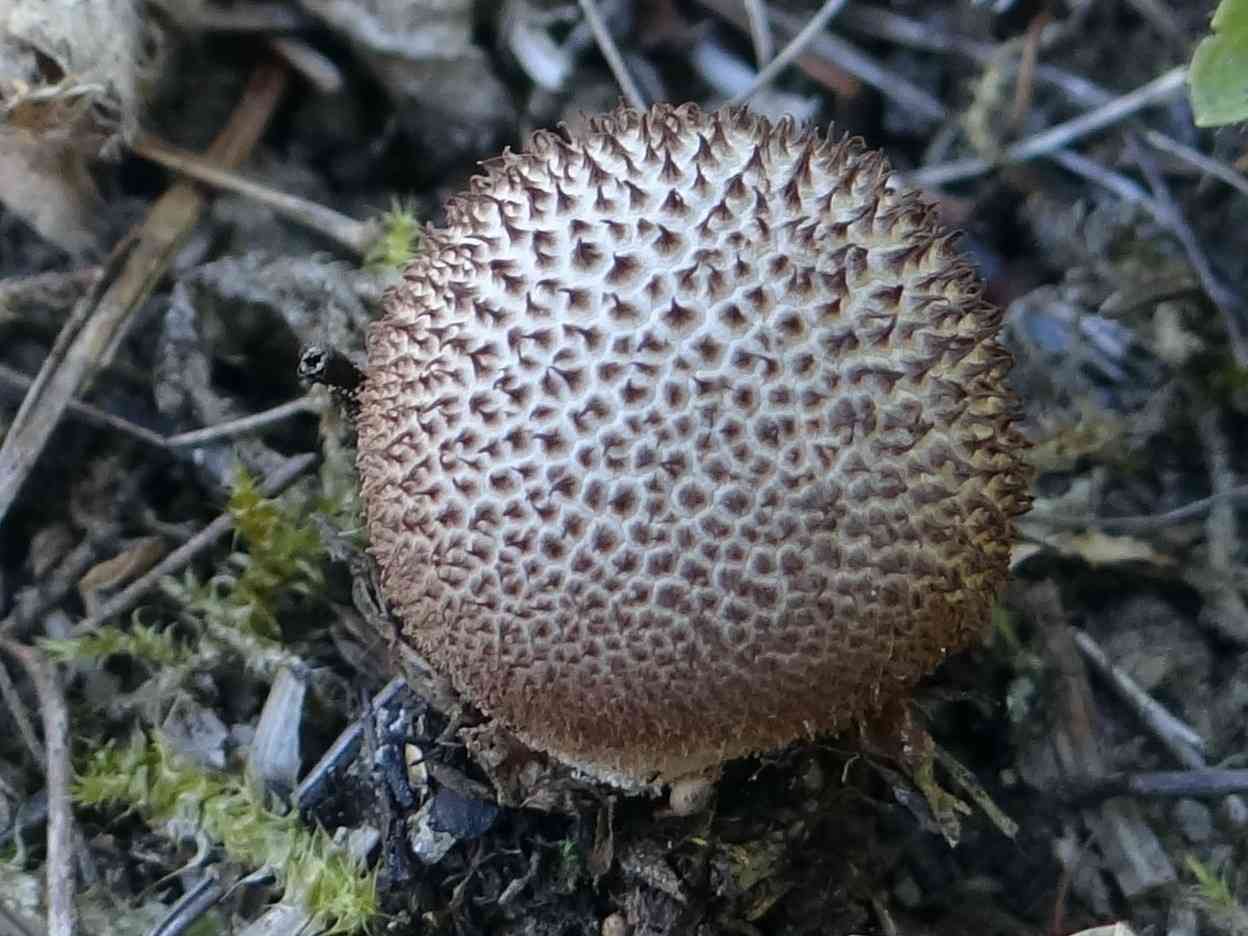
Lycoperdon nigrescens, or the dusky puffball, typically emerges in clusters within forested and wooded areas from late summer through autumn. These compact, spherical fungi exhibit a characteristic transformation as they mature: their initially spiny outer layer gradually becomes smooth. Concurrently, their coloration deepens from a light brown to a richer, darker shade, seemingly mirroring the encroaching shadows of the year's end.
In This Article
Attributes of Dusky puffball
Cap Diameter
2 - 4 cm
Height
2 - 3.5 cm
Cap
Cap 2 - 4 cm across; pear shaped; brown; surface spines to smooth
Stem
Stem 1 - 2 cm long, 1.5 cm thick; brown
Stem Shapes
Tapering
Flesh
Spongy; pure white
Spore Print Color
Olive
Odor
Faintly unpleasant, sulfurous, not strongly distinct.
Body Color
BrownYellow
Flesh Bruises
The flesh or milk does not discolor when bruised or cut.
Growth Form
Solitary, Gregarious
Nutrient Gathering
Saprophytic
Substrate
On soil
You can find Dusky puffball by these plants
Spruces, Firs
Occurence Habitats
Coniferous Woodland
Species Status
Common
Endangered Species
No
Scientific Classification of Dusky puffball
Phylum
Club fungi
Class
Mushroom-forming fungi
Order
Gilled fungi
Family
Agaricaceae
Genus
Lycoperdon
Toxicity and Edibility of Dusky puffball
Is Dusky puffball Toxic?
Toxicity information is not available for this mushroom. Always consult with an expert before consuming any wild mushrooms.