Large white Leucopaxallus
Leucopaxillus albissimus
A species of Leucopaxillus. Also known as Very White Clitocybe.
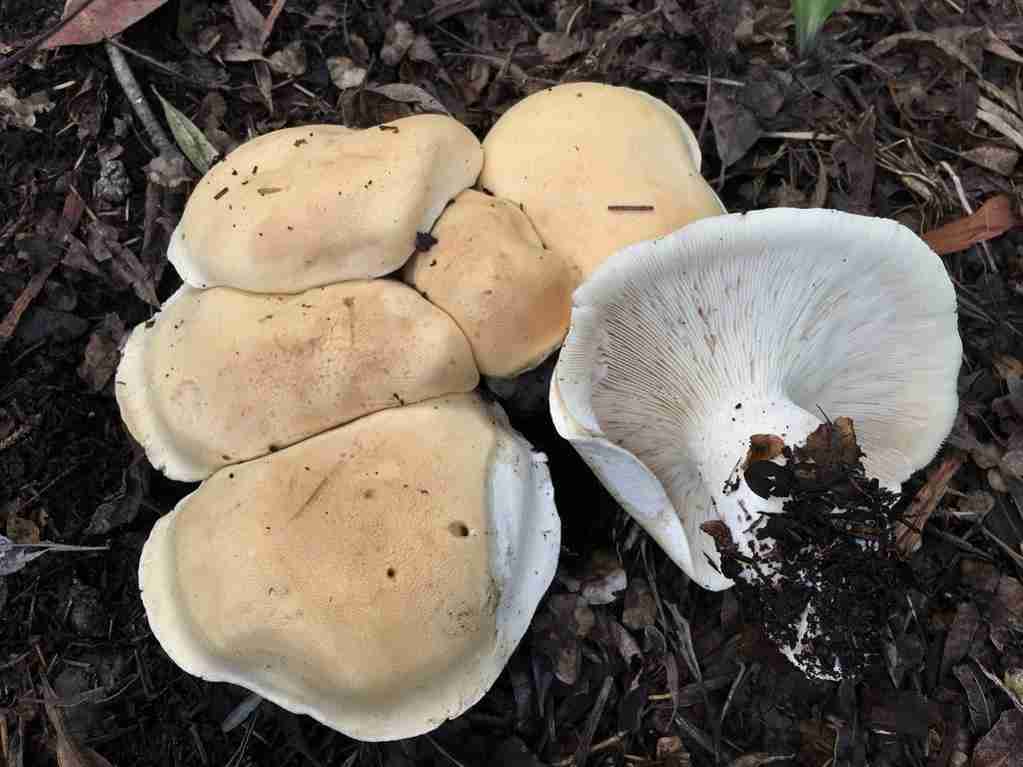
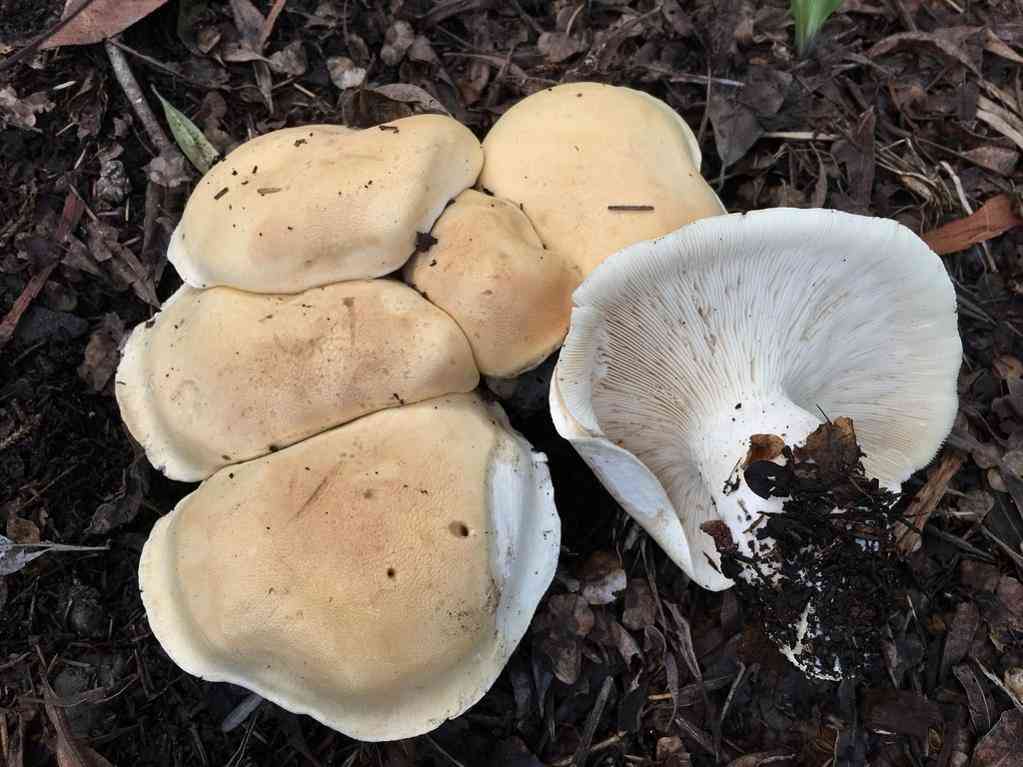
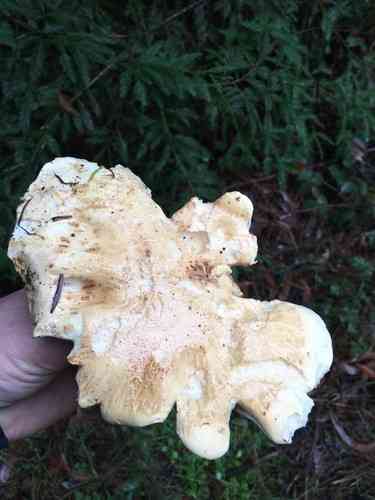
Globally, mycologists have crowned the substantial, pallid Leucopaxillus (Leucopaxillus albissimus) as the whitest mushroom. Its pristine white cap, round and full, rests atop a similarly thick stem. This mushroom, notable for its dull appearance, can span up to 15 cm across. Uniquely, its color remains unaltered throughout its growth.
In This Article
Attributes of Large white Leucopaxallus
Cap Diameter
4 - 20 cm
Height
3 - 8 cm
Cap
Cap 5 - 13 cm across; convex, broadly convex to nearly flat; off-white to pale tan, brownish; inrolled margin
Cap Shape
Convex, Flat, Depressed
Cap Surfaces
Smooth, Velvety, Fibrillose-scaly
Gills
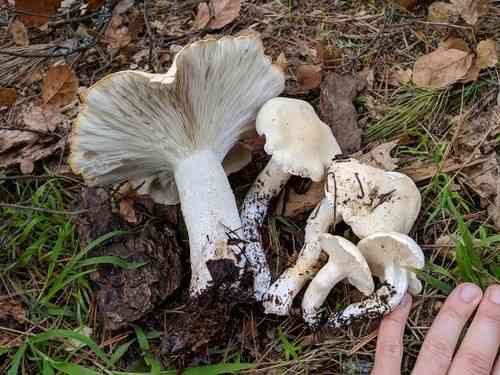
Attached; close; whitish
Gill Attachment
Decurrent
Stem
Stem 4 - 8 cm long, 1.5 - 3 cm thick; whitish; surface bald, slightly fibrillose
Stem Shapes
Club Shaped
Stem Surfaces
Smooth to slightly fibrous
Flesh
Thick; hard; white; not changing when sliced
Ring
Ringless
Spore Print Color
White
Odor
May have a mealy or indistinct smell.
Body Color
BrownGrayWhite
Flesh Bruises
The flesh or milk does not discolor when bruised or cut.
Growth Form
Scattered, Gregarious
Nutrient Gathering
Saprophytic
Substrate
On soil, Leaf or Needle Litter
You can find Large white Leucopaxallus by these plants
Ponderosa pine, Coast redwood
Occurence Habitats
Coniferous Woodland
Species Status
Widely distributed
Endangered Species
No
Scientific Classification of Large white Leucopaxallus
Phylum
Club fungi
Class
Mushroom-forming fungi
Order
Gilled fungi
Family
Pale-spore mushrooms
Genus
Leucopaxillus
Toxicity and Edibility of Large white Leucopaxallus
Is Large white Leucopaxallus Toxic?
The substantial white Leucopaxillus poses a slight to moderate health risk. It has been observed to induce gastrointestinal distress and abdominal discomfort in certain individuals, and is generally considered challenging for the digestive system.

