Leucoagaricus nympharum

Leucoagaricus nympharum

A species of Leucoagaricus.

Leucoagaricus nympharum belongs to a varied group of fungi, recognized by their lamellate fruiting bodies, which generally feature a pileus and stipe. This particular species possesses a unique look, with its cap evolving in form throughout its development. It thrives in environments with decomposing leaves and nutrient-rich soil, commonly preferring areas with higher temperatures. Leucoagaricus nympharum propagates by dispersing spores from the lamellae located on the underside of its cap.

In This Article
Attributes Classification Toxicity

Attributes of Leucoagaricus nympharum

ForwardPlant - ID plants and mushrooms, and learn more about them🌿

Identify and diagnose plants, get toxicity alerts, and explore safety guides for all types of fungi.

Try for Free
Cap Diameter
4 - 8 cm
Height
4 - 10 cm
Cap
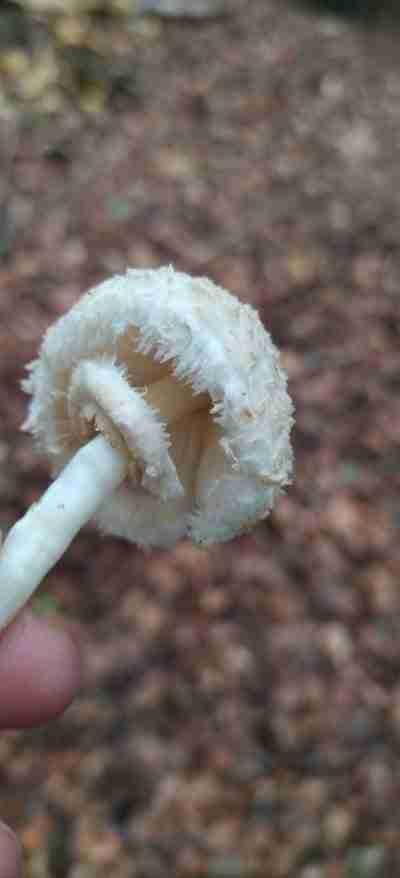
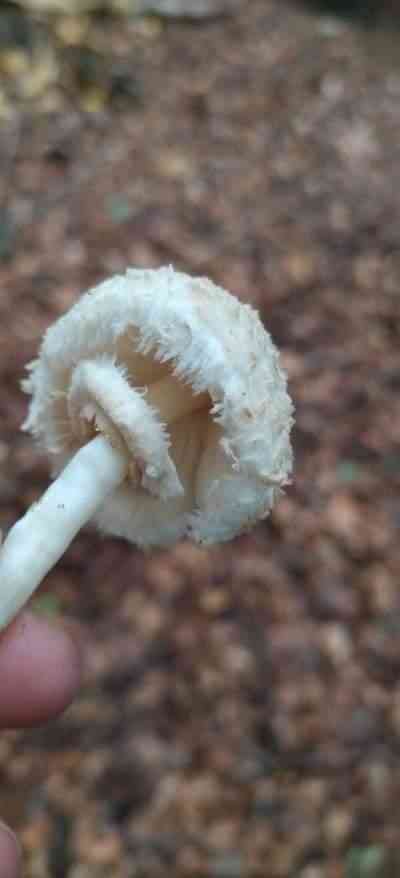
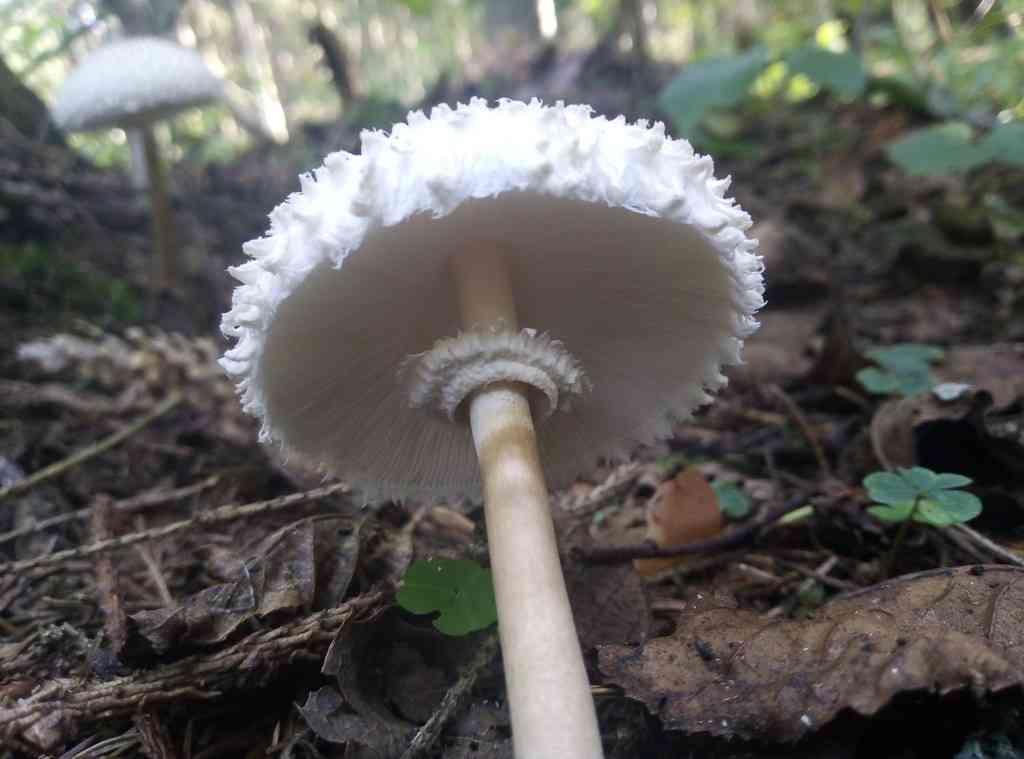
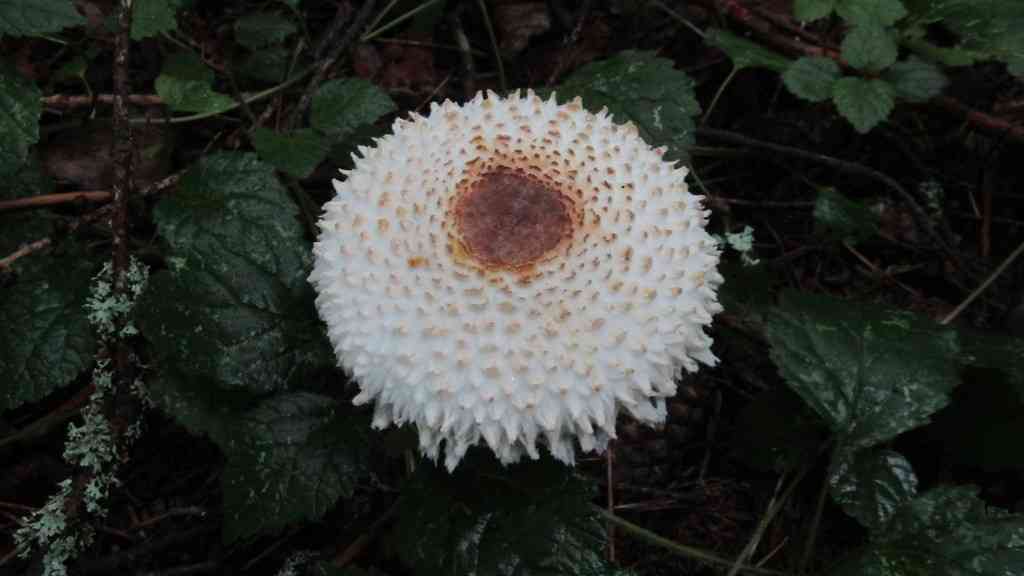
Cap 4 - 8 cm across; cylindrical, convex; white, bluish gray; with scales
Cap Shape
Convex, Flat
Cap Surfaces
Fibrillose-scaly, Smooth
Gill Attachment
Free
Stem
Stem 3 - 7 cm long, 6 - 15 mm thick; cylindrical; white to brown; brittle
Stem Shapes
Club Shaped
Flesh
Brittle; white; unchanging in the air
Ring
With Ring
Spore Print Color
White
Odor
Mildly mushroomy but not distinctive.
Body Color
BrownWhite
Flesh Bruises
The flesh or milk does not discolor when bruised or cut.
Growth Form
Solitary, Scattered
Substrate
On soil
You can find Leucoagaricus nympharum by these plants
Spruces, Firs, Norway spruce
Species Status
Quite common
Endangered Species
No

Scientific Classification of Leucoagaricus nympharum

ForwardPlant APP

AI mushroom expert in your pocket

Try for Free
Phylum
Club fungi
Class
Mushroom-forming fungi
Order
Gilled fungi
Family
Agaricaceae
Genus
Leucoagaricus
⚠️

Toxicity and Edibility of Leucoagaricus nympharum

ForwardPlant: Identify & Forage

Your Essential Guide to Edible vs. Toxic Mushrooms. Forage with Confidence!

Try for Free

Is Leucoagaricus nympharum Toxic?

Leucoagaricus nympharum is a mushroom species recognized for its gastrointestinal toxins, inducing mild digestive upset in humans. Specific identification details, habitat, season, and key morphological traits remain undescribed. Ingestion can result in abdominal and intestinal discomfort. Rigorous identification is advised prior to handling. Oversight may lead to adverse effects.


Type of poisoning
Gastrointestinal
Toxic Severity
Low toxicity
Incubation Period
0.5-4 hours
Poisoning Symptoms
Experience of minor digestive upset in the stomach and intestines.