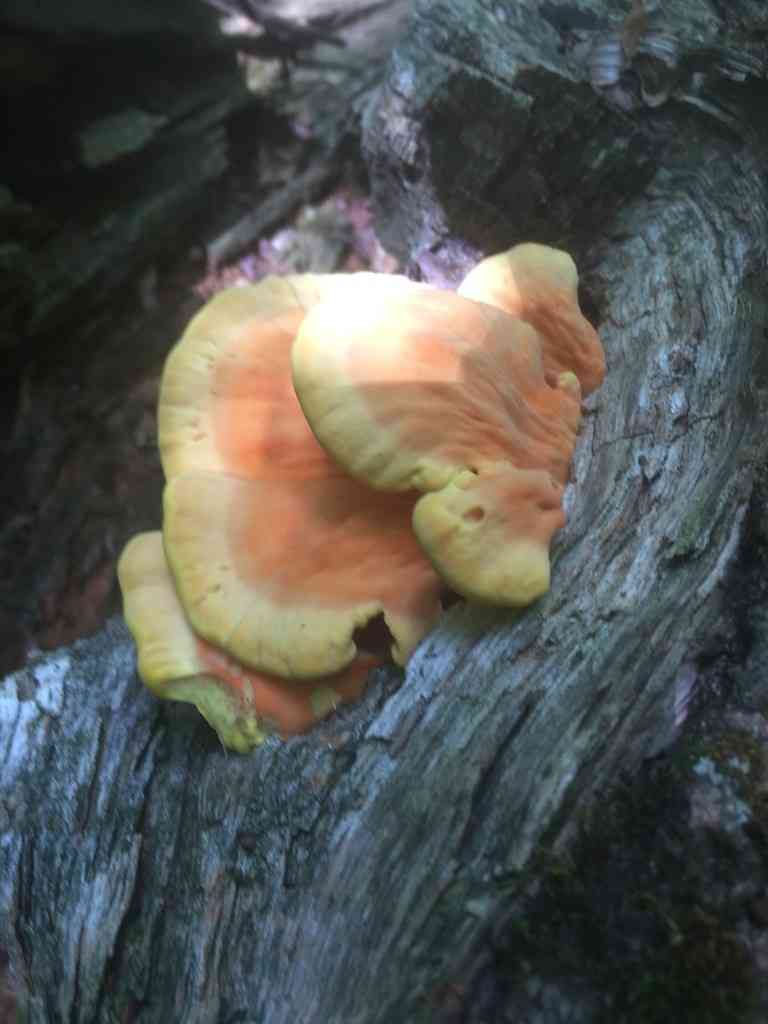
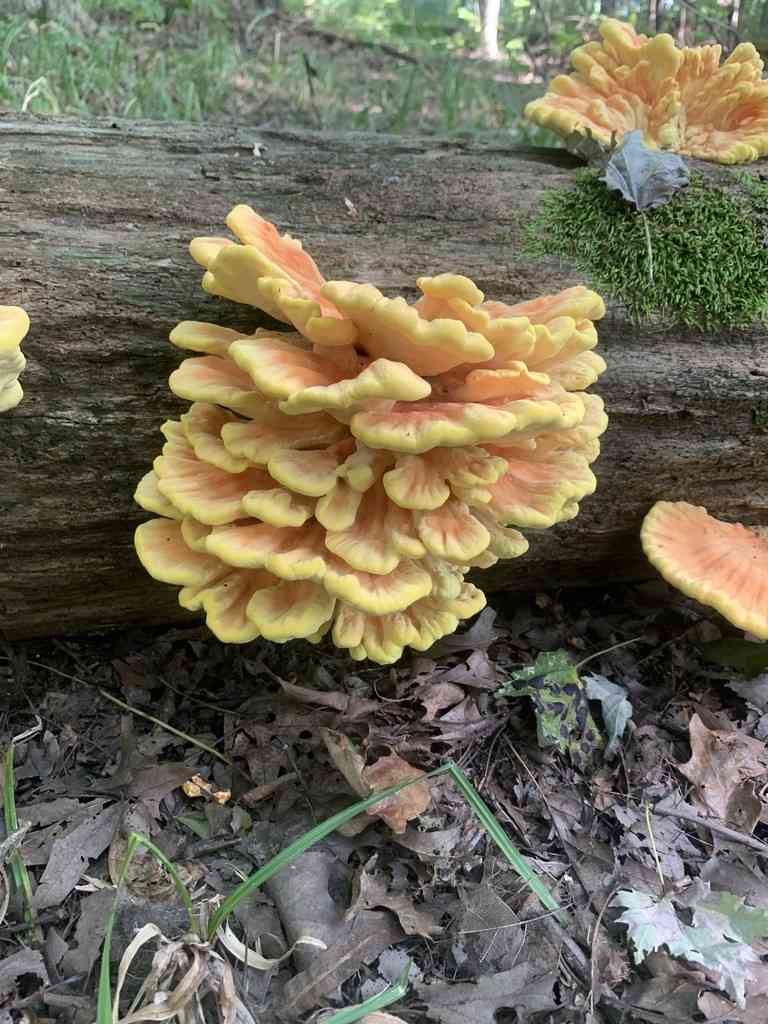
Chicken of the woods
Laetiporus sulphureus
A species of Laetiporus. Also known as Sulphur polypore.
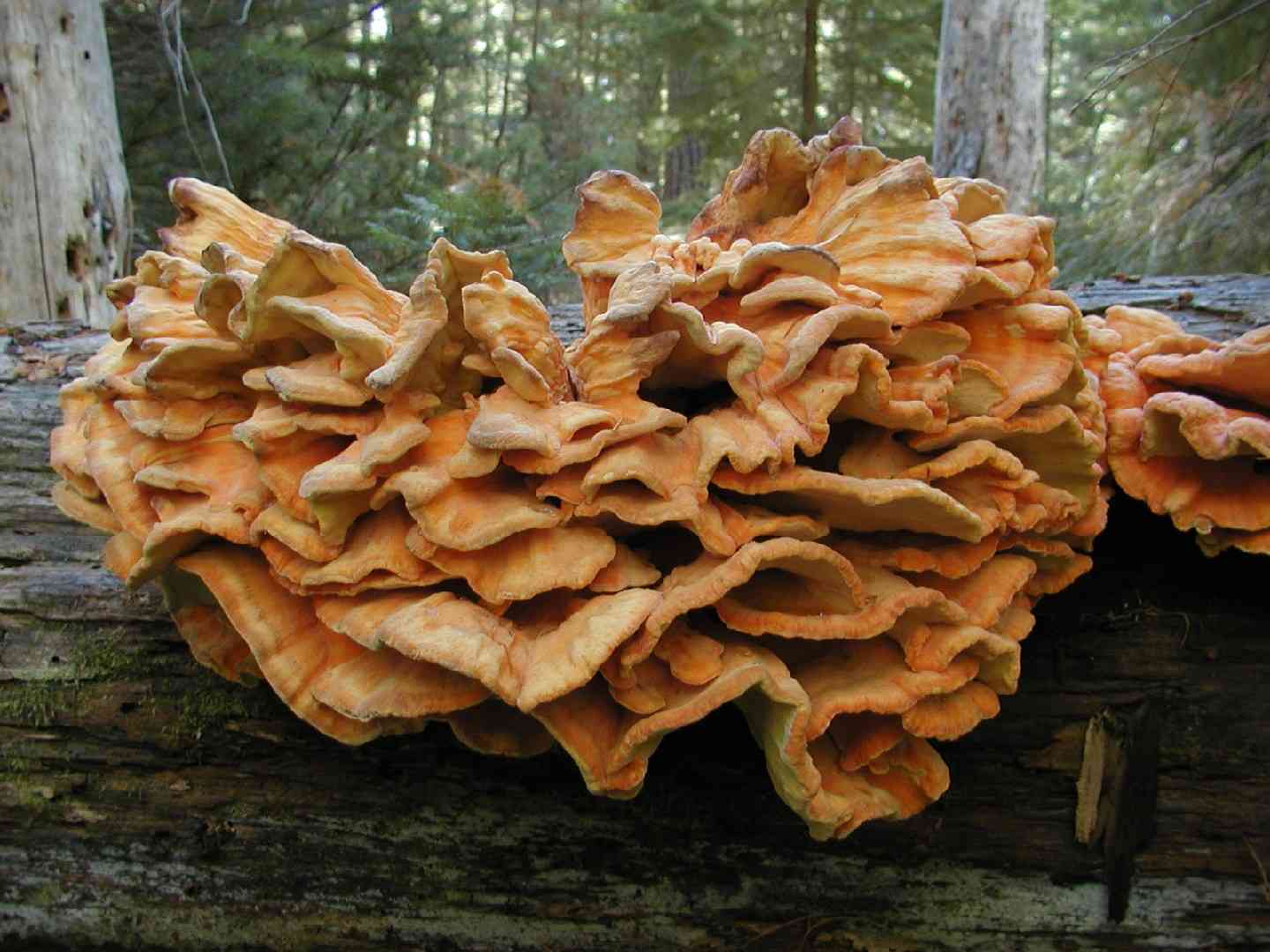
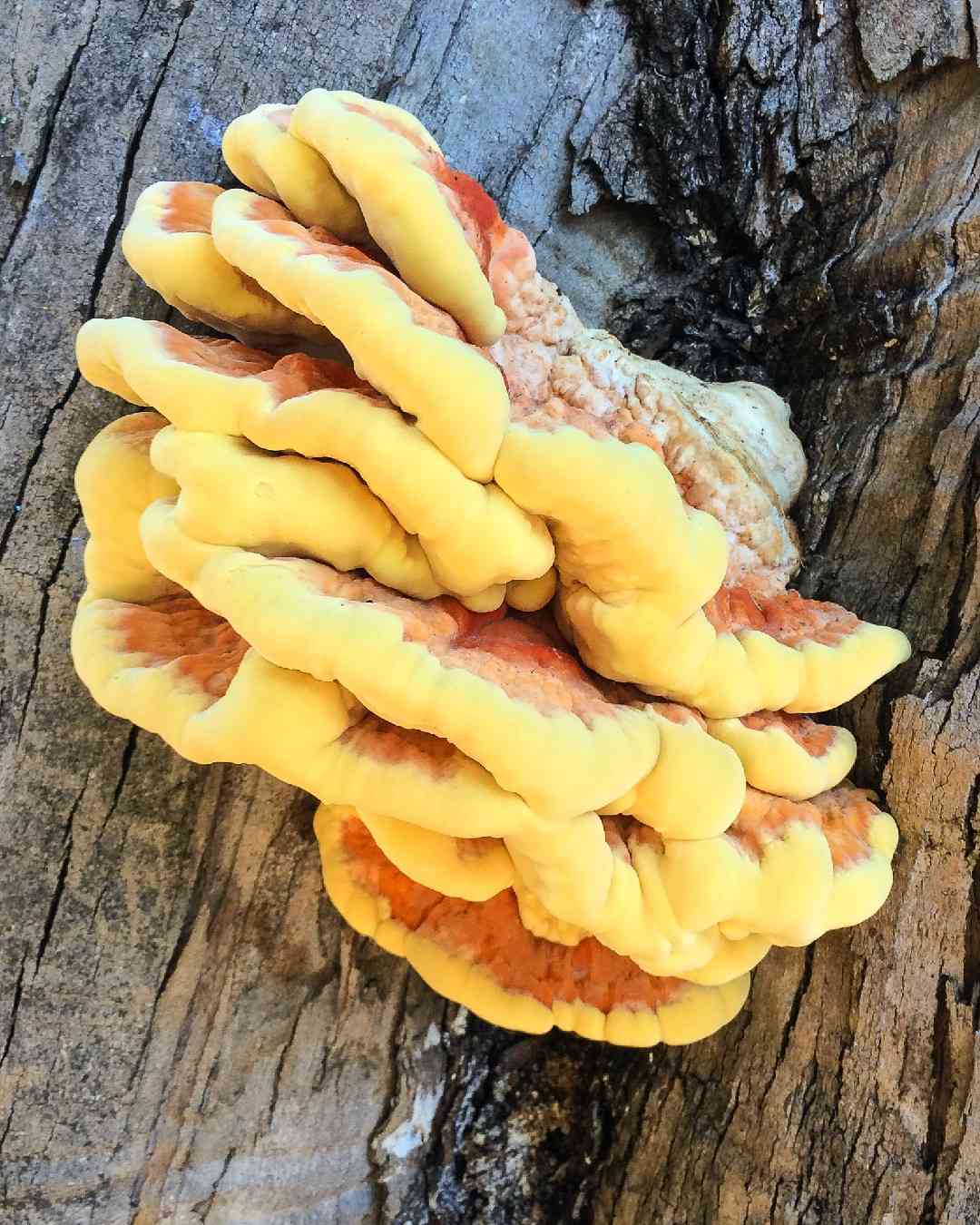
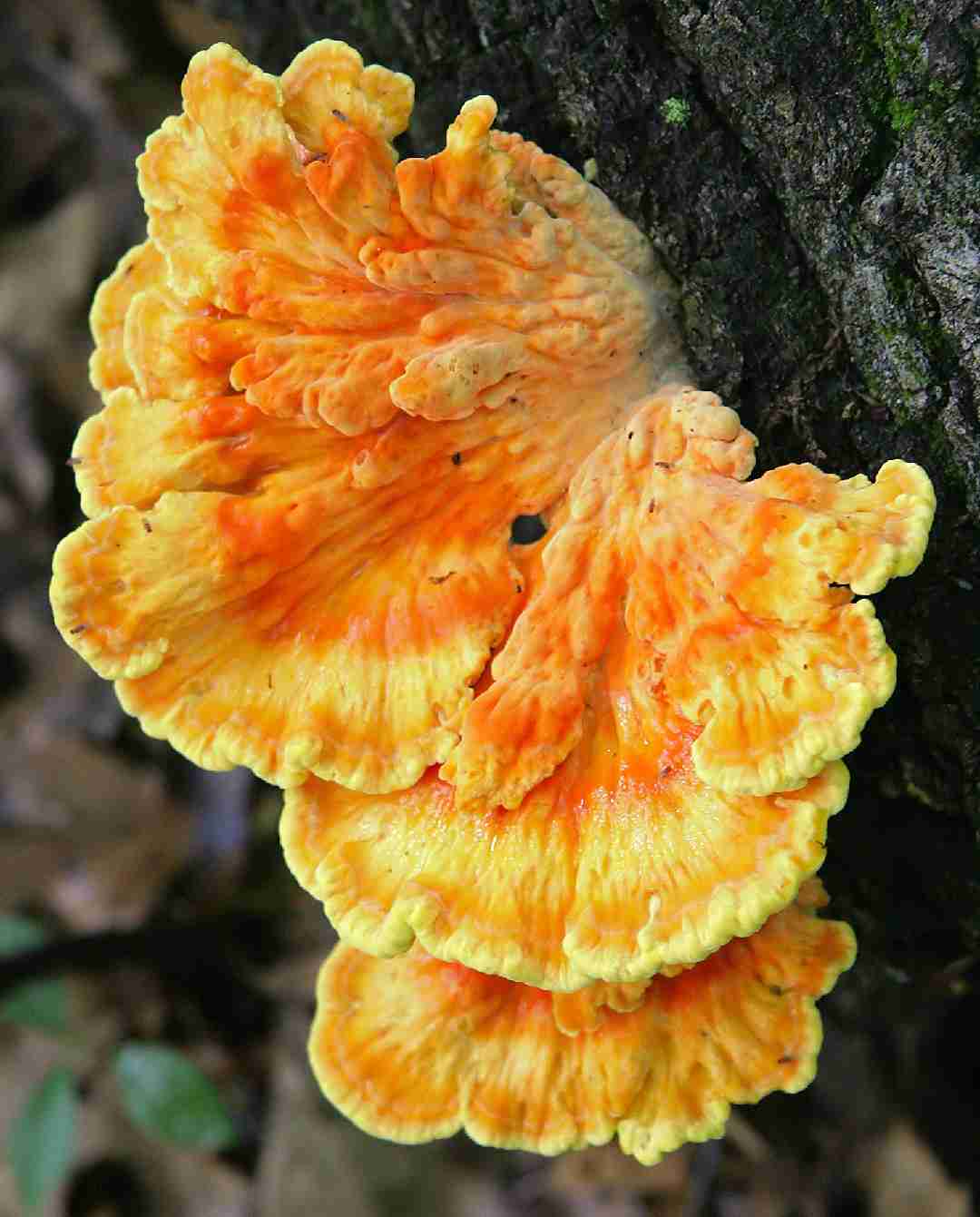
Laetiporus sulphureus, commonly known as chicken of the woods, is a distinctive sight in deciduous woodlands. Its vibrant orange and yellow clusters, often persisting through winter, are readily spotted on the trunks of standing trees. This parasitic fungus, unfortunately, leads to a damaging brown heart rot, posing a significant threat, especially to Yew trees. The presence of its fruiting bodies typically indicates the tree is already too compromised to recover.
In This Article
Attributes of Chicken of the woods
Cap Diameter
5 - 25 cm
Height
5 - 25 cm
Cap
5 - 25 cm across, up to 20 cm deep, up to 3 cm thick; fan-shaped to semicircular; yellow-orange; smooth
Cap Shape
Flat, Depressed
Cap Surfaces
Smooth, Velvety
Flesh
Thick; soft become tougher; white to pale yellow, unchanging when sliced
Spore Print Color
White
Odor
Mildly mushroomy, not distinctive.
Body Color
YellowOrange
Flesh Bruises
The flesh or milk does not discolor when bruised or cut.
Growth Form
Clustered
Nutrient Gathering
Saprophytic, Parasitic
Substrate
Dead Woods, Wood of Living Trees
You can find Chicken of the woods by these plants
Black cherry, Northern red oak, Oaks, Willows, Sweet cherry
Occurence Habitats
Deciduous Woodland, Coniferous Woodland
Species Status
Widely distributed east of the Rocky Mountains.
Endangered Species
No
Scientific Classification of Chicken of the woods
Phylum
Club fungi
Class
Mushroom-forming fungi
Order
Shelf fungi
Family
Bracket polypores
Genus
Laetiporus
Toxicity and Edibility of Chicken of the woods
Is Chicken of the woods Toxic?
Toxicity information is not available for this mushroom. Always consult with an expert before consuming any wild mushrooms.