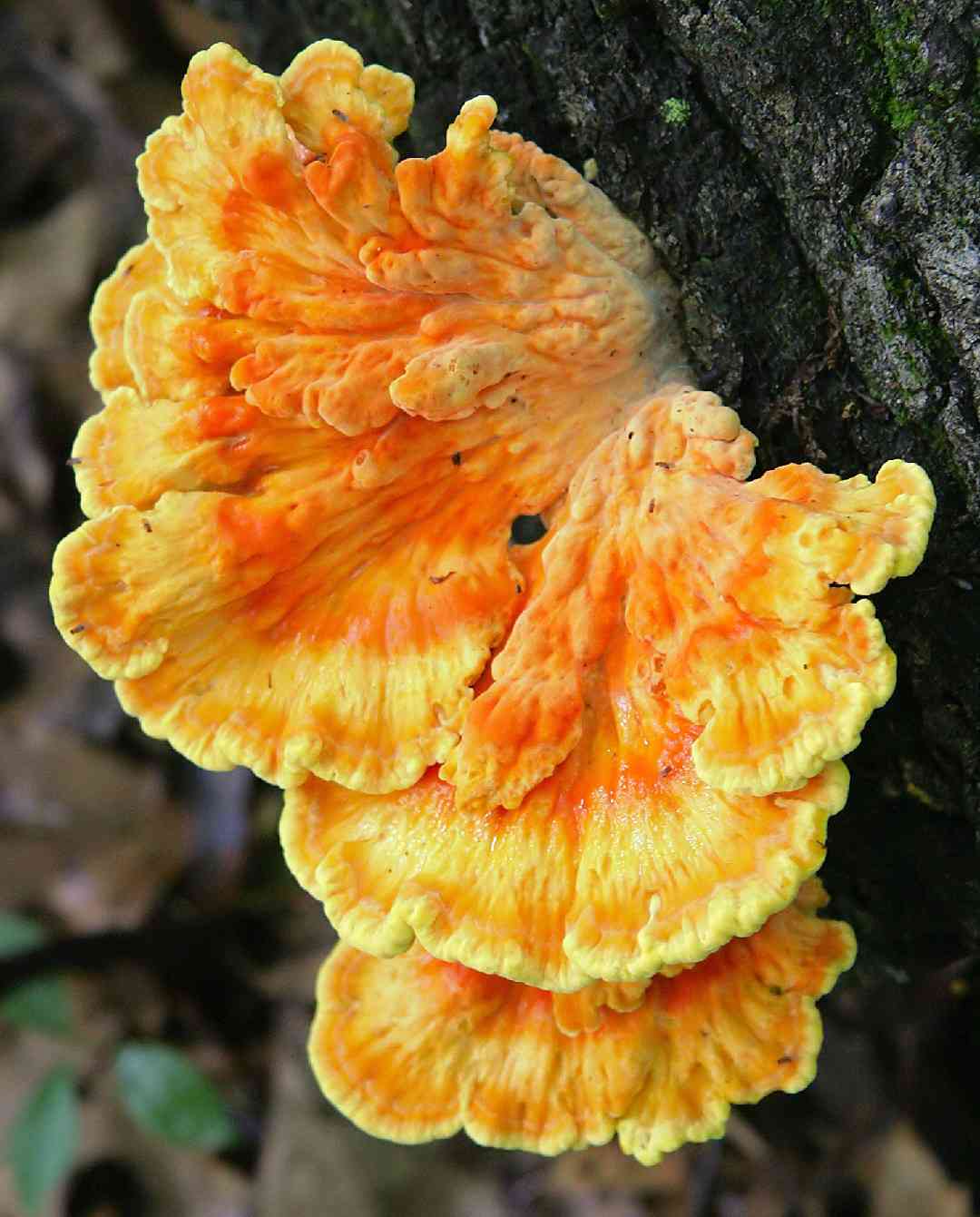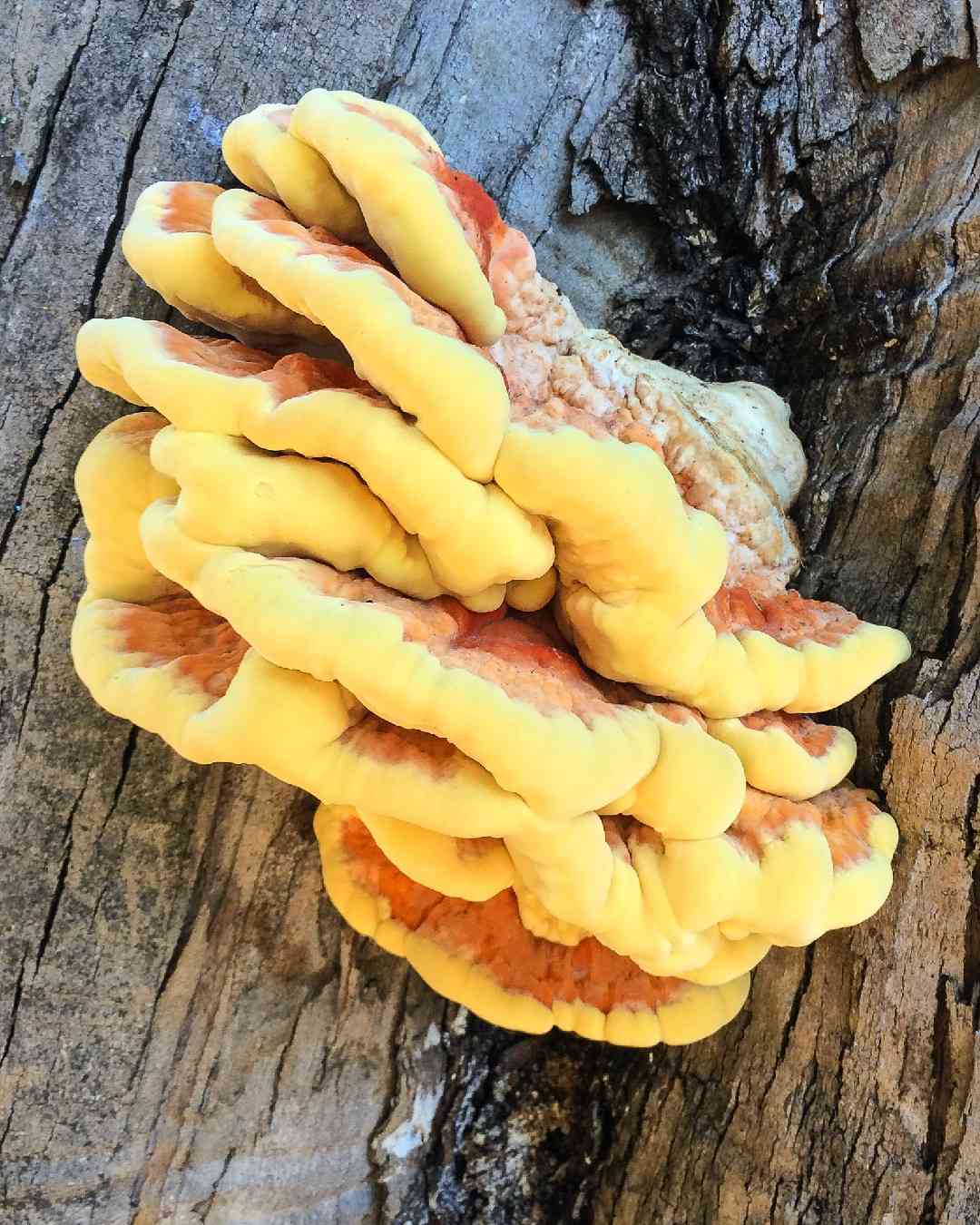


Chicken-of-the-woods
Laetiporus gilbertsonii
A species of Laetiporus. Also known as Western chicken-of-the-woods.
Laetiporus cincinnatus, a vibrant polypore, shares a close kinship with the renowned Laetiporus sulphureus, commonly known as Chicken-of-the-Woods. Their genetic proximity was such that it wasn't until the 21st century that mycologists recognized them as separate species. However, unlike its celebrated counterpart, Laetiporus cincinnatus is not highly regarded as a culinary delight, with varying accounts of its edibility and documented instances of gastrointestinal discomfort.
In This Article
Attributes of Chicken-of-the-woods
Cap Diameter
5 - 15 cm
Cap
Cap 6 - 14 cm across; fan-shaped to semicircula; bright to pale yellow or orangish yellow
Cap Surfaces
Velvety
Stem Surfaces
Smooth to slightly fibrous
Flesh
Thick; soft, watery, chalky; yellowish to whitish; not changing when sliced
Spore Print Color
White
Odor
Mildly mushroomy but not distinctive.
Body Color
YellowOrange
Flesh Bruises
The flesh or milk does not discolor when bruised or cut.
Growth Form
Solitary, Gregarious, Clustered
Nutrient Gathering
Saprophytic, Parasitic
Substrate
Wood of Living Trees, Dead Woods
You can find Chicken-of-the-woods by these plants
Eucalypts
Occurence Habitats
Deciduous Woodland
Endangered Species
No
Scientific Classification of Chicken-of-the-woods
Phylum
Club fungi
Class
Mushroom-forming fungi
Order
Shelf fungi
Family
Bracket polypores
Genus
Laetiporus
Toxicity and Edibility of Chicken-of-the-woods
Is Chicken-of-the-woods Toxic?
Toxicity information is not available for this mushroom. Always consult with an expert before consuming any wild mushrooms.