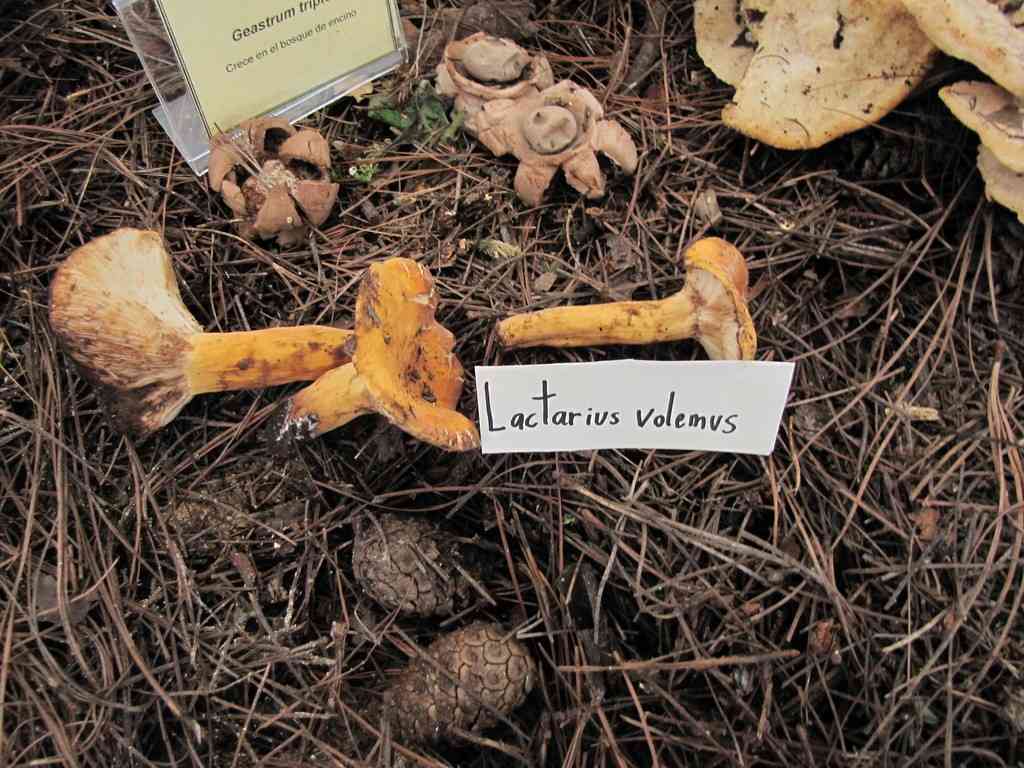
Weeping milk cap
Lactarius volemus
A species of Milk-caps. Also known as Voluminous-latex milky, Bradley, Lactarius orange.
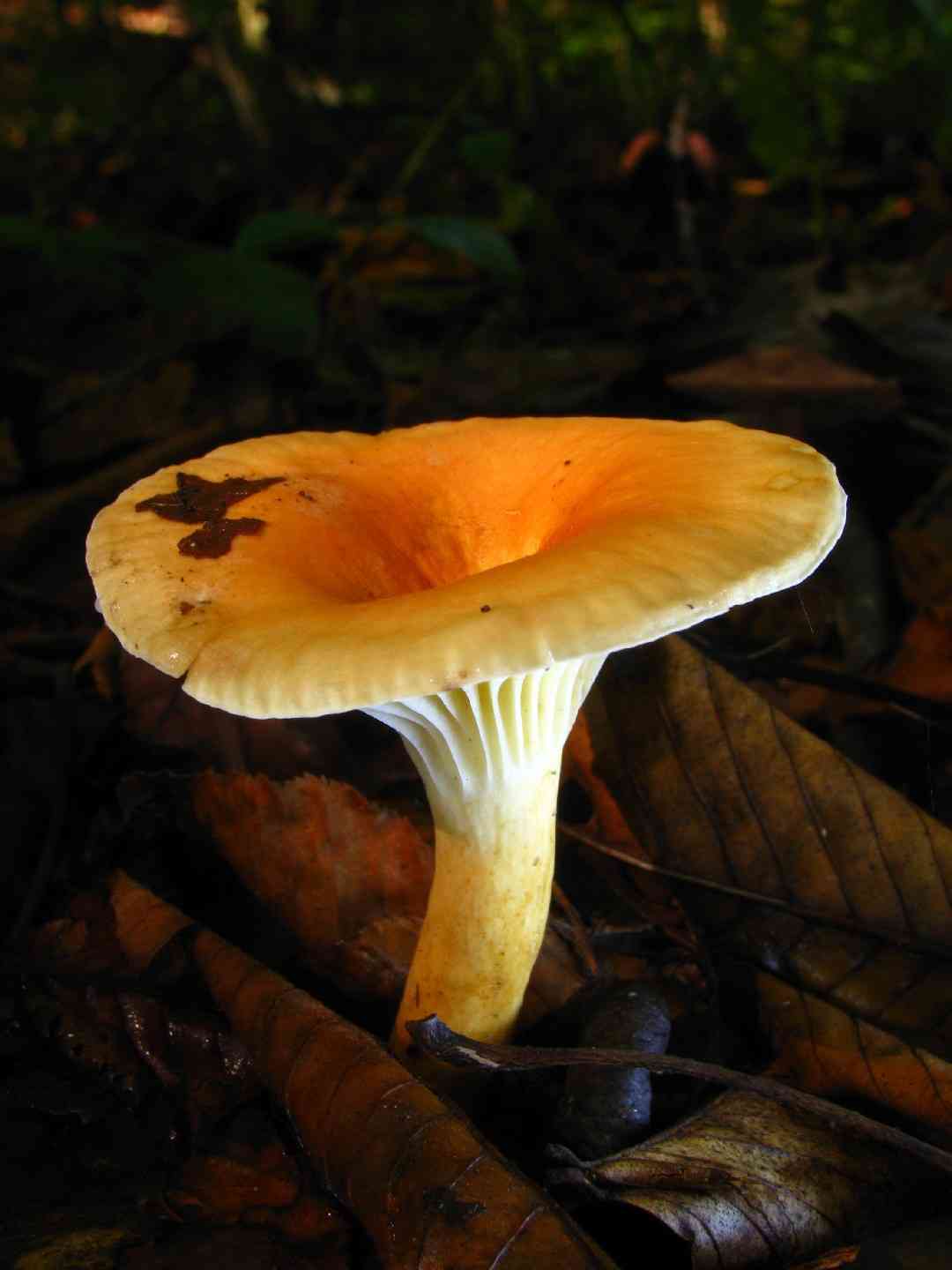
The weeping milk cap, a mycorrhizal fungus, establishes subterranean connections with various trees, predominantly oaks. Belonging to the Lactarius genus, this mushroom secretes a distinctive milky fluid from its gills when agitated. This brown liquid is notably prone to staining surfaces it touches, including hands and paper.
In This Article
Attributes of Weeping milk cap
Cap Diameter
3 - 13 cm
Height
5 - 12 cm
Cap
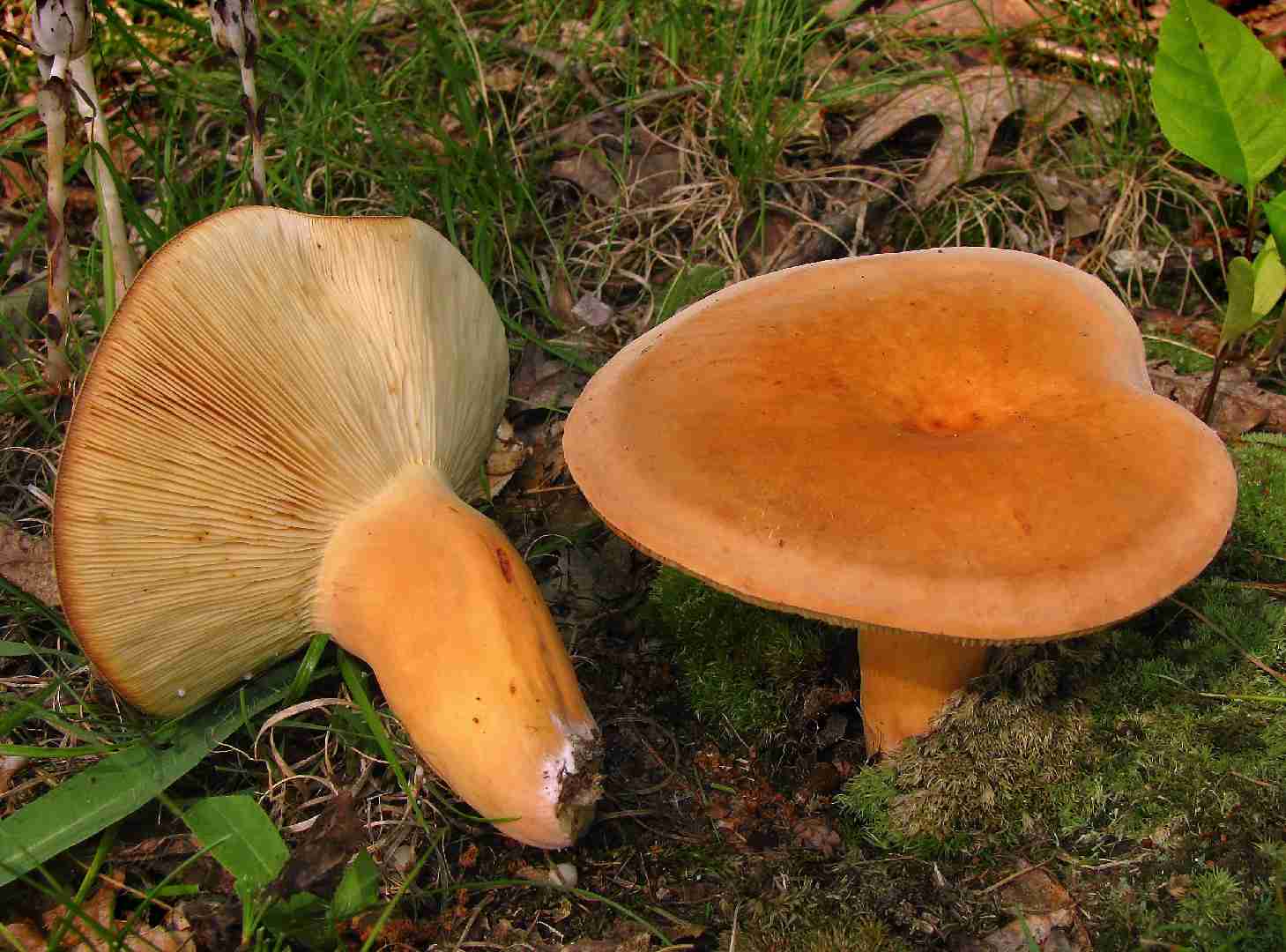
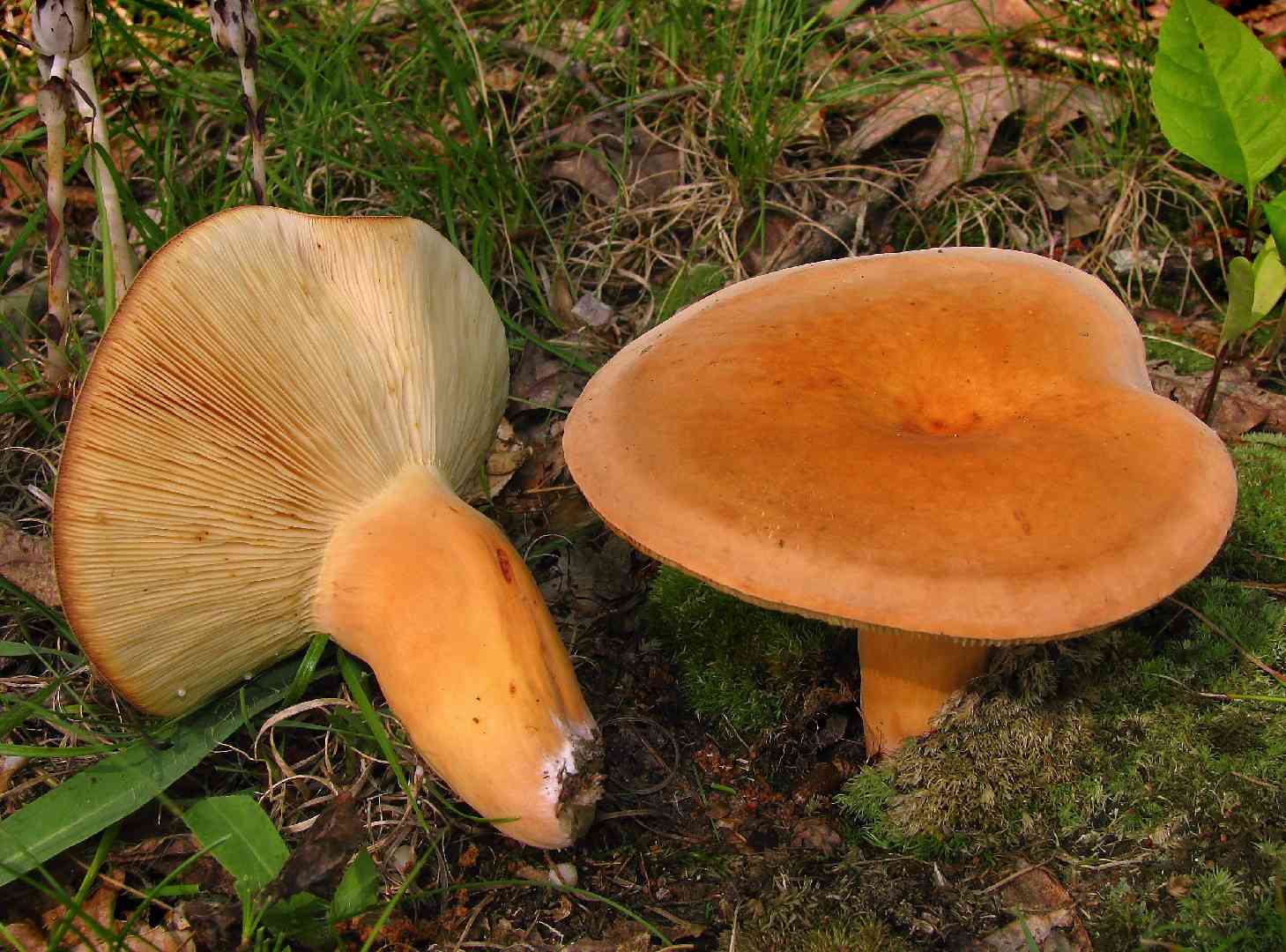
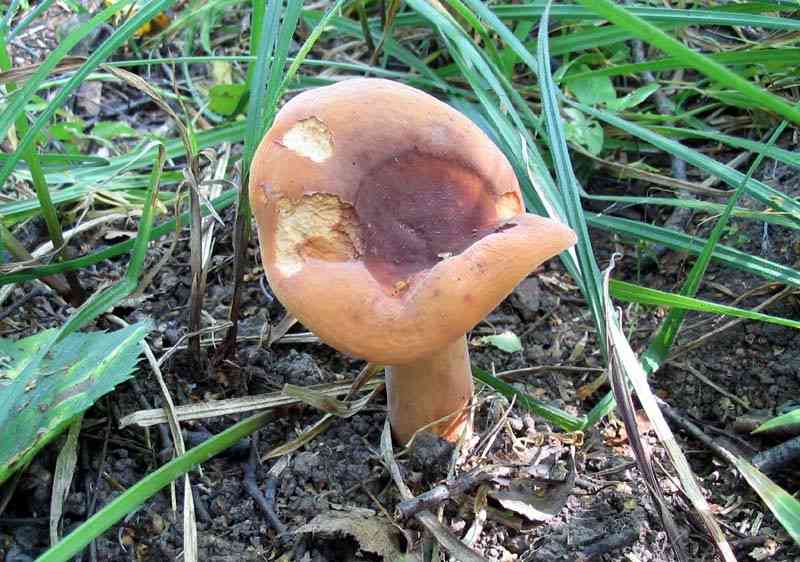
Cap 3 - 13 cm across; convex, flat; orange-brown; smooth
Cap Shape
Convex, Flat, Depressed
Cap Surfaces
Smooth, Velvety
Gills
Attached; close; cream to buff; displaying brown when injured
Gill Attachment
Attached
Stem
Stem 5 - 10 cm long, 5 - 25 mm thick; equal or tapering to base; orange-brown
Stem Shapes
Cylindrical
Stem Surfaces
Smooth
Flesh
White; staining slowly brown when sliced
Ring
Ringless
Spore Print Color
White
Odor
Slightly fishy, not particularly pungent.
Body Color
BrownRedOrange
Flesh Bruises
Discolor to brown
Growth Form
Solitary, Scattered, Gregarious
Nutrient Gathering
Mycorrhizal
Substrate
On soil
You can find Weeping milk cap by these plants
Oaks, Pines
Occurence Habitats
Deciduous Woodland, Coniferous Woodland, Mixed Woodland
Species Status
Widely distributed
Endangered Species
No
Scientific Classification of Weeping milk cap
Phylum
Club fungi
Class
Mushroom-forming fungi
Order
Russulales
Family
Russulaceae
Genus
Milk-caps
Toxicity and Edibility of Weeping milk cap
Is Weeping milk cap Toxic?
Toxicity information is not available for this mushroom. Always consult with an expert before consuming any wild mushrooms.