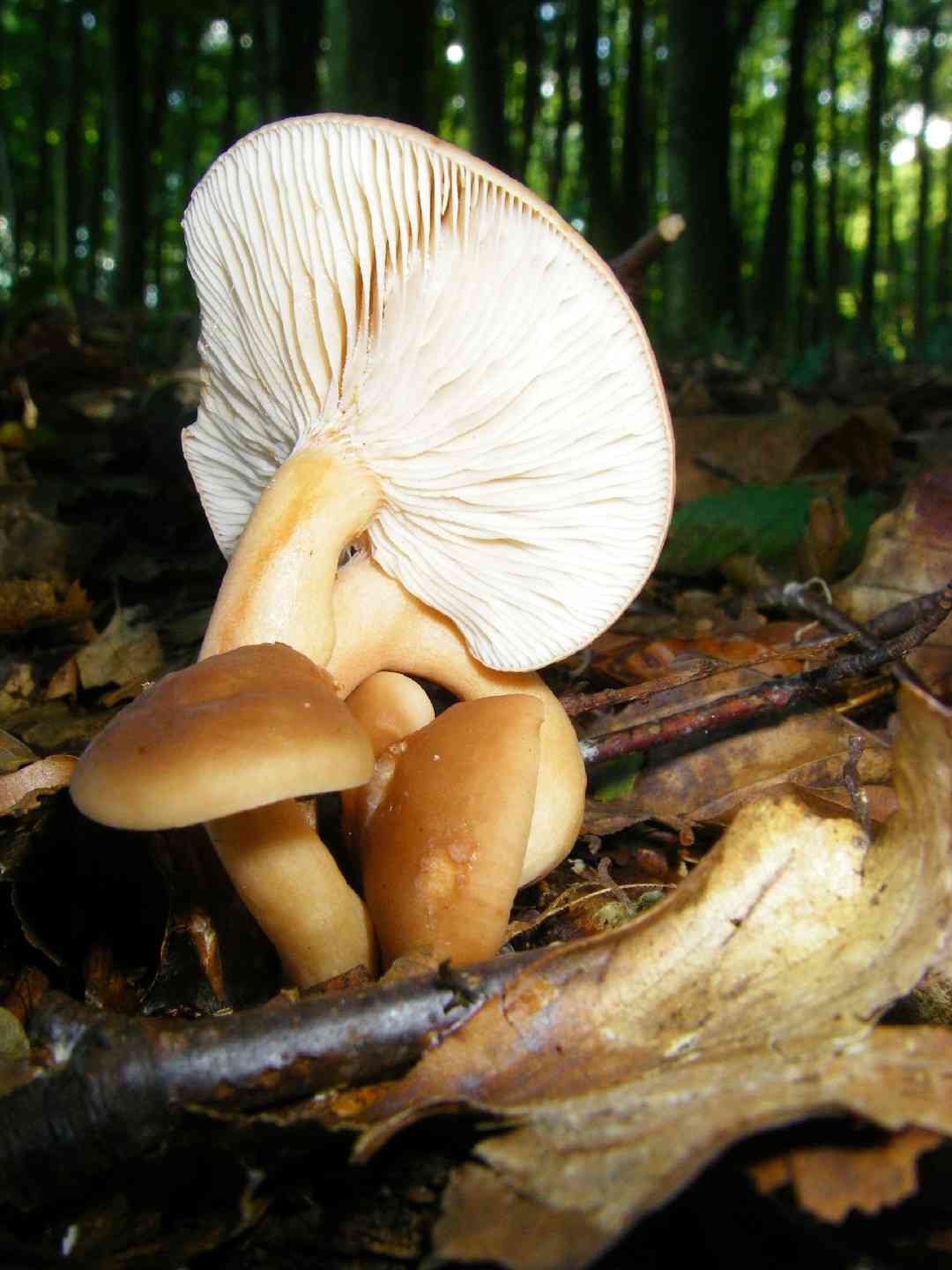
Mild milkcap
Lactarius subdulcis
A species of Milk-caps.
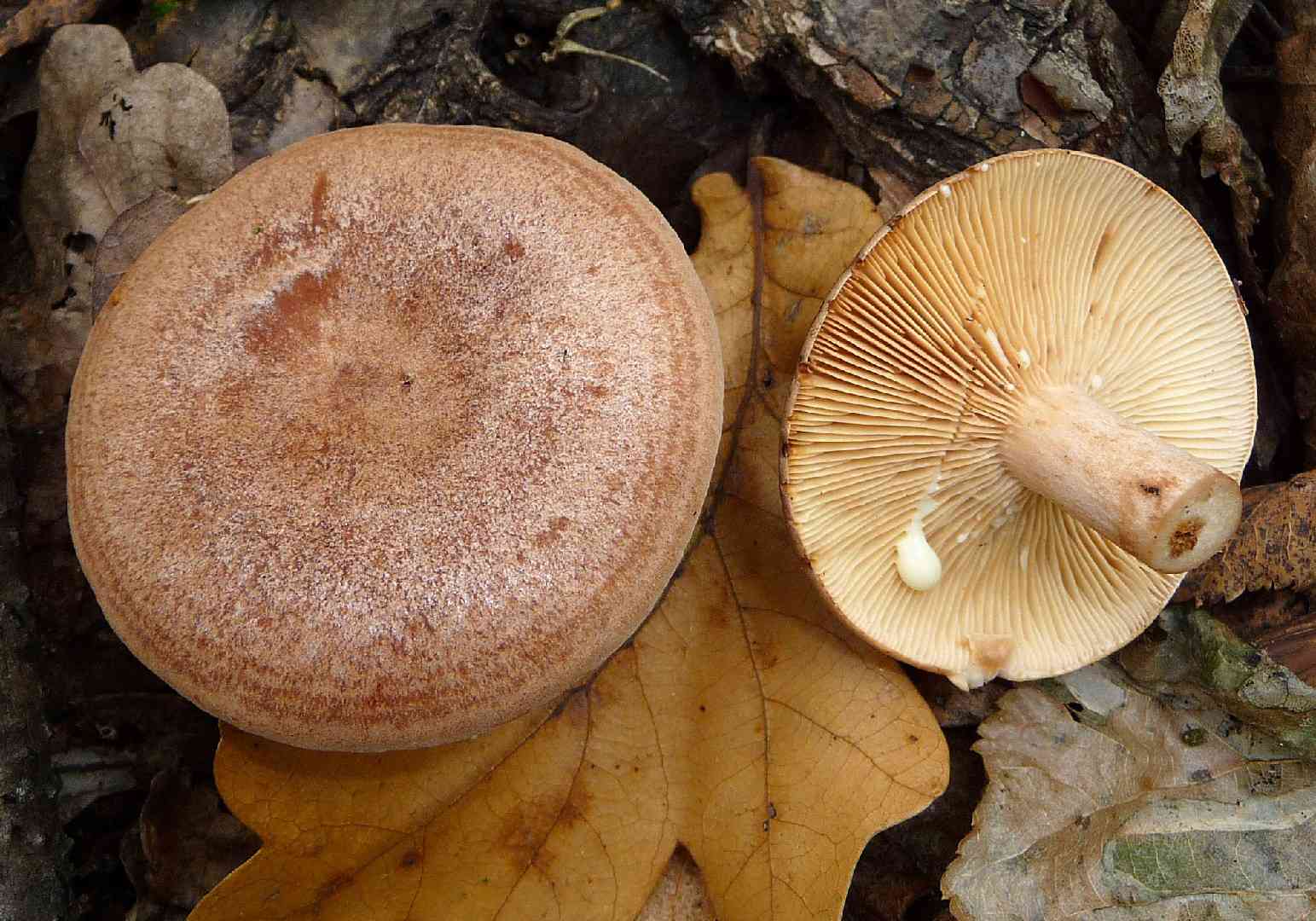
The Beech Milkcap (Lactarius subdulcis) is frequently found in forests, engaging in a mutually beneficial association with beech trees and other tree species. Both its common and scientific names, 'milkcap' and 'Lactarius' respectively, derive from the milky white fluid that exudes when the mushroom's gills are injured.
In This Article
Attributes of Mild milkcap
Cap Diameter
3 - 7 cm
Height
4 - 10 cm
Cap
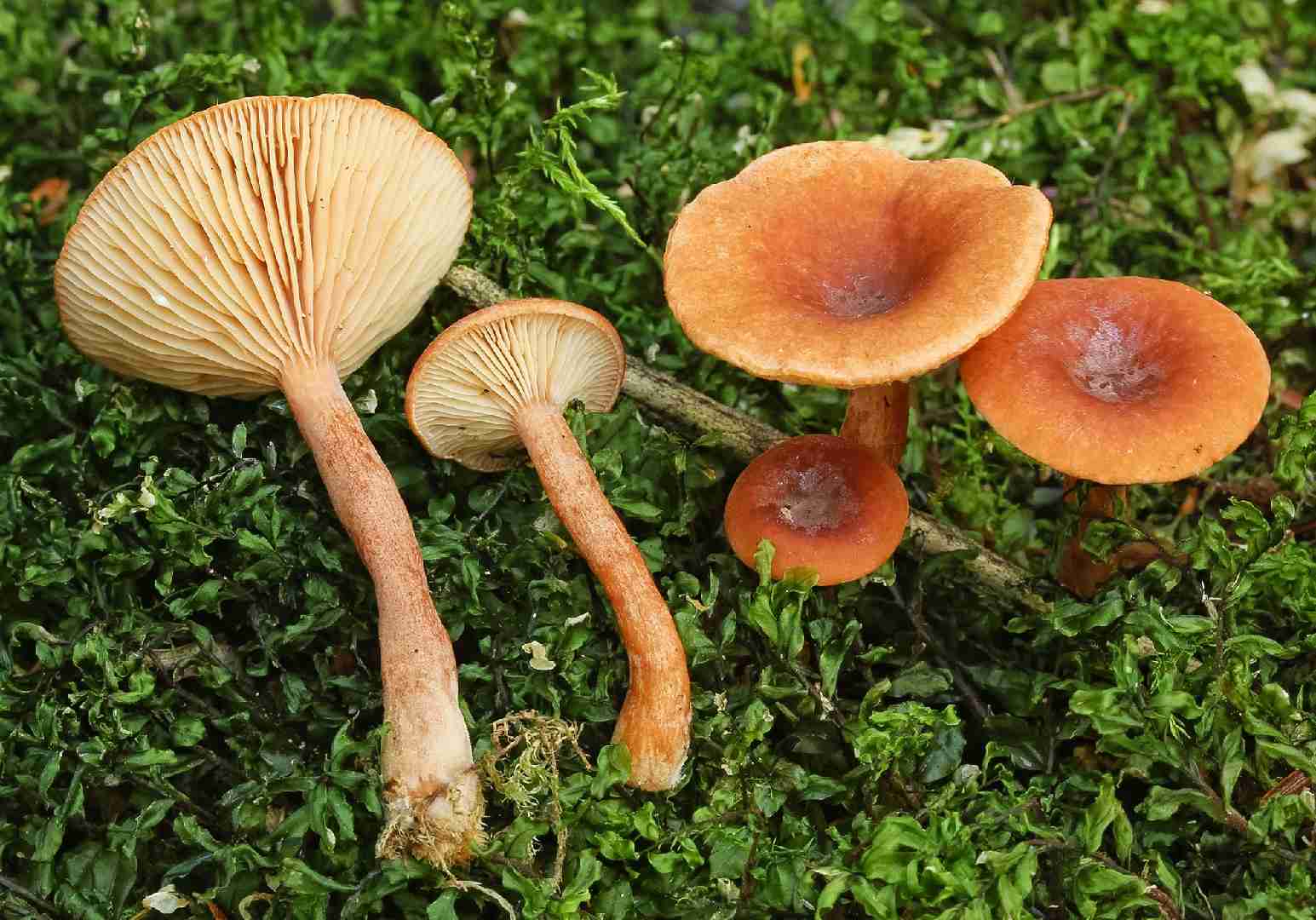
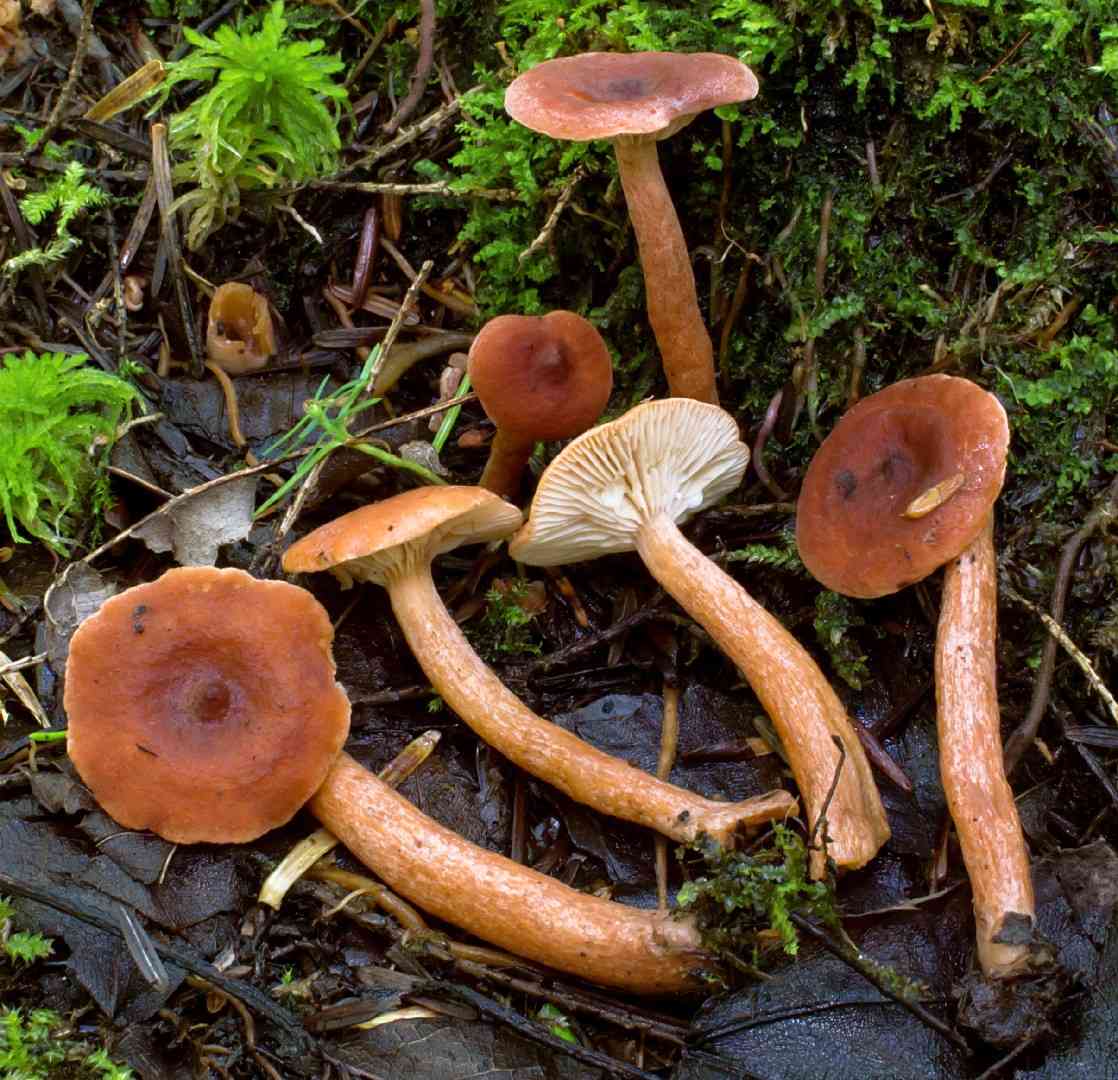
Cap 3 - 7 cm across; convex; reddish-brown to buff; fairly rigid to flexible, smooth to slightly wrinkled; margin incurved
Cap Shape
Convex, Depressed, Central Bump
Cap Surfaces
Smooth
Gills
Adnate to shortly decurrent; crowded; white or pink
Gill Attachment
Attached
Stem
Stem 3 - 7 cm long, 6 - 13 mm thick; cylindrical, club-shaped; cap-colored, paler at the top; sometimes furrowed lengthwise
Stem Shapes
Cylindrical
Stem Surfaces
Smooth
Flesh
Thin; pale
Ring
Ringless
Spore Print Color
Cream with a slight salmon-pink tinge
Odor
Faintly sweet, not distinctive.
Body Color
BrownYellowRed
Flesh Bruises
The flesh or milk does not discolor when bruised or cut.
Growth Form
Solitary, Gregarious, Scattered
Nutrient Gathering
Mycorrhizal
Substrate
On soil
You can find Mild milkcap by these plants
Oaks, Pines, European beech
Occurence Habitats
Deciduous Woodland
Species Status
Common
Endangered Species
No
Scientific Classification of Mild milkcap
Phylum
Club fungi
Class
Mushroom-forming fungi
Order
Russulales
Family
Russulaceae
Genus
Milk-caps
Toxicity and Edibility of Mild milkcap
Is Mild milkcap Toxic?
Toxicity information is not available for this mushroom. Always consult with an expert before consuming any wild mushrooms.