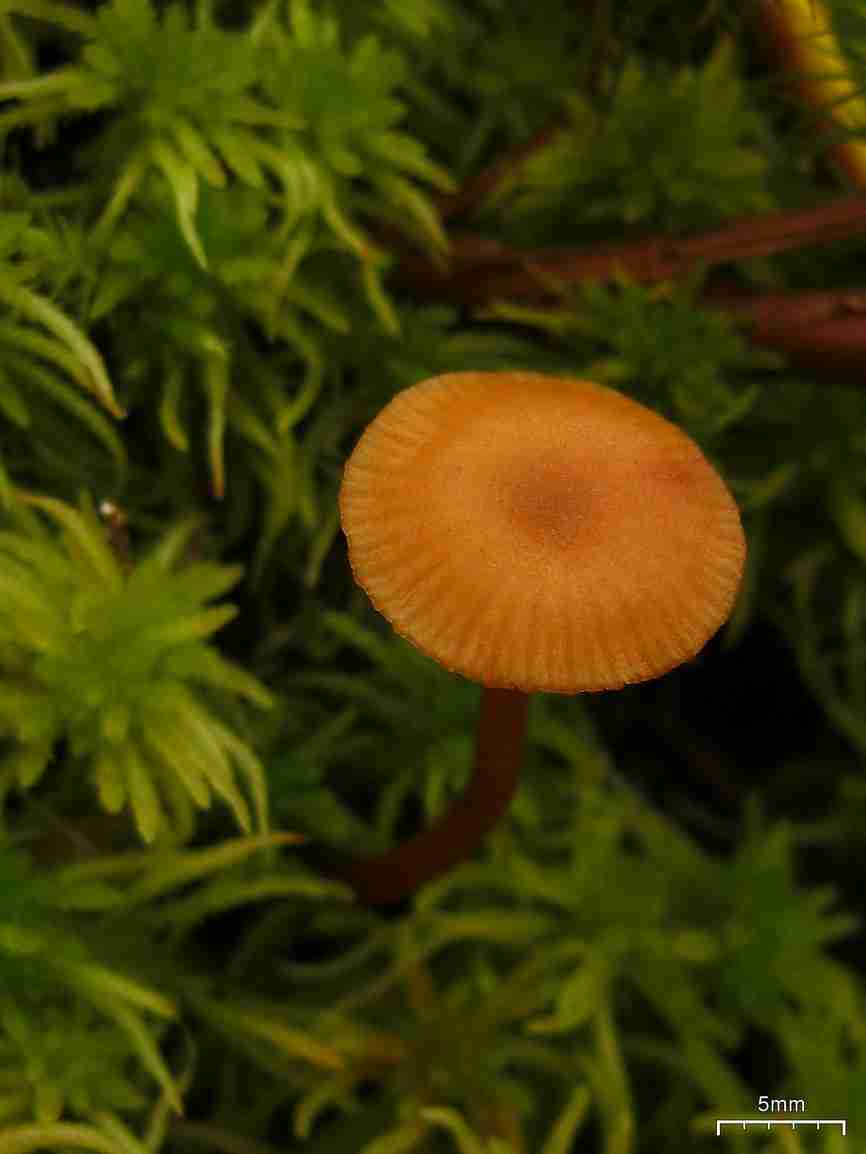
Laccaria longipes
Laccaria longipes
A species of Deceivers.
Laccaria longipes is characterized by its distinctively thin and extended stipe, setting it apart from related species. Predominantly inhabiting woodland environments, it frequently sprouts from the earth where there is an abundance of decaying organic material. This fungus contributes significantly to forest health through its symbiotic associations with tree roots, facilitating the transfer of essential nutrients.
In This Article
Attributes of Laccaria longipes
Cap Diameter
1 - 8 cm
Height
7 - 15 cm
Cap Shape
Convex, Flat, Depressed
Cap Surfaces
Fibrillose-scaly, Visible lines or stripes
Gill Attachment
Attached
Stem Shapes
Cylindrical
Stem Surfaces
Smooth to slightly fibrous
Ring
Ringless
Odor
Mild, indistinct, faintly earthy
Flesh Bruises
The flesh or milk does not discolor when bruised or cut.
Growth Form
Solitary, Scattered, Gregarious
Nutrient Gathering
Mycorrhizal
Substrate
On soil, Mosses
Occurence Habitats
Coniferous Woodland, Mixed Woodland
Scientific Classification of Laccaria longipes
Phylum
Club fungi
Class
Mushroom-forming fungi
Order
Gilled fungi
Family
Hydnangiaceae
Genus
Deceivers
Toxicity and Edibility of Laccaria longipes
Is Laccaria longipes Toxic?
Toxicity information is not available for this mushroom. Always consult with an expert before consuming any wild mushrooms.

