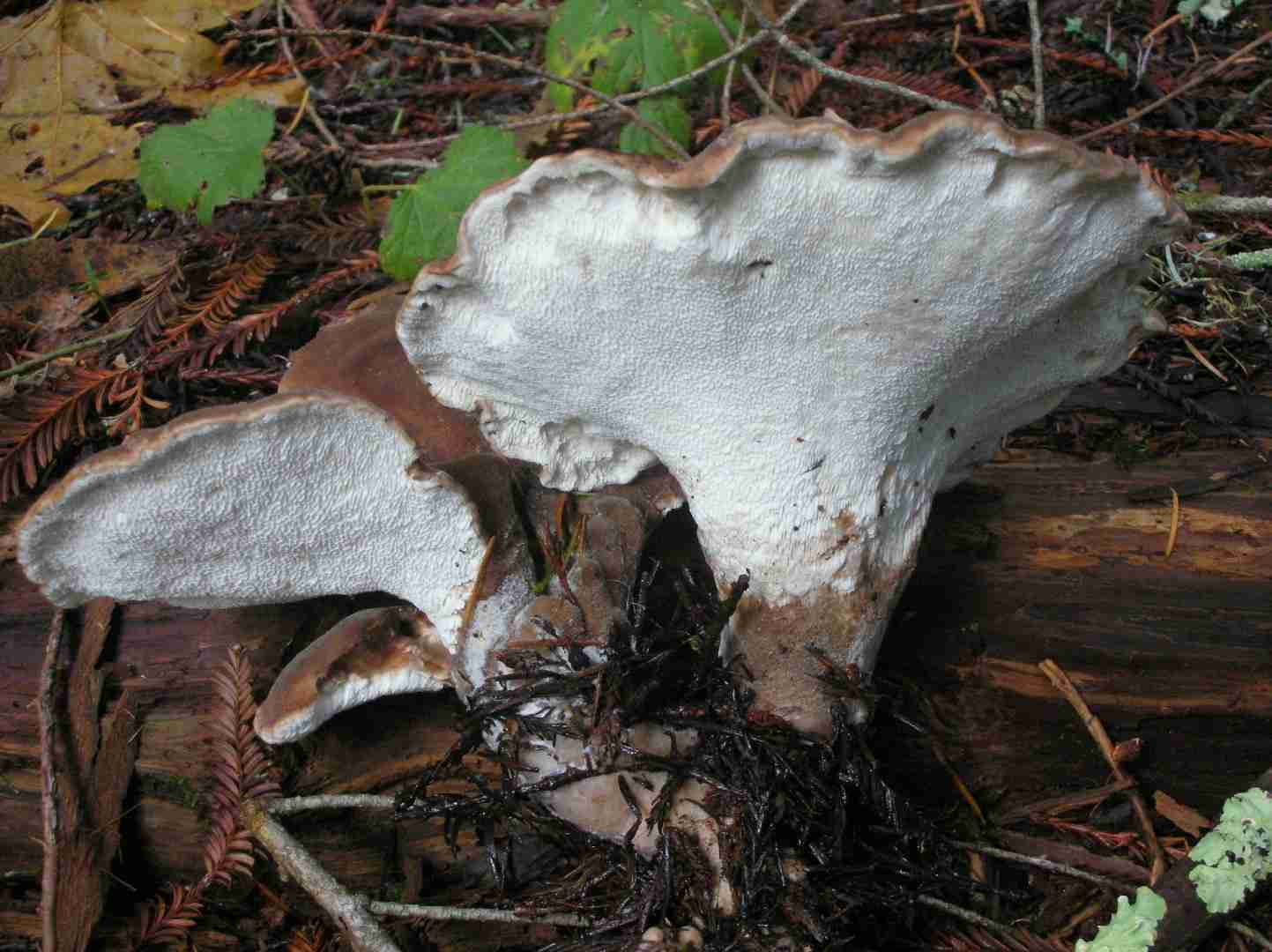
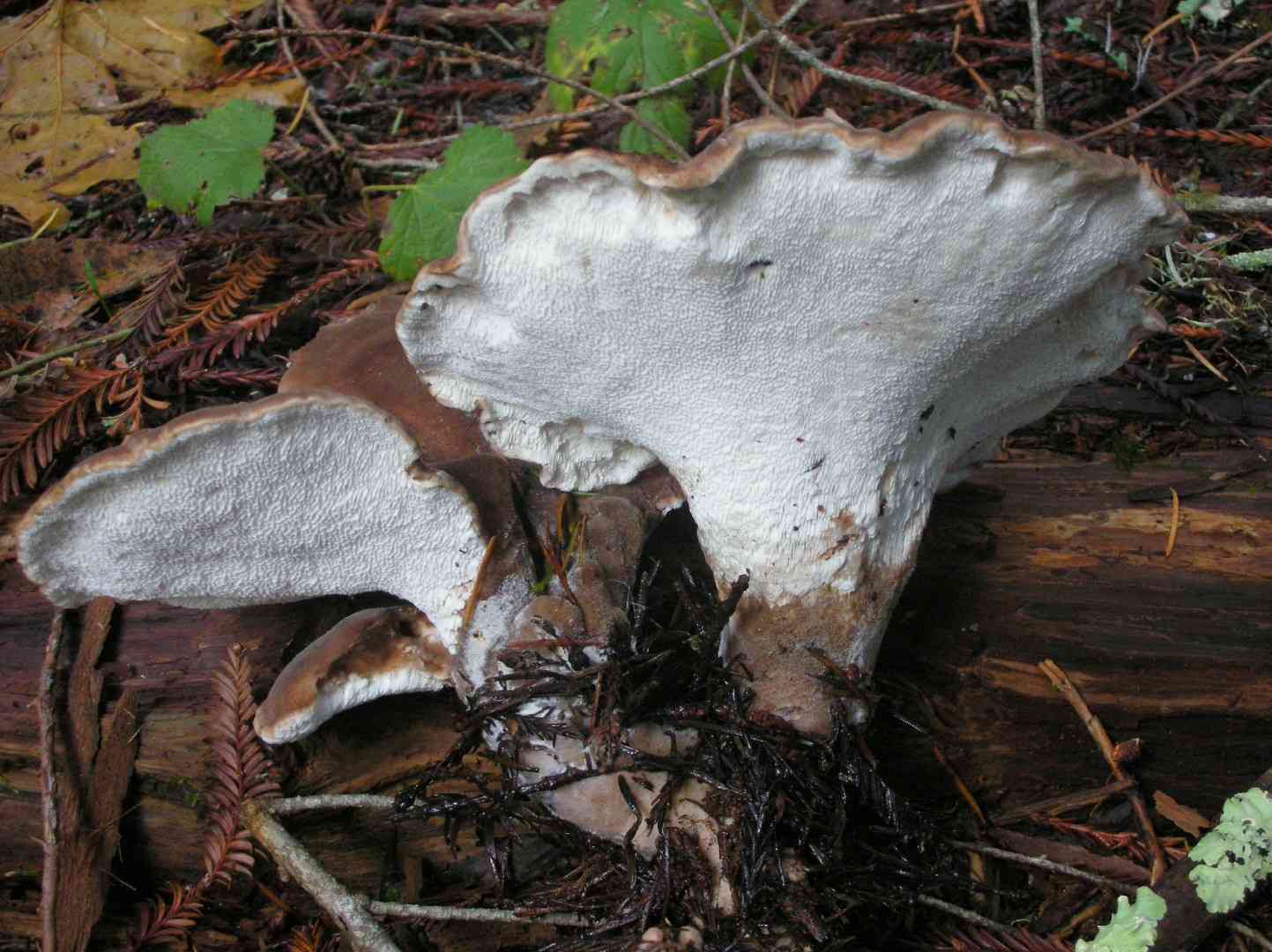
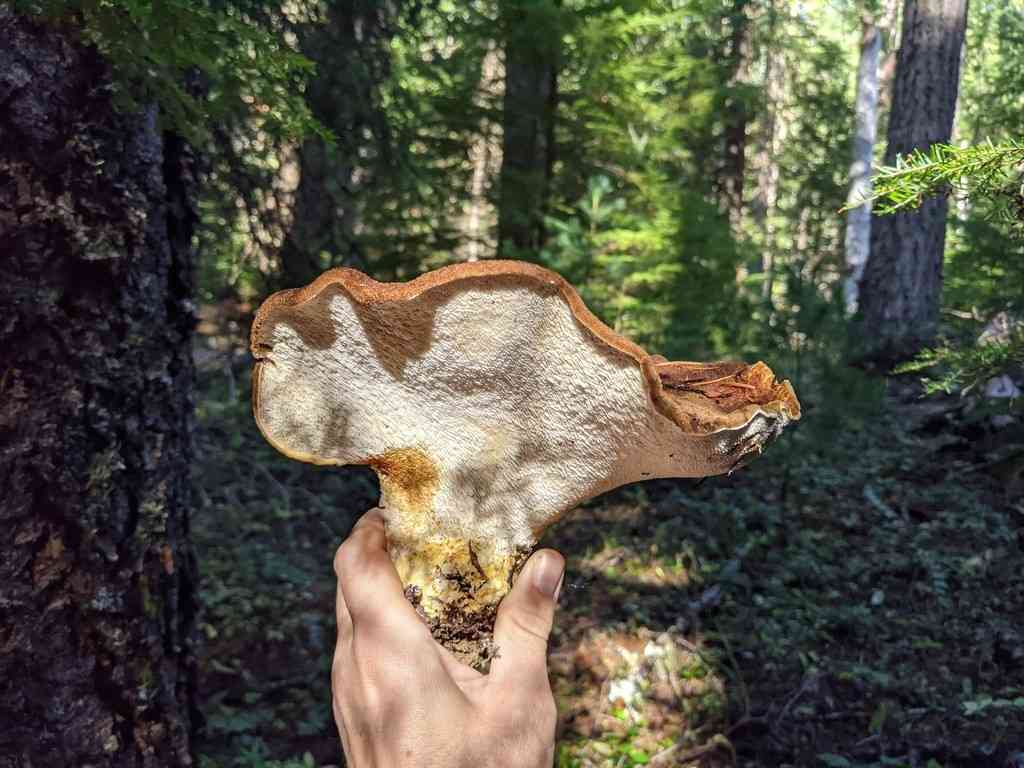
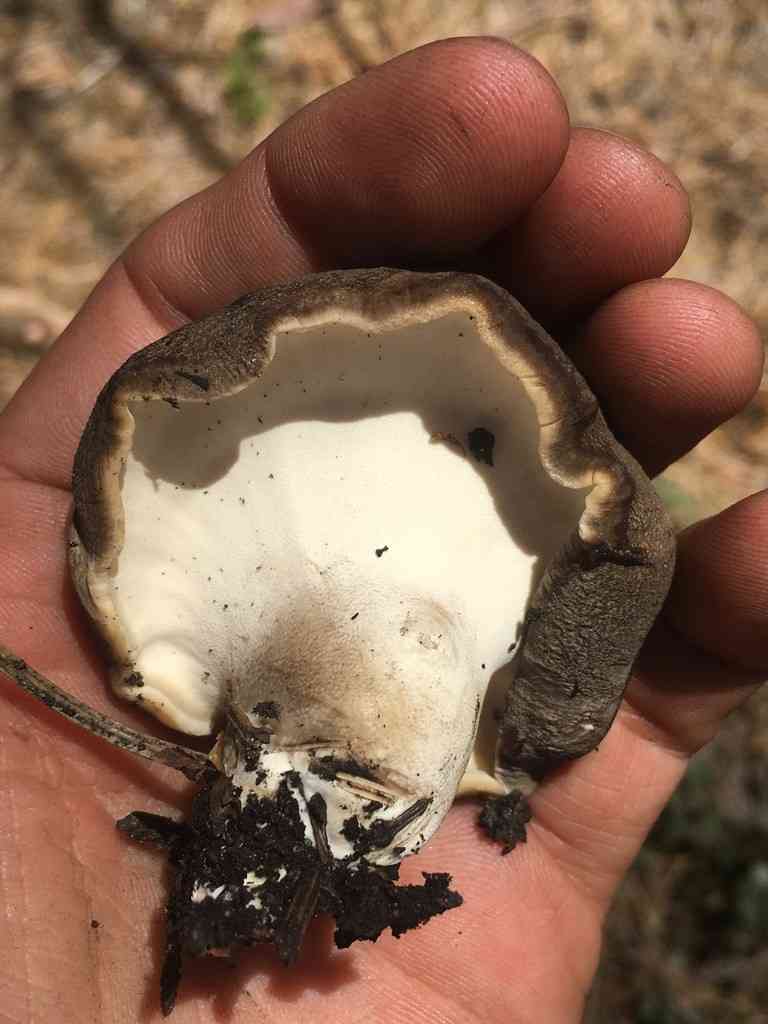
Bitter iodine polypore
Jahnoporus hirtus
A species of Jahnoporus.
The tough, acrid iodine polypore is not consumed because of its remarkably bitter flavor and unyielding texture. Jahnoporus hirtus is typically discovered in mixed and coniferous woodlands, emerging from the soil and, less frequently, from wood.
In This Article
Attributes of Bitter iodine polypore
Cap Diameter
5 - 25 cm
Height
6 - 12 cm
Cap
Cap 5 - 18 cm across; convex to flat or somewhat irregular; brown to dark brown or grayish brown; with hairs
Cap Surfaces
Velvety, Fibrillose-scaly
Stem
Stem 4 - 9 cm long, 2 - 3.5 cm thick; white, dull brown; with pubescent
Stem Shapes
Tapering
Stem Surfaces
Fibrillose
Flesh
Flesh 1 cm thick; firm, rather tough, corky; white
Ring
Ringless
Spore Print Color
White
Odor
Pleasantly earthy with a typical mushroom scent.
Body Color
BrownGrayWhitePurple
Flesh Bruises
Discolor to brown
Growth Form
Solitary, Gregarious
Nutrient Gathering
Saprophytic
Substrate
On soil, Dead Woods
You can find Bitter iodine polypore by these plants
Spruces, Pines
Occurence Habitats
Coniferous Woodland
Species Status
Fairly common
Endangered Species
No
Scientific Classification of Bitter iodine polypore
Phylum
Club fungi
Class
Mushroom-forming fungi
Order
Russulales
Family
Albatrellaceae
Genus
Jahnoporus
Toxicity and Edibility of Bitter iodine polypore
Is Bitter iodine polypore Toxic?
Toxicity information is not available for this mushroom. Always consult with an expert before consuming any wild mushrooms.

