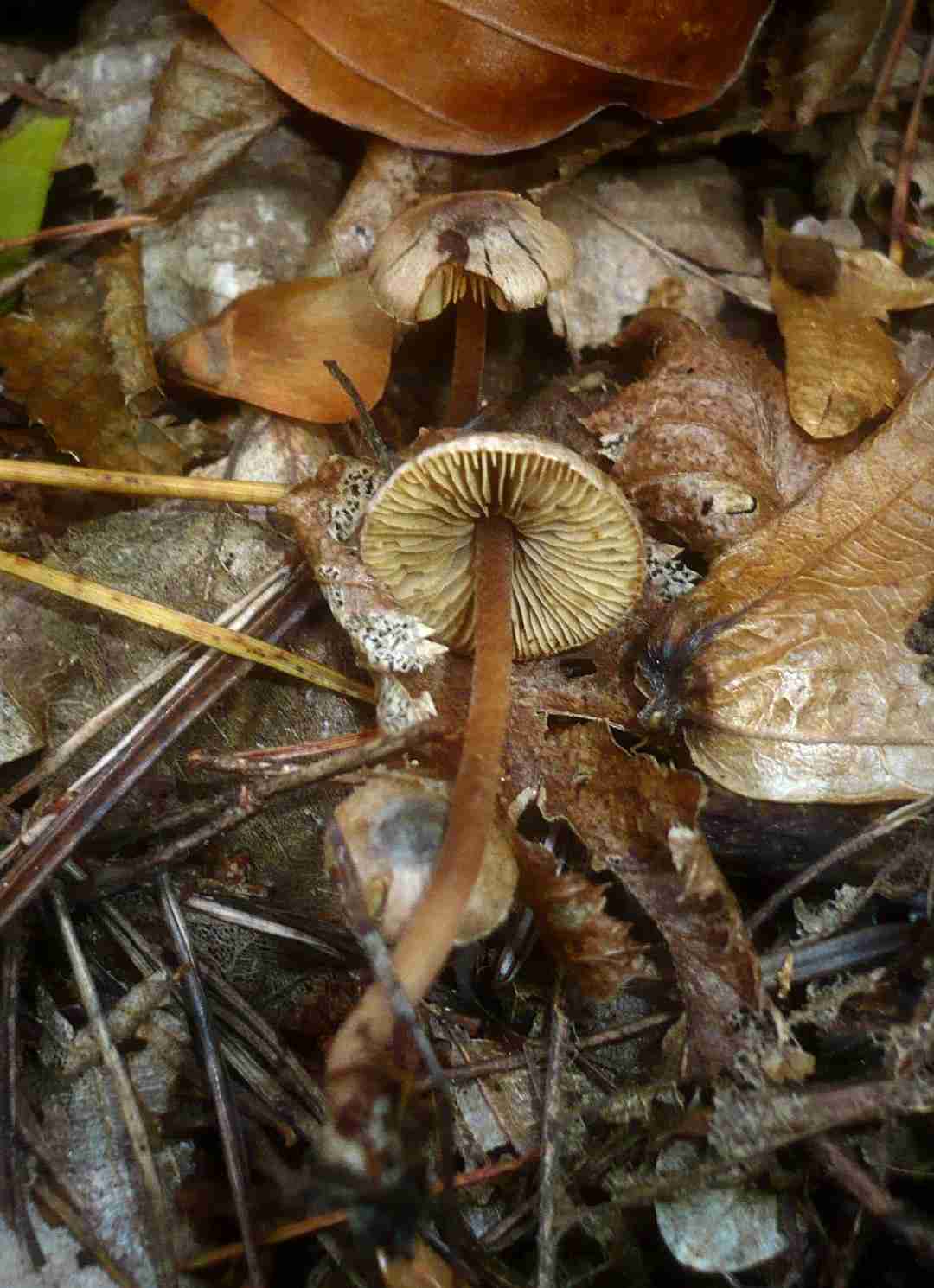
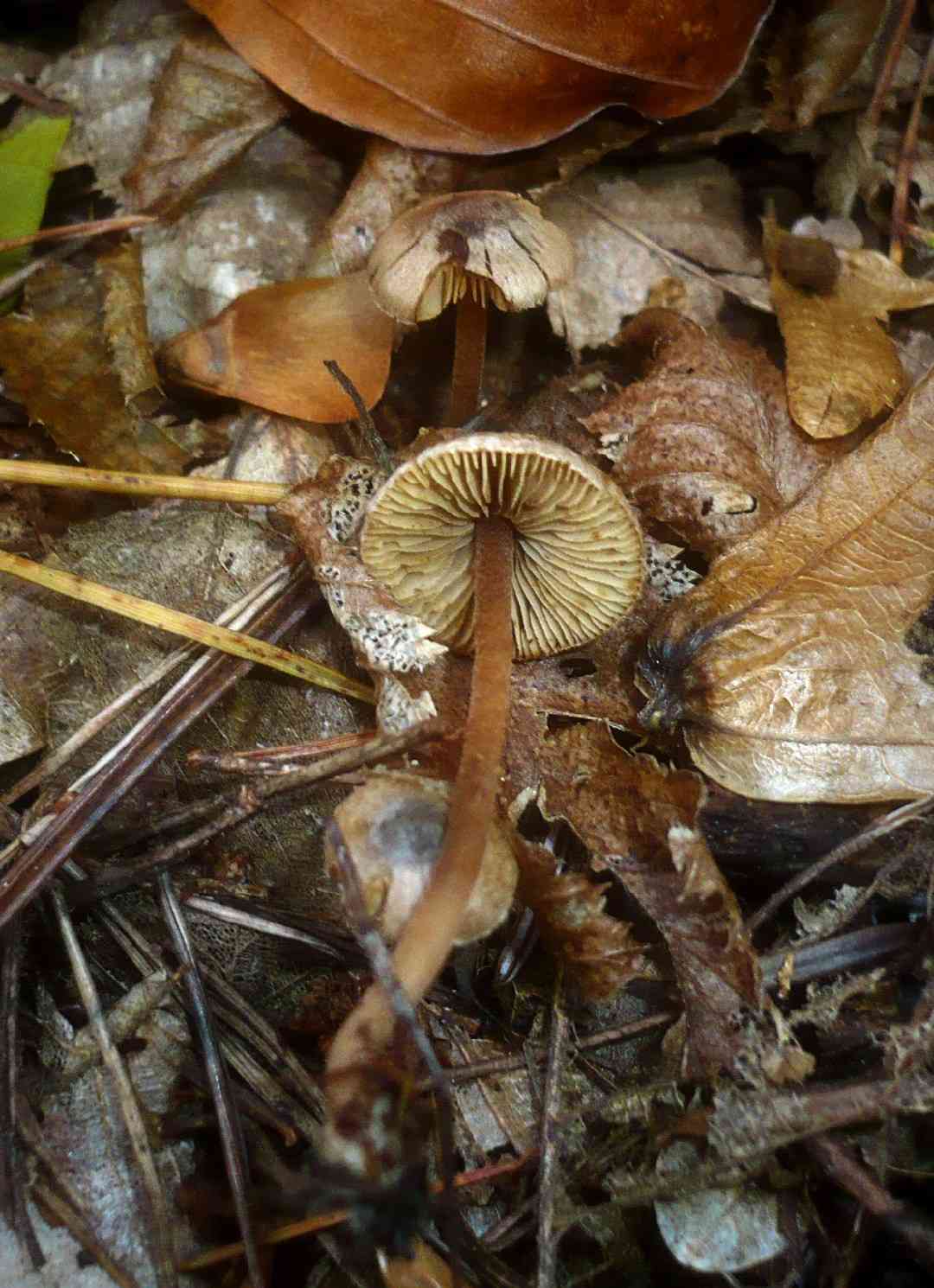
Scurfy fibrecap

Inocybe petiginosa

A species of Fiber caps.

The Inosperma maculatum, a fungi recognized by its unique brownish cap that appears somewhat rough or scaly, frequently thrives in diverse woodlands, especially those with a strong presence of oak trees. Its fruiting season generally spans from summer through autumn. The existence of this mushroom plays a role in enhancing the variety of life forms and maintaining ecological equilibrium within its surroundings.

In This Article
Attributes Classification Toxicity

Attributes of Scurfy fibrecap

ForwardPlant - ID plants and mushrooms, and learn more about them🌿

Identify and diagnose plants, get toxicity alerts, and explore safety guides for all types of fungi.

Try for Free
Cap Diameter
1 - 3 cm
Height
3 - 8 cm
Cap
Cap 5 - 15 mm across; convex to obtusely umbonate; whitish, brown; with scales to silky-fibrous
Cap Shape
Convex, Central Bump
Cap Surfaces
Fibrillose-scaly
Gills
Free to adnexed; broad; cream to brown
Gill Attachment
Free
Stem
Stem 1.5 - 3 cm long, 1 - 2 mm thick; cylindrical; pinkish brown to gray; elastic
Stem Shapes
Cylindrical
Flesh
Thin; creamy yellow to reddish yellow
Ring
Ringless
Spore Print Color
Snuff brown
Odor
Mildly spermatophoric to non-distinctive.
Body Color
BrownGrayCream
Flesh Bruises
The flesh or milk does not discolor when bruised or cut.
Growth Form
Scattered, Gregarious
Nutrient Gathering
Mycorrhizal
Substrate
On soil
You can find Scurfy fibrecap by these plants
Oaks, European beech
Species Status
Quite common
Endangered Species
No

Scientific Classification of Scurfy fibrecap

ForwardPlant APP

AI mushroom expert in your pocket

Try for Free
Phylum
Club fungi
Class
Mushroom-forming fungi
Order
Gilled fungi
Family
Inocybaceae
Genus
Fiber caps
⚠️

Toxicity and Edibility of Scurfy fibrecap

ForwardPlant: Identify & Forage

Your Essential Guide to Edible vs. Toxic Mushrooms. Forage with Confidence!

Try for Free

Is Scurfy fibrecap Toxic?

The neurotoxic mushroom, *Inocybe scurfuda*, often appears in diverse environments, though it shows a preference for damp soil conditions and warmer periods. Identified by its unique physical traits, consuming this fungus can trigger significant health problems. Symptoms observed include impaired cognition, pupil constriction, and muscle weakness, escalating in severe instances to a sharp fall in blood pressure, gastrointestinal distress, and profound asthmatic responses.


Toxins type
Muscarine
Type of poisoning
Neurotoxic
Toxic Severity
High toxicity
Incubation Period
0.25-4 hours
Poisoning Symptoms
Nerve toxin, consciousness clouding, pupil shrinkage, paralysis, perspiration, blood pressure drop, digestion issues, vomiting, diarrhea, severe asthma in extreme cases.