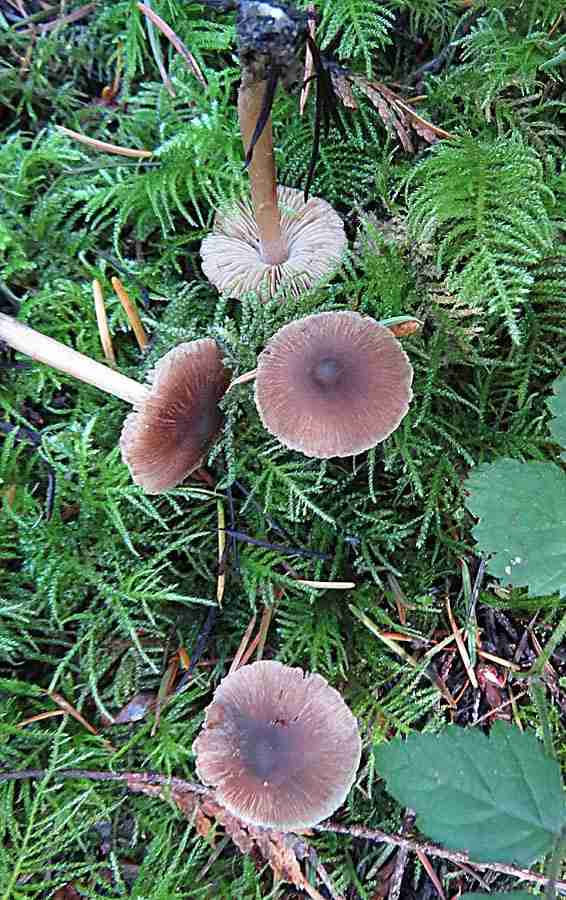
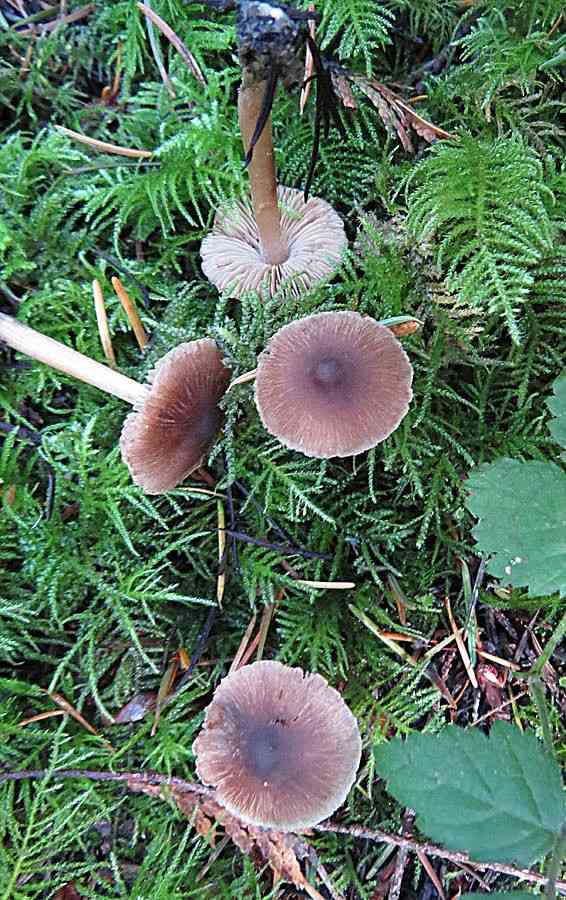
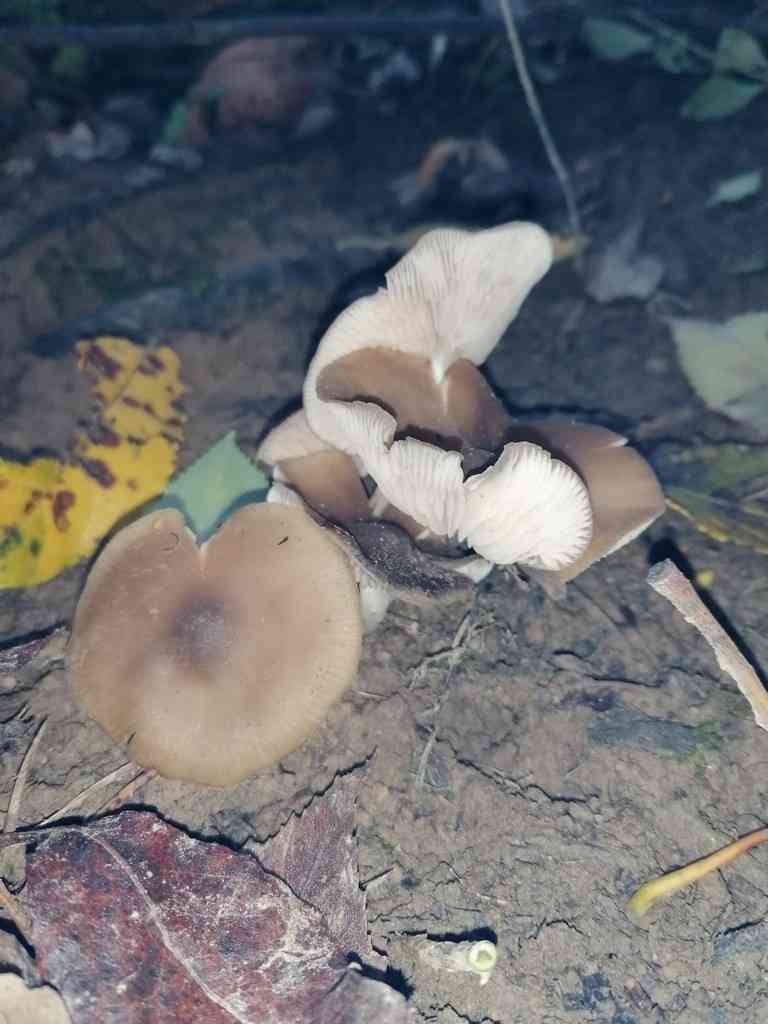
Inocybe nitidiuscula

Inocybe nitidiuscula

A species of Fiber caps.

Inocybe nitidiuscula is a member of a fungal family characterized by its fibrous cap and stalk. This species typically thrives in woodland soils abundant with decomposing organic material. It exhibits a unique cap whose form evolves over time, and a stem with a delicate texture. Inocybe nitidiuscula contributes to various ecosystems and can be observed across different climatic zones during its reproductive period.

In This Article
Attributes Classification Toxicity

Attributes of Inocybe nitidiuscula

ForwardPlant - ID plants and mushrooms, and learn more about them🌿

Identify and diagnose plants, get toxicity alerts, and explore safety guides for all types of fungi.

Try for Free
Cap Diameter
2 - 5 cm
Height
1 - 7 cm
Cap
Cap 1 - 4 cm across; conic-convex to applanate; brown, gray brown; with radially fibrous from fibrils
Cap Shape
Bell-shaped, Central Bump
Cap Surfaces
Fibrillose-scaly
Gills
Sinuate, adnate; broad; white, cream
Gill Attachment
Attached
Stem
Stem 2.5 - 8 cm long, 3 - 7 mm thick; club-shaped; white, orange to pinkish; with hairs
Stem Shapes
Cylindrical
Flesh
Thin; white, pale pink
Ring
Ringless
Spore Print Color
Brown
Odor
Mildly earthy or faintly spermatic scent.
Body Color
Brown
Flesh Bruises
The flesh or milk does not discolor when bruised or cut.
Growth Form
Solitary, Scattered
Nutrient Gathering
Mycorrhizal
Substrate
On soil
You can find Inocybe nitidiuscula by these plants
Oaks, Pines, Spruces, Firs
Endangered Species
No

Scientific Classification of Inocybe nitidiuscula

ForwardPlant APP

AI mushroom expert in your pocket

Try for Free
Phylum
Club fungi
Class
Mushroom-forming fungi
Order
Gilled fungi
Family
Inocybaceae
Genus
Fiber caps
⚠️

Toxicity and Edibility of Inocybe nitidiuscula

ForwardPlant: Identify & Forage

Your Essential Guide to Edible vs. Toxic Mushrooms. Forage with Confidence!

Try for Free

Is Inocybe nitidiuscula Toxic?

Inocybe nitidiuscula is a mushroom that contains neurotoxins and can be encountered in diverse environments, circumstances, and times of the year. Consuming it may lead to symptoms such as impaired consciousness, constricted pupils, muscle weakness, profuse perspiration, a decrease in blood pressure, and digestive problems like sickness and loose stools. In serious instances, it has the potential to induce severe asthma attacks. This particular mushroom can be identified by its distinctive physical characteristics.


Toxins type
Muscarine
Type of poisoning
Neurotoxic
Toxic Severity
High toxicity
Incubation Period
0.25-4 hours
Poisoning Symptoms
Nerve toxin, consciousness clouding, pupil shrinkage, paralysis, perspiration, blood pressure drop, digestion issues, vomiting, diarrhea, severe asthma in extreme cases.