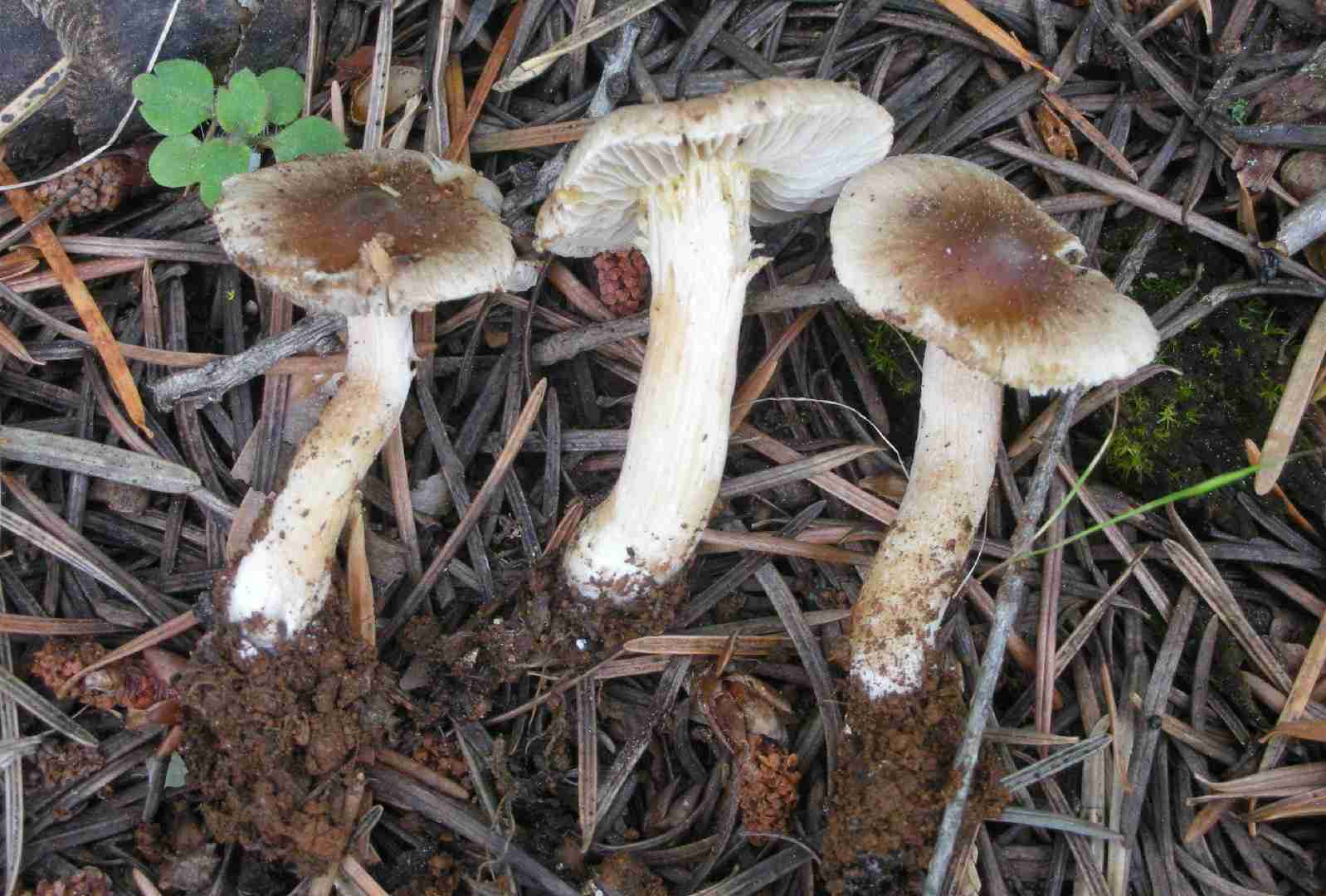
Bulbous fibrecap

Inocybe napipes

A species of Fiber caps.

Characterized by its swollen base and a cap composed of numerous fibers, the bulbous fibrecap is a notable fungus. This species commonly forms mycorrhizal associations with broadleaf trees, playing a beneficial role in maintaining the health of forest environments. Its cap exhibits a range of brown hues, and underneath, its gills are densely arranged. It flourishes in moderate climates, frequently emerging from damp woodland soil during periods of active growth.

In This Article
Attributes Classification Toxicity

Attributes of Bulbous fibrecap

ForwardPlant - ID plants and mushrooms, and learn more about them🌿

Identify and diagnose plants, get toxicity alerts, and explore safety guides for all types of fungi.

Try for Free
Cap Diameter
2 - 7 cm
Height
3 - 9 cm
Cap
Cap 2 - 5 cm across; hazelnut brown to dull brown; surface smooth
Cap Shape
Central Bump
Cap Surfaces
Fibrillose-scaly
Gills
Adnate; crowded; whitish to pale brown
Gill Attachment
Attached
Stem
Stem 3 - 7 cm long, 5 - 10 mm thick; bulbous; whitish, brown
Stem Shapes
Bulbous
Flesh
Thin; firm; whitish
Ring
Ringless
Spore Print Color
Tobacco brown
Odor
Reminiscent of earthballs, distinctly earthy.
Body Color
BrownYellowWhite
Flesh Bruises
The flesh or milk does not discolor when bruised or cut.
Growth Form
Solitary, Scattered
Substrate
On soil
You can find Bulbous fibrecap by these plants
Spruces, Oaks
Species Status
Frequent
Endangered Species
No

Scientific Classification of Bulbous fibrecap

ForwardPlant APP

AI mushroom expert in your pocket

Try for Free
Phylum
Club fungi
Class
Mushroom-forming fungi
Order
Gilled fungi
Family
Inocybaceae
Genus
Fiber caps
⚠️

Toxicity and Edibility of Bulbous fibrecap

ForwardPlant: Identify & Forage

Your Essential Guide to Edible vs. Toxic Mushrooms. Forage with Confidence!

Try for Free

Is Bulbous fibrecap Toxic?

In humid, moss-rich areas, particularly under coniferous trees during wet seasons, one might encounter the neurotoxic mushroom known as 'Bulbous Fibrecap'. This fungus can lead to severe health problems, including impaired consciousness, paralysis, digestive disturbances, and, in dire situations, acute asthma. Its defining characteristic, which differentiates it from harmless species, is its distinctively bulbous stem base.


Toxins type
Muscarine
Type of poisoning
Neurotoxic
Toxic Severity
High toxicity
Incubation Period
0.25-4 hours
Poisoning Symptoms
Nerve toxin, consciousness clouding, pupil shrinkage, paralysis, perspiration, blood pressure drop, digestion issues, vomiting, diarrhea, severe asthma in extreme cases.