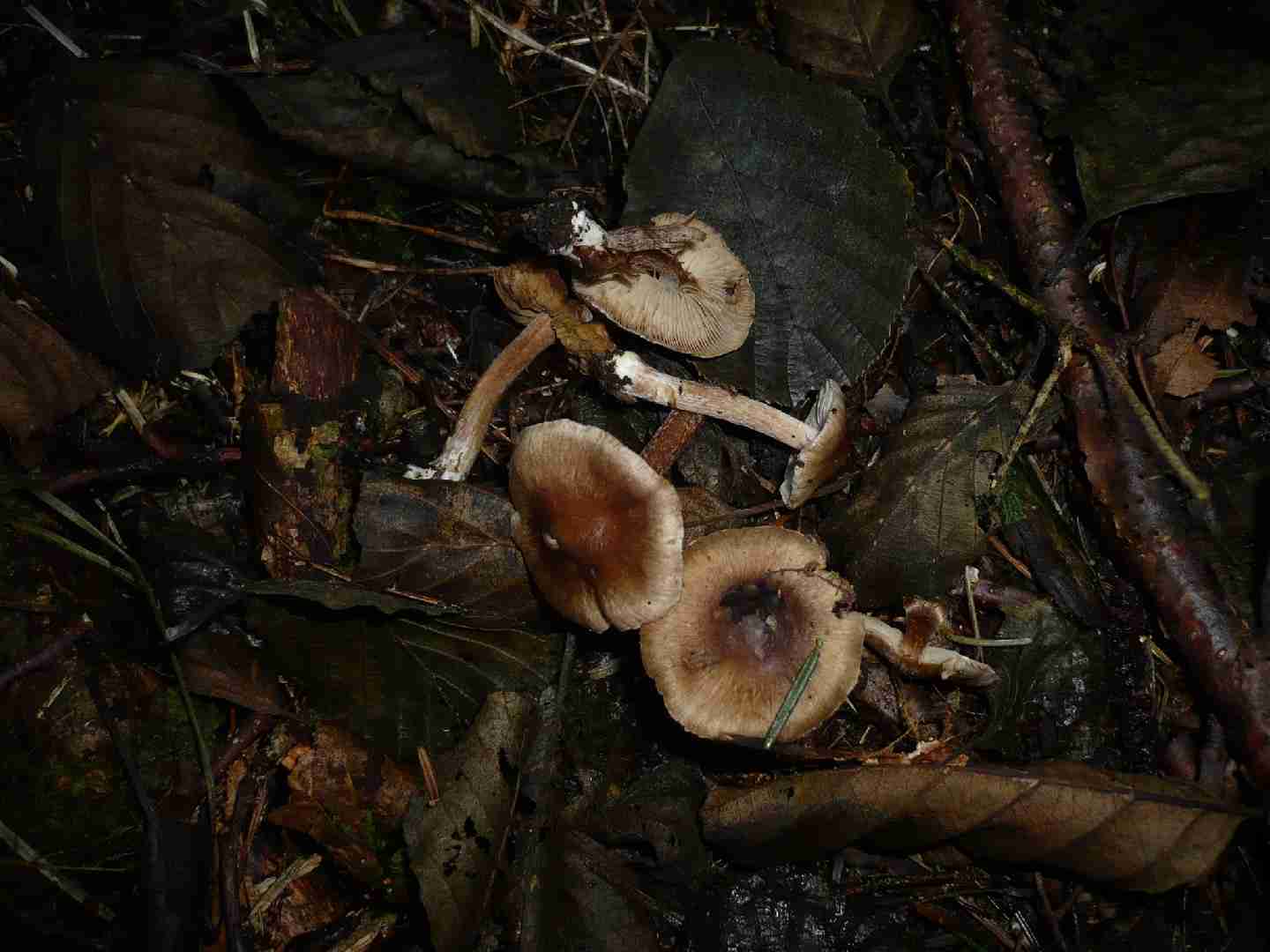
Inocybe acuta

Inocybe acuta

A species of Fiber caps.

Inocybe acuta is predominantly found in moderate climates, flourishing in forested environments. It's identifiable by its cap, which presents a conical or campanulate form and may feature a pointed apex. The cap's exterior frequently exhibits fibrous patterns and undergoes color changes over time. Beneath its cap, Inocybe acuta possesses gills that start light-colored and progressively darken with age. Its growth primarily occurs during the colder seasons.

In This Article
Attributes Classification Toxicity

Attributes of Inocybe acuta

ForwardPlant - ID plants and mushrooms, and learn more about them🌿

Identify and diagnose plants, get toxicity alerts, and explore safety guides for all types of fungi.

Try for Free
Cap Diameter
1 - 4 cm
Cap Shape
Bell-shaped, Central Bump
Cap Surfaces
Fibrillose-scaly
Gill Attachment
Notched
Stem Shapes
Cylindrical
Ring
Ringless
Spore Print Color
Brown
Odor
Mildly mushroomy but not distinctive
Flesh Bruises
The flesh or milk does not discolor when bruised or cut.
Nutrient Gathering
Mycorrhizal
Substrate
On soil
You can find Inocybe acuta by these plants
Oaks, Willows, Sweetgale

Scientific Classification of Inocybe acuta

ForwardPlant APP

AI mushroom expert in your pocket

Try for Free
Phylum
Club fungi
Class
Mushroom-forming fungi
Order
Gilled fungi
Family
Inocybaceae
Genus
Fiber caps
⚠️

Toxicity and Edibility of Inocybe acuta

ForwardPlant: Identify & Forage

Your Essential Guide to Edible vs. Toxic Mushrooms. Forage with Confidence!

Try for Free

Is Inocybe acuta Toxic?

Inocybe acuta, a mushroom with neurotoxic properties, can cause a range of symptoms including impaired consciousness, miosis, muscle weakness, increased sweating, decreased blood pressure, gastrointestinal distress, and emesis. In severe instances, exposure may trigger significant asthmatic episodes. Due to its potentially harmful effects, consumption of Inocybe acuta should always be avoided, even though it lacks distinctive visual characteristics. Its geographical distribution and seasonal occurrence are currently not documented.


Toxins type
Muscarine
Type of poisoning
Neurotoxic
Toxic Severity
High toxicity
Incubation Period
0.25-4 hours
Poisoning Symptoms
Nerve toxin, consciousness clouding, pupil shrinkage, paralysis, perspiration, blood pressure drop, digestion issues, vomiting, diarrhea, severe asthma in extreme cases.