Velvet tooth
Hydnellum spongiosipes
A species of Hydnellum.
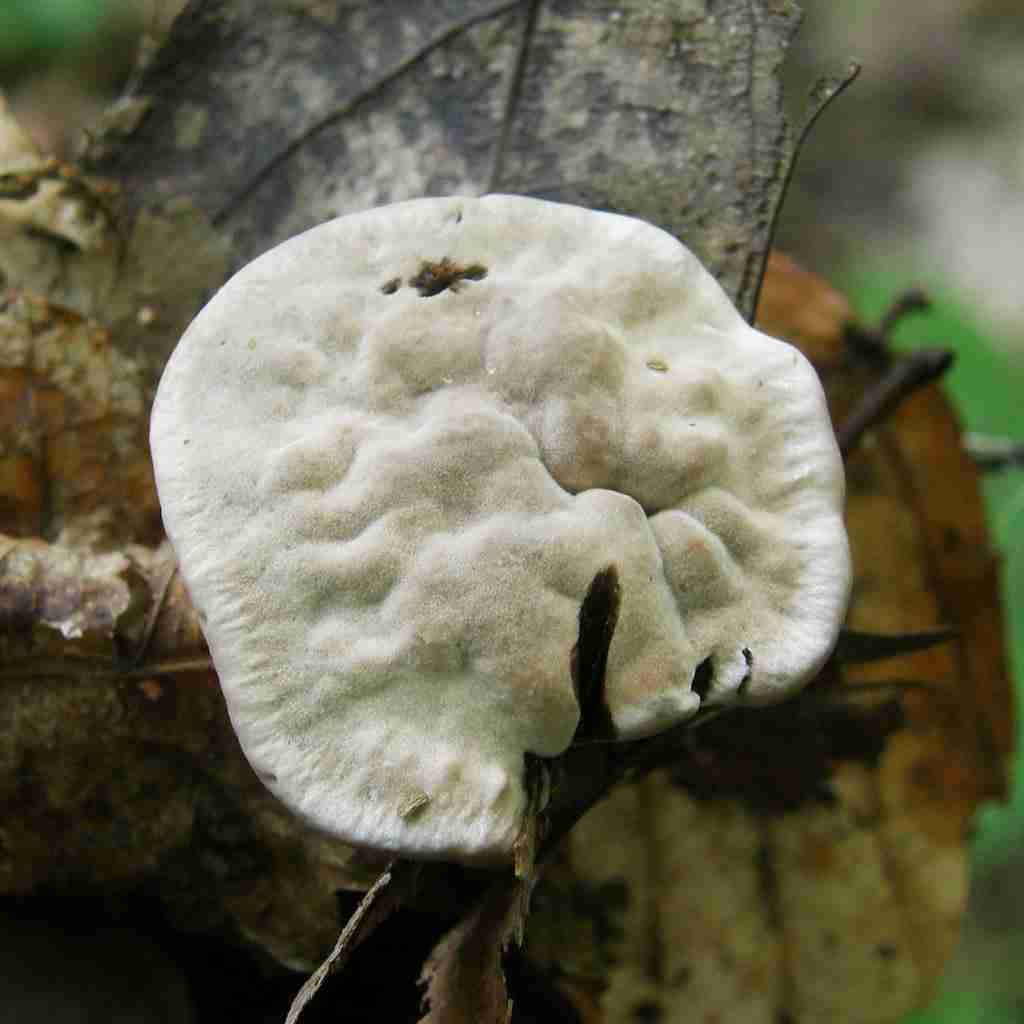
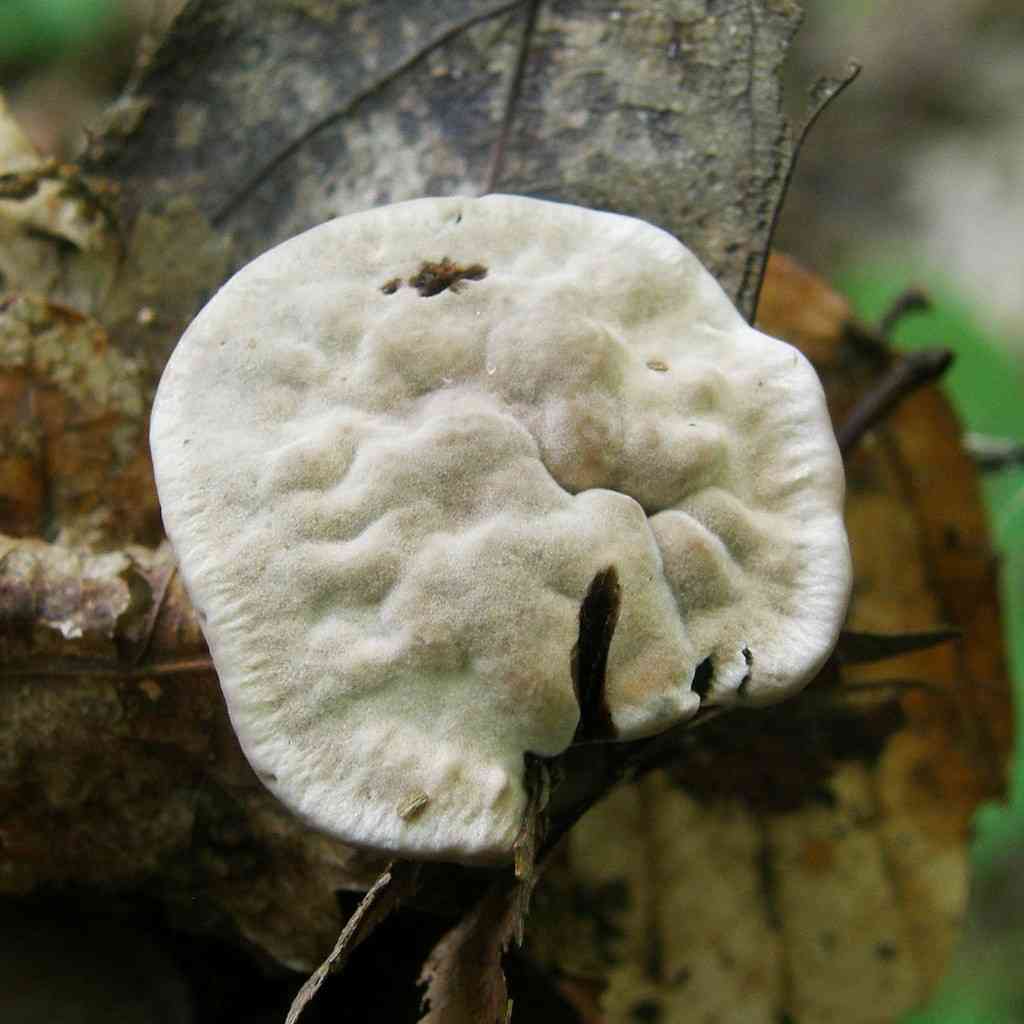
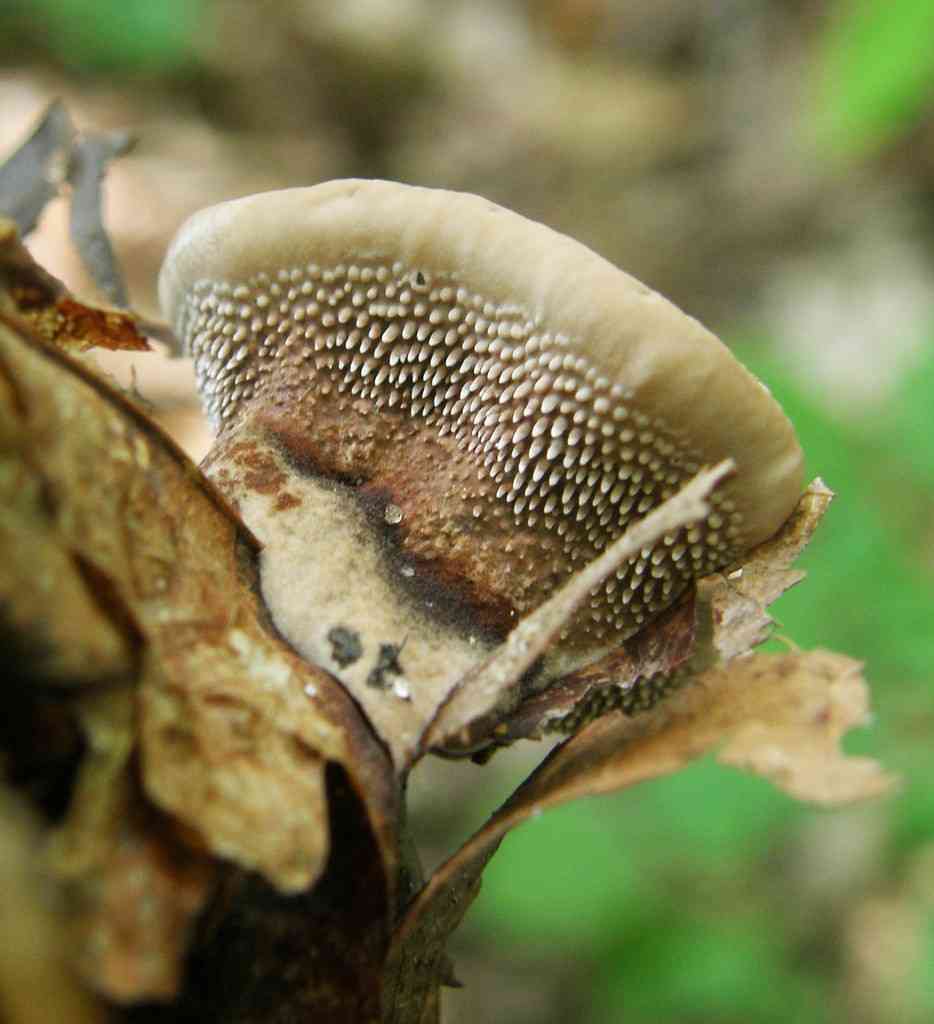
Found beneath hardwood trees, the Velvet tooth fungus possesses a unique, somewhat cork-like texture. Its rapid growth often leads it to entirely cover fallen twigs and leaves. It's common for several individual fruiting bodies to merge, forming a single, expansive mat. True to its name, Velvet tooth is characterized by a soft, velvety top surface and distinctive tooth-like projections on its underside.
In This Article
Attributes of Velvet tooth
Cap Diameter
2 - 10 cm
Height
4 - 12 cm
Cap
Cap 2 - 10 cm wide; convex, flat; brown; velvety; display dark brown when paler areas bruised
Cap Shape
Convex, Flat
Cap Surfaces
Velvety
Stem
Stem 3 - 10 cm long, 1 - 3 cm thick at apex; club-shaped, swollen and much thicker below, spongy; dark brown; velvety
Stem Shapes
Club Shaped
Stem Surfaces
Velvety
Flesh
Upper layer fairly soft, lower layer corky; brown
Ring
Ringless
Spore Print Color
Brown
Odor
Mild, non-distinctive, with possible mealy notes.
Body Color
Brown
Flesh Bruises
The flesh or milk does not discolor when bruised or cut.
Growth Form
Solitary, Gregarious
Nutrient Gathering
Mycorrhizal
Substrate
On soil
You can find Velvet tooth by these plants
White oak, Oaks
Occurence Habitats
Deciduous Woodland
Species Status
Widely distributed east of the Rocky Mountains
Endangered Species
No
Scientific Classification of Velvet tooth
Phylum
Club fungi
Class
Mushroom-forming fungi
Order
Thelephorales
Family
Bankeraceae
Genus
Hydnellum
Toxicity and Edibility of Velvet tooth
Is Velvet tooth Toxic?
Toxicity information is not available for this mushroom. Always consult with an expert before consuming any wild mushrooms.