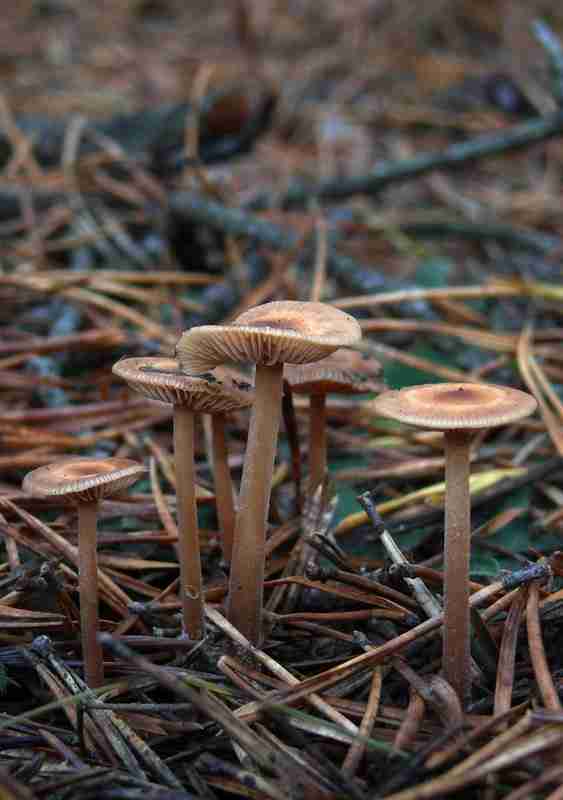
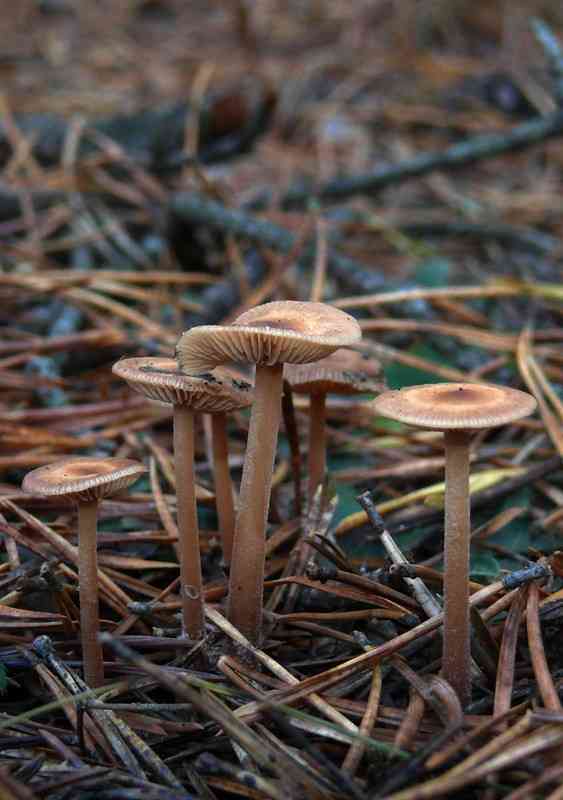
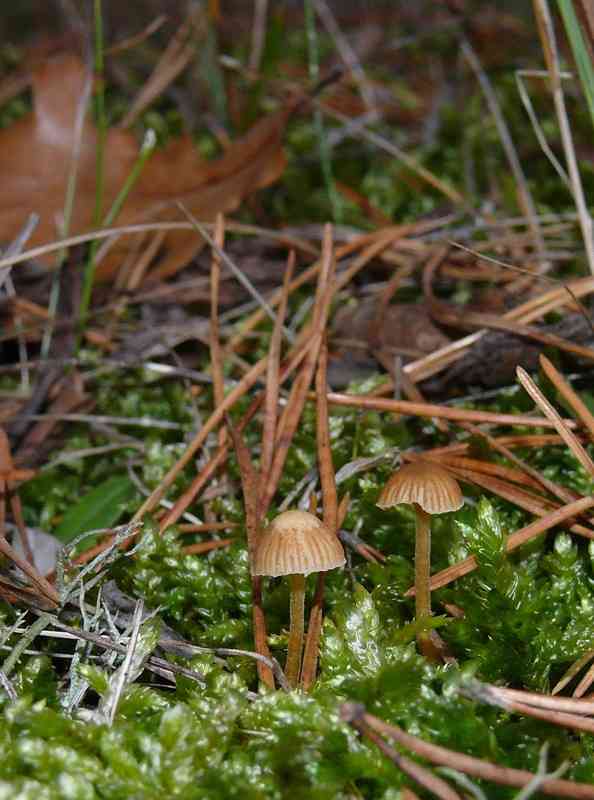
Pine toughshank
Gymnopus putillus
A species of Gymnopus.
Mycena acicula, a diminutive fungus, usually appears in clusters across the forest floor. It frequently takes root on decaying timber and leaf debris. This species is characterized by its smooth, light-colored cap and a thin, resilient stem. It flourishes in moderate climates and is most abundant during autumn. Its existence serves as a quiet yet significant element within the woodland environment.
In This Article
Attributes of Pine toughshank
Cap Diameter
1 - 7 cm
Cap Shape
Convex, Flat, Depressed
Cap Surfaces
Visible lines or stripes
Gill Attachment
Notched
Stem Shapes
Cylindrical
Ring
Ringless
Spore Print Color
White
Odor
Mildly mushroomy but not distinctive.
Flesh Bruises
The flesh or milk does not discolor when bruised or cut.
Nutrient Gathering
Saprophytic
Substrate
On soil
Scientific Classification of Pine toughshank
Phylum
Club fungi
Class
Mushroom-forming fungi
Order
Gilled fungi
Family
Marasmiaceae
Genus
Gymnopus
Toxicity and Edibility of Pine toughshank
Is Pine toughshank Toxic?
Toxicity information is not available for this mushroom. Always consult with an expert before consuming any wild mushrooms.

