Luxury caps
Gymnopus luxurians
A species of Gymnopus.
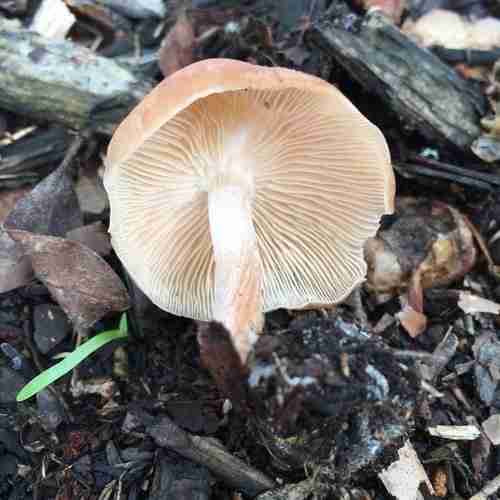
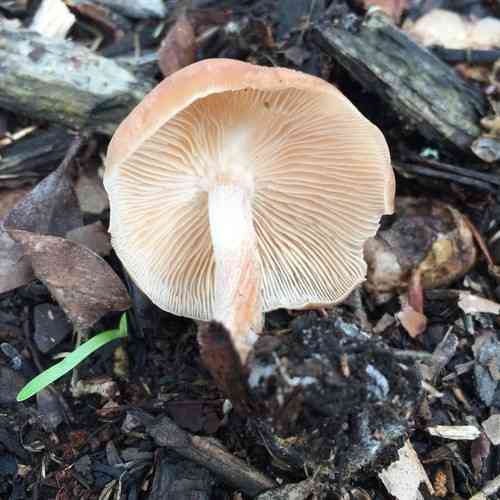
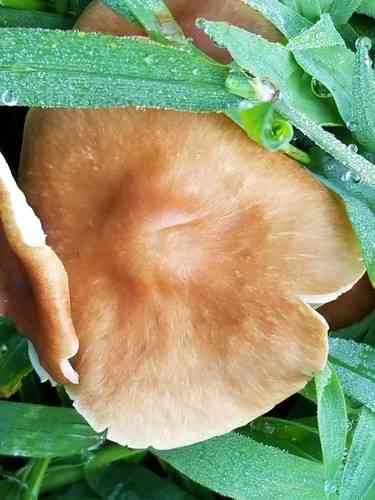
Gymnopus luxurians, also known as the Luxury cap, frequently appears amidst woodchips and decomposing garden debris. Its identifying feature is a cap that gradually turns upwards with age. Initially, the cap displays a brownish-orange center that lightens to a creamy white at the edges, eventually transitioning to a mature pinkish-buff shade.
In This Article
Attributes of Luxury caps
Cap Diameter
3 - 11 cm
Height
4 - 10 cm
Cap
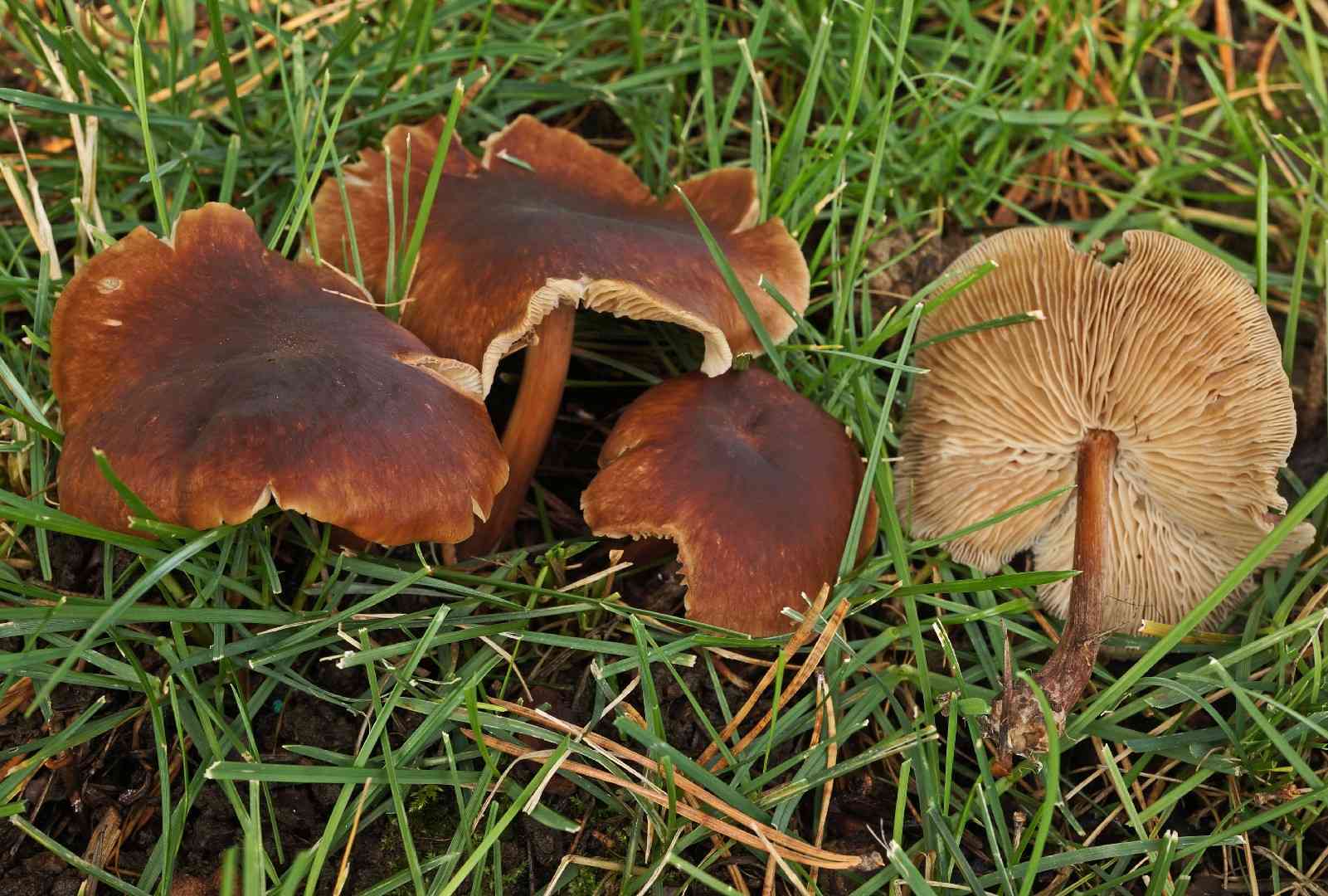
Cap 3 - 11 cm across; convex, broadly bell-shaped, flat; dark reddish brown; margin slightly lined
Cap Shape
Convex, Bell-shaped, Flat
Cap Surfaces
Smooth, Visible lines or stripes
Gills
Narrowly attached; close; whitish, darkening to pale pinkish tan
Gill Attachment
Notched
Stem
Stem 4 - 7 cm long, 4 - 15 mm thick; slightly enlarged base; whitish; surface finely silky or finely dusted
Stem Shapes
Cylindrical
Stem Surfaces
Ribbed
Flesh
Whitish to pale pinkish tan; unchanging when sliced
Ring
Ringless
Spore Print Color
White to creamy white
Odor
Mild, non-distinctive or faintly fragrant.
Body Color
BrownBlackRedWhitePink
Flesh Bruises
The flesh or milk does not discolor when bruised or cut.
Growth Form
Gregarious, Clustered
Nutrient Gathering
Saprophytic
Substrate
Wood Chips or Mulch, On soil, Dead Woods
Occurence Habitats
Disturbed Lands
Species Status
Widely distributed
Endangered Species
No
Scientific Classification of Luxury caps
Phylum
Club fungi
Class
Mushroom-forming fungi
Order
Gilled fungi
Family
Marasmiaceae
Genus
Gymnopus
Toxicity and Edibility of Luxury caps
Is Luxury caps Toxic?
Toxicity information is not available for this mushroom. Always consult with an expert before consuming any wild mushrooms.

