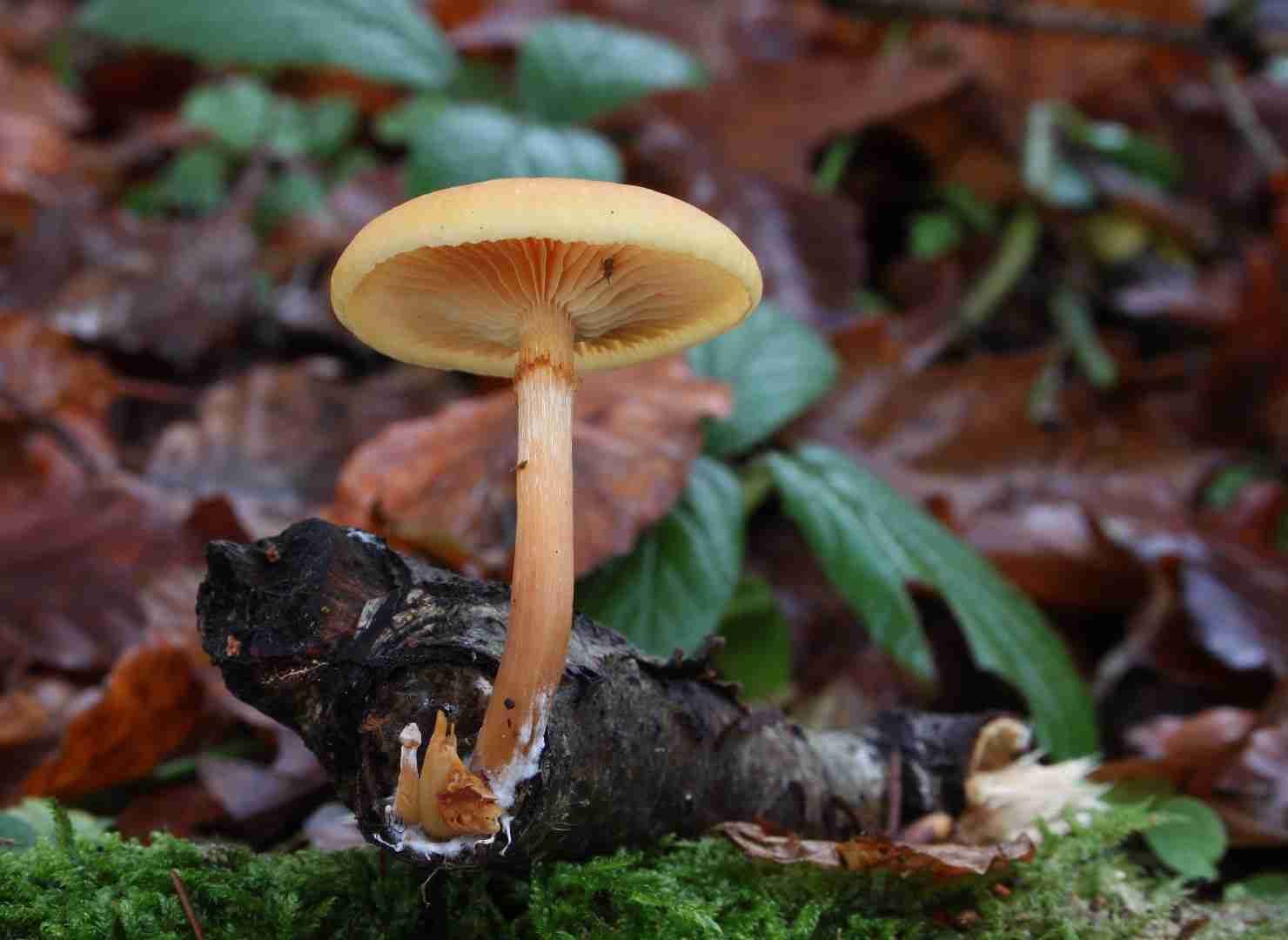
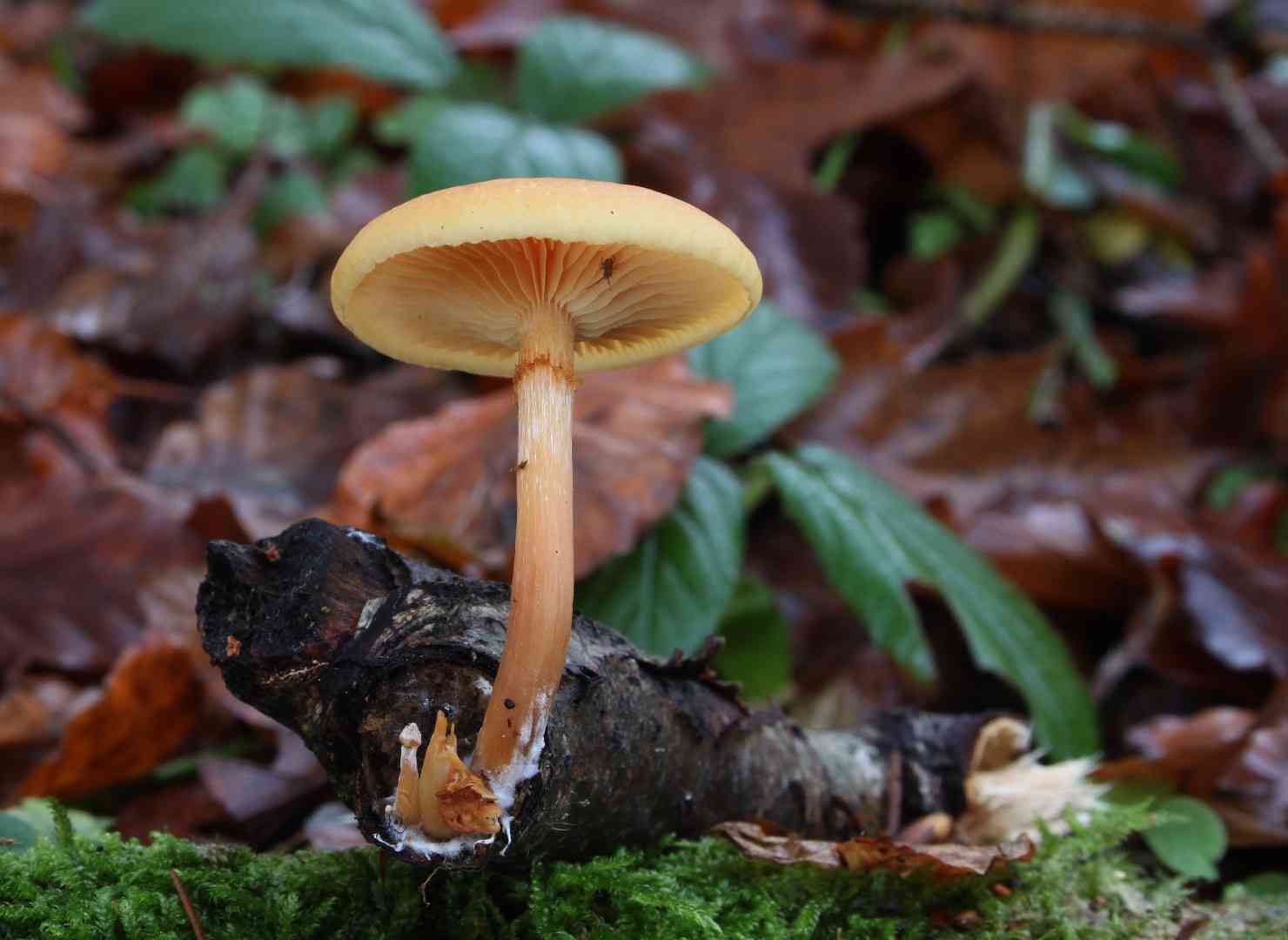
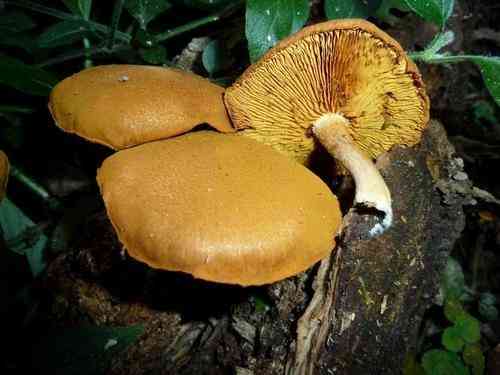
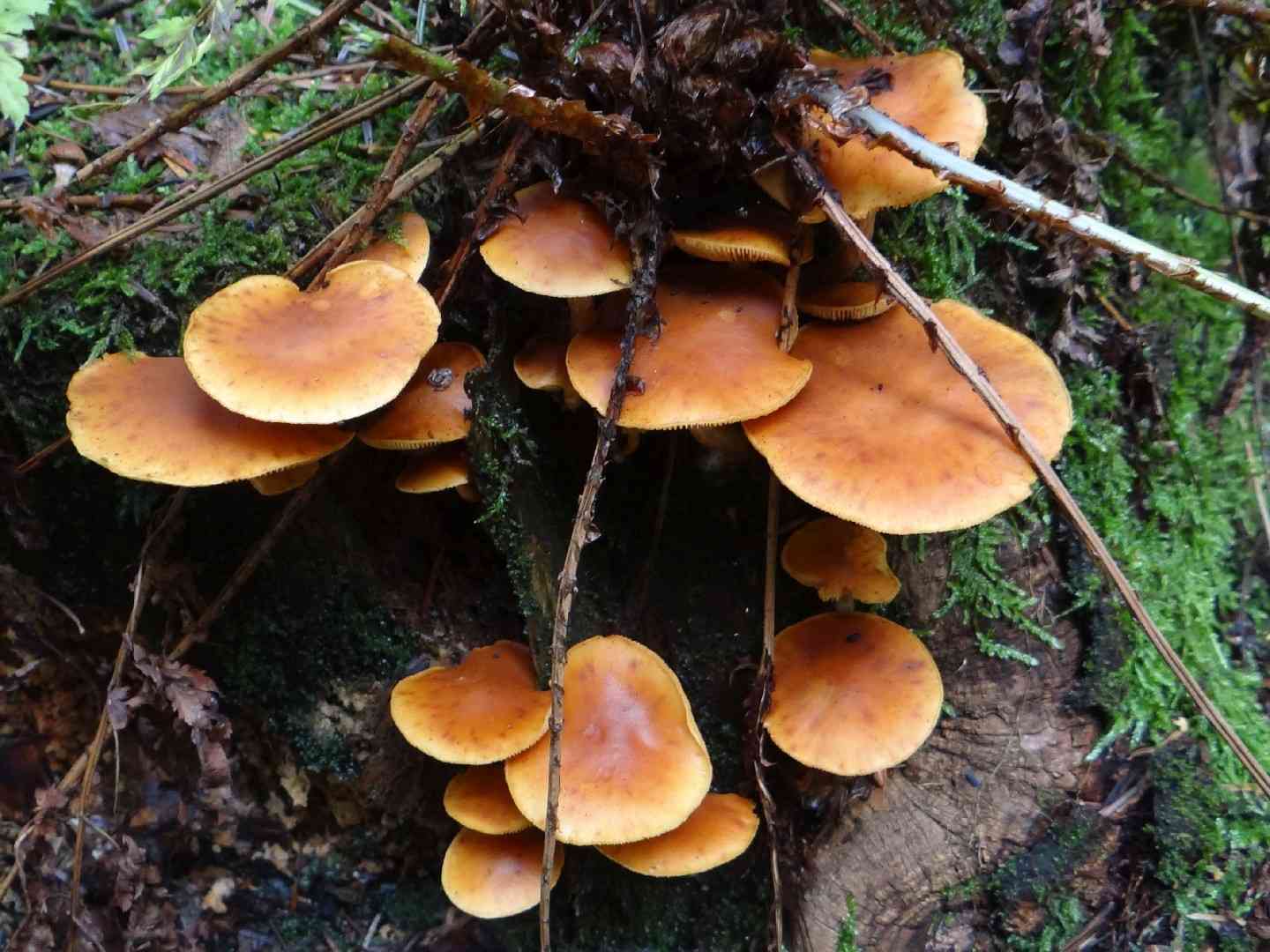
Common rustgill

Gymnopilus penetrans

A species of Rustgills.

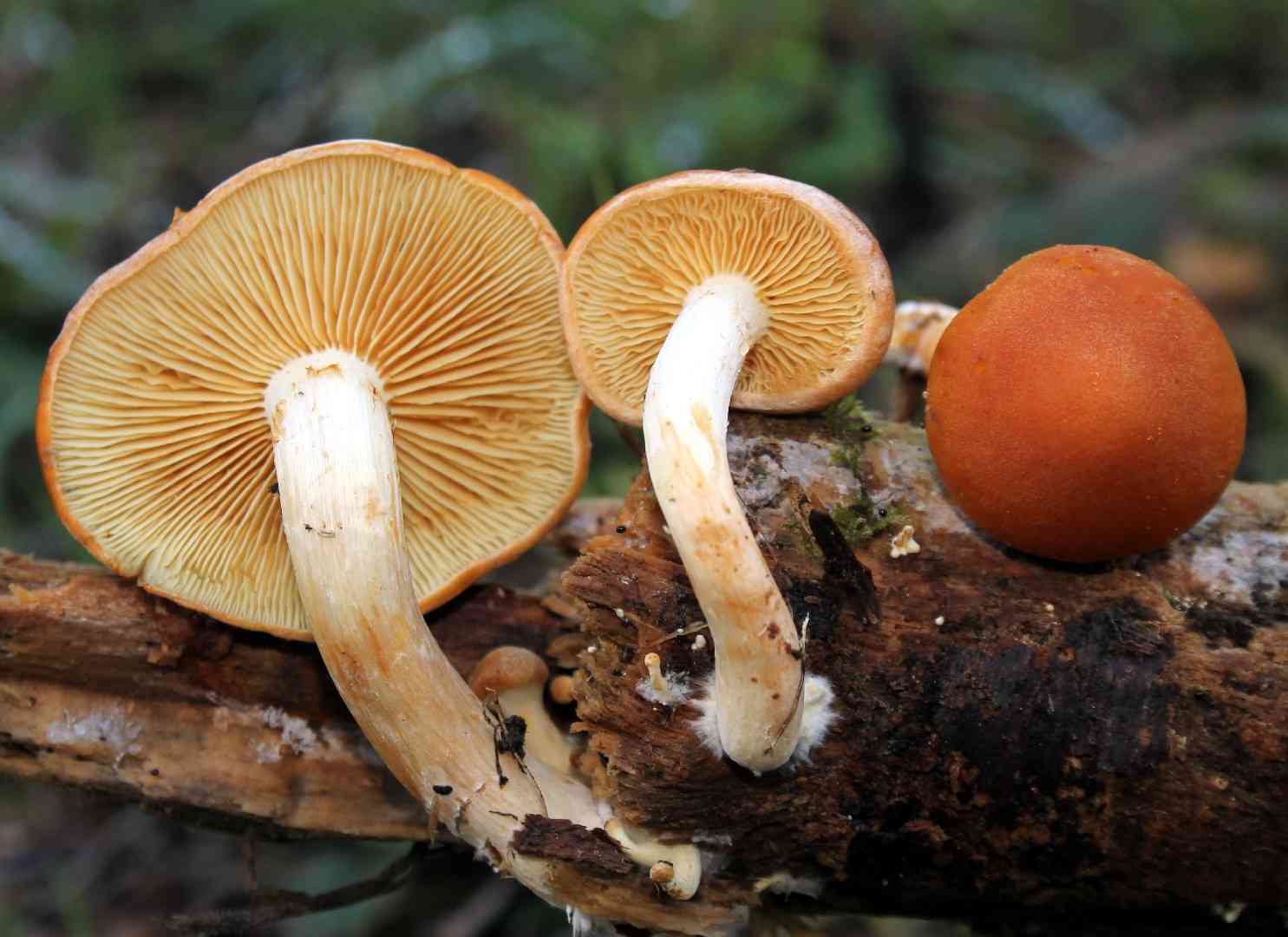
The widespread common rustgill mushroom frequently appears in clusters within temperate zones globally. Gardeners sometimes introduce this fungus into wood chip mulch to inhibit weed proliferation in their landscaping. These mushrooms are known to be quite toxic and consumption should be avoided.

In This Article
Attributes Classification Toxicity Similar Mushrooms

Attributes of Common rustgill

ForwardPlant - ID plants and mushrooms, and learn more about them🌿

Identify and diagnose plants, get toxicity alerts, and explore safety guides for all types of fungi.

Try for Free
Cap Diameter
3 - 9 cm
Height
4 - 8 cm
Cap
Cap 4 - 8 cm across; flat; orange-brown; smooth
Cap Shape
Convex, Flat, Depressed
Cap Surfaces
Fibrillose-scaly, Velvety
Gills
Adnate; crowded; yellow, brown
Gill Attachment
Notched
Stem
Stem 4 - 7 cm long, 6 - 12 mm thick; yellow, orange-brown
Stem Shapes
Cylindrical
Stem Surfaces
Fibrillose
Flesh
Thin; tawny
Ring
Ringless
Spore Print Color
Rusty orange-brown
Odor
Faintly fruity when fresh; intensifies upon cutting.
Body Color
BrownYellowRedOrange
Flesh Bruises
The flesh or milk does not discolor when bruised or cut.
Growth Form
Gregarious
Nutrient Gathering
Saprophytic
Substrate
Dead Woods, Wood Chips or Mulch
You can find Common rustgill by these plants
Spruces, Pines, Firs
Occurence Habitats
Coniferous Woodland, Disturbed Lands
Species Status
Fairly common and widespread
Endangered Species
No

Scientific Classification of Common rustgill

ForwardPlant APP

AI mushroom expert in your pocket

Try for Free
Phylum
Club fungi
Class
Mushroom-forming fungi
Order
Gilled fungi
Family
Hymenogastraceae
Genus
Rustgills
⚠️

Toxicity and Edibility of Common rustgill

ForwardPlant: Identify & Forage

Your Essential Guide to Edible vs. Toxic Mushrooms. Forage with Confidence!

Try for Free

Is Common rustgill Toxic?

Common rustgill, due to its bitter flavor and potential for harm, is not considered suitable for consumption. Numerous species within the Gymnopilus family are known to be highly poisonous. Although it predominantly thrives on the remnants of conifers, other organic matter, deciduous trees, and woodchips, the existence of psilocybin in this specific species is unconfirmed. Therefore, to ensure safety, all fungi belonging to the Gymnopilus genus, including the common rustgill, should be regarded as toxic.

Toxic Severity
Low to high toxicity
Incubation Period
0.5-6 hours
Poisoning Symptoms
Digestive issues, vertigo, vision complications, blood circulation troubles.

More Mushrooms That Are Similar to Common rustgill
