Pig's ears
Gomphus clavatus
A species of Gomphus. Also known as Pig's-ear gomphus, Pig's ear.
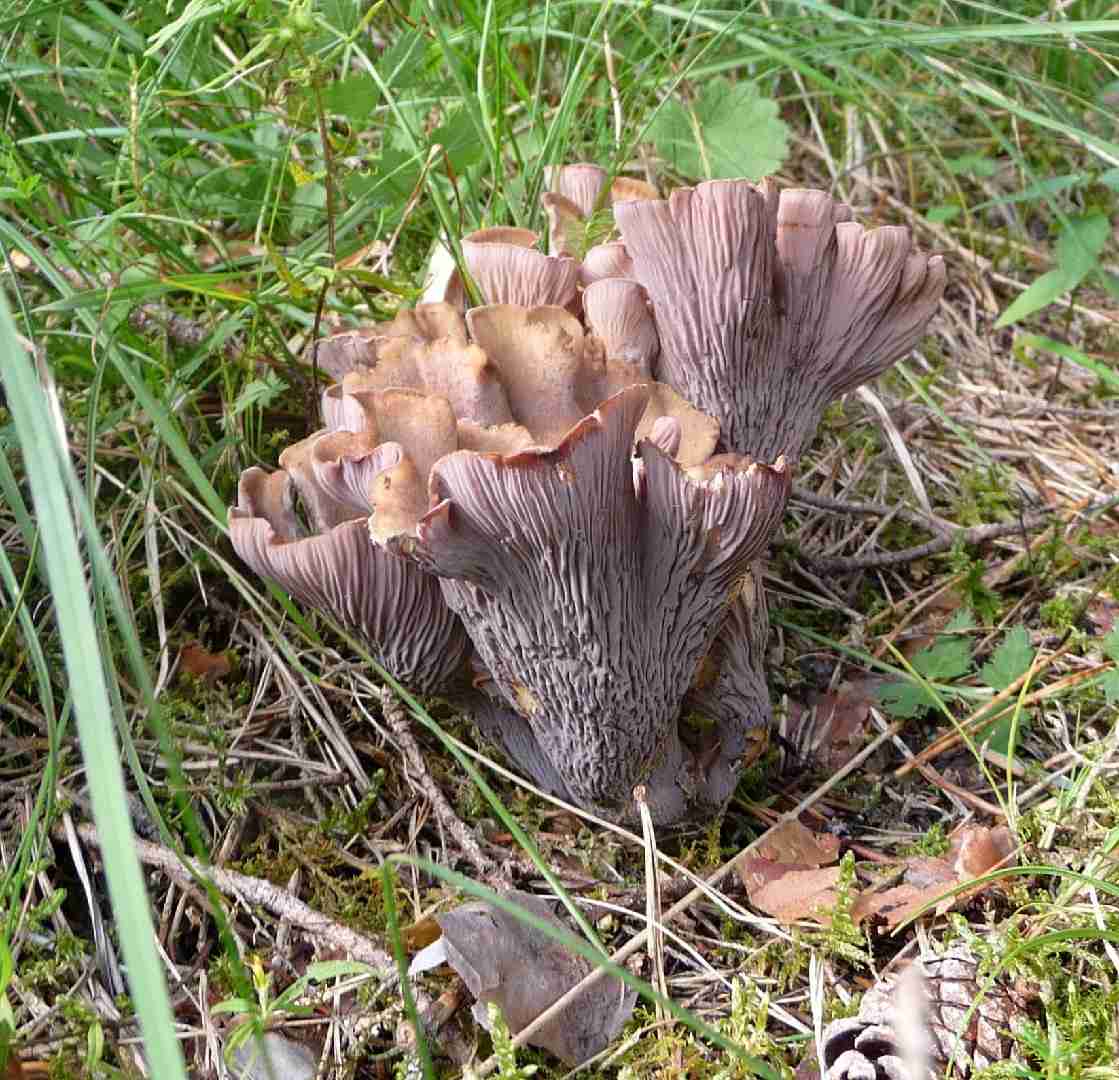
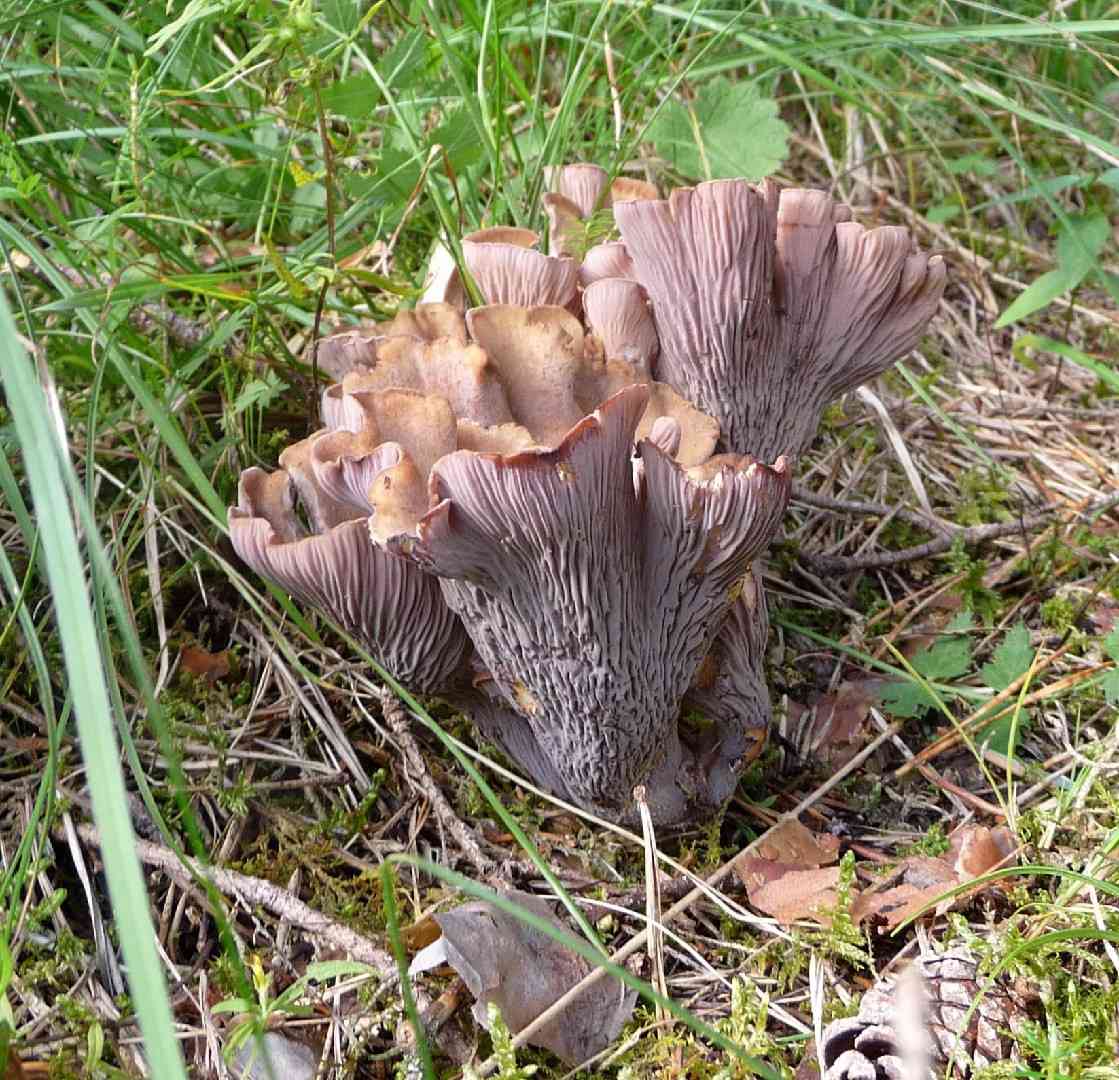
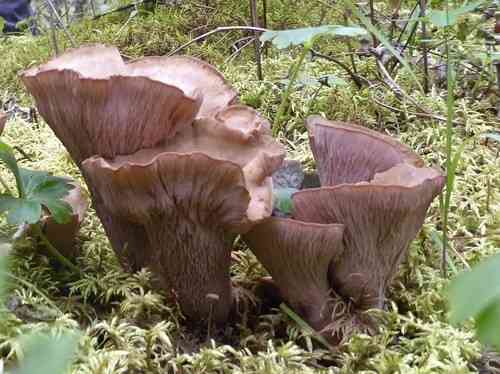
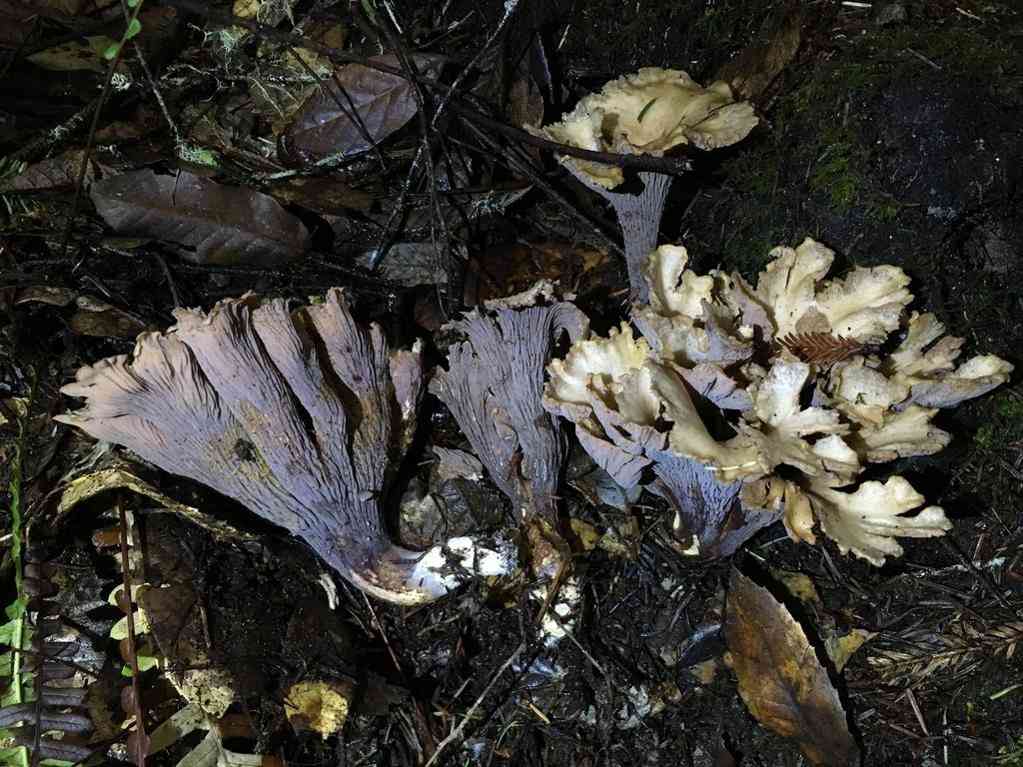
Gomphus clavatus, commonly known as pig's ears, produces distinctive fruitbodies. Multiple mushroom caps emerge from a singular stalk, frequently merging their edges. This unique growth habit results in a form resembling the convolutions of an ear. Regrettably, its status is endangered in certain regions globally, primarily due to the demolition of ancient woodlands.
In This Article
Attributes of Pig's ears
Cap Diameter
8 - 12 cm
Height
3 - 6 cm
Cap
Cap 10 cm across; flat to depressed or funnel-shaped; ocher to pale tan, with violet tints; surface smooth, finely velvety
Cap Shape
Depressed, Convex
Cap Surfaces
Fibrillose-scaly
Gill Attachment
Decurrent
Stem
Stem 2 - 4 cm long, 1 - 3 cm thick; violet to brown; surface smooth
Stem Shapes
Club Shaped
Stem Surfaces
Fibrillose
Flesh
Yellowish white to pale lilac
Ring
Ringless
Spore Print Color
Ocher-brown
Odor
Subtle, indistinct earthy aroma.
Body Color
BrownRedWhitePurpleCream
Flesh Bruises
The flesh or milk does not discolor when bruised or cut.
Growth Form
Scattered, Gregarious
Nutrient Gathering
Mycorrhizal
Substrate
On soil
You can find Pig's ears by these plants
Spruces, Pines, Firs, European beech
Occurence Habitats
Coniferous Woodland
Species Status
Widespread
Endangered Species
No
Scientific Classification of Pig's ears
Phylum
Club fungi
Class
Mushroom-forming fungi
Order
Gomphales
Family
Gomphaceae
Genus
Gomphus
Toxicity and Edibility of Pig's ears
Is Pig's ears Toxic?
Toxicity information is not available for this mushroom. Always consult with an expert before consuming any wild mushrooms.

