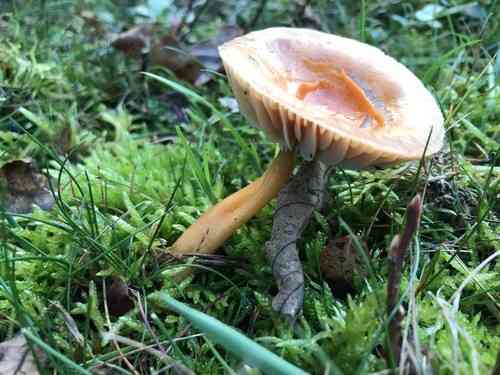
Heath waxcap
Gliophorus laetus
A species of Waxcaps.
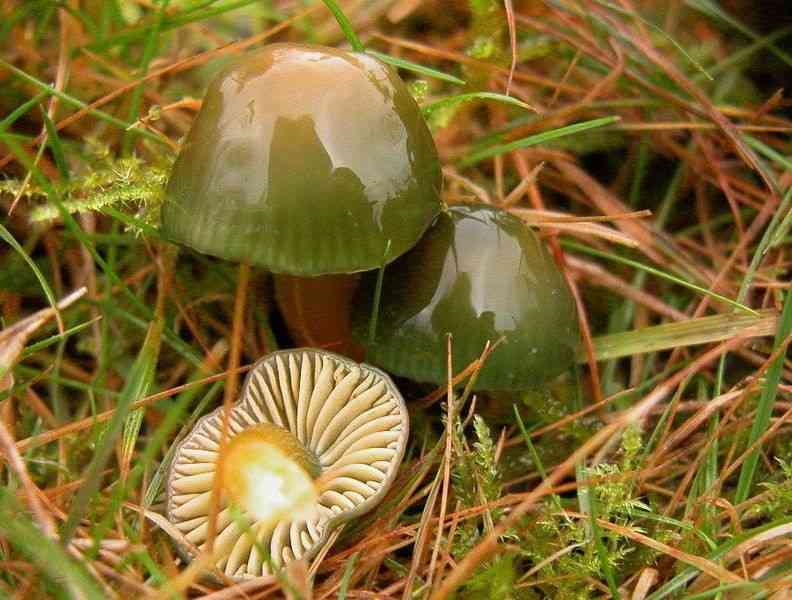
The heath waxcap, a mushroom not typically rare, is seeing its numbers fall. This decline is largely attributed to the loss of its natural environment, specifically grazed grasslands. A notable characteristic of this waxcap is its occasional emission of an unappealing, fish-like scent.
In This Article
Attributes of Heath waxcap
Cap Diameter
1 - 4 cm
Height
2 - 7 cm
Cap
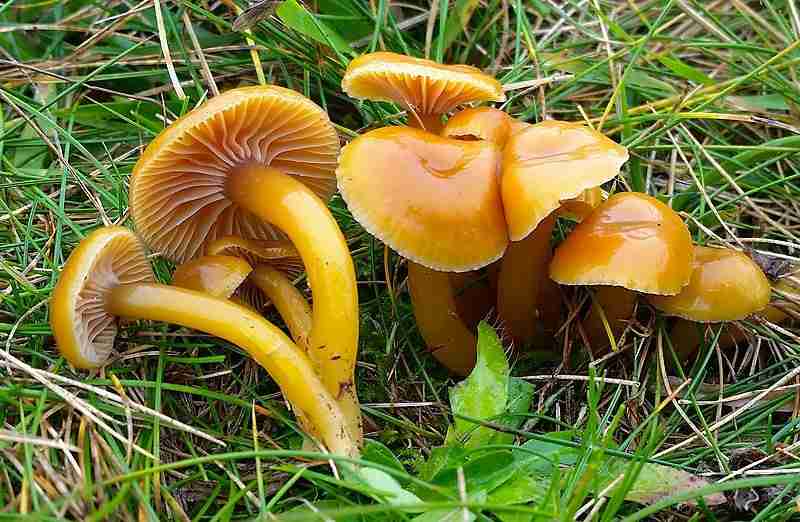
Cap 1.5 - 3.5 cm across; convex, expanding to nearly flat; medium brownish orange over the center, paler pinkish orange elsewhere; bald, slimy; margin becoming translucently lined with age
Cap Shape
Convex, Flat, Depressed
Cap Surfaces
Smooth, Slimy or slightly sticky, Visible lines or stripes
Gills
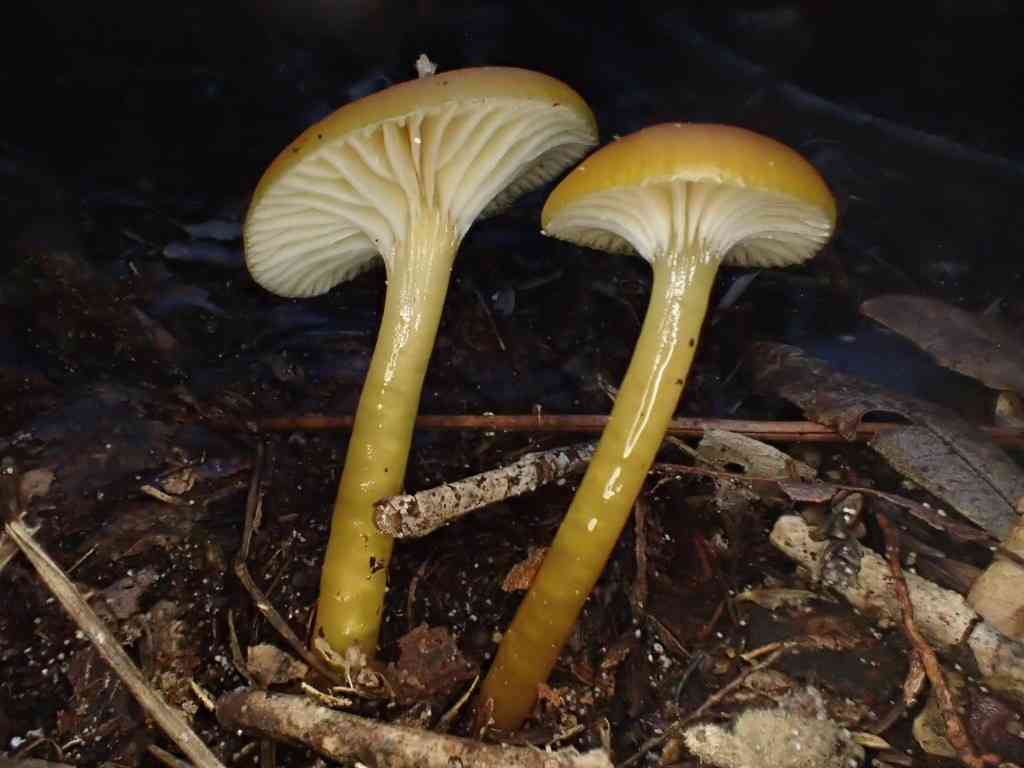
Decurrent; distant; creamy
Gill Attachment
Attached
Stem
Stem 3 - 4 cm long, 2 - 3 mm thick; equal, hollow; pale orange; bald
Stem Shapes
Cylindrical
Stem Surfaces
Smooth
Flesh
Insubstantial; whitish
Ring
Ringless
Spore Print Color
White
Odor
Mildly mushroomy but not distinctive.
Body Color
BrownOrangePink
Flesh Bruises
The flesh or milk does not discolor when bruised or cut.
Growth Form
Scattered, Gregarious
Nutrient Gathering
Saprophytic
Substrate
On soil, Mosses
You can find Heath waxcap by these plants
Junipers, Spruces, Oaks
Occurence Habitats
Coniferous Woodland, Meadows, Scrublands
Species Status
Common in Europe, widely distributed in North America
Endangered Species
No
Scientific Classification of Heath waxcap
Phylum
Club fungi
Class
Mushroom-forming fungi
Order
Gilled fungi
Family
Waxgills
Genus
Waxcaps
Toxicity and Edibility of Heath waxcap
Is Heath waxcap Toxic?
Toxicity information is not available for this mushroom. Always consult with an expert before consuming any wild mushrooms.