Daisy earthstar
Geastrum floriforme
A species of Earthstars.
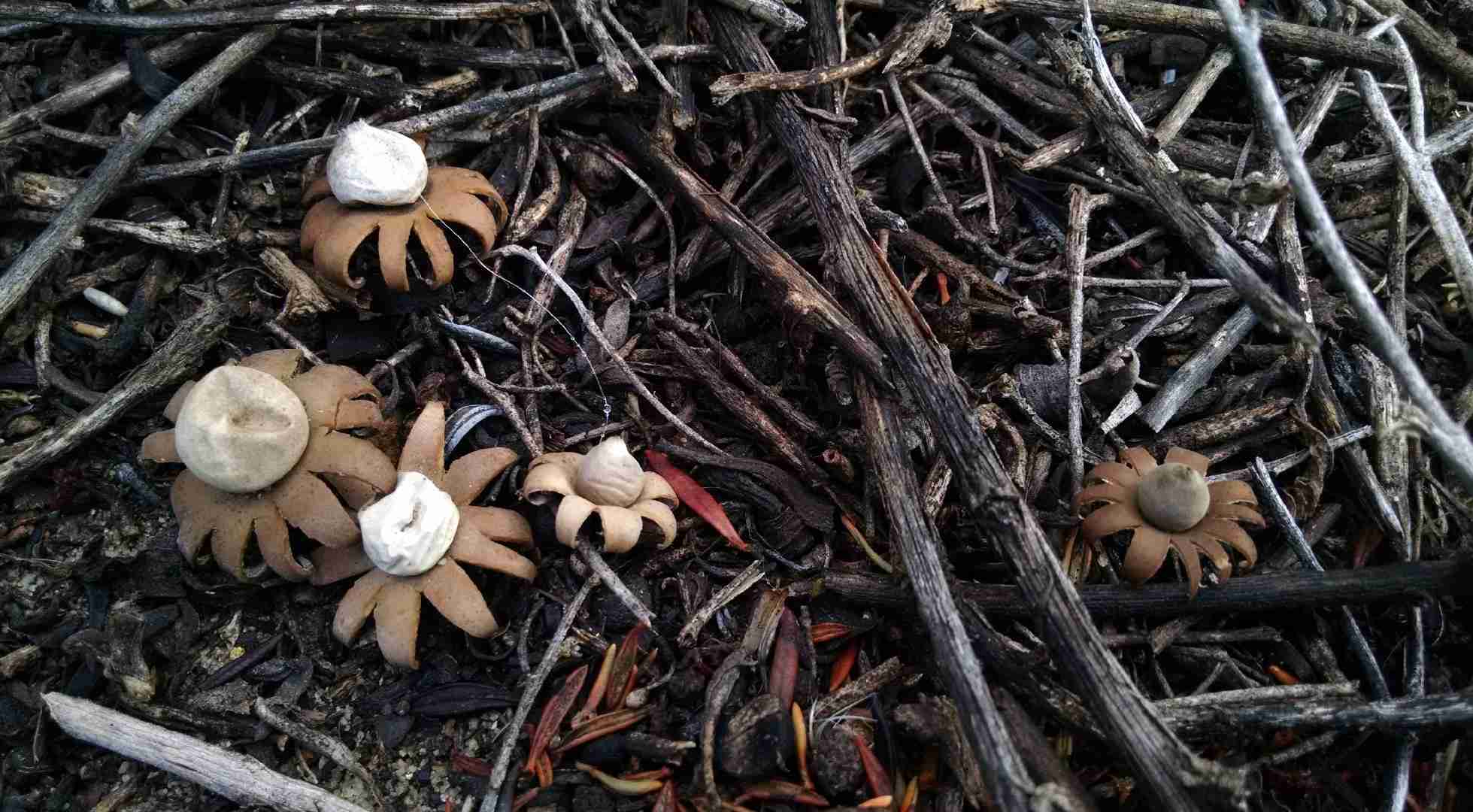
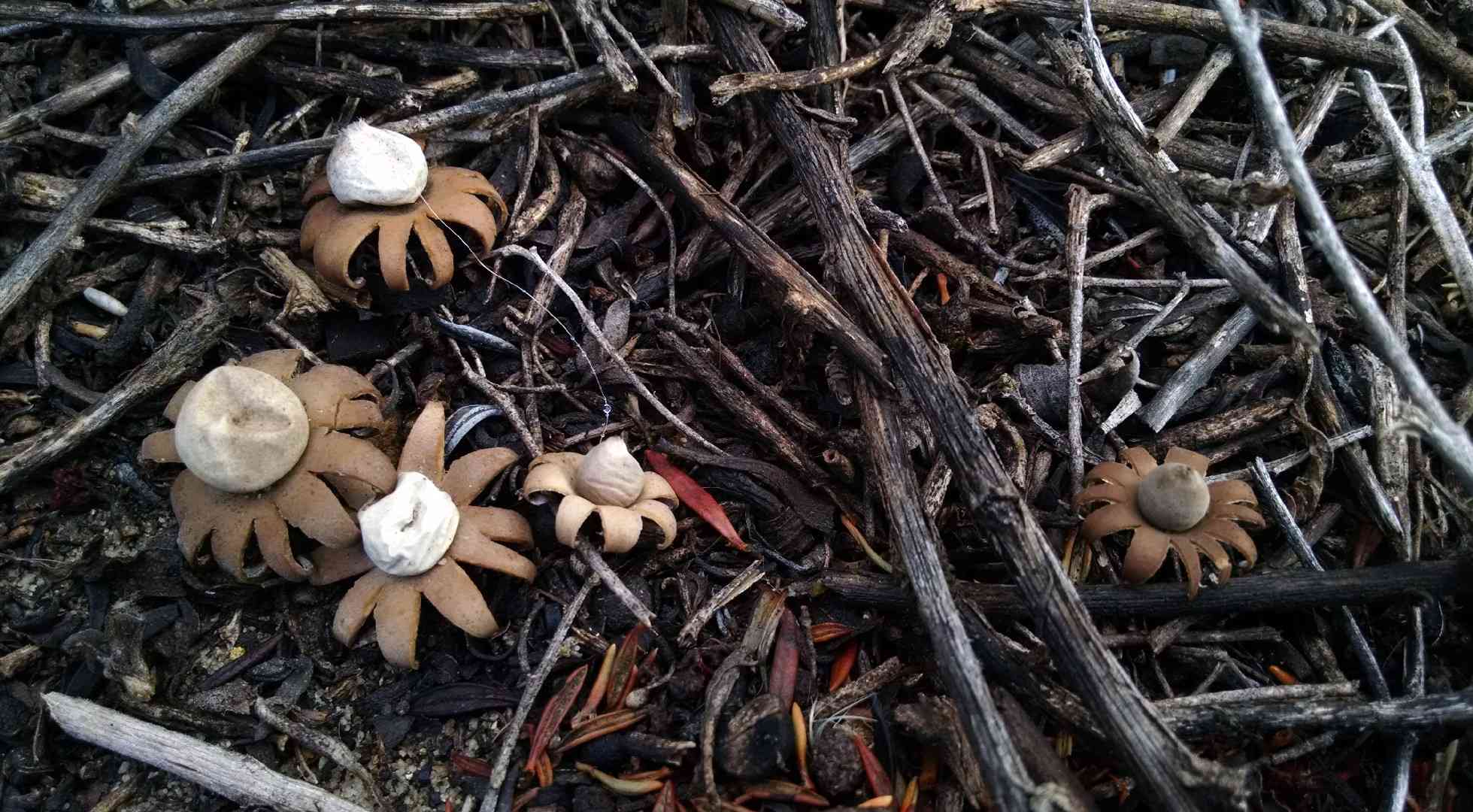
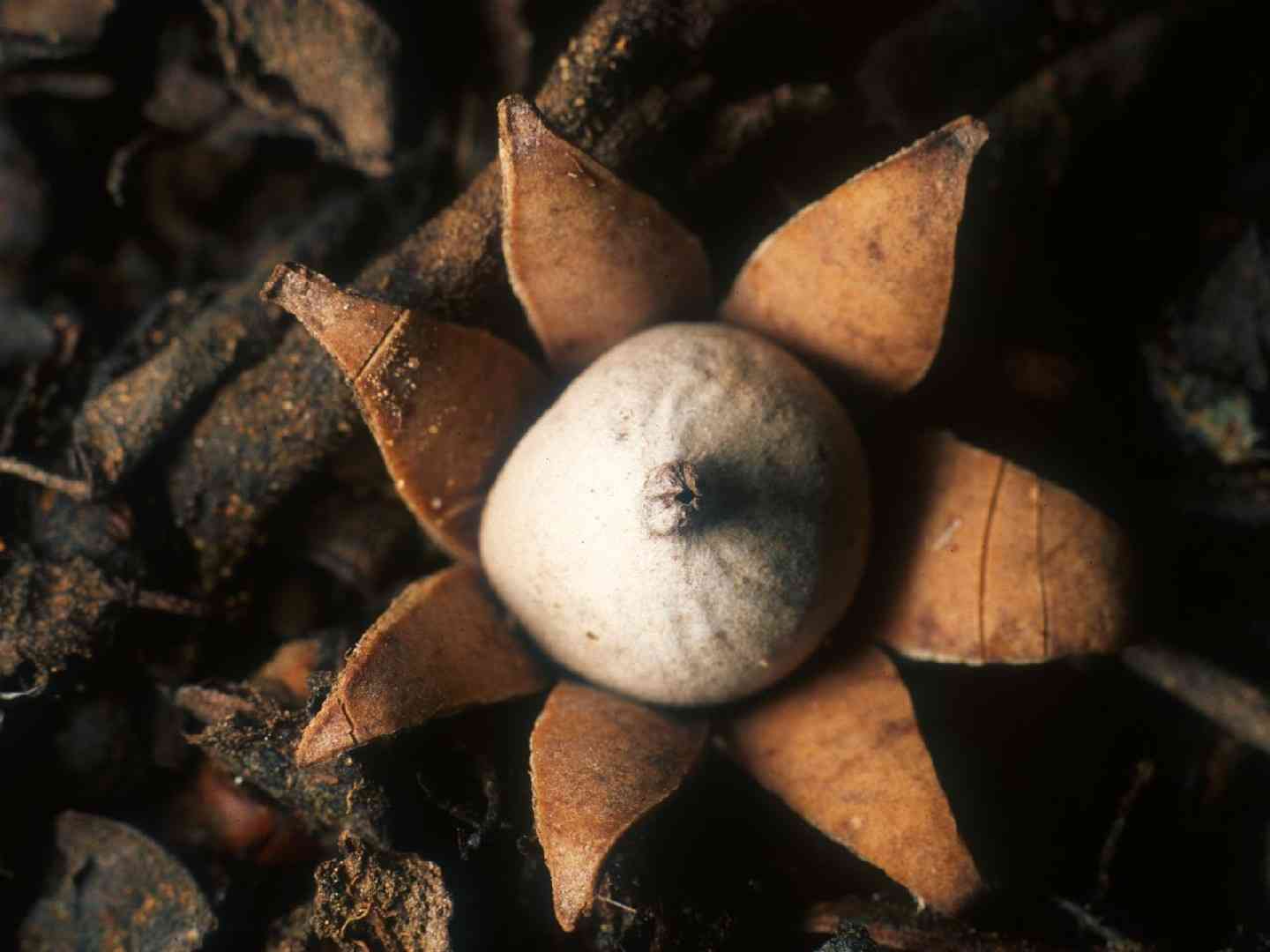
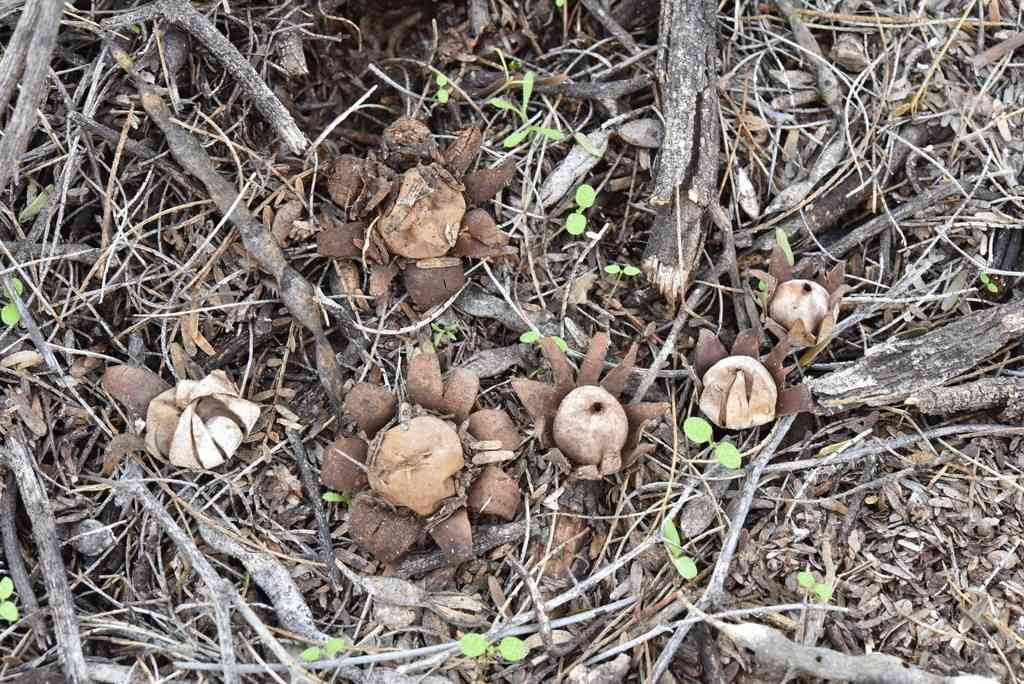
Daisy earthstar, an extraordinary fungus, transforms into a mature star-shaped form due to its outer layer splitting distinctively. You'll typically find it in forests, nestled within leaf litter or on decaying wood, where it plays a vital role as a decomposer in the ecosystem. Its fascinating life cycle progresses from a sealed, spherical structure to an open, star-like shape, illustrating an remarkable adaptation for spore dispersal.
In This Article
Attributes of Daisy earthstar
Cap Diameter
6 - 15 mm
Cap
6 - 15 mm broad; compressed-globose; grayish brown, become grayish white in senescent specimens; furfuraceous
Stem
Sessile
Spore Print Color
Dark brown
Odor
Faint, indistinct mushroom smell.
Body Color
Brown
Flesh Bruises
The flesh or milk does not discolor when bruised or cut.
Growth Form
Solitary, Scattered
Nutrient Gathering
Saprophytic
Substrate
On soil
You can find Daisy earthstar by these plants
Privets
Occurence Habitats
Coniferous Woodland, Mixed Woodland
Species Status
Uncommon
Endangered Species
No
Scientific Classification of Daisy earthstar
Phylum
Club fungi
Class
Mushroom-forming fungi
Order
Earth stars
Family
Earthstars
Genus
Earthstars
Toxicity and Edibility of Daisy earthstar
Is Daisy earthstar Toxic?
Toxicity information is not available for this mushroom. Always consult with an expert before consuming any wild mushrooms.

