Galerina oregonensis
Galerina oregonensis
A species of Galerina.
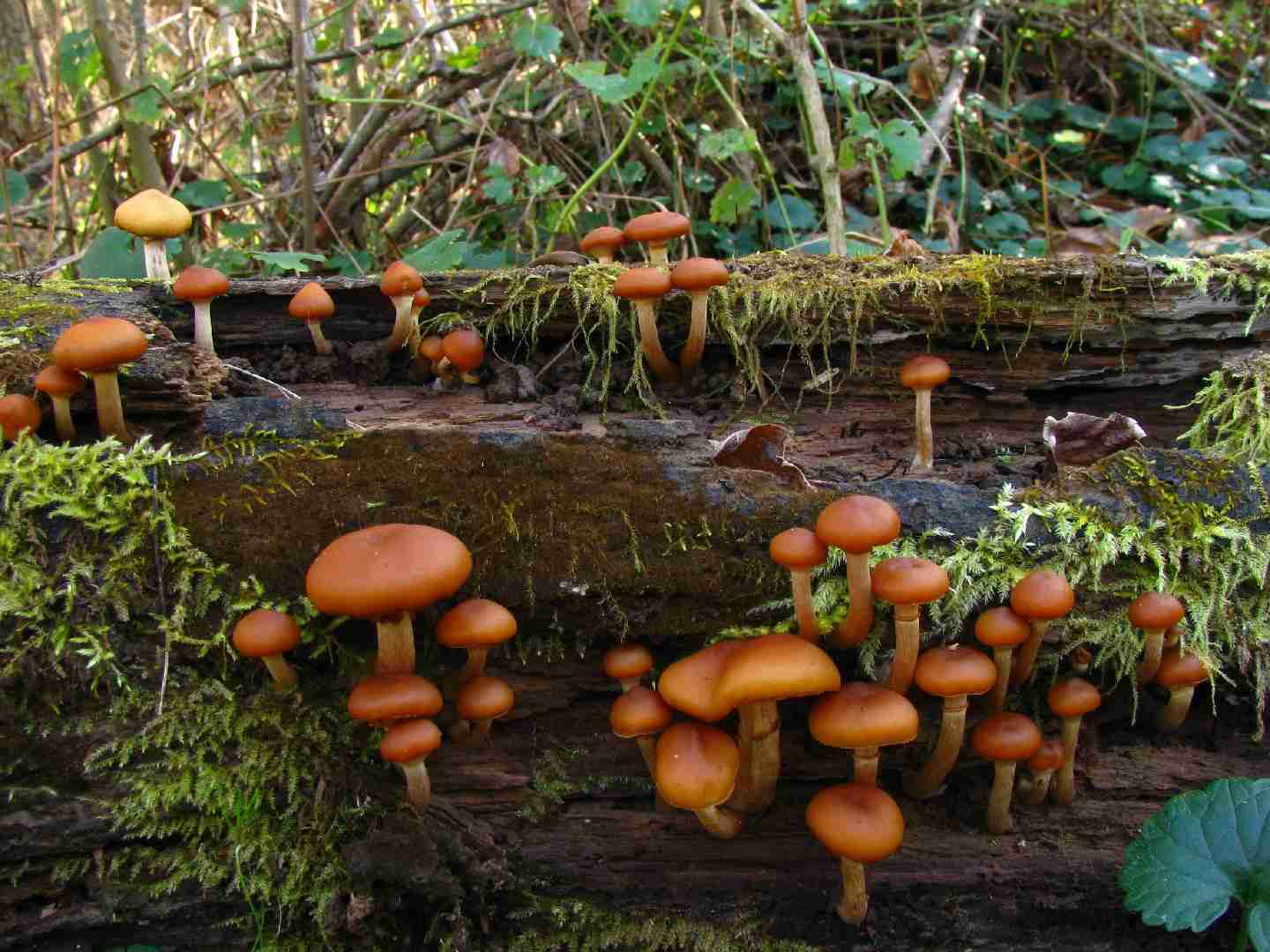
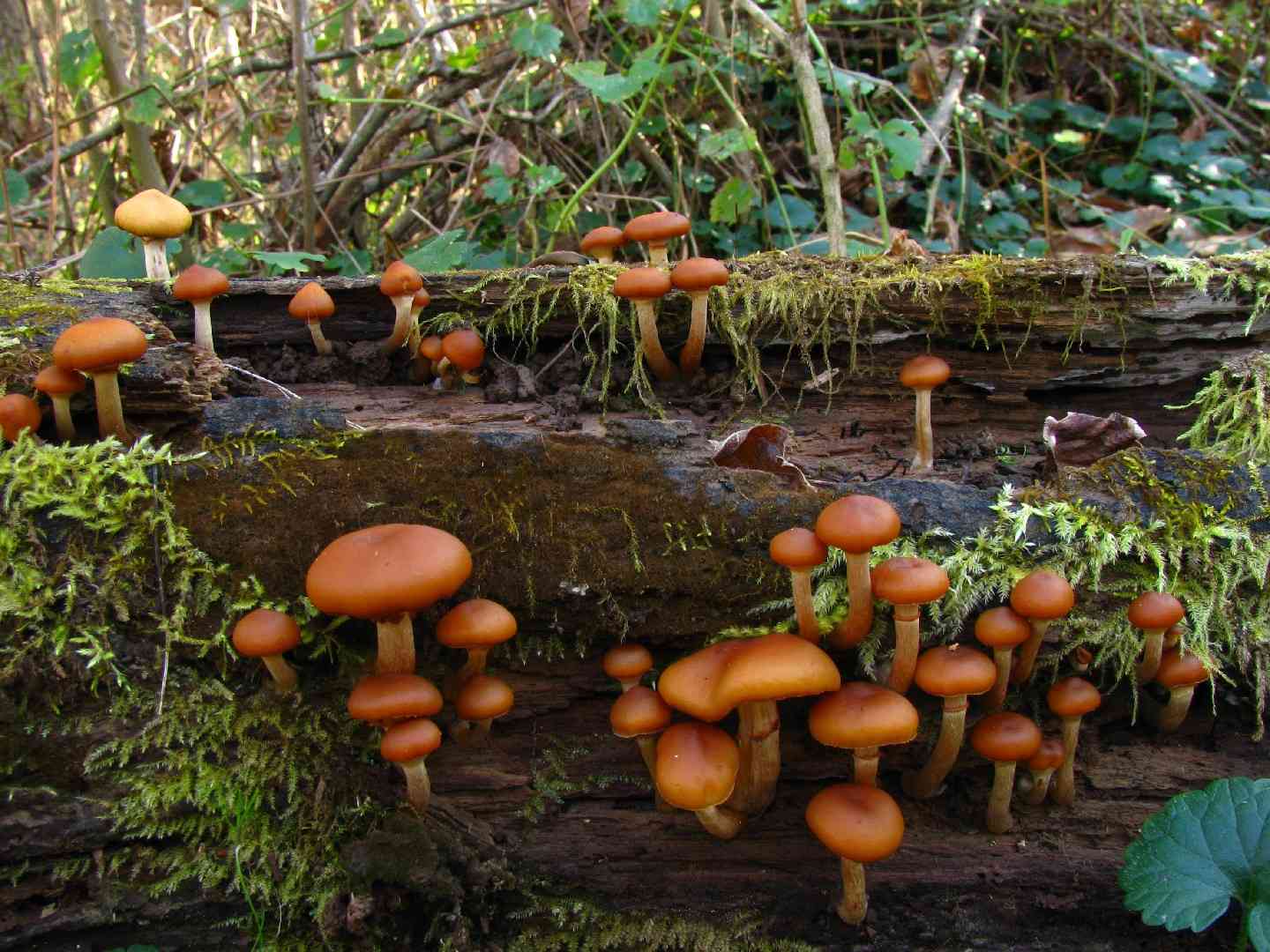
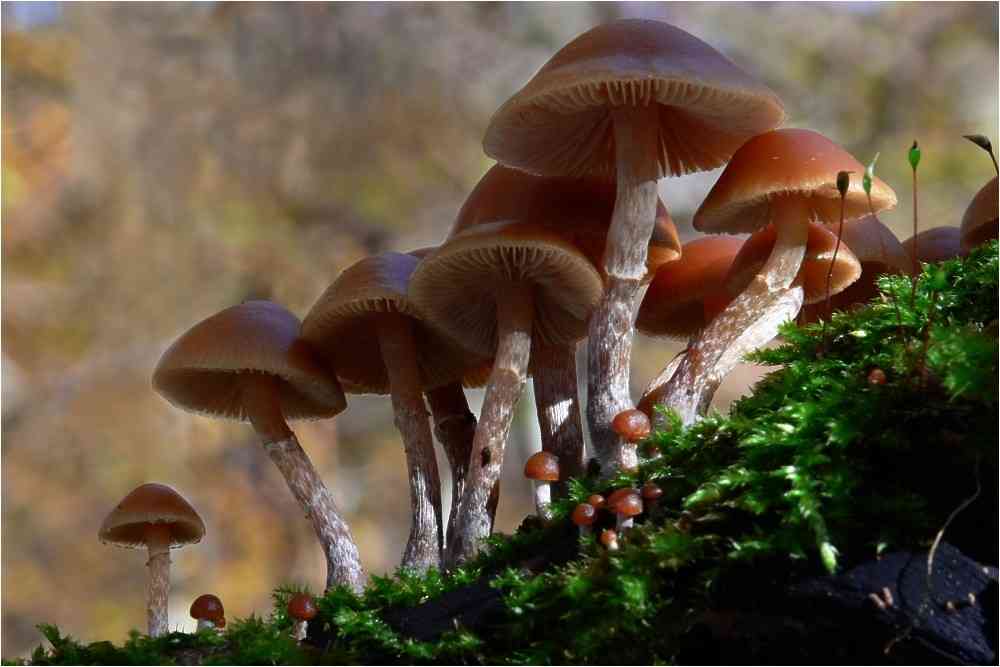
The mushroom's cap typically measures between 1.7 and 4 cm (0.67 to 1.57 in) in diameter. It starts out convex, sometimes broadly conical, with margins that curve inward towards the gills. As it develops, the cap flattens and becomes broadly convex, occasionally forming a distinct central bump or umbo. The cap's surface texture exhibits considerable variation among the five taxa now grouped under *G. marginata*. Smith and Singer describe these textures ranging from viscid (*G. autumnalis*) to shining and viscid to lubricous when moist (*G. oregonensis*), to shining, lubricous to subviscid (particles of dirt adhere to surface) or merely moist, with a fatty appearance although not distinctly viscid, and finally to moist but not viscid (*G. marginata*). The cap remains smooth and is hygrophanous, meaning its color changes with humidity. It appears pale to dark ochraceous tawny over the center and yellow-ochraceous at the edge when moist and young, but fades to a duller tan or darker shade when dry. When damp, the cap becomes somewhat translucent, revealing the gill outlines as striations. The flesh is thin, pliable, and ranges in color from pale brownish ochraceous to nearly white. Its odor and taste are described as slightly to strongly flour-like (farinaceous).
The gills are typically narrow and closely spaced, attaching broadly to the stem (adnate) or nearly running down it (decurrent), with convex edges. They are a pallid brown when young, maturing to a tawny color. Shorter gills, called lamellulae, extend partway from the cap edge to the stem, interspersed among the longer gills. The stem ranges from 3 to 6 cm (1.2 to 2.4 in) in length and 3 to 9 mm (0.12 to 0.35 in) in thickness at the top, maintaining a consistent width or slightly widening downwards. Initially solid, it becomes hollow from the base as it matures. A membranous ring is located on the upper half of the stem near the cap, though it may detach and be absent in older specimens. Its initial color is whitish or light brown, but it typically appears a darker rusty-brown in mature specimens where spores have fallen onto it. Above the ring, the stem surface is covered in a very fine whitish powder and is lighter than the cap; below the ring, it is brown, transitioning to a reddish-brown to bistre at the base. The lower part of the stem has a thin layer of pallid fibrils that eventually disappear without forming scales. The spore print is rusty-brown.
Attributes of Galerina oregonensis
Scientific Classification of Galerina oregonensis
Toxicity and Edibility of Galerina oregonensis
Is Galerina oregonensis Toxic?
Galerina oregonensis, a toxic fungus, can cause liver failure if accidentally consumed. Initial symptoms of gastroenteritis typically manifest within 6 to 24 hours. A temporary improvement in these symptoms is then observed between 24 and 48 hours post-ingestion, although liver damage may already be detectable through laboratory tests during this phase. After 48 hours, gastrointestinal issues reappear, and the progression of liver damage accelerates, potentially culminating in organ failure and, in severe instances, death.

