Red-belted conk
Fomitopsis pinicola
A species of Fomitopsis. Also known as Red-banded polypore.
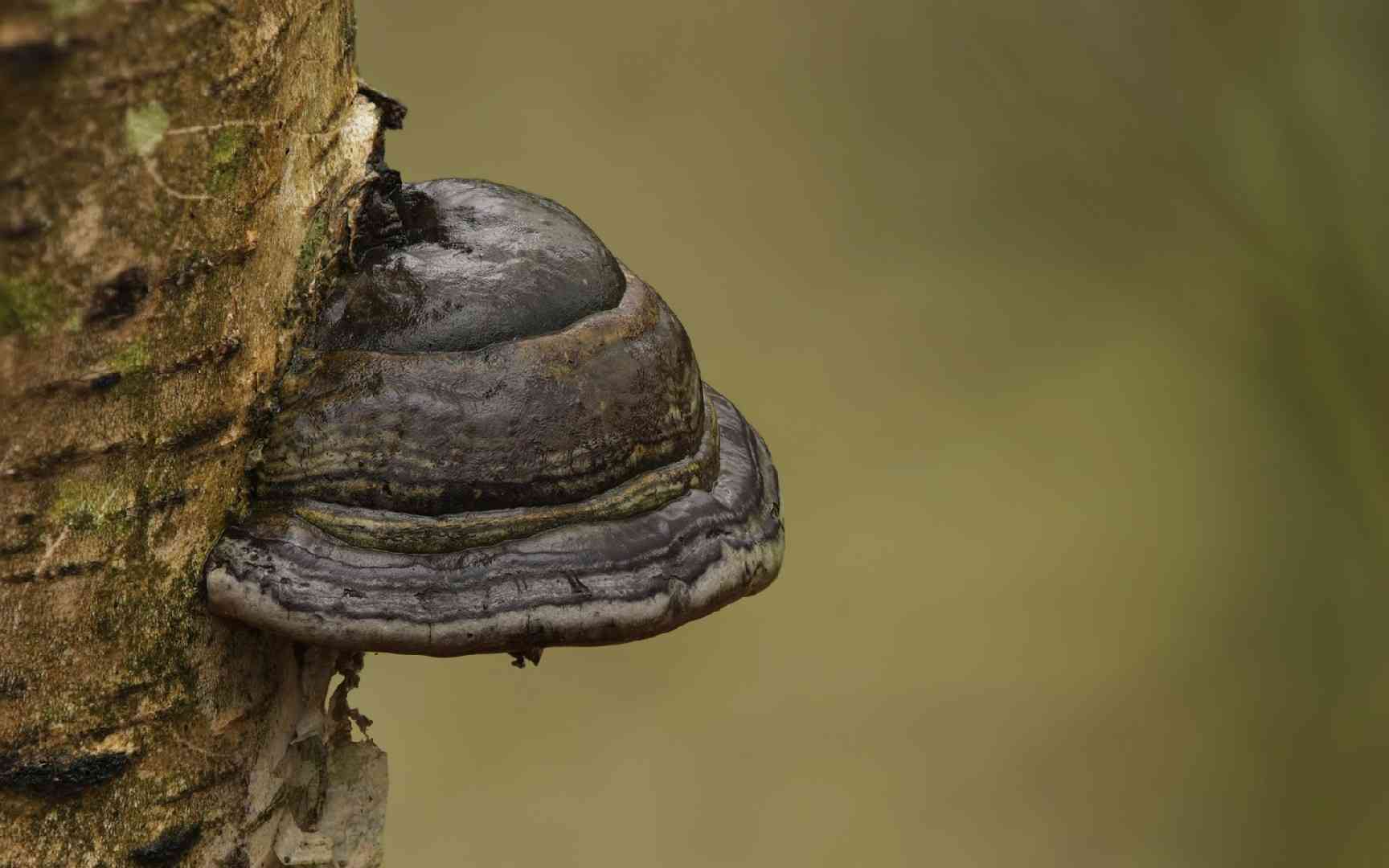
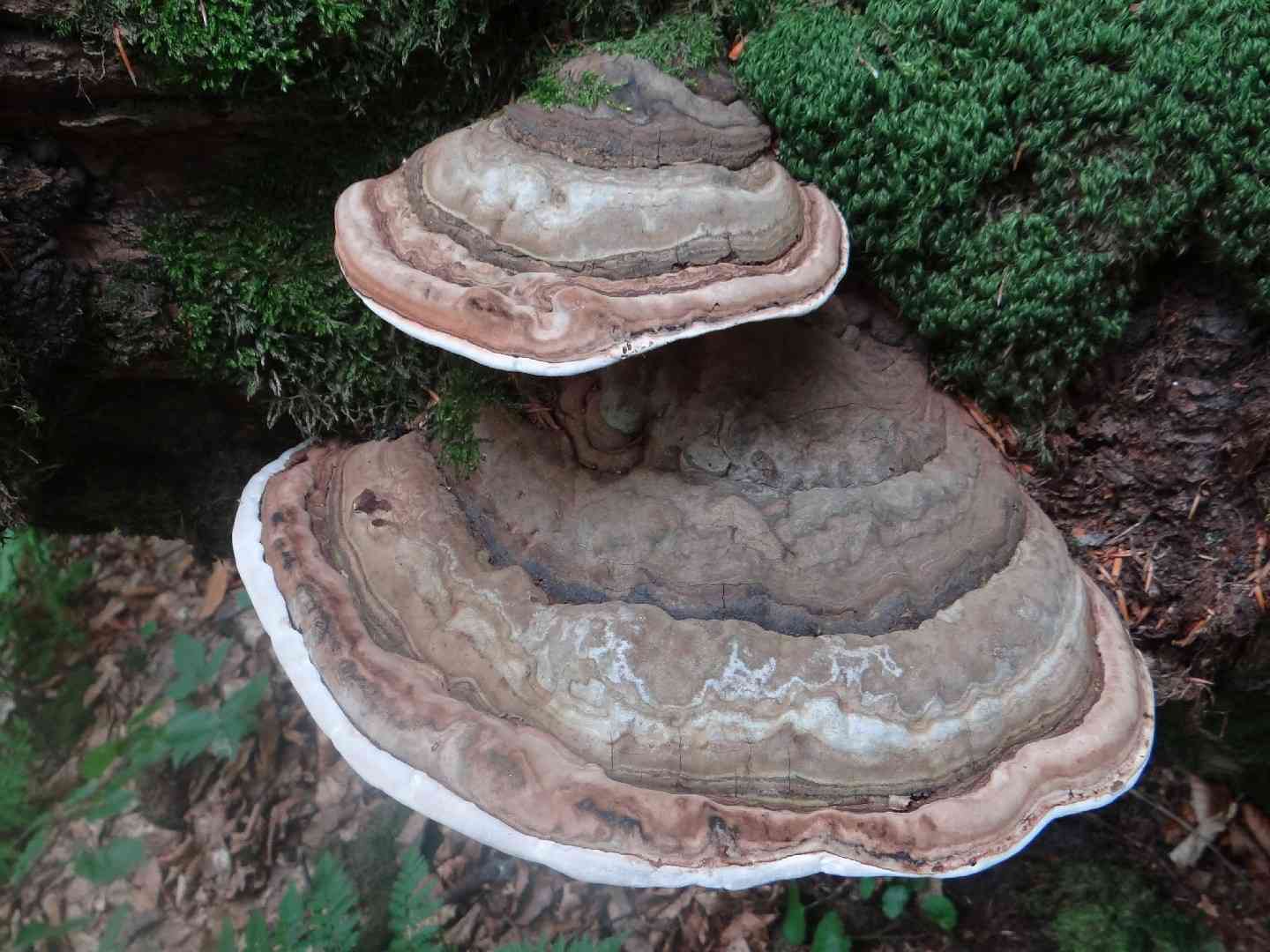
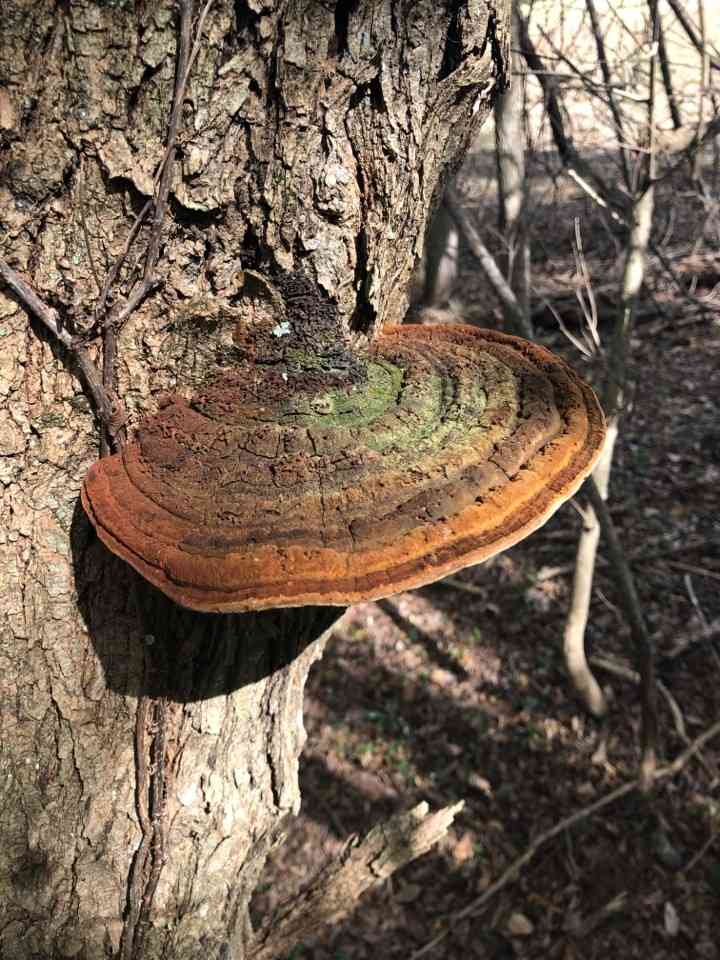
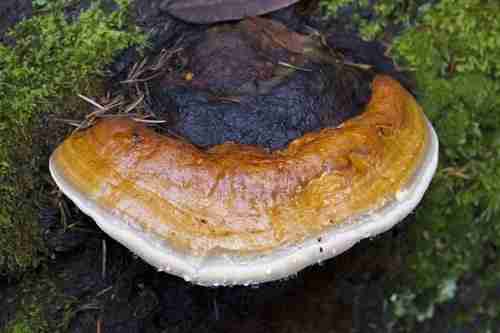
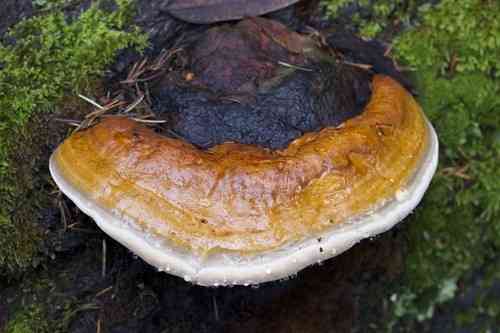
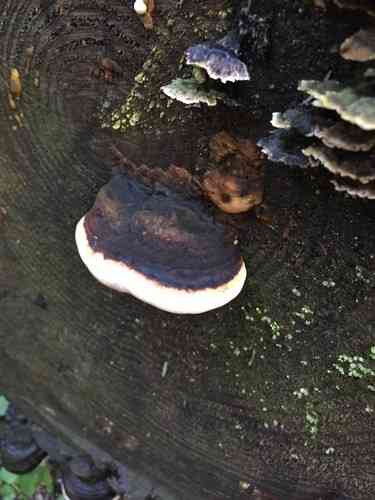
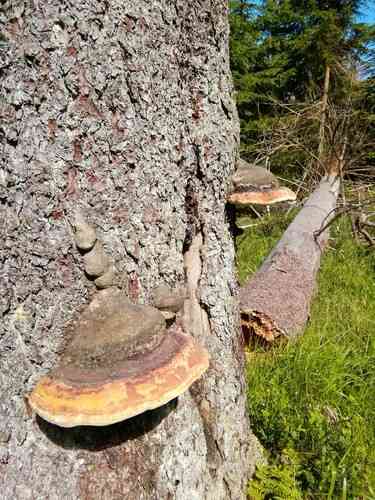
This shelf-like or bracket fungus persists for many years on both live and deceased conifer trees. Each year's growth forms clear rings or ridges, with a vibrant red or orange stripe delineating the older sections from the newest additions. The red-belted conk poses a threat to living trees only if it establishes itself within a significant wound or a fractured treetop.
In This Article
Attributes of Red-belted conk
Cap Diameter
10 - 30 cm
Height
5 - 20 cm
Cap
Cap 40 cm across; fan-shaped, convex; red, with a white to yellow marginal area; smooth
Cap Shape
Convex
Stem
Absent
Flesh
Leathery to woody; cream to buff
Ring
Shiny or varnished; red, white
Spore Print Color
White to very pale lemon yellow
Odor
Mildly mushroomy but not distinctive.
Body Color
BrownYellowRedWhite
Flesh Bruises
The flesh or milk does not discolor when bruised or cut.
Growth Form
Solitary, Scattered
Nutrient Gathering
Saprophytic, Parasitic
Substrate
Dead Woods, Wood of Living Trees
You can find Red-belted conk by these plants
Spruces
Occurence Habitats
Coniferous Woodland, Deciduous Woodland
Species Status
Most conspicuous and widely distributed
Endangered Species
No
Scientific Classification of Red-belted conk
Phylum
Club fungi
Class
Mushroom-forming fungi
Order
Shelf fungi
Family
Bracket polypores
Genus
Fomitopsis
Toxicity and Edibility of Red-belted conk
Is Red-belted conk Toxic?
Toxicity information is not available for this mushroom. Always consult with an expert before consuming any wild mushrooms.