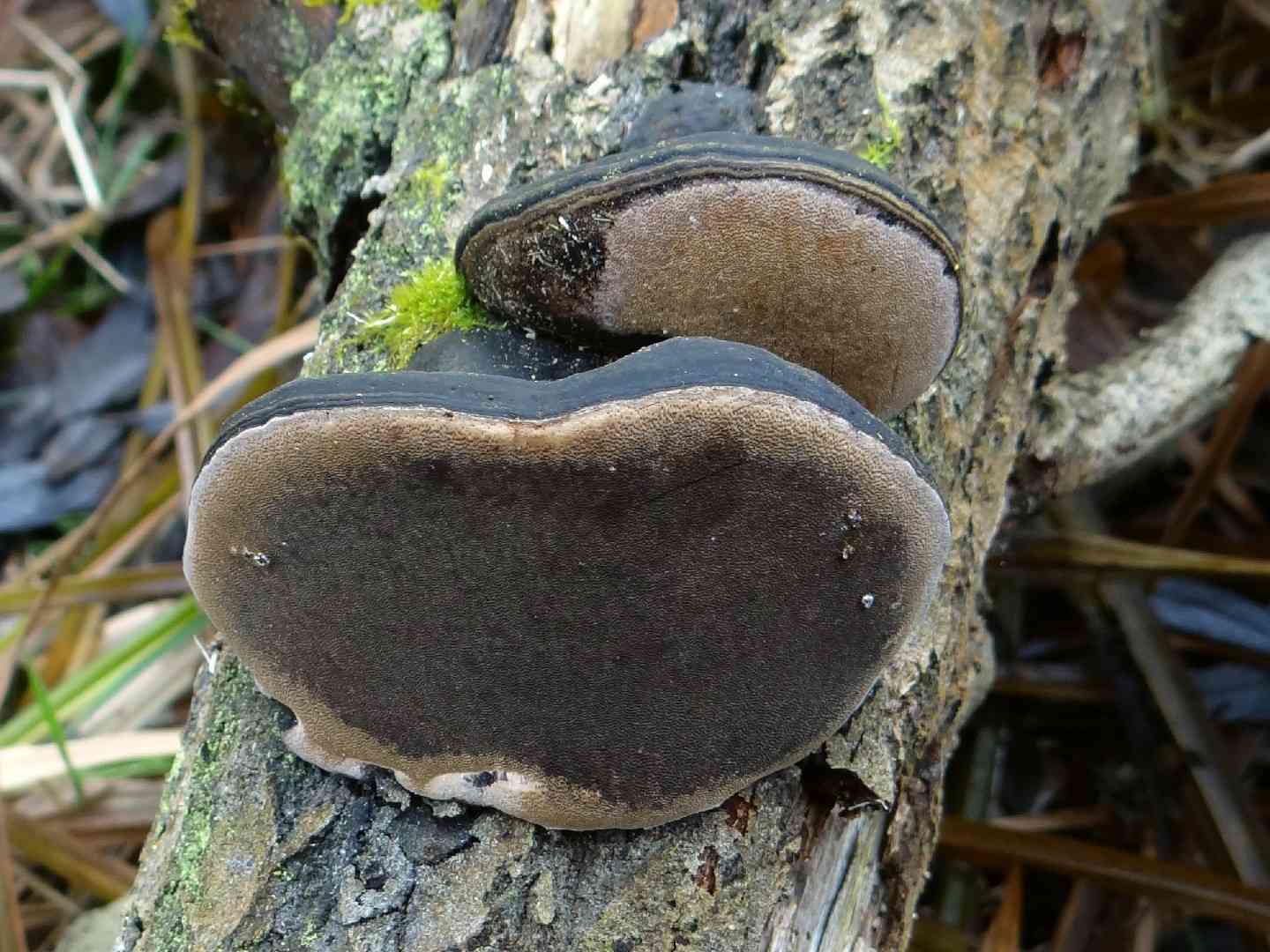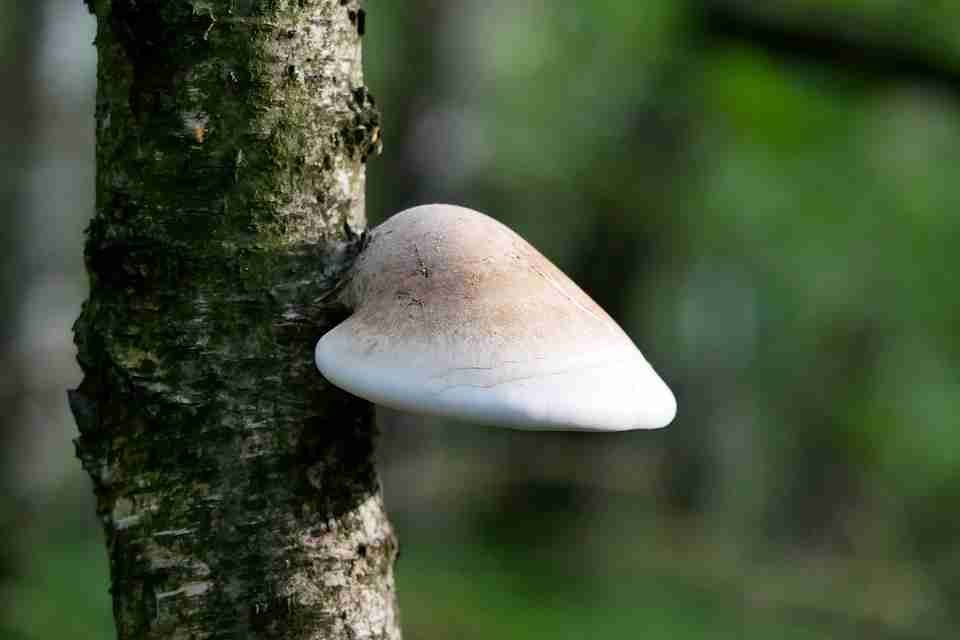
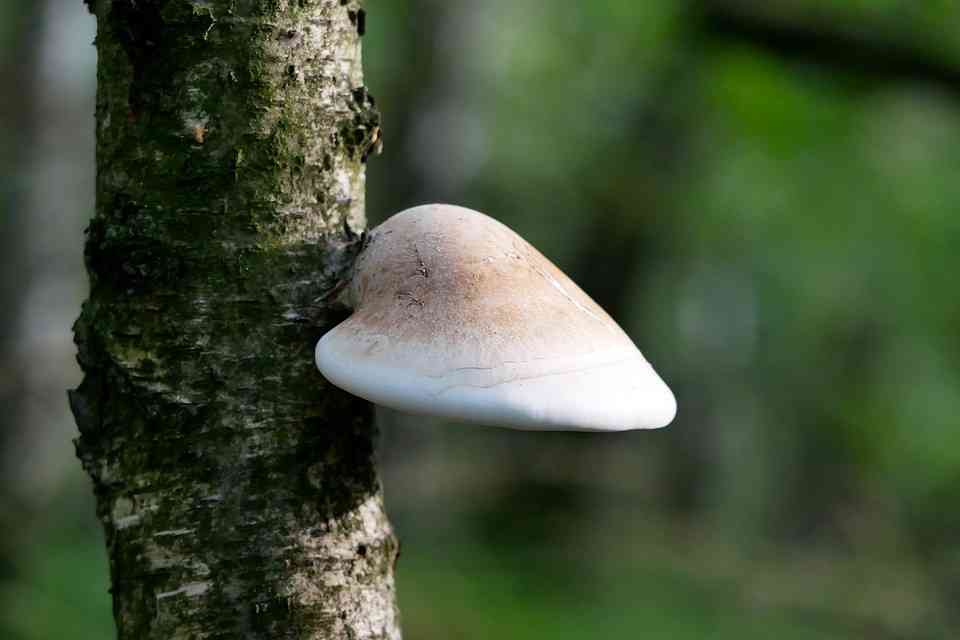
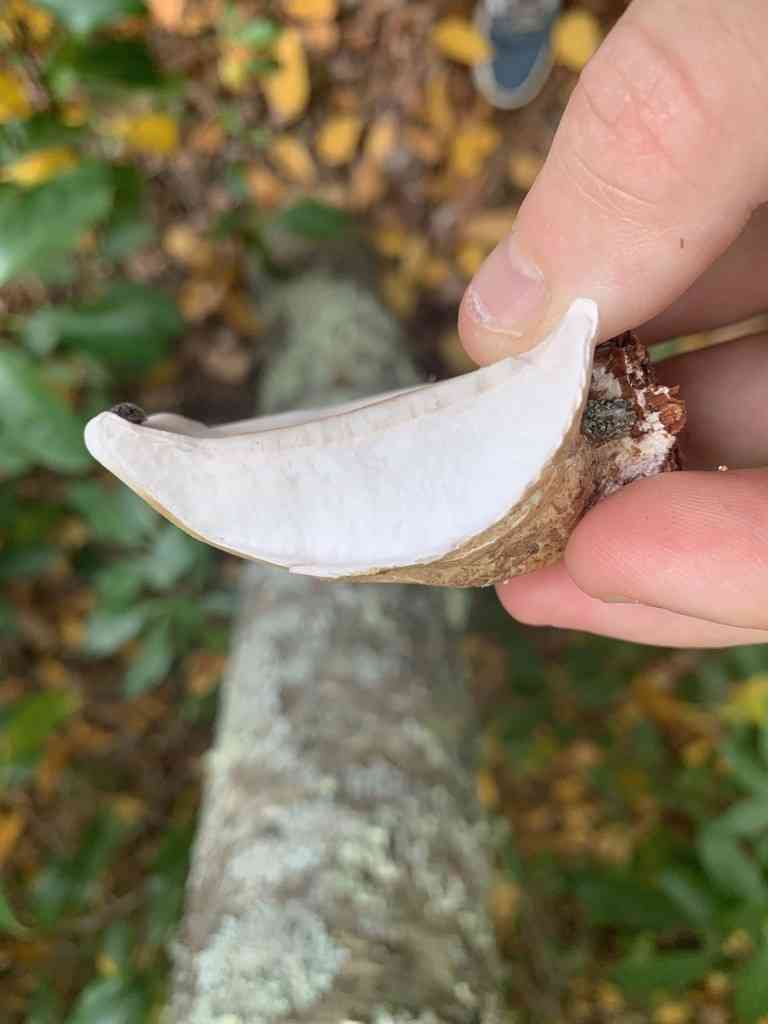
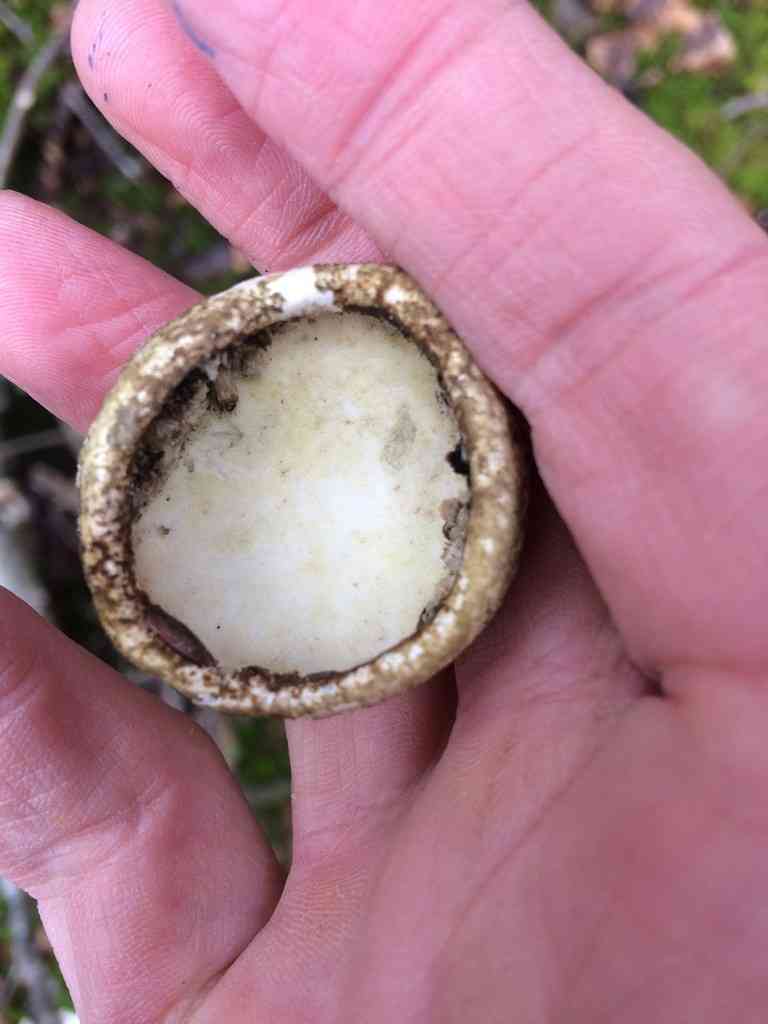
Birch polypore
Fomitopsis betulina
A species of Fomitopsis. Also known as Razor strop.
The birch polypore boasts a diverse range of uses. Its robust outer layer has served as a sharpening strop for barbers' razors and as a substrate for mounting insect specimens. Once dehydrated, this fungus was also employed for transporting embers over considerable distances due to its slow-burning properties. The historical utility of the birch polypore extends further; fragments of this mushroom were discovered among the belongings of the five-millennia-old mummy, Ötzi the Iceman.
In This Article
Attributes of Birch polypore
Cap Diameter
5 - 25 cm
Height
5 - 8 cm
Cap
2.5 - 25 cm wide; pale, with greyish-brown top surface, creamy white underside; smooth; rounded margin
Cap Shape
Convex
Cap Surfaces
Smooth
Stem
Up to 6 cm long; lateral, thick
Flesh
Soft, then becomes corky and firm as the fruiting body matures; whitie
Ring
Middle of the stalk
Spore Print Color
White
Odor
Strong, fragrant when fresh; mildly mushroomy.
Body Color
BrownGrayWhiteCream
Flesh Bruises
The flesh or milk does not discolor when bruised or cut.
Growth Form
Solitary, Gregarious
Nutrient Gathering
Saprophytic
Substrate
Dead Woods, Wood of Living Trees
You can find Birch polypore by these plants
Paper birch, Downy birch, Silver birch
Occurence Habitats
Deciduous Woodland
Species Status
Geographic distribution to be restricted to the Northern Hemisphere
Endangered Species
No
Scientific Classification of Birch polypore
Phylum
Club fungi
Class
Mushroom-forming fungi
Order
Shelf fungi
Family
Bracket polypores
Genus
Fomitopsis
Toxicity and Edibility of Birch polypore
Is Birch polypore Toxic?
Toxicity information is not available for this mushroom. Always consult with an expert before consuming any wild mushrooms.