Tinder fungus
Fomes fomentarius
A species of Fomes. Also known as Hoof fungus, Ice man fungus, False tinder fungus, Horse's hoof fungus.
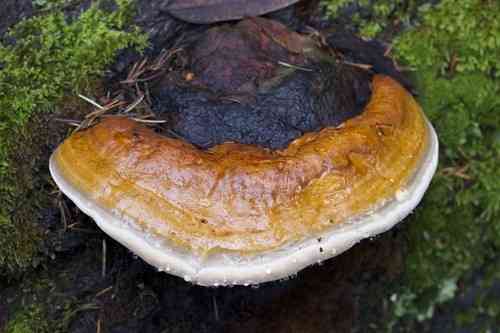
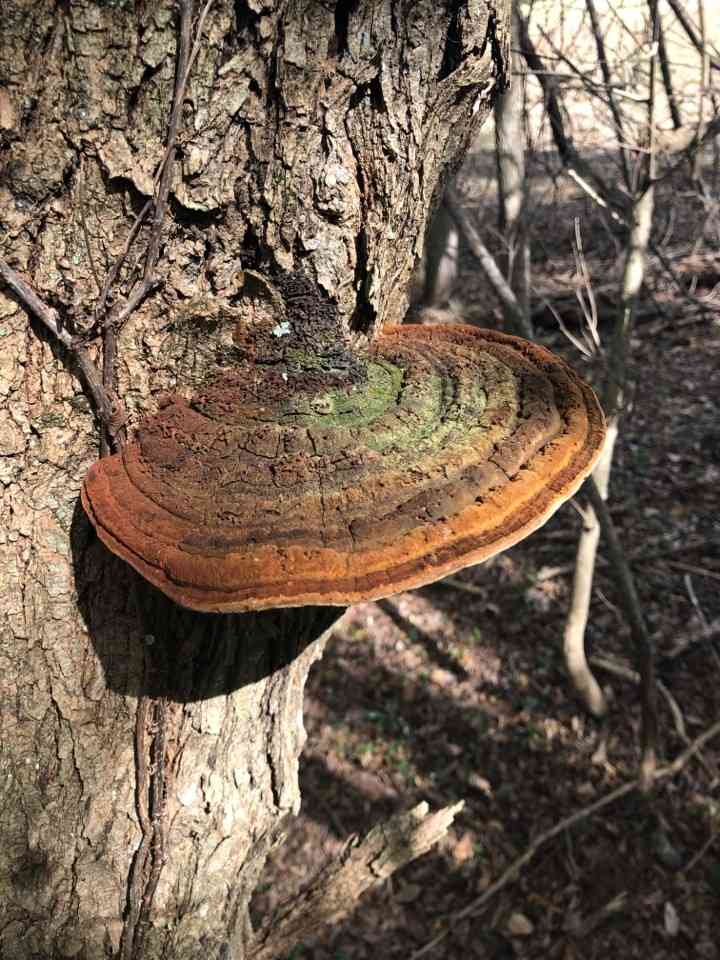
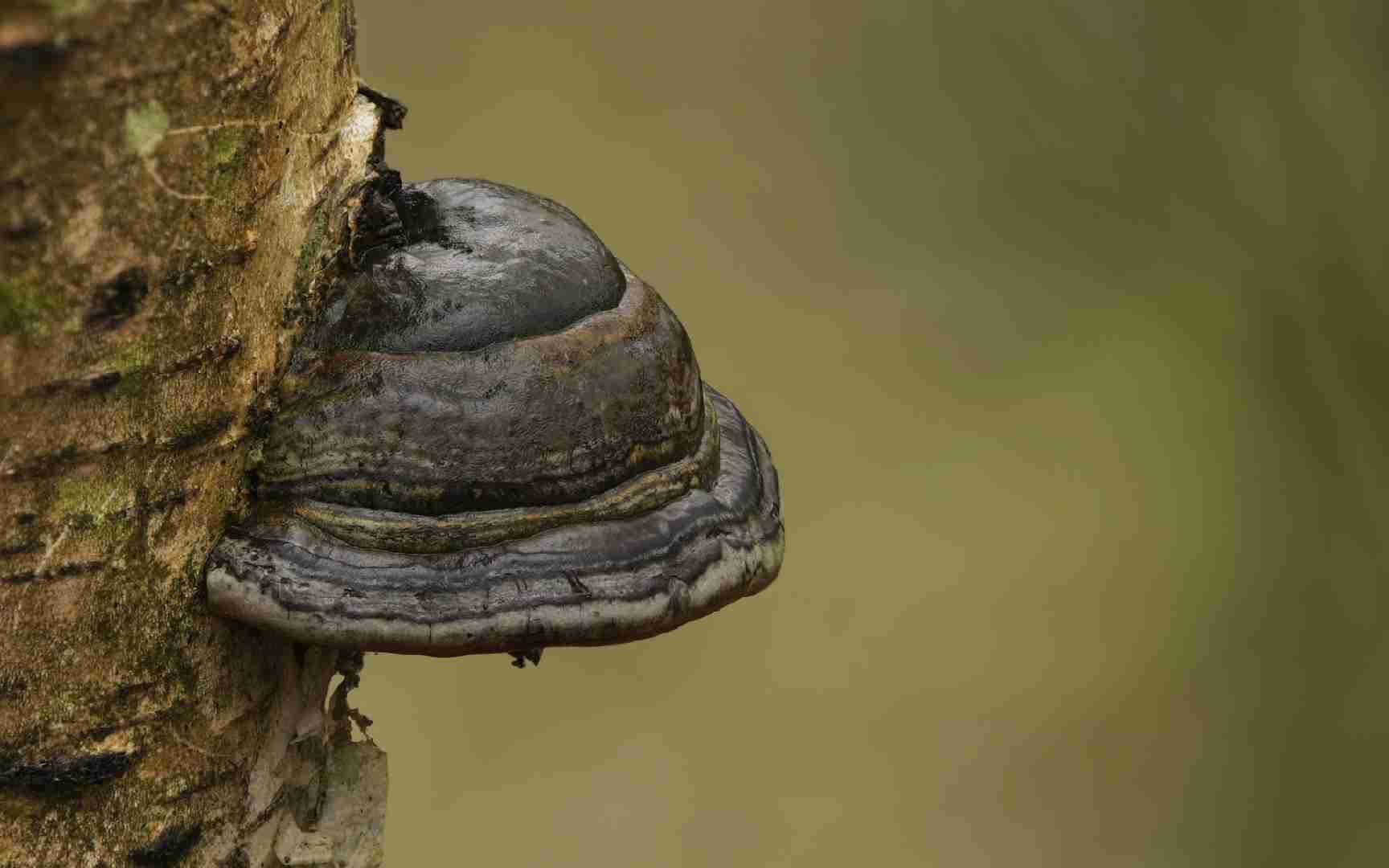
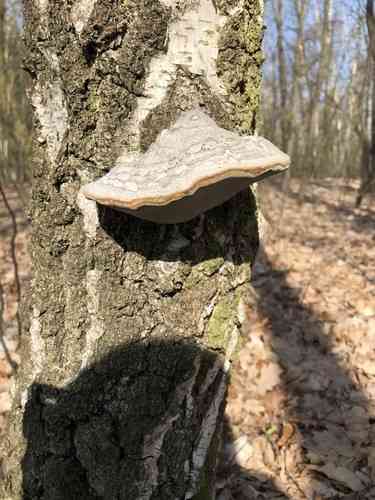
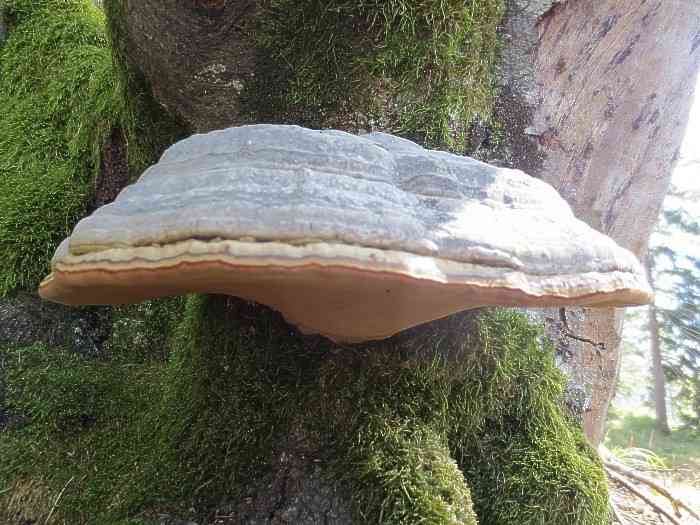
This substantial and robust shelf fungus is commonly observed growing on birch, beech, and sycamore trees. Its popular name, tinder fungus, stems from its property of burning very slowly, making it an effective tool for fire ignition. When dried, parts of this fungus also serve as a useful desiccant. A fragment of this fungus was discovered with Otzi the Iceman, providing evidence that its practical applications have been recognized for thousands of years.
In This Article
Attributes of Tinder fungus
Cap Diameter
15 - 25 cm
Height
5 - 15 cm
Cap
Cap 20 cm across; shell-shaped to hoof-shaped; gray and brownish
Cap Surfaces
Fibrillose-scaly
Gills
Not applicable
Stem
Absent
Flesh
Thin; hard, fibrous; yellowish brown
Ring
On the edge; circular; white
Spore Print Color
White
Odor
Faintly fruity, not distinctive.
Body Color
BrownGray
Flesh Bruises
The flesh or milk does not discolor when bruised or cut.
Growth Form
Solitary, Scattered, Gregarious
Nutrient Gathering
Saprophytic, Parasitic
Substrate
Wood of Living Trees, Dead Woods
You can find Tinder fungus by these plants
American beech, Paper birch, European beech
Occurence Habitats
Deciduous Woodland
Species Status
Fairly widely distributed
Endangered Species
No
Scientific Classification of Tinder fungus
Phylum
Club fungi
Class
Mushroom-forming fungi
Order
Shelf fungi
Family
Polyporaceae
Genus
Fomes
Toxicity and Edibility of Tinder fungus
Is Tinder fungus Toxic?
Toxicity information is not available for this mushroom. Always consult with an expert before consuming any wild mushrooms.