Tropical white polypore
Favolus tenuiculus
A species of Honeycomb fungus.
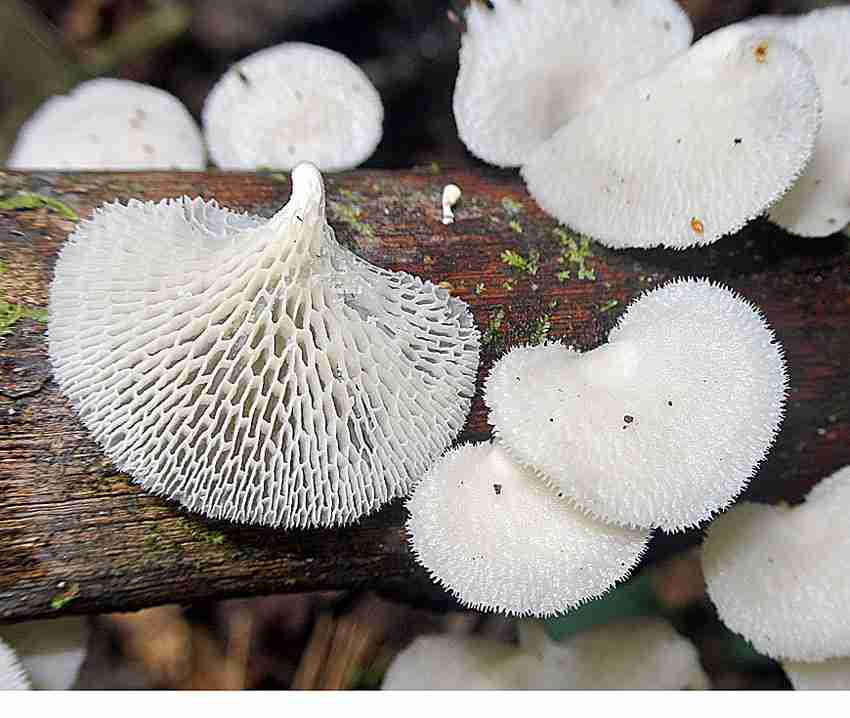
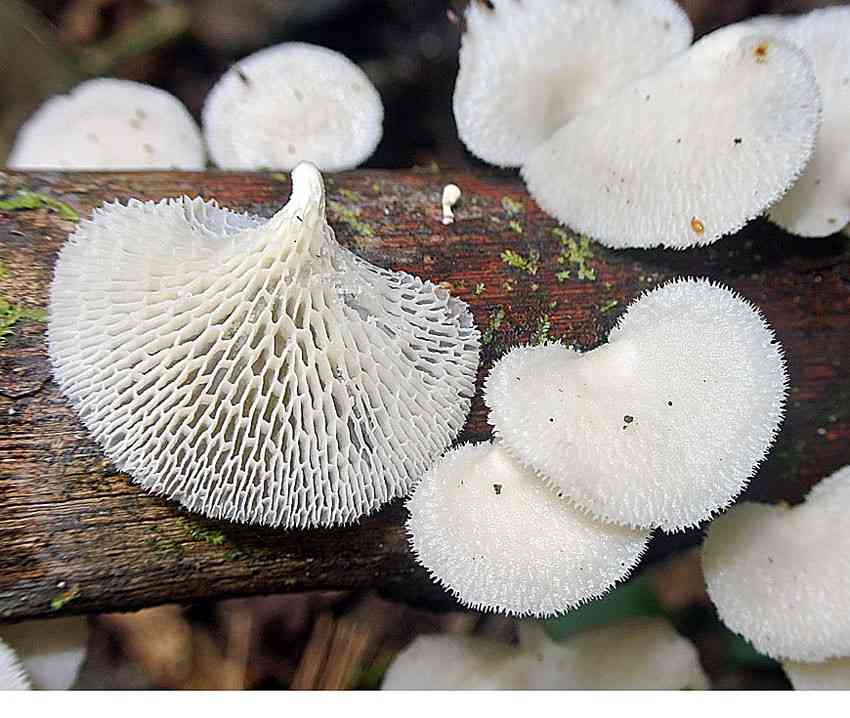
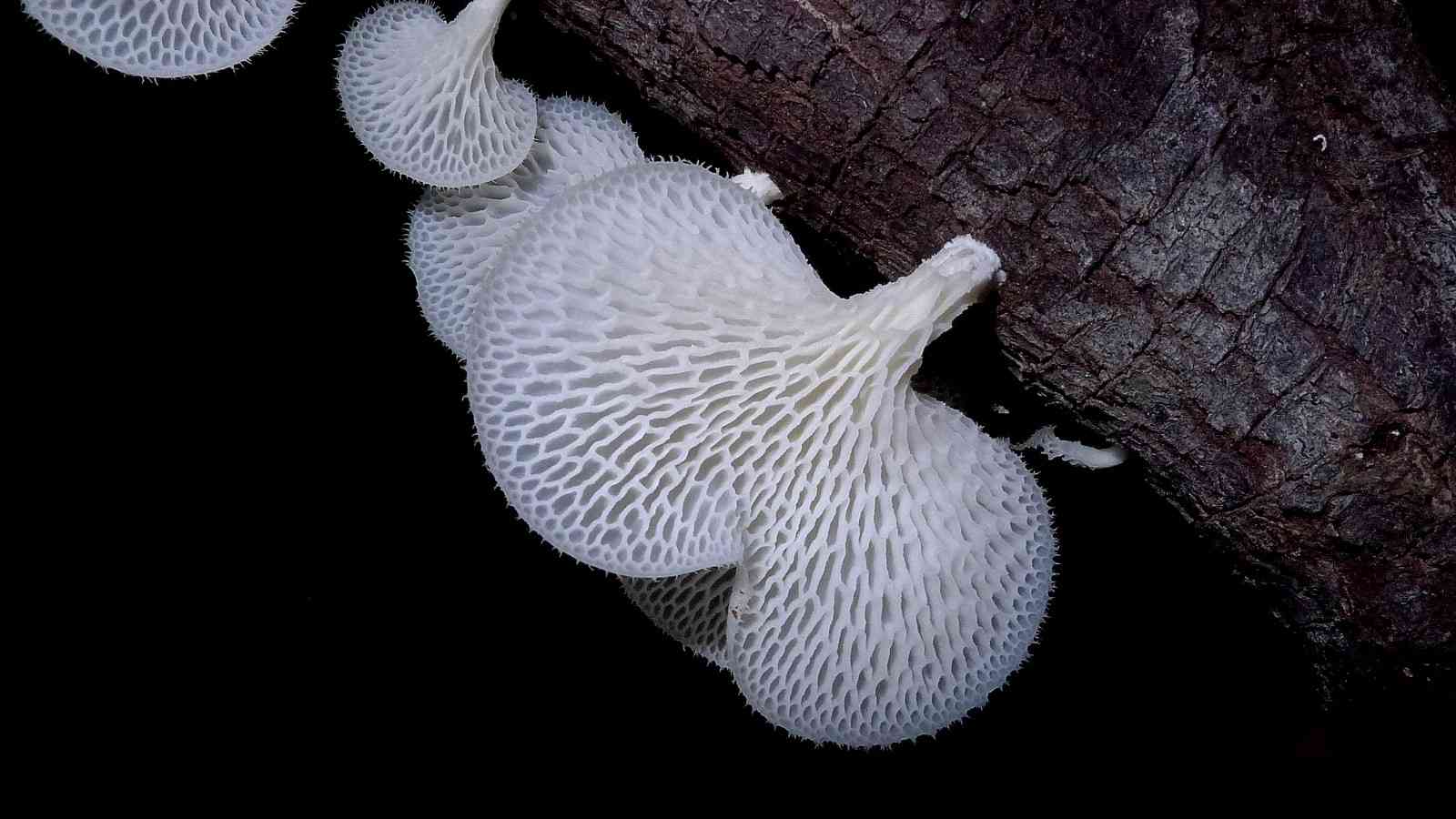
Favolus tenuiculus, commonly known as the tropical white polypore, thrives on decaying wood, especially in humid environments. It was previously classified under the genus Polyporus, which has since undergone reclassification. Its distinctive look gave rise to its name, and it serves as a primary food source for native insect populations.
In This Article
Attributes of Tropical white polypore
Cap Diameter
2 - 10 cm
Height
2 - 2.5 cm
Cap
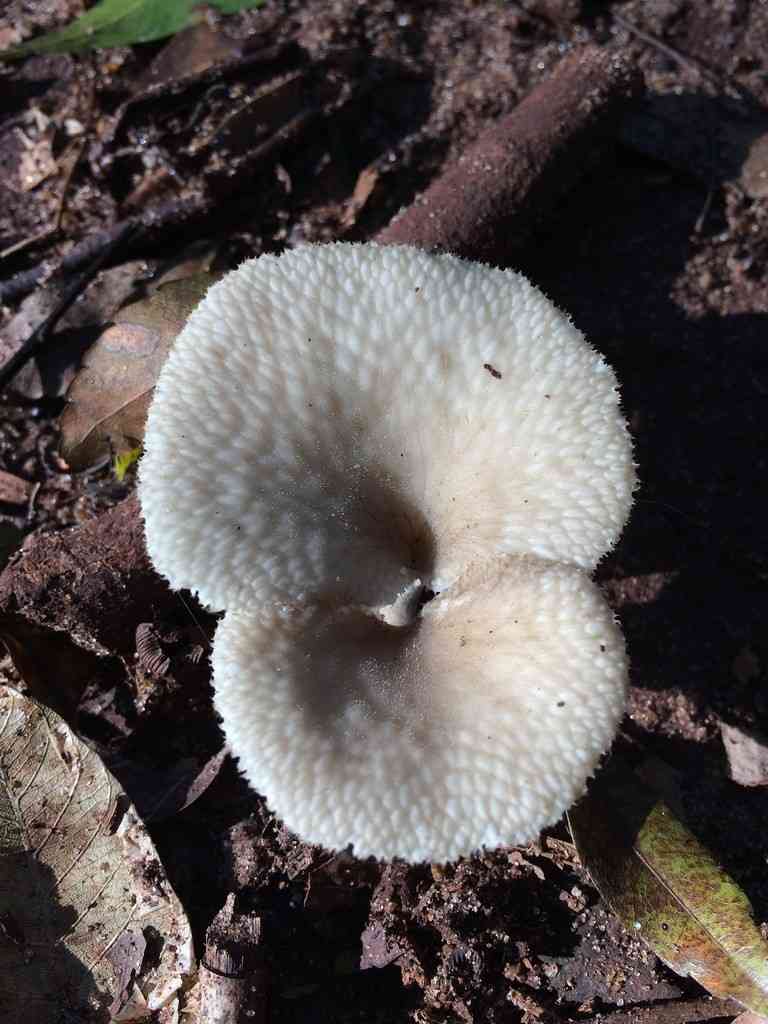
Cap 2 - 10 cm across; white to cream, buff; surface smooth, with raised bumps; finely fringed margin
Stem
White to cream, buff
Flesh
Flesh 3 mm thick; white to pale ochraceous
Spore Print Color
White
Odor
Mildly mushroomy but not distinctive.
Body Color
BrownWhiteCream
Flesh Bruises
The flesh or milk does not discolor when bruised or cut.
Growth Form
Clustered
Nutrient Gathering
Saprophytic
Substrate
On wood
You can find Tropical white polypore by these plants
Willows
Species Status
Very common
Endangered Species
No
Scientific Classification of Tropical white polypore
Phylum
Club fungi
Class
Mushroom-forming fungi
Order
Shelf fungi
Family
Polyporaceae
Genus
Honeycomb fungus
Toxicity and Edibility of Tropical white polypore
Is Tropical white polypore Toxic?
Toxicity information is not available for this mushroom. Always consult with an expert before consuming any wild mushrooms.

