White brain
Exidia thuretiana
A species of Exidia.
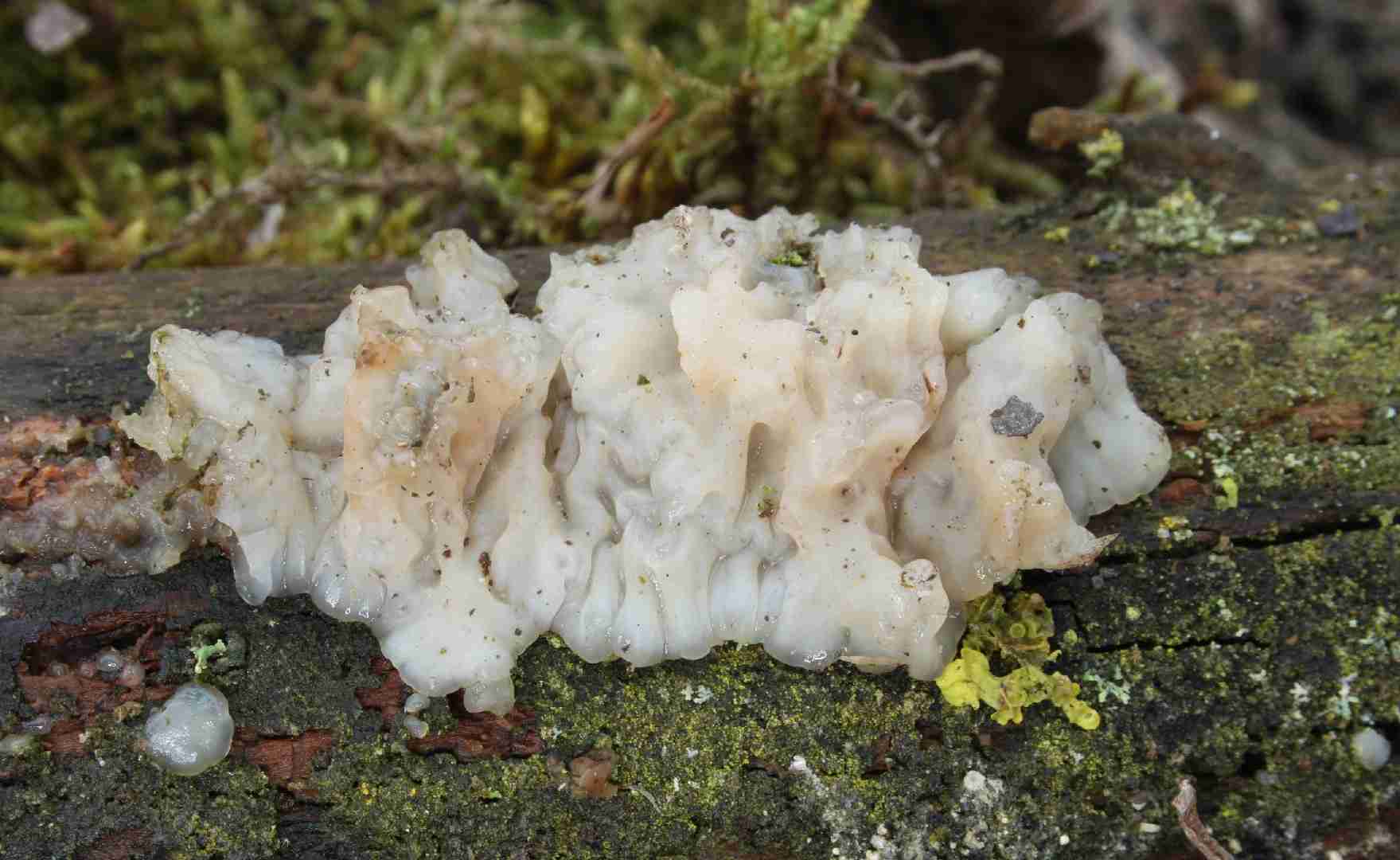
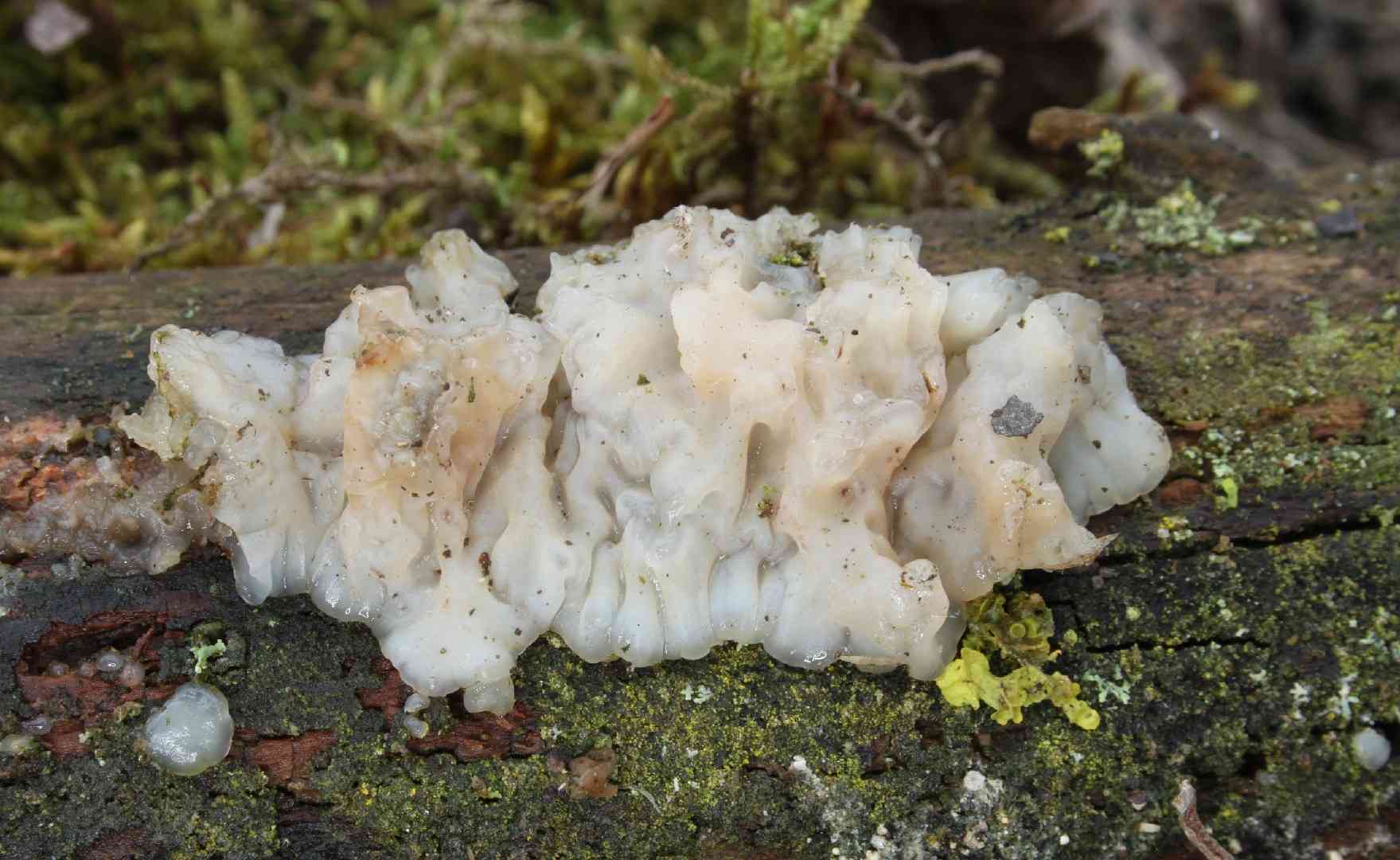
White brain manifests as an ethereal, whitish, or light-colored gelatinous structure, frequently taking on the appearance of a convoluted brain-like or jelly-like formation. It thrives in moist, cooler habitats, commonly developing on decaying or dead wood where it contributes to decomposition. Its presence spans different seasons, contingent upon the prevailing climate and specific locale.
In This Article
Attributes of White brain
Cap Diameter
2 - 10 mm
Cap
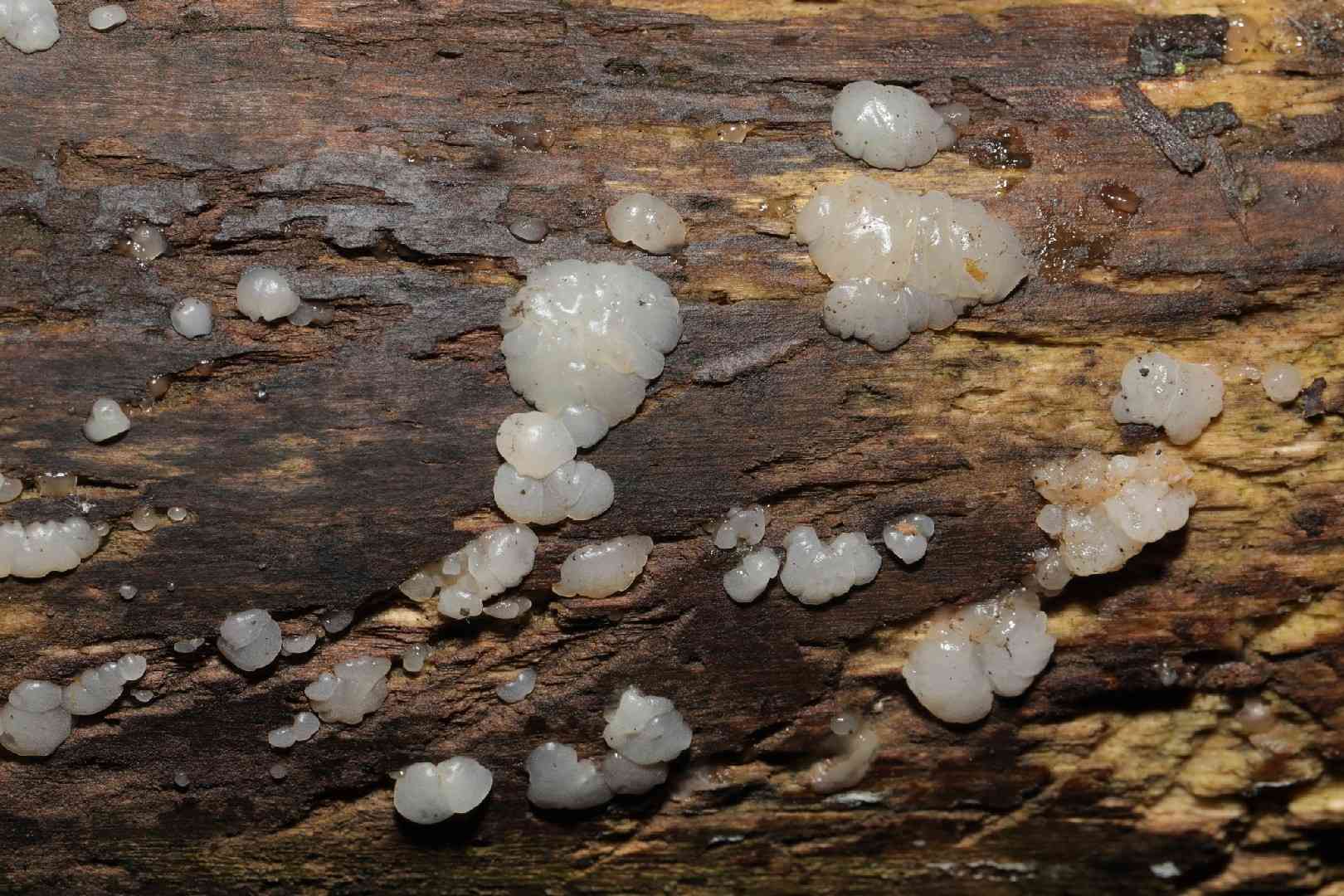
2 - 10 mm in diameter; cushion-shaped; whitish; smooth, opaque
Stem
Lateral, rudimentary or absent
Flesh
Slimy or sticky
Spore Print Color
White
Odor
Faintly fungal, generally indistinct.
Body Color
White
Flesh Bruises
The flesh or milk does not discolor when bruised or cut.
Growth Form
Clustered
Nutrient Gathering
Saprophytic
Substrate
Dead Woods
You can find White brain by these plants
Willows, Oaks
Occurence Habitats
Deciduous Woodland
Species Status
Common in Europe
Endangered Species
No
Scientific Classification of White brain
Phylum
Club fungi
Class
Mushroom-forming fungi
Order
Auriculariales
Family
Auriculariaceae
Genus
Exidia
Toxicity and Edibility of White brain
Is White brain Toxic?
Toxicity information is not available for this mushroom. Always consult with an expert before consuming any wild mushrooms.

