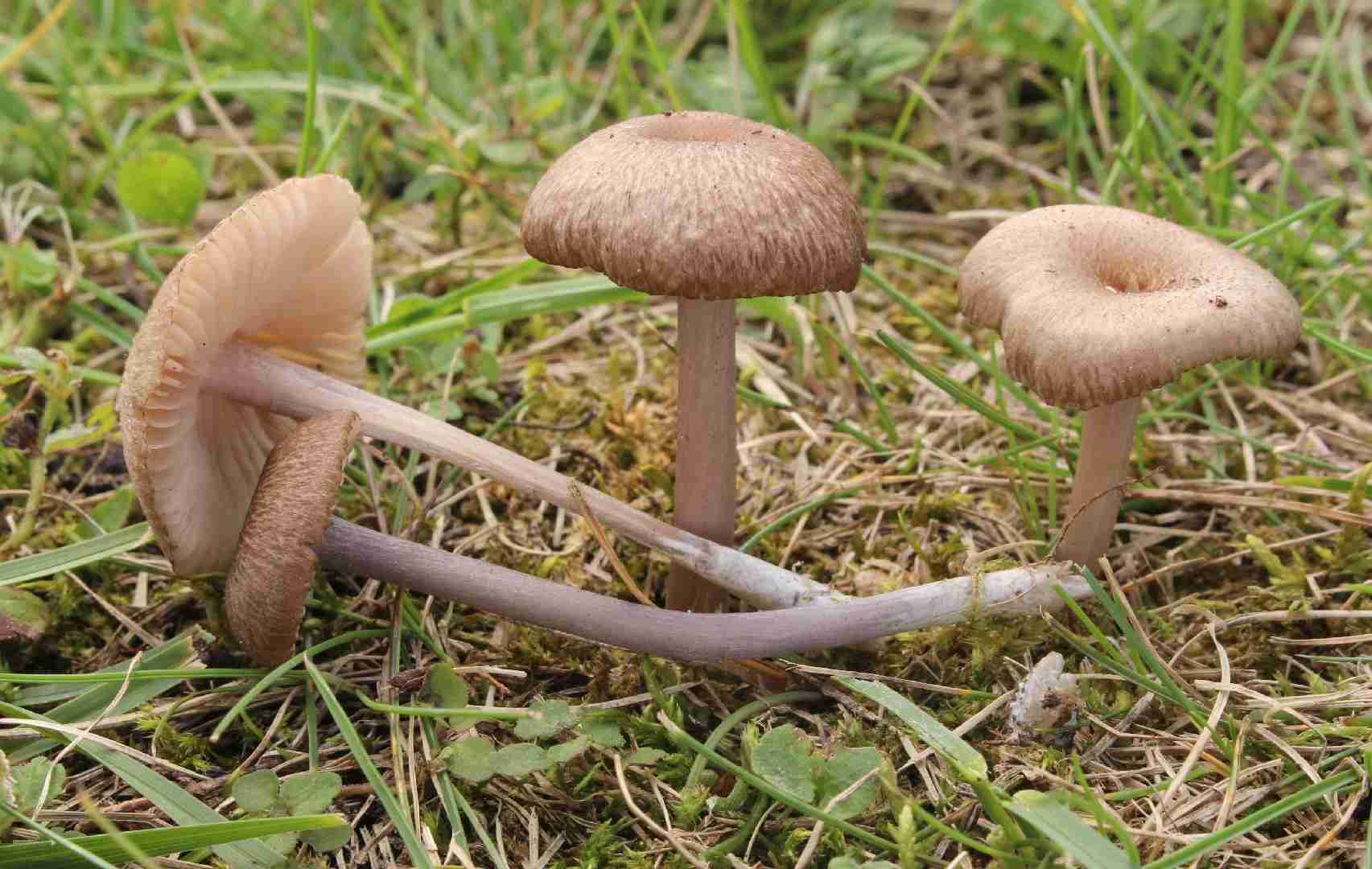
Felted pinkgill
Entoloma griseocyaneum
A species of Pinkgills.
The Felted Pinkgill is recognized by its unique, velvety cap, which commonly displays a grayish-blue hue. This species predominantly grows in the leaf litter of various forest types and exhibits gills extending outward from a central stalk beneath its cap. Typically found in damp, moderate climates, the Felted Pinkgill belongs to an extensive and varied family known for their wide array of cap forms and colors.
In This Article
Attributes of Felted pinkgill
Cap Diameter
2 - 3 cm
Height
4 - 10 cm
Cap
Cap 2 - 3 cm across; conical to broadly convex; pale yellow-brown, red-brown; with fibrous and scaly
Cap Shape
Bell-shaped, Convex
Cap Surfaces
Fibrillose-scaly
Gills
Adnate, sinuate; fairly distant; whitish to pink
Gill Attachment
Notched
Stem
Stem 4 - 10 cm long, 3 - 7 mm thick; cylindrical; blue-grey; with fibrils
Stem Shapes
Cylindrical
Stem Surfaces
Fibrillose
Flesh
Thin; whitish
Ring
Ringless
Spore Print Color
Pink
Odor
Mildly mushroomy, not distinctive.
Body Color
BrownYellowRedSilverGrayBlue
Flesh Bruises
The flesh or milk does not discolor when bruised or cut.
Growth Form
Scattered, Gregarious
Nutrient Gathering
Saprophytic
Substrate
On soil
You can find Felted pinkgill by these plants
Spruces, Pines
Occurence Habitats
Meadows
Species Status
Vulnerable
Endangered Species
No
Scientific Classification of Felted pinkgill
Phylum
Club fungi
Class
Mushroom-forming fungi
Order
Gilled fungi
Family
Entolomataceae
Genus
Pinkgills
Toxicity and Edibility of Felted pinkgill
Is Felted pinkgill Toxic?
Toxicity information is not available for this mushroom. Always consult with an expert before consuming any wild mushrooms.

