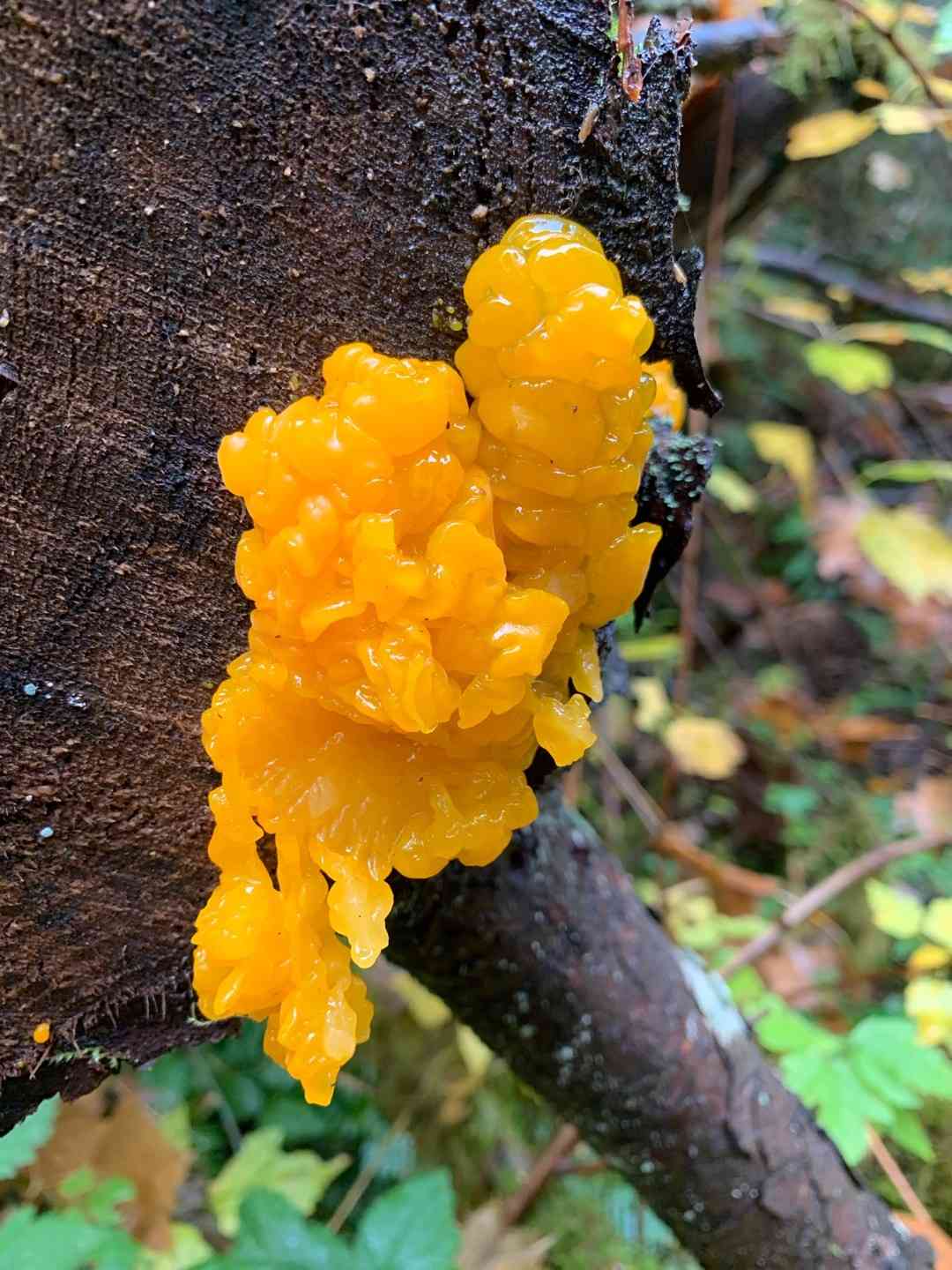
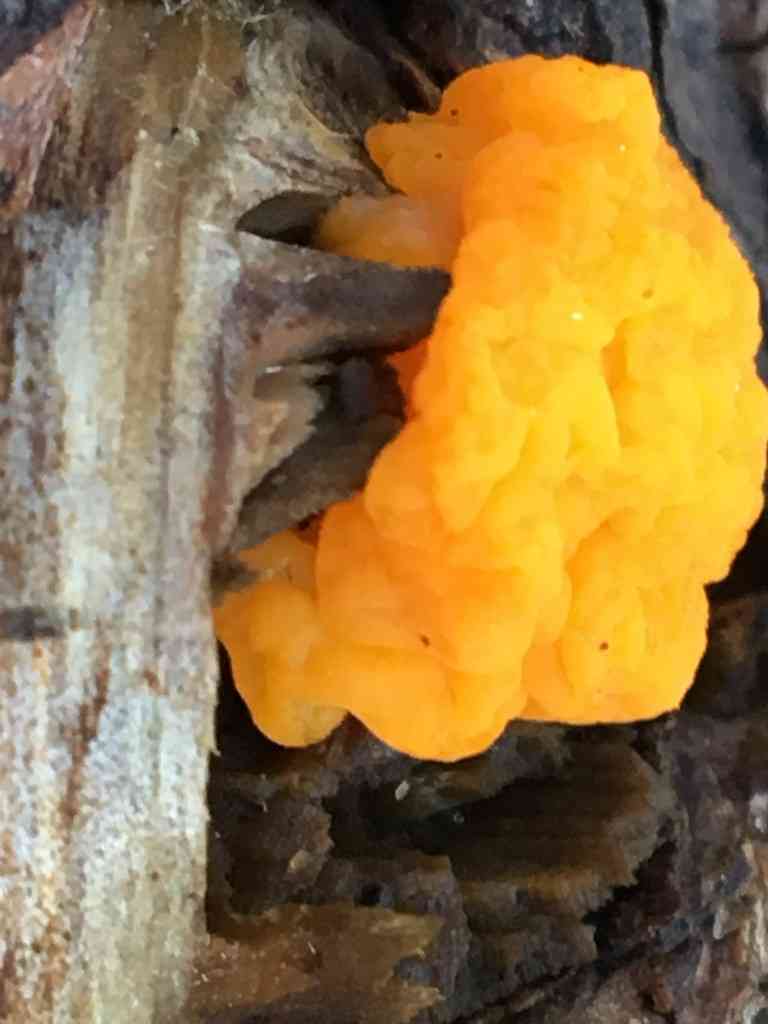
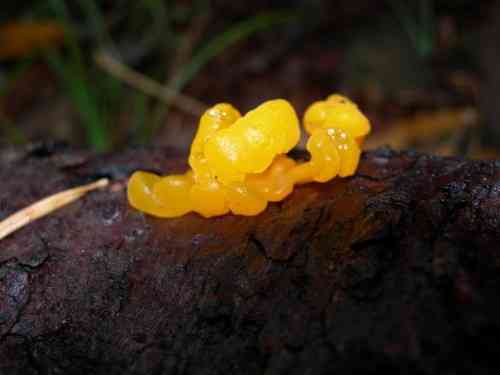
Orange jelly
Dacrymyces chrysospermus
A species of Dacrymyces. Also known as Orange jelly spot.
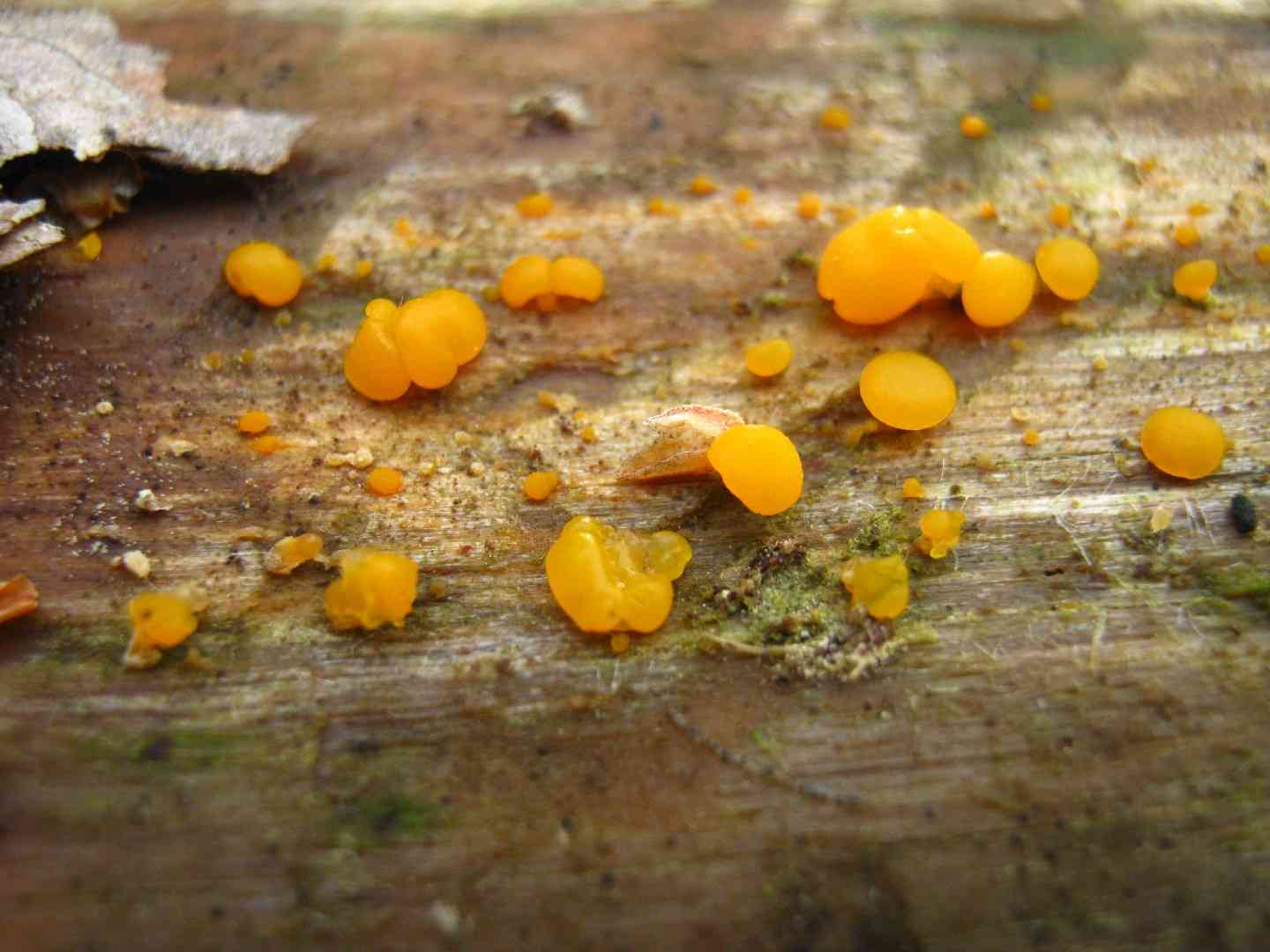
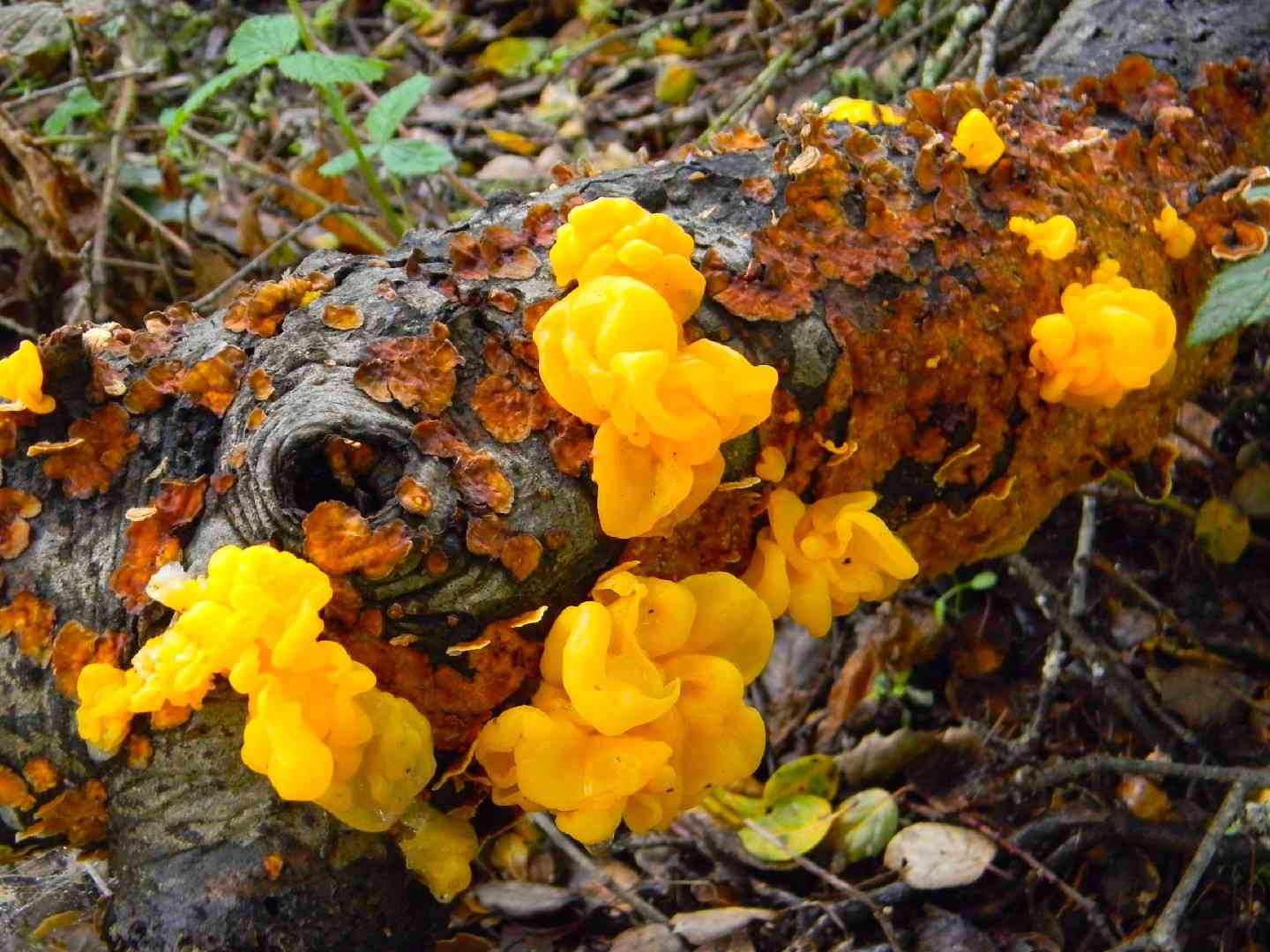
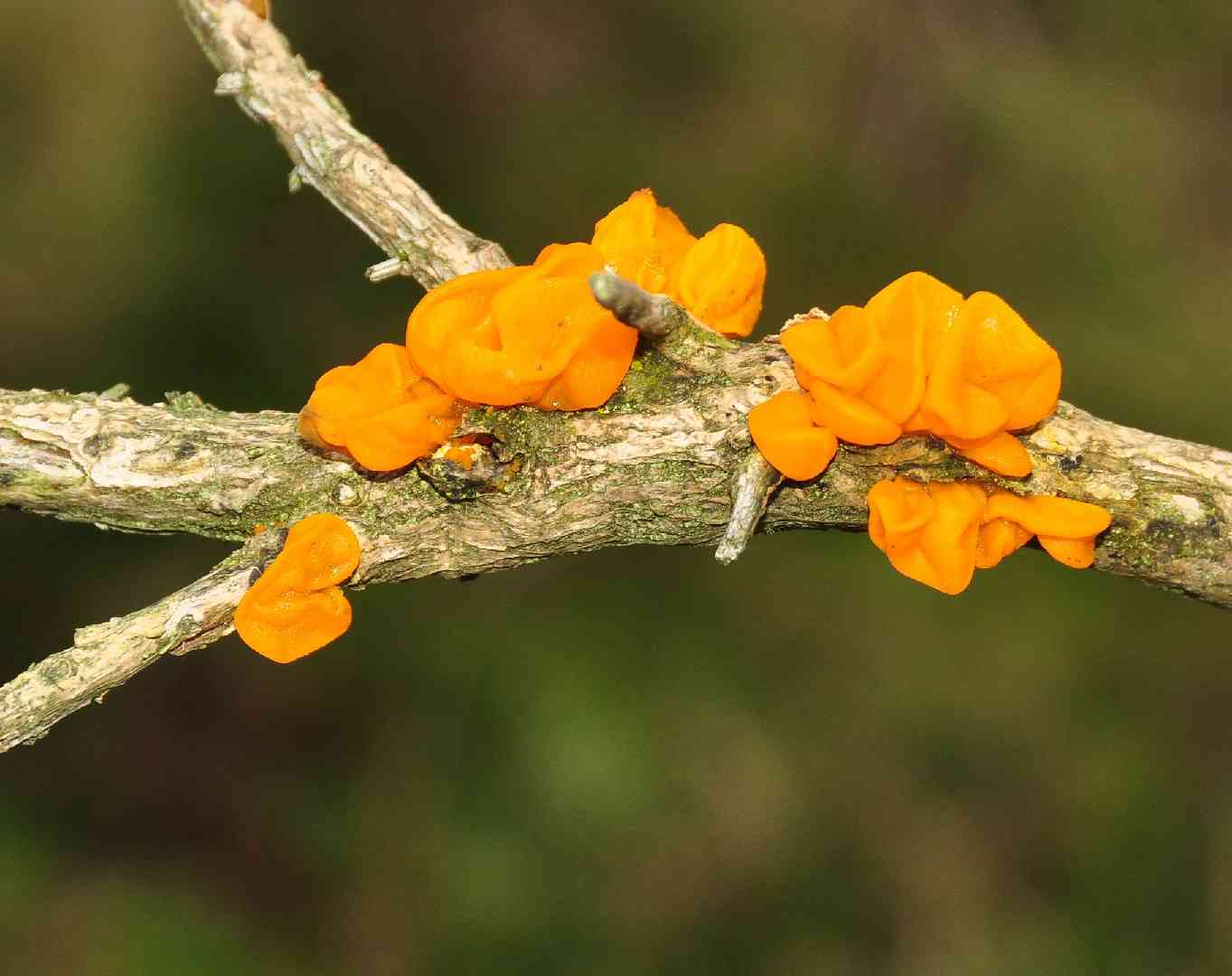
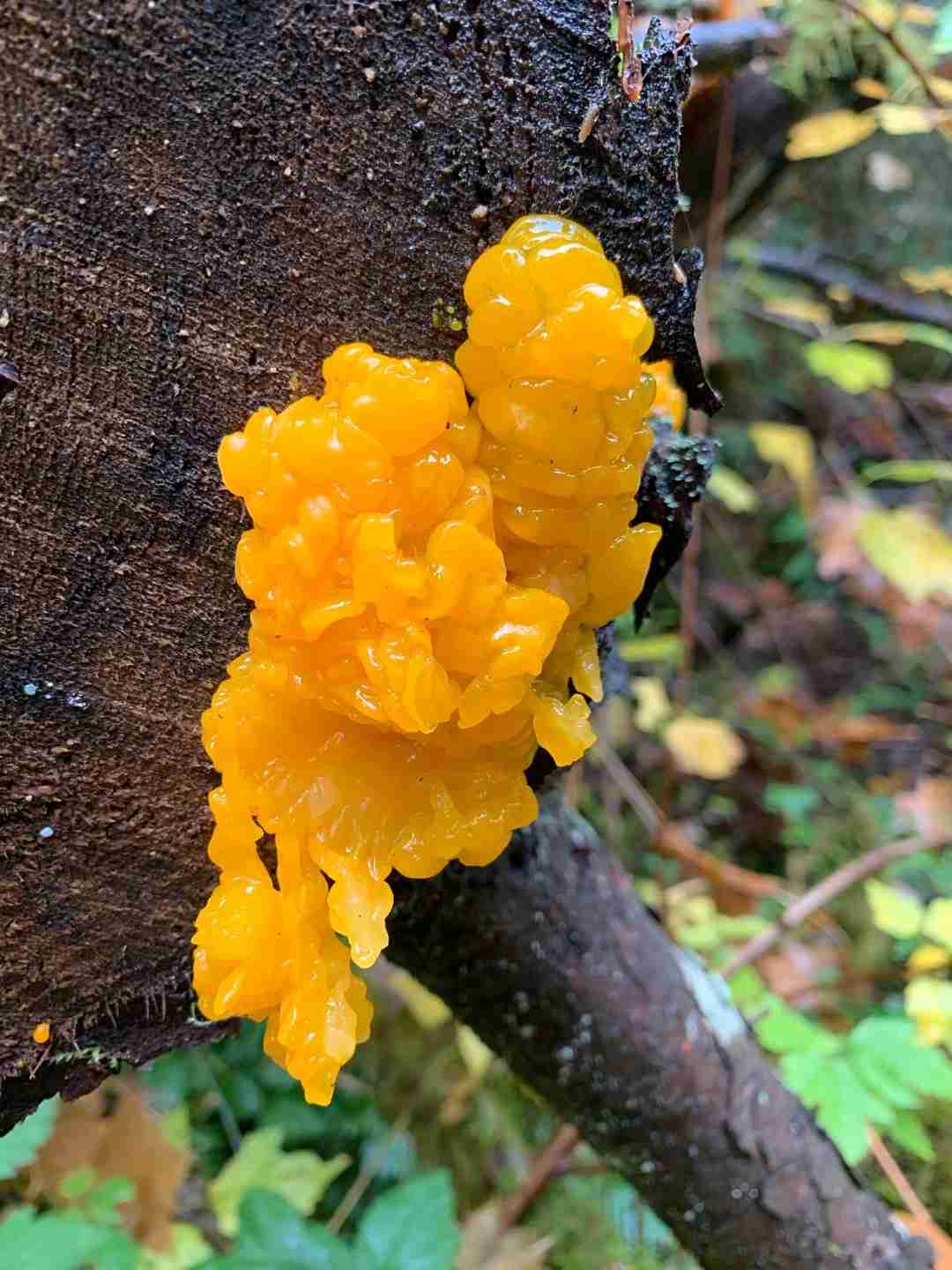
The vibrant orange jelly fungus, Dacrymyces chrysospermus, with its somewhat off-putting, slick appearance, emerges from cracks in tree bark throughout the forest. A striking visual contrast is created by the brilliant white point where the caps connect to the host plant, set against the bright yellow, brain-like cap. This particular mushroom is most frequently discovered on decomposing coniferous wood.
In This Article
Attributes of Orange jelly
Height
5 - 50 mm
Stem
Thick; with large lobes
Flesh
Flesh 6 cm thick; orange-yellow; reddish-brown and more translucent when dry
Spore Print Color
White
Odor
Mildly mushroomy but not distinctive.
Body Color
YellowOrange
Flesh Bruises
The flesh or milk does not discolor when bruised or cut.
Growth Form
Scattered, Gregarious
Nutrient Gathering
Saprophytic
Substrate
Dead Woods
You can find Orange jelly by these plants
Pines
Occurence Habitats
Coniferous Woodland
Species Status
Widespread
Endangered Species
No
Scientific Classification of Orange jelly
Phylum
Club fungi
Class
Dacrymycetes
Order
Dacrymycetales
Family
Jelly fungi
Genus
Dacrymyces
Toxicity and Edibility of Orange jelly
Is Orange jelly Toxic?
Toxicity information is not available for this mushroom. Always consult with an expert before consuming any wild mushrooms.