Earthy powdercap
Cystoderma amianthinum
A species of Powdercaps. Also known as Saffron powder-cap, Pure cystoderma.
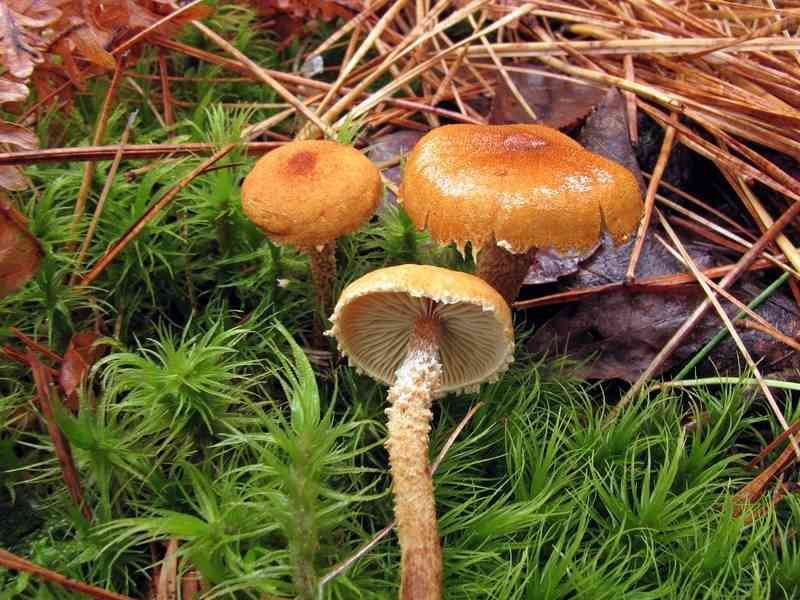
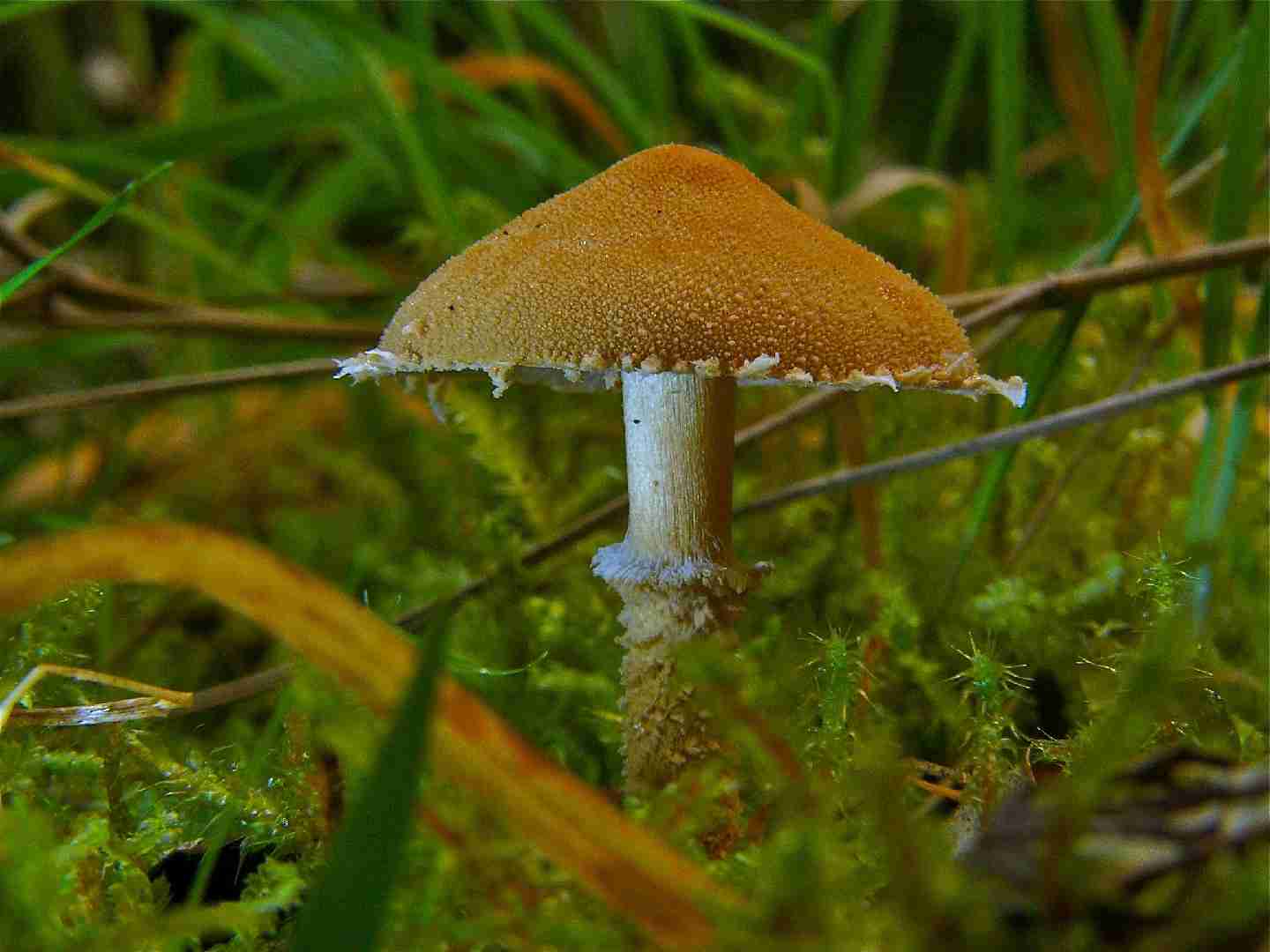
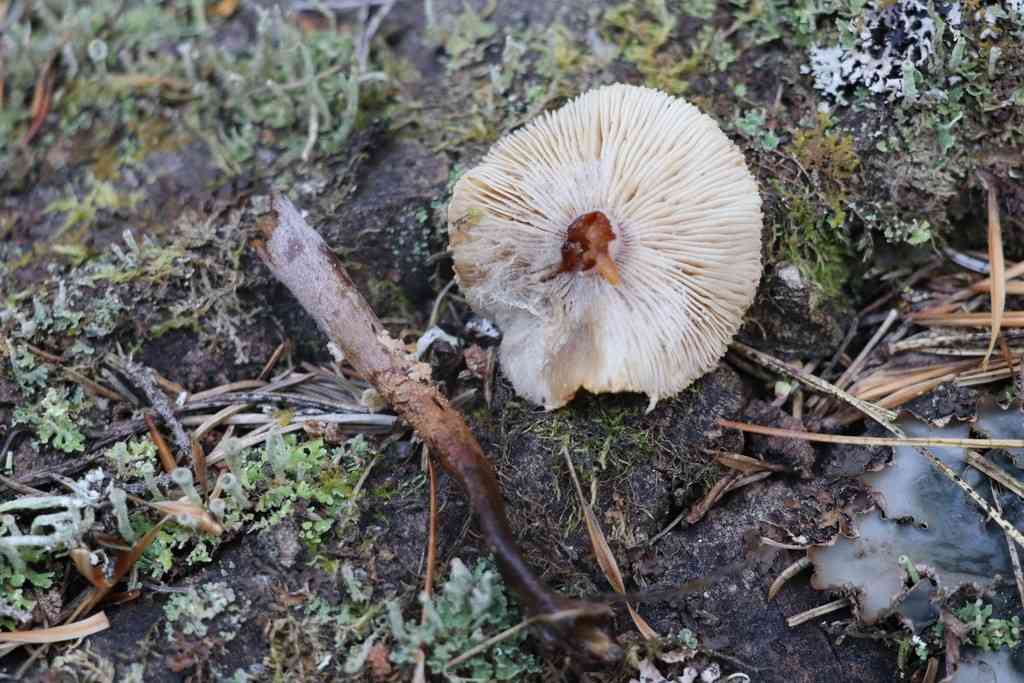
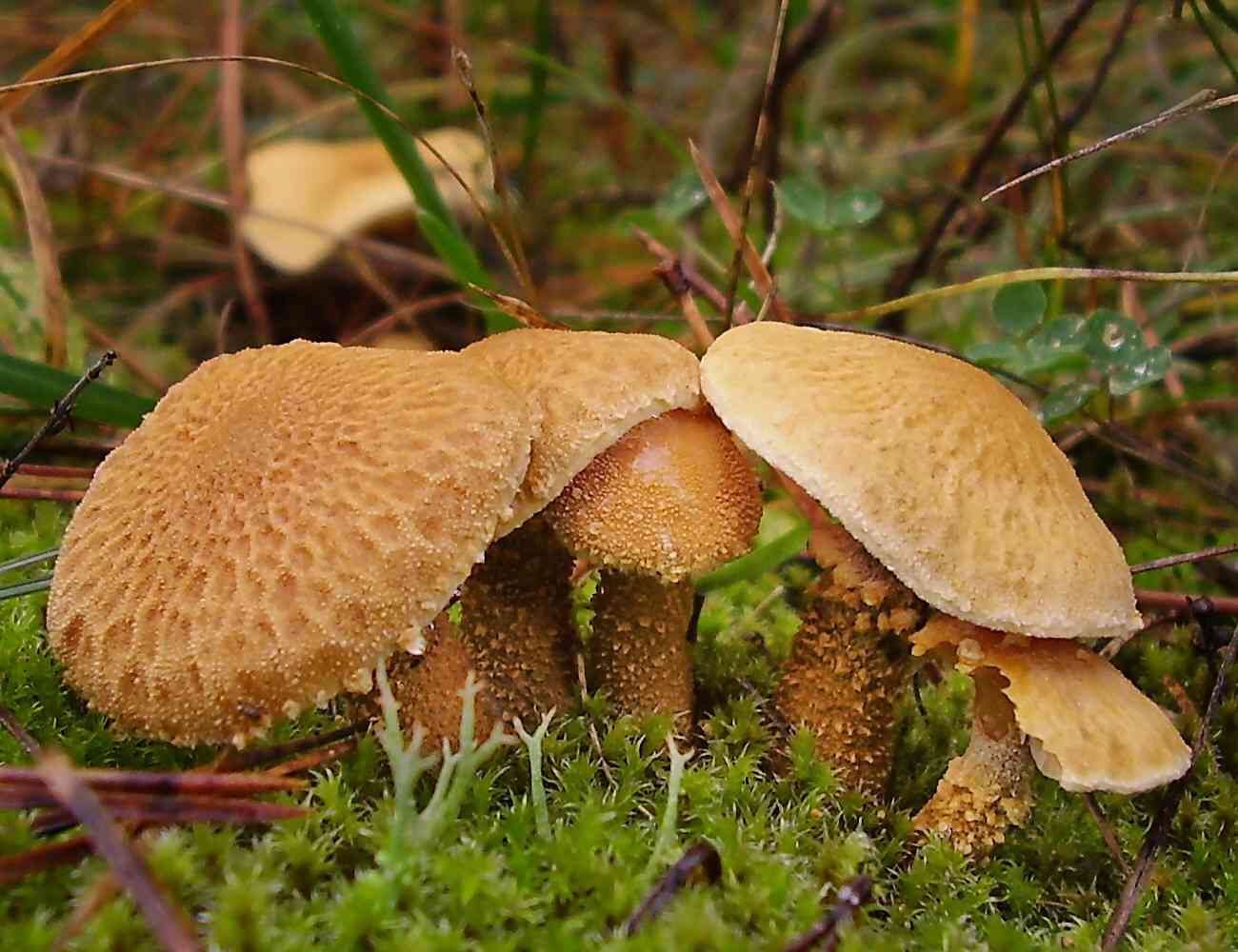
The earthy powdercap (Cystoderma amianthinum), often seen in lawns, moors, heath, and other damp grasslands, is capable of forming impressive fairy rings in areas free of synthetic fertilizers or chemicals. Its unique stem transitions from smooth directly below the cap to noticeably shaggy further down, making each mushroom appear as if it's adorned with a small sock!
In This Article
Attributes of Earthy powdercap
Cap Diameter
2 - 5 cm
Height
4 - 10 cm
Cap
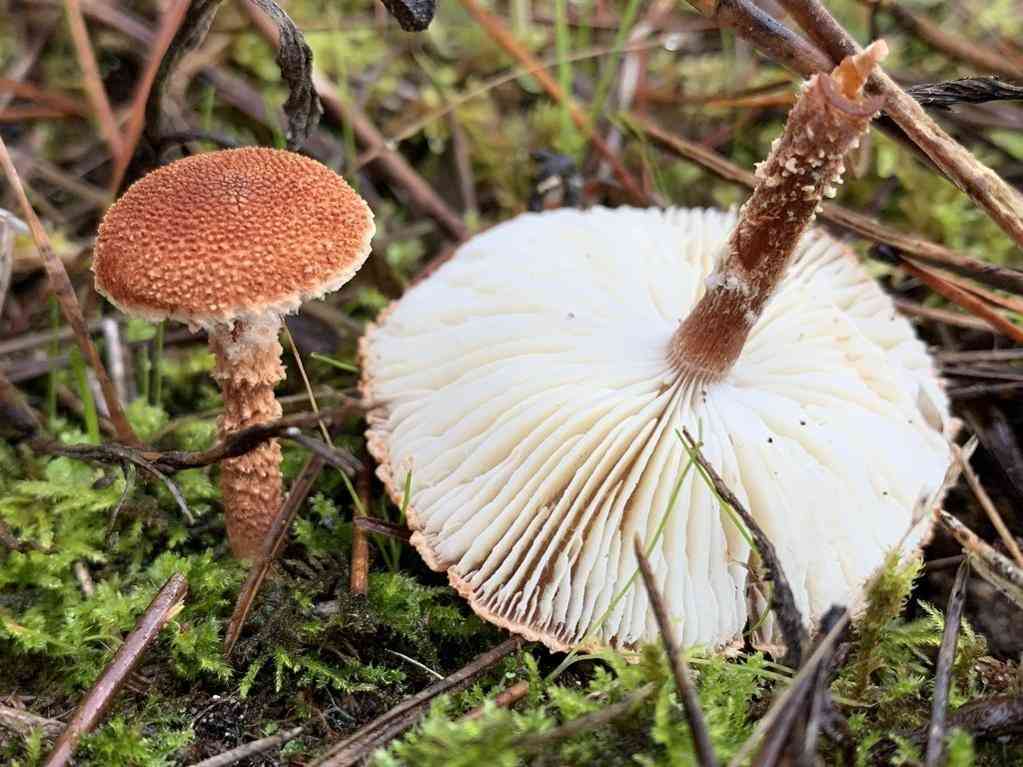
Cap 2 - 5 cm across; convex to flat; bright ocher to ocher-tan; surface with finely granular, smooth, radially wrinkled; margin with veil remnants
Cap Shape
Convex, Bell-shaped, Flat
Cap Surfaces
Fibrillose-scaly
Gills
Attached; close; white to cream
Gill Attachment
Attached
Stem
Stem 3 - 7 cm long, 3 - 8 mm thick; cylindrical; bright ocher to ocher-tan; surface smooth, granular-scaly
Stem Shapes
Cylindrical
Stem Surfaces
Scaly
Flesh
Thin; whitish
Ring
With Ring
Spore Print Color
White
Odor
Often pungent and musty.
Body Color
BrownYellowRed
Flesh Bruises
The flesh or milk does not discolor when bruised or cut.
Growth Form
Solitary, Scattered, Gregarious
Nutrient Gathering
Saprophytic
Substrate
On soil, Mosses
You can find Earthy powdercap by these plants
Spruces, Firs, Pines
Occurence Habitats
Coniferous Woodland, Meadows
Species Status
Widely distributed
Endangered Species
No
Scientific Classification of Earthy powdercap
Phylum
Club fungi
Class
Mushroom-forming fungi
Order
Gilled fungi
Family
Agaricaceae
Genus
Powdercaps
Toxicity and Edibility of Earthy powdercap
Is Earthy powdercap Toxic?
Toxicity information is not available for this mushroom. Always consult with an expert before consuming any wild mushrooms.