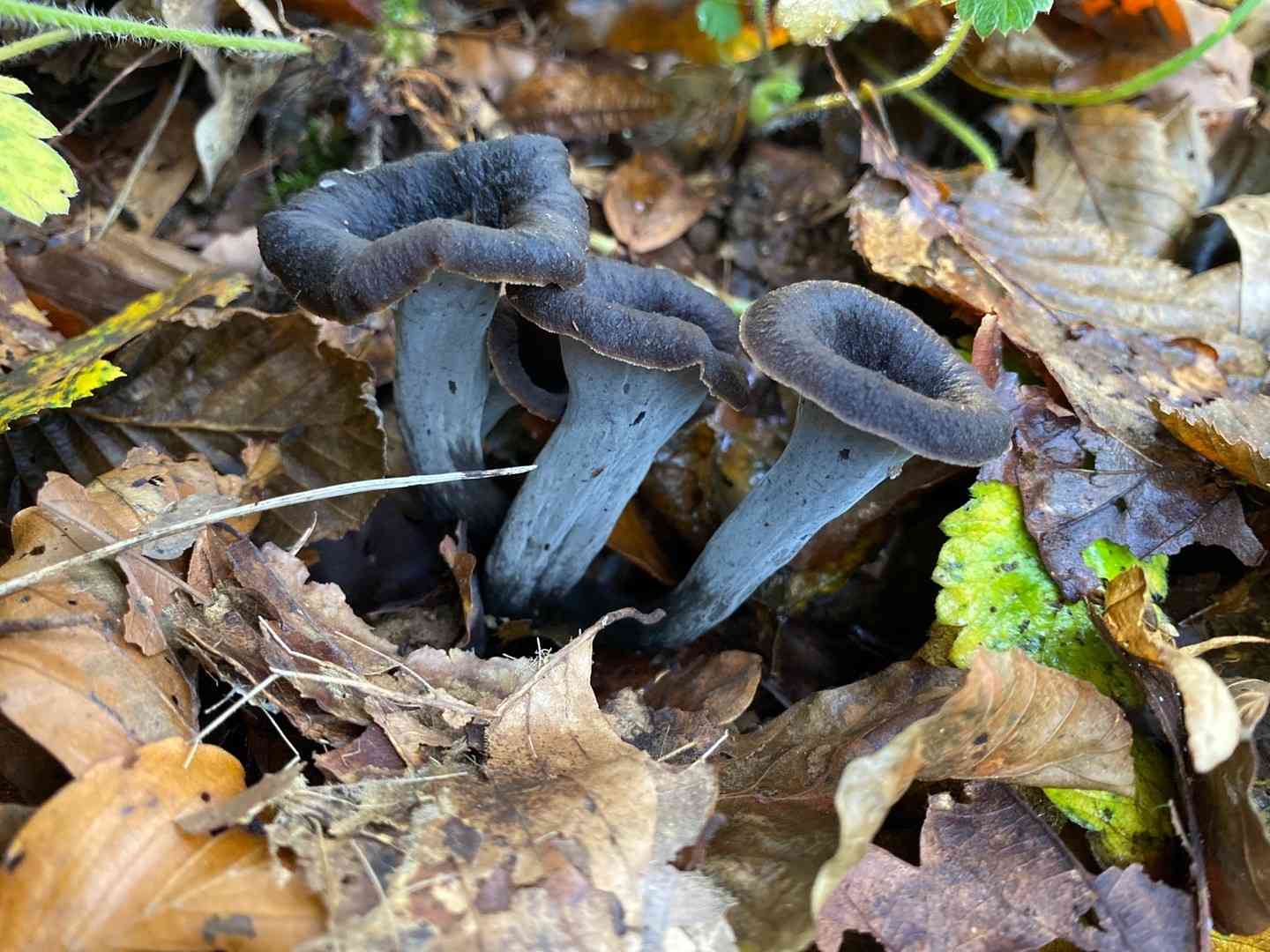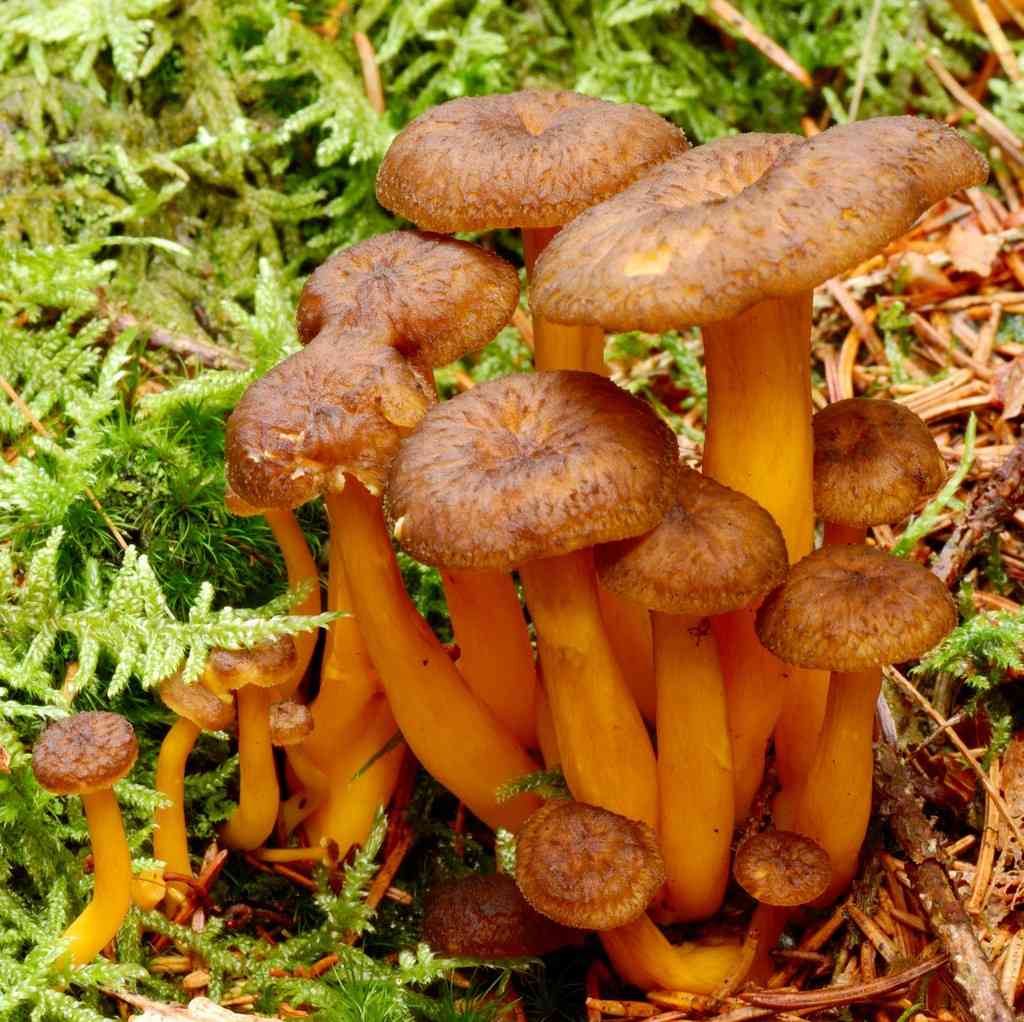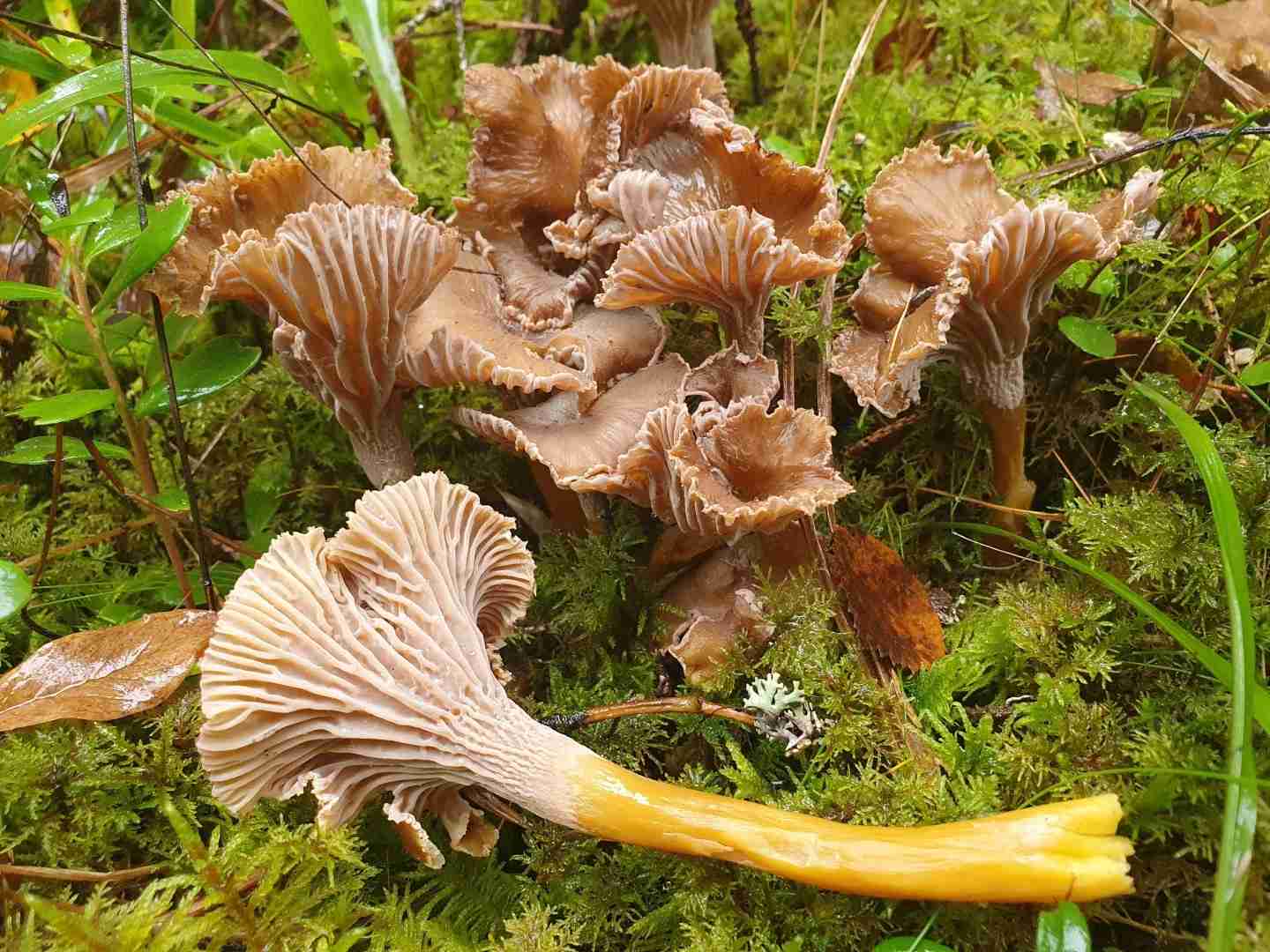
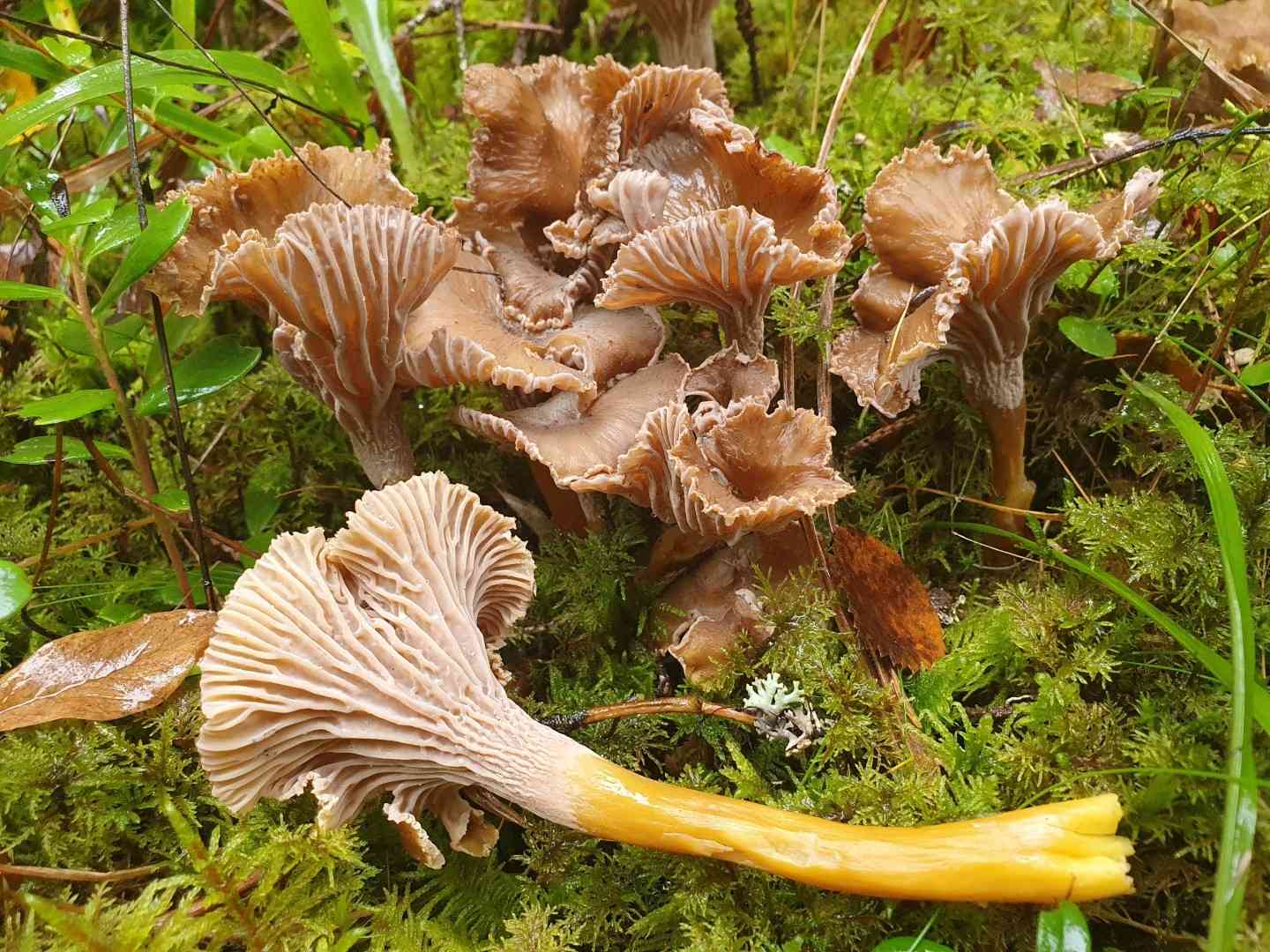
Yellowfoot
Craterellus tubaeformis
A species of Craterellus. Also known as Funnel chanterelle, Yellowlegs.
The yellowfoot, a highly prized member of the chanterelle family, thrives in temperate forests, wetlands, and bogs throughout the northern hemisphere. Esteemed as a gourmet edible, it offers a delightful, intricate flavor profile, though it leans less fruity and sweet compared to some of its more renowned relatives. Often referred to as winter mushrooms, yellowfoots are notable for their late-season fruiting habits.
In This Article
Attributes of Yellowfoot
Cap Diameter
2 - 7 cm
Height
3 - 9 cm
Cap
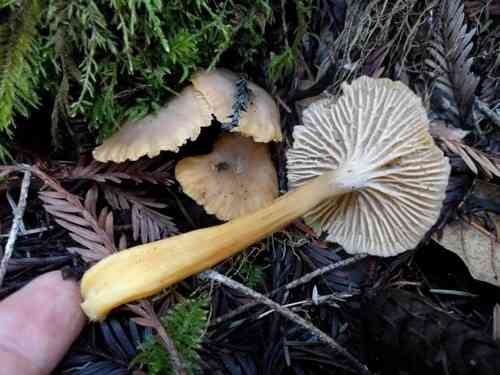
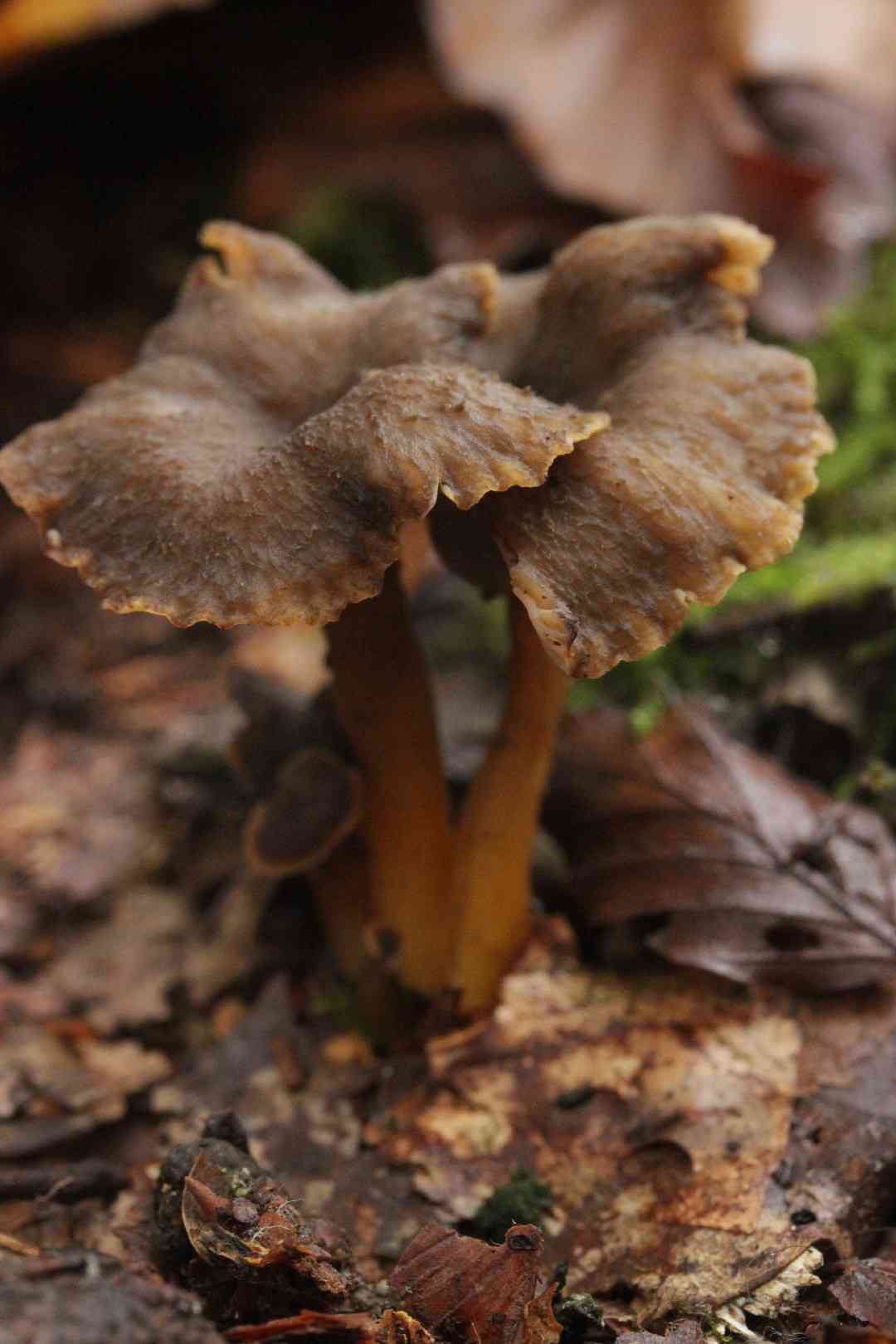
Cap 2 - 7 cm across; funnel- or trumpet-shaped; brown; surface smooth, slightly scaly; margin wavy
Cap Shape
Convex, Depressed
Cap Surfaces
Slimy or slightly sticky, Fibrillose-scaly
Gills
Decurrent; forked; pale
Gill Attachment
Decurrent
Stem
Stem 3 - 9 cm long, 3 - 8 mm thick; yellow to tawny; waxy; surface smooth
Stem Shapes
Cylindrical
Stem Surfaces
Smooth
Flesh
Brownish to yellowish
Ring
Ringless
Spore Print Color
White
Odor
Slightly fragrant, generally not distinctive.
Body Color
BrownBlackYellowGrayWhiteOrange
Flesh Bruises
The flesh or milk does not discolor when bruised or cut.
Growth Form
Scattered, Gregarious
Nutrient Gathering
Mycorrhizal
Substrate
On soil, Mosses, Dead Woods
You can find Yellowfoot by these plants
Spruces, Pines, Oaks, European beech
Occurence Habitats
Coniferous Woodland, Mixed Woodland
Endangered Species
No
Scientific Classification of Yellowfoot
Phylum
Club fungi
Class
Mushroom-forming fungi
Order
Cantharellales
Family
Chanterelle
Genus
Craterellus
Toxicity and Edibility of Yellowfoot
Is Yellowfoot Toxic?
Toxicity information is not available for this mushroom. Always consult with an expert before consuming any wild mushrooms.