Yellow foot
Craterellus lutescens
A species of Craterellus.
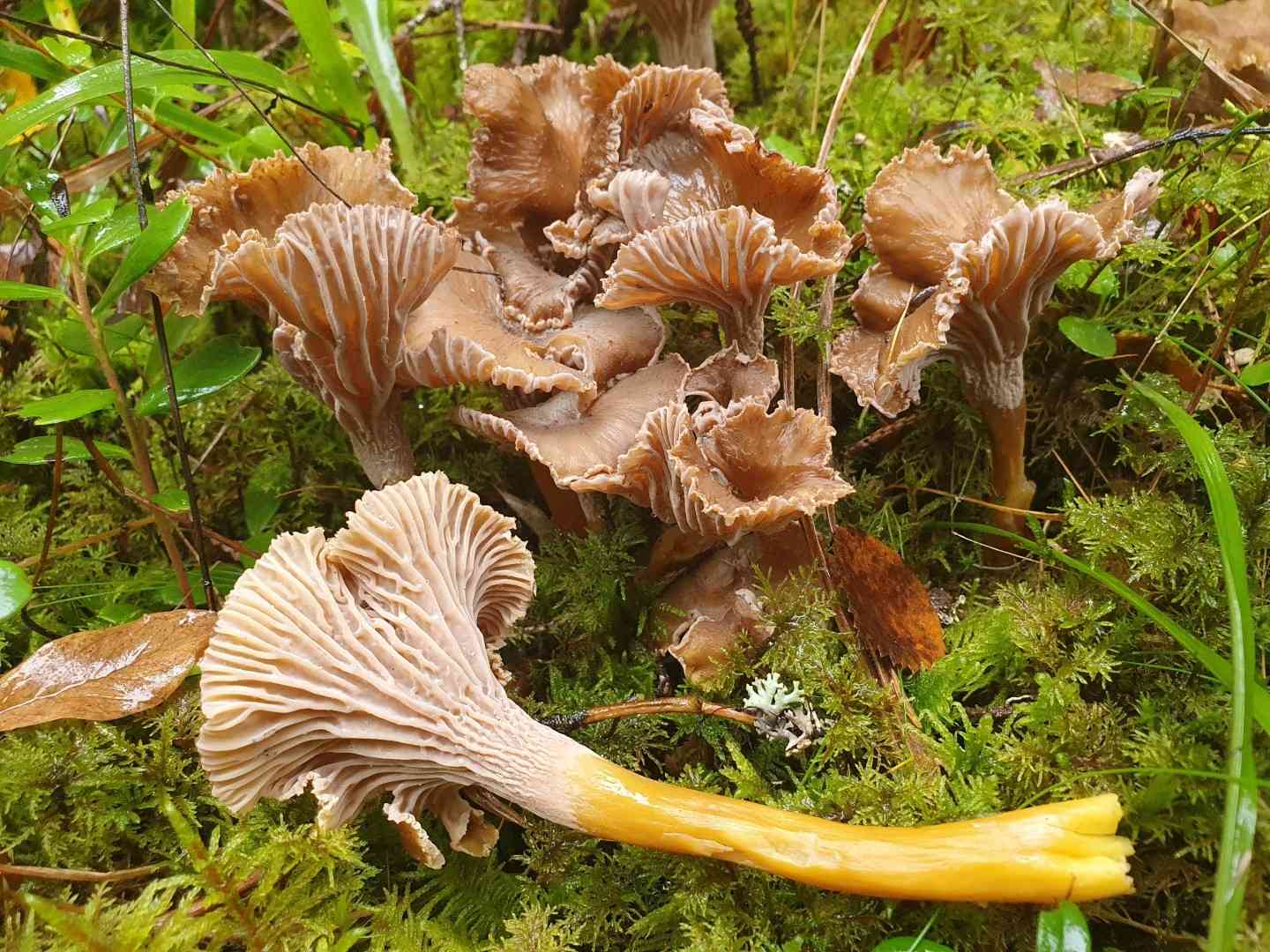
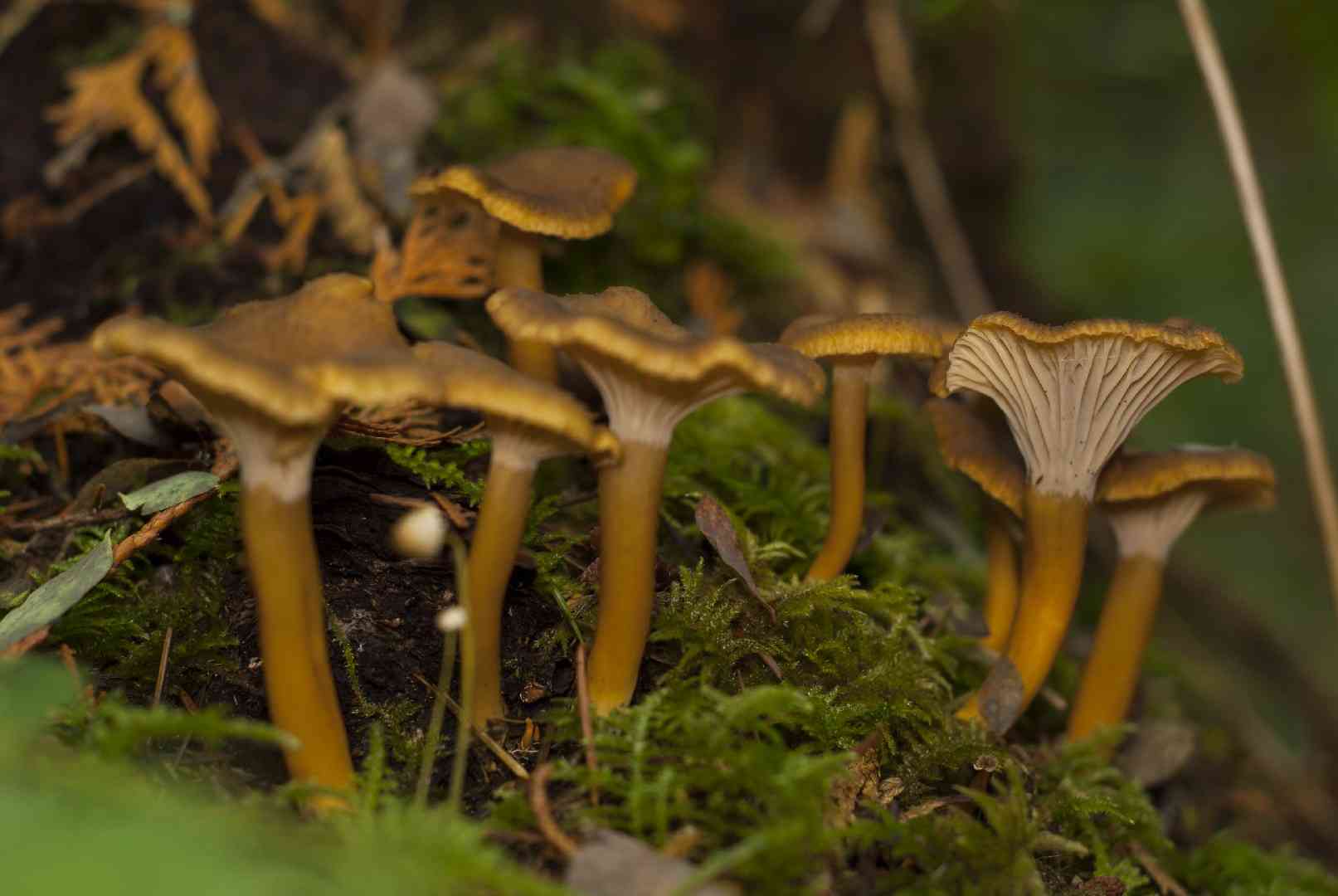
As with all species belonging to the Craterellus genus, the yellow foot lacks genuine gills, possessing instead a network of wrinkled veins. In this particular mushroom, these gill-like wrinkles are exceptionally faint, making its underside appear entirely smooth. This species is typically found in association with conifer forests.
In This Article
Attributes of Yellow foot
Cap Diameter
2 - 6 cm
Height
3 - 6 cm
Cap
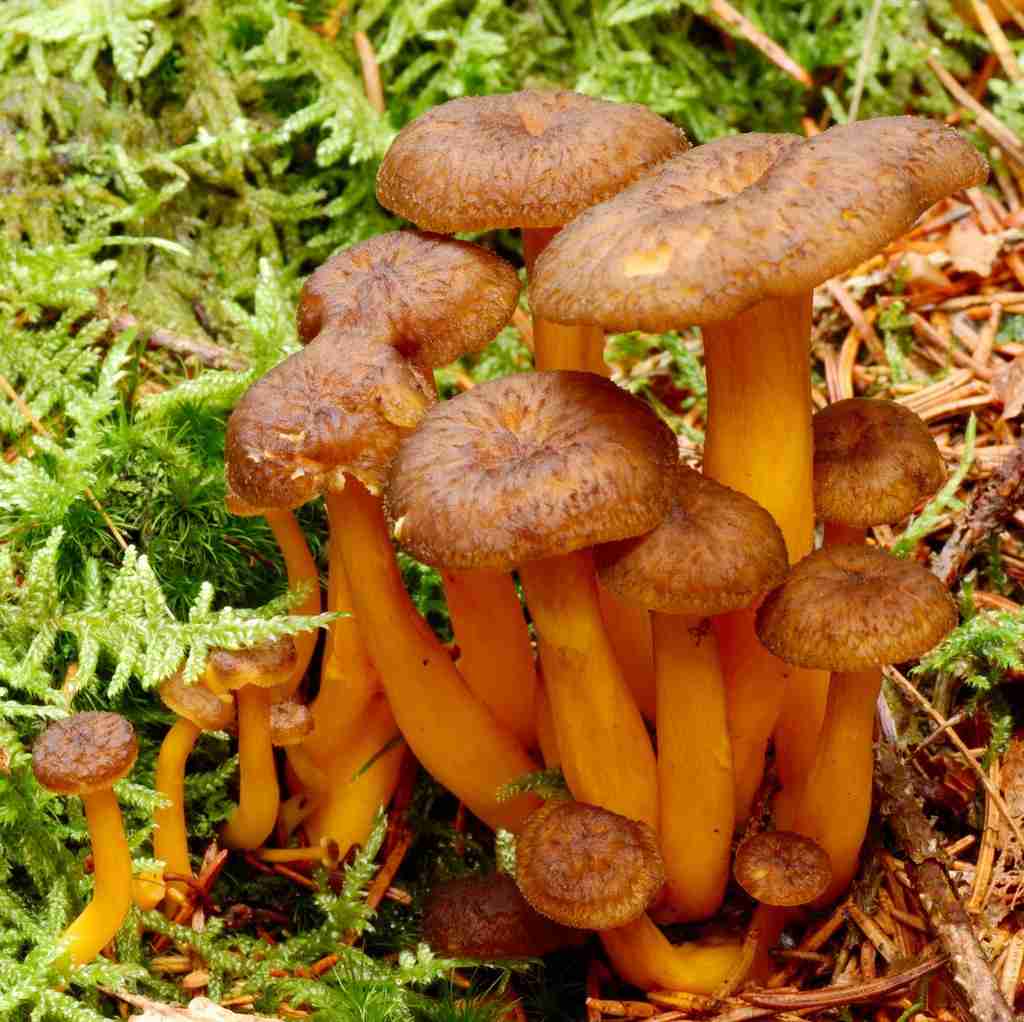
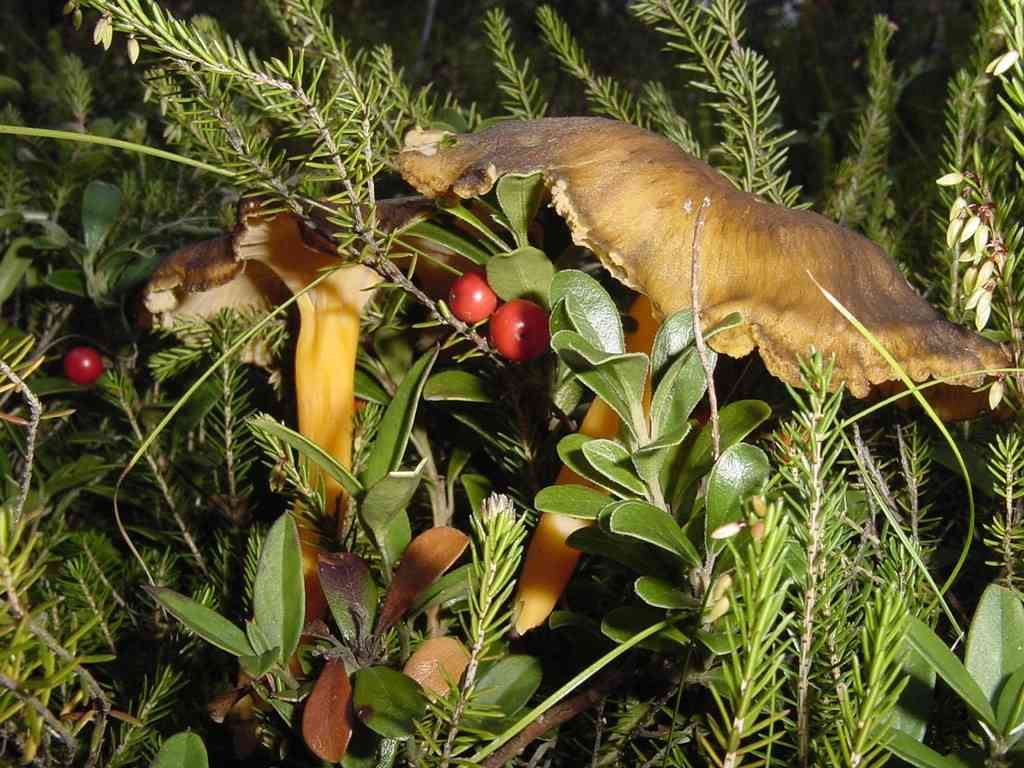
Cap 2 - 6 cm across; vase-shaped; brown to orangish brown, fading to tan; bald, or with innate brown fibrils
Cap Shape
Depressed, Bell-shaped
Cap Surfaces
Fibrillose-scaly
Stem
Stem 2.5 - 6 cm long, 4 - 11 mm thick; equal, or tapered slightly toward the base, hollow; bright orange; bald, lubricous
Stem Shapes
Cylindrical
Stem Surfaces
Smooth
Flesh
Insubstantial; whitish in cap, orangish in stem cortex; unchanging
Ring
Ringless
Spore Print Color
Cream to salmon
Odor
Mildly mushroomy but not distinctive.
Body Color
BrownBronzeOrange
Flesh Bruises
The flesh or milk does not discolor when bruised or cut.
Growth Form
Gregarious
Nutrient Gathering
Mycorrhizal
Substrate
On soil, Mosses, Dead Woods
You can find Yellow foot by these plants
Spruces
Occurence Habitats
Coniferous Woodland, Deciduous Woodland
Species Status
Widespread
Endangered Species
No
Scientific Classification of Yellow foot
Phylum
Club fungi
Class
Mushroom-forming fungi
Order
Cantharellales
Family
Chanterelle
Genus
Craterellus
Toxicity and Edibility of Yellow foot
Is Yellow foot Toxic?
Toxicity information is not available for this mushroom. Always consult with an expert before consuming any wild mushrooms.