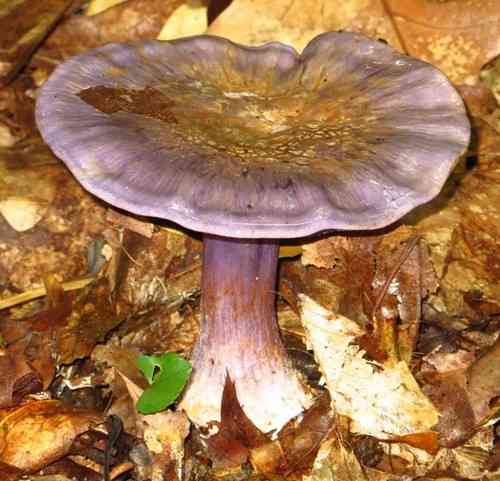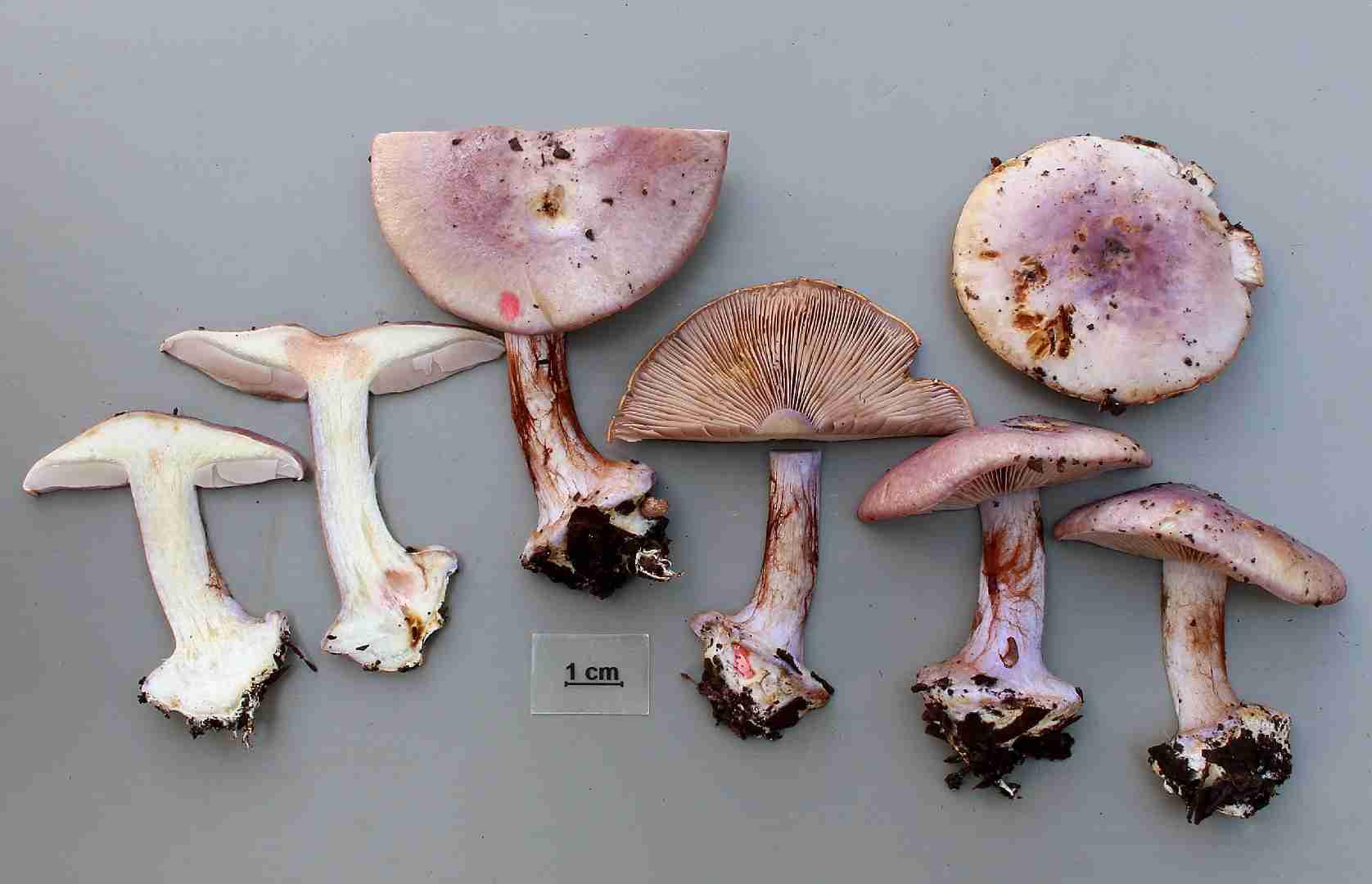
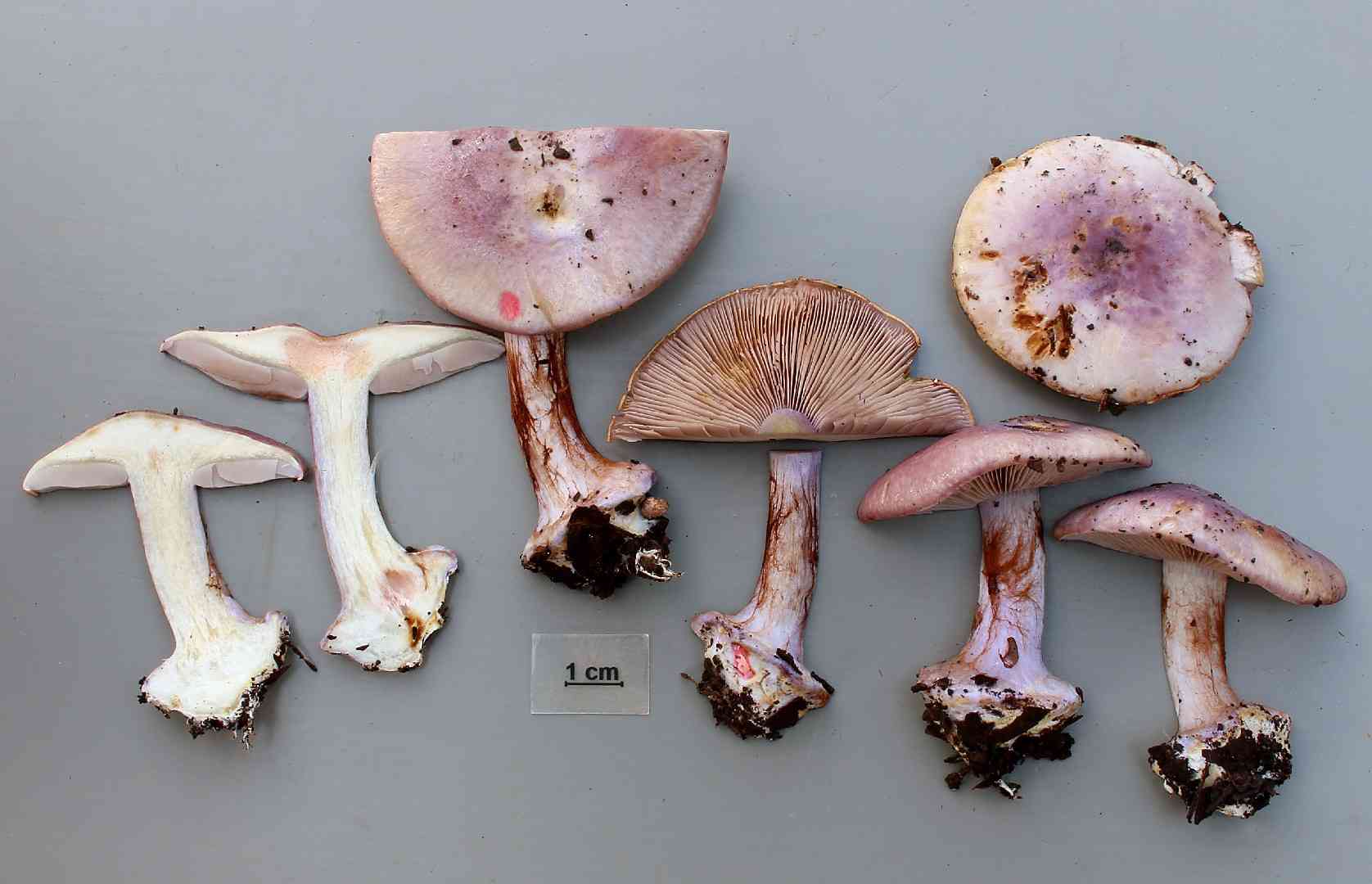
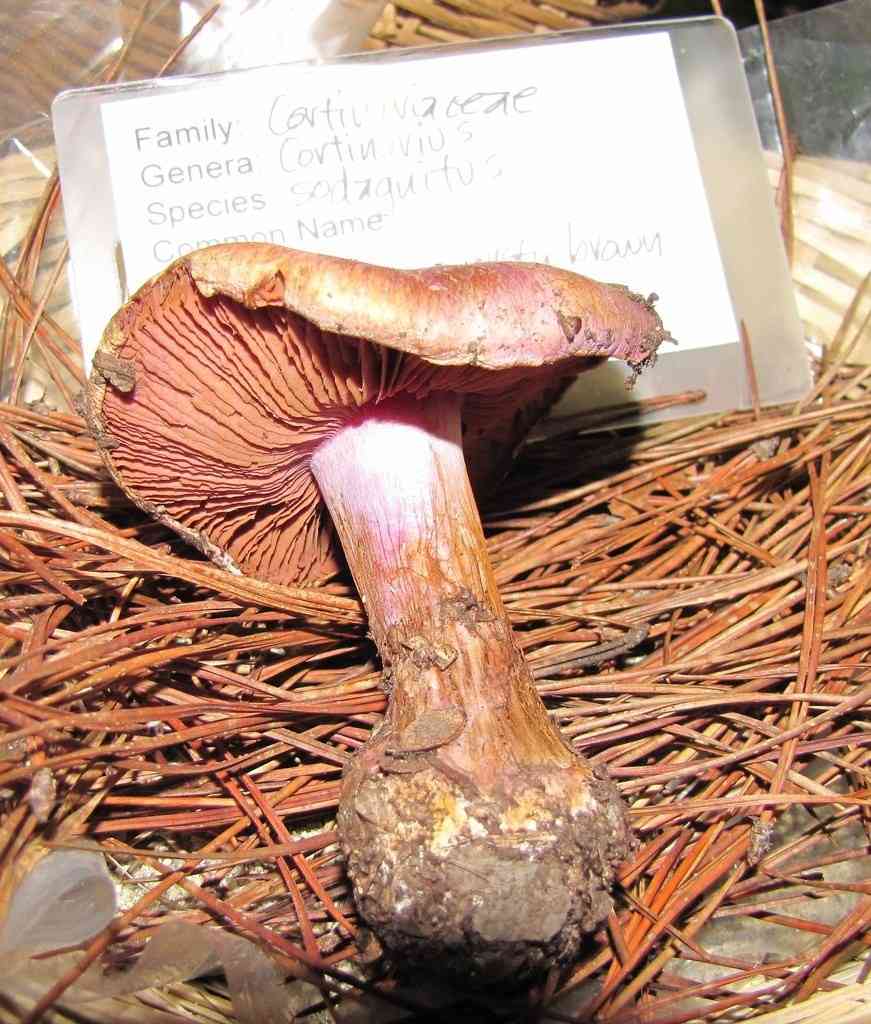
Bitter bigfoot webcap
Cortinarius sodagnitus
A species of Cortinar.
The distinctive Cortinarius venenosus, known for its unique arachnoid partial veil and robust build, typically features a deeply pigmented cap that is somewhat viscid in its early stages. Its widely spaced gills undergo color changes as the fungus matures. This species thrives in forested environments, frequently engaging in symbiotic partnerships with specific tree types, thus playing a role in the health of woodland ecosystems.
In This Article
Attributes of Bitter bigfoot webcap
Cap Diameter
3 - 11 cm
Height
4 - 7 cm
Cap
Cap 4 - 8 cm across; convex; deep violet to ocher; surface smooth
Cap Shape
Convex, Flat
Cap Surfaces
Slimy or slightly sticky
Gills
Adnate; dense; grayish to brown
Gill Attachment
Notched
Stem
Stem 4 - 9 cm long, 1 - 2 cm thick; cylindrical; white to violet; with veil
Stem Shapes
Bulbous
Flesh
Firm; whitish
Ring
With Ring Zone
Spore Print Color
Rusty brown
Odor
Mildly mushroomy but not distinctive.
Body Color
BrownYellowRedWhitePurple
Flesh Bruises
The flesh or milk does not discolor when bruised or cut.
Growth Form
Solitary, Scattered
Nutrient Gathering
Mycorrhizal
Substrate
On soil
You can find Bitter bigfoot webcap by these plants
Spruces, Pines
Endangered Species
No
Scientific Classification of Bitter bigfoot webcap
Phylum
Club fungi
Class
Mushroom-forming fungi
Order
Gilled fungi
Family
Cortinariaceae
Genus
Cortinar
Toxicity and Edibility of Bitter bigfoot webcap
Is Bitter bigfoot webcap Toxic?
Toxicity information is not available for this mushroom. Always consult with an expert before consuming any wild mushrooms.