Bruising webcap
Cortinarius purpurascens
A species of Cortinar.
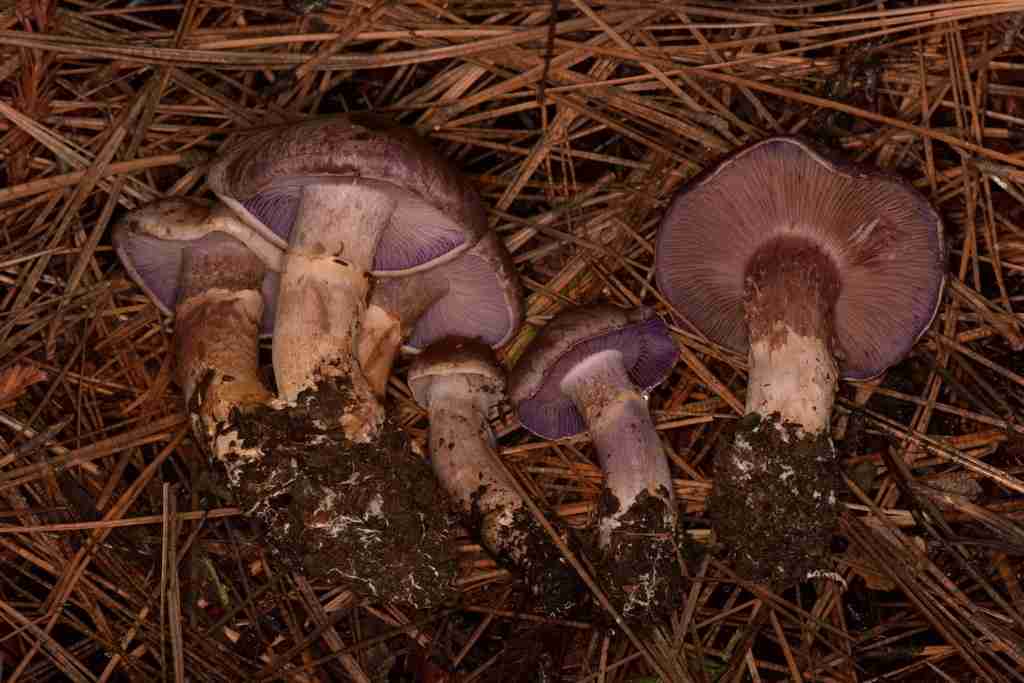
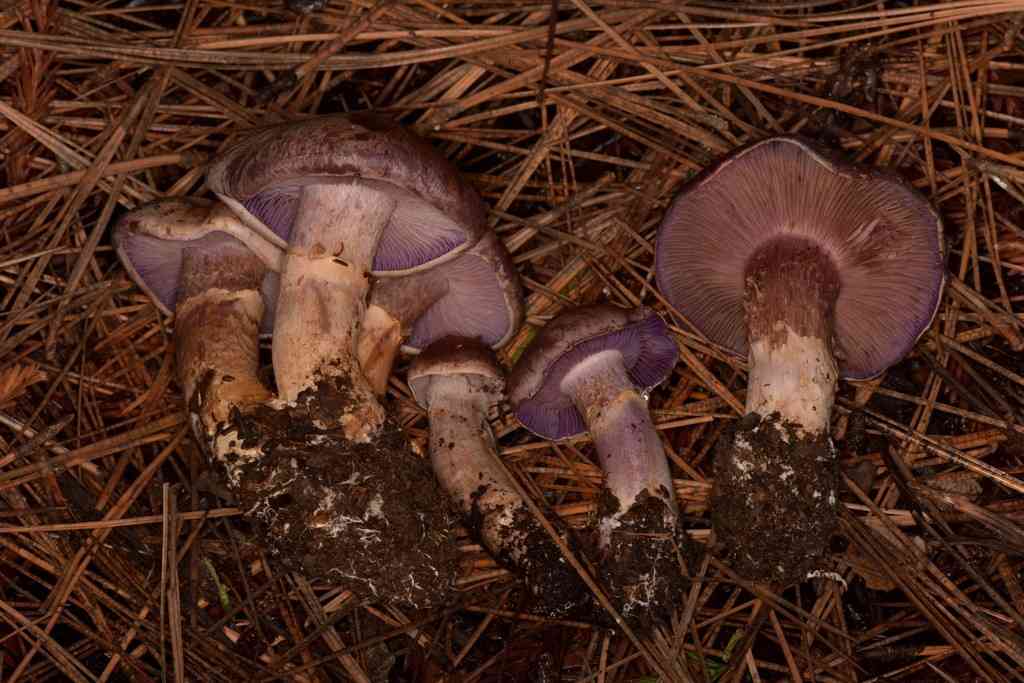
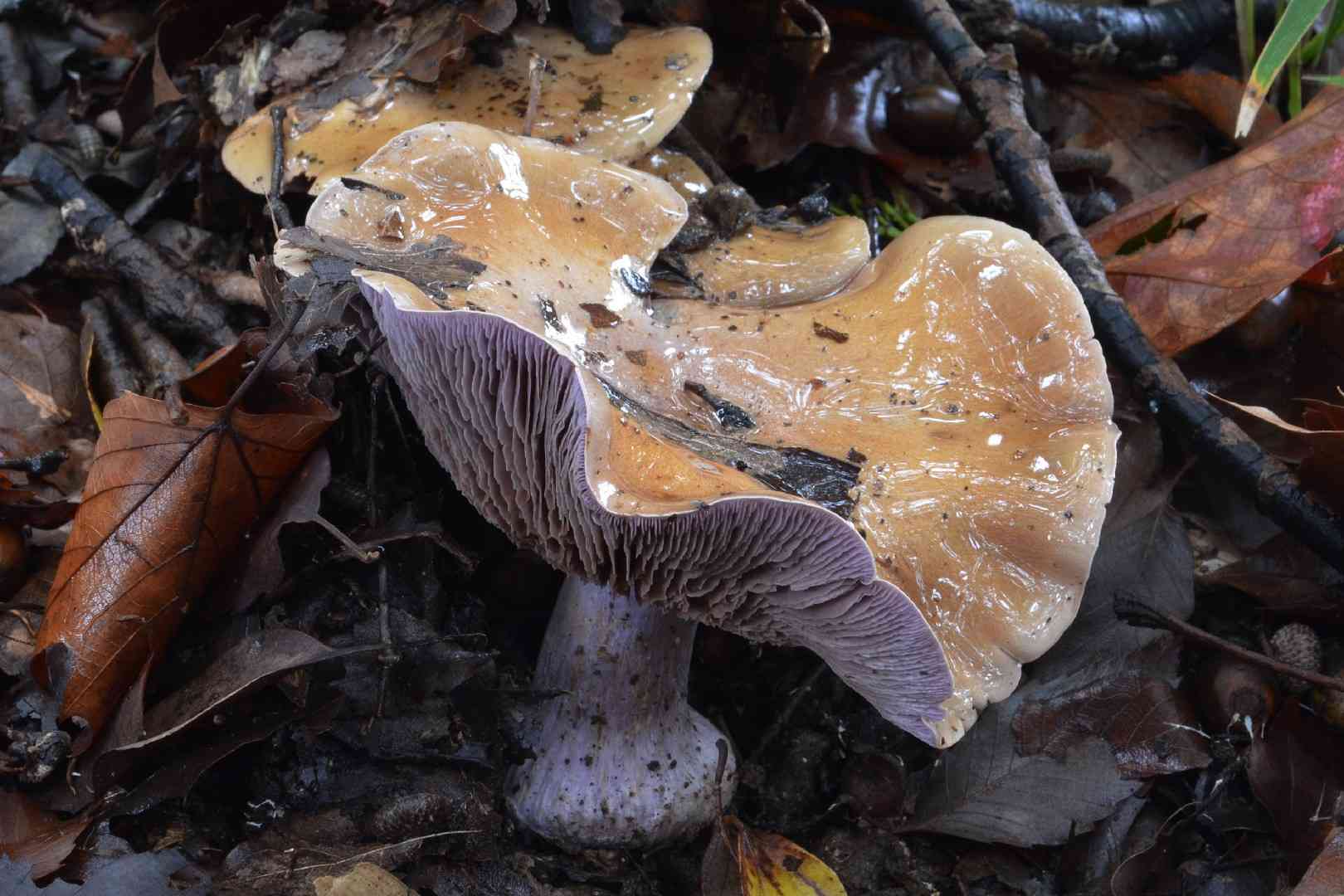
As its name implies, the Bruising webcap discolors to a purplish hue when it sustains damage. This characteristic is also acknowledged in its specific epithet, purpurascens. The Bruising webcap is typically recognized by its substantial, often glistening and adhesive cap. This variety bears a strong resemblance to numerous highly poisonous fungi and should therefore never be harvested for consumption.
In This Article
Attributes of Bruising webcap
Cap Diameter
4 - 10 cm
Height
6 - 13 cm
Cap
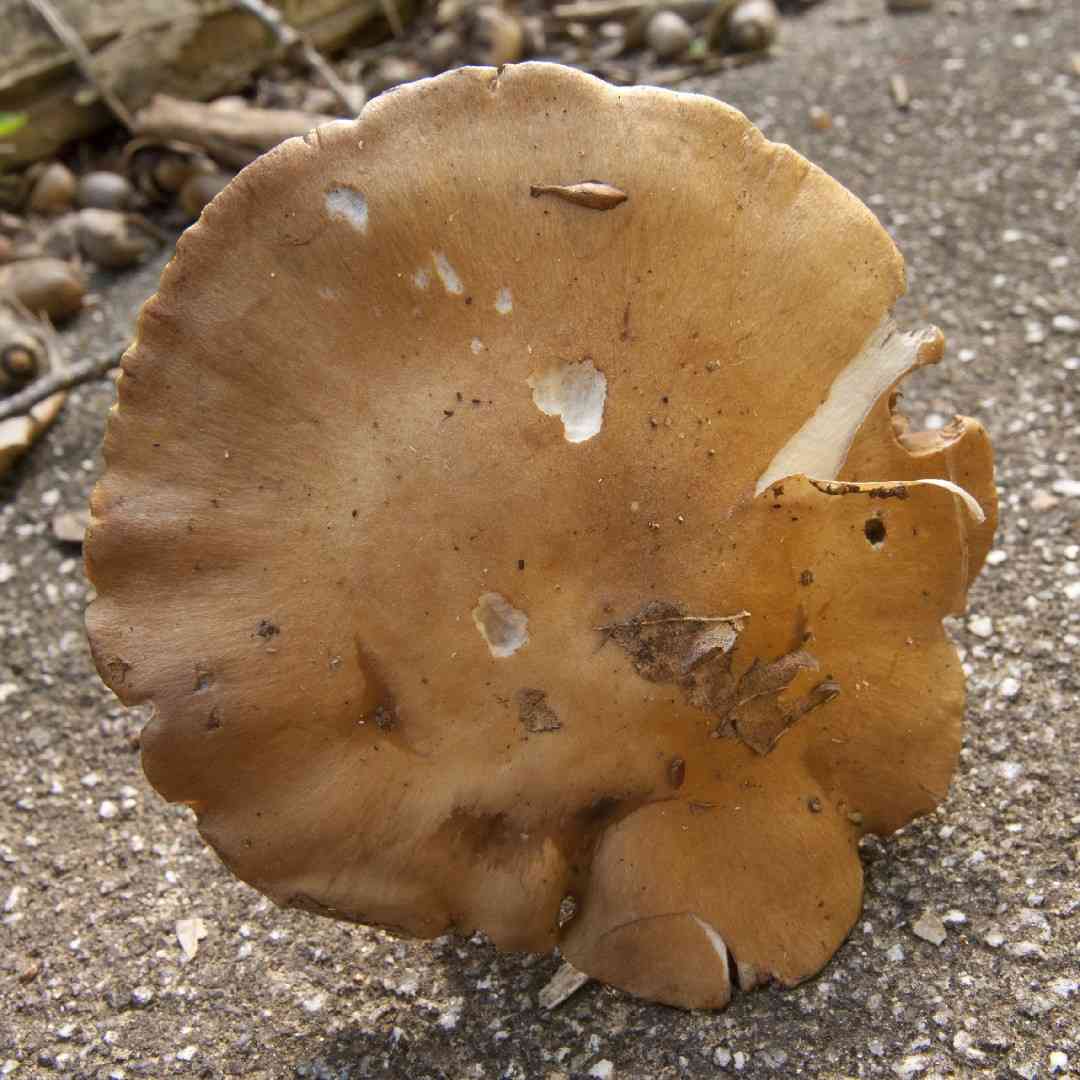
Cap 3 - 10 cm across; convex to flat; brownish, grayish bluish; margin with filaments
Cap Shape
Convex, Flat
Cap Surfaces
Smooth, Fibrillose-scaly, Slimy or slightly sticky
Gills
Crowded closely; dark violet
Gill Attachment
Notched
Stem
Stem 5 - 12 cm long, 1.5 - 2.5 cm thick; cylindrical; purple or violet brown
Stem Shapes
Cylindrical
Stem Surfaces
Smooth
Flesh
Violet lilac or violet, paling slightly; turns purple when cut or damaged
Ring
With Ring Zone
Spore Print Color
Rusty brown
Odor
Pleasant, mild, not particularly significant.
Body Color
BrownGrayWhiteBluePurple
Flesh Bruises
The flesh or milk does not discolor when bruised or cut.
Growth Form
Scattered
Nutrient Gathering
Mycorrhizal
Substrate
On soil
You can find Bruising webcap by these plants
Spruces, Pines, Oaks
Occurence Habitats
Deciduous Woodland, Mixed Woodland
Species Status
Quite rare
Endangered Species
No
Scientific Classification of Bruising webcap
Phylum
Club fungi
Class
Mushroom-forming fungi
Order
Gilled fungi
Family
Cortinariaceae
Genus
Cortinar
Toxicity and Edibility of Bruising webcap
Is Bruising webcap Toxic?
Toxicity information is not available for this mushroom. Always consult with an expert before consuming any wild mushrooms.

