Saffron stainer
Cortinarius olearioides
A species of Cortinar.
The saffron stainer, a prominent fungus within its family, is easily identifiable by its unique characteristics. Its cap exhibits a chromatic shift during its development, and it commonly thrives in forests, frequently engaging in mutually beneficial relationships with specific tree species. This particular mushroom belongs to a broader category distinguished by a veil-like membrane that conceals the gills when the specimen is young.
In This Article
Attributes of Saffron stainer
Cap Diameter
4 - 16 cm
Height
4 - 12 cm
Cap
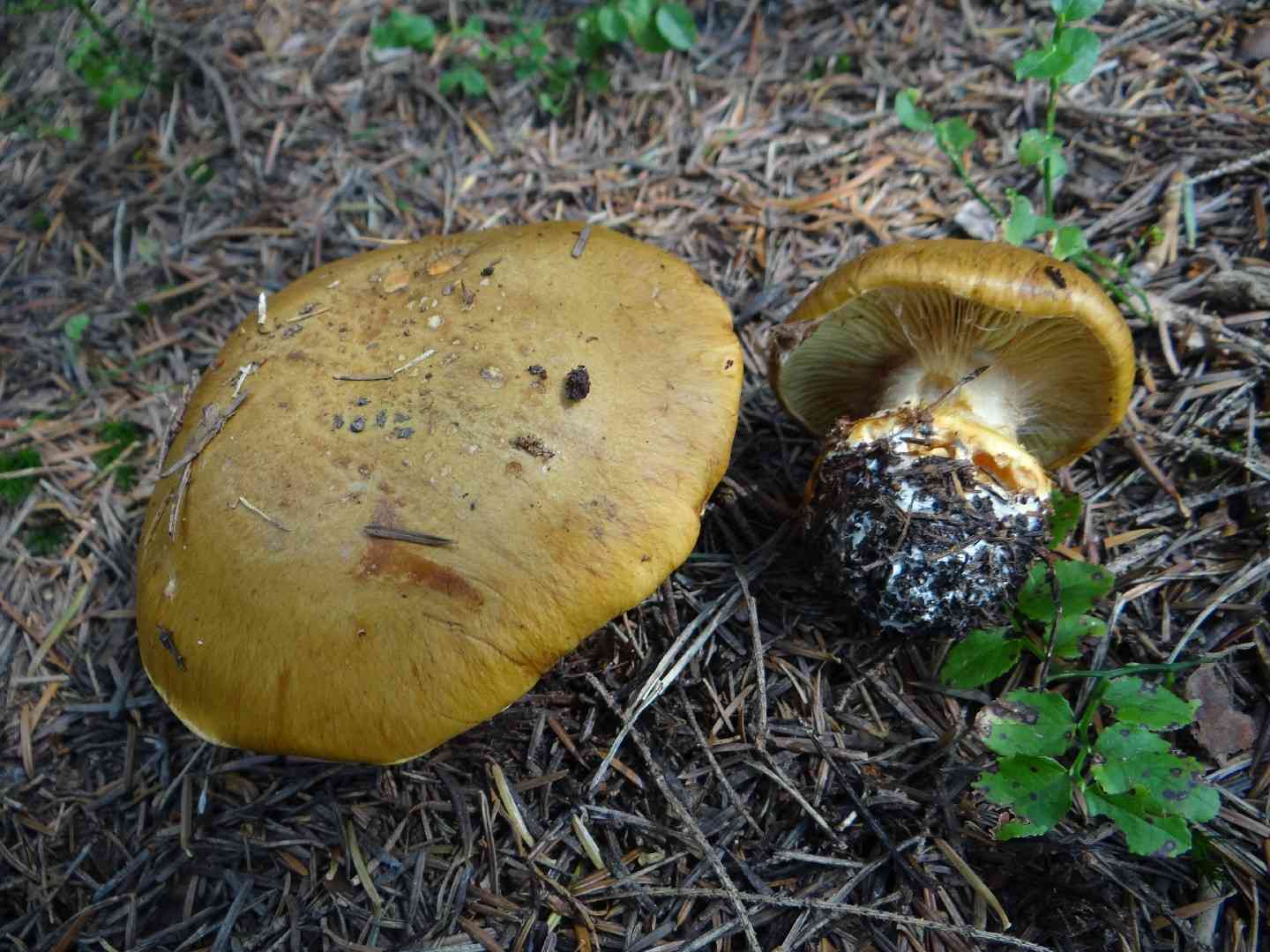
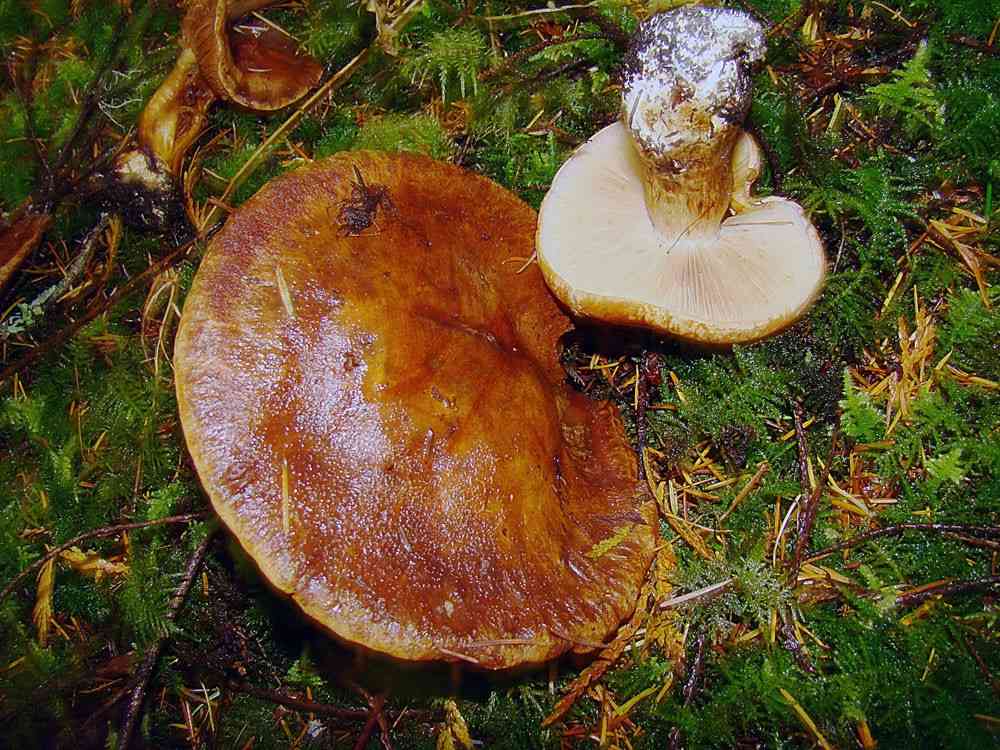
Cap 5 - 15 cm across; convex to flat; golden yellow to saffron-orange; surface smooth
Cap Shape
Convex, Flat
Cap Surfaces
Smooth, Slimy or slightly sticky
Gills
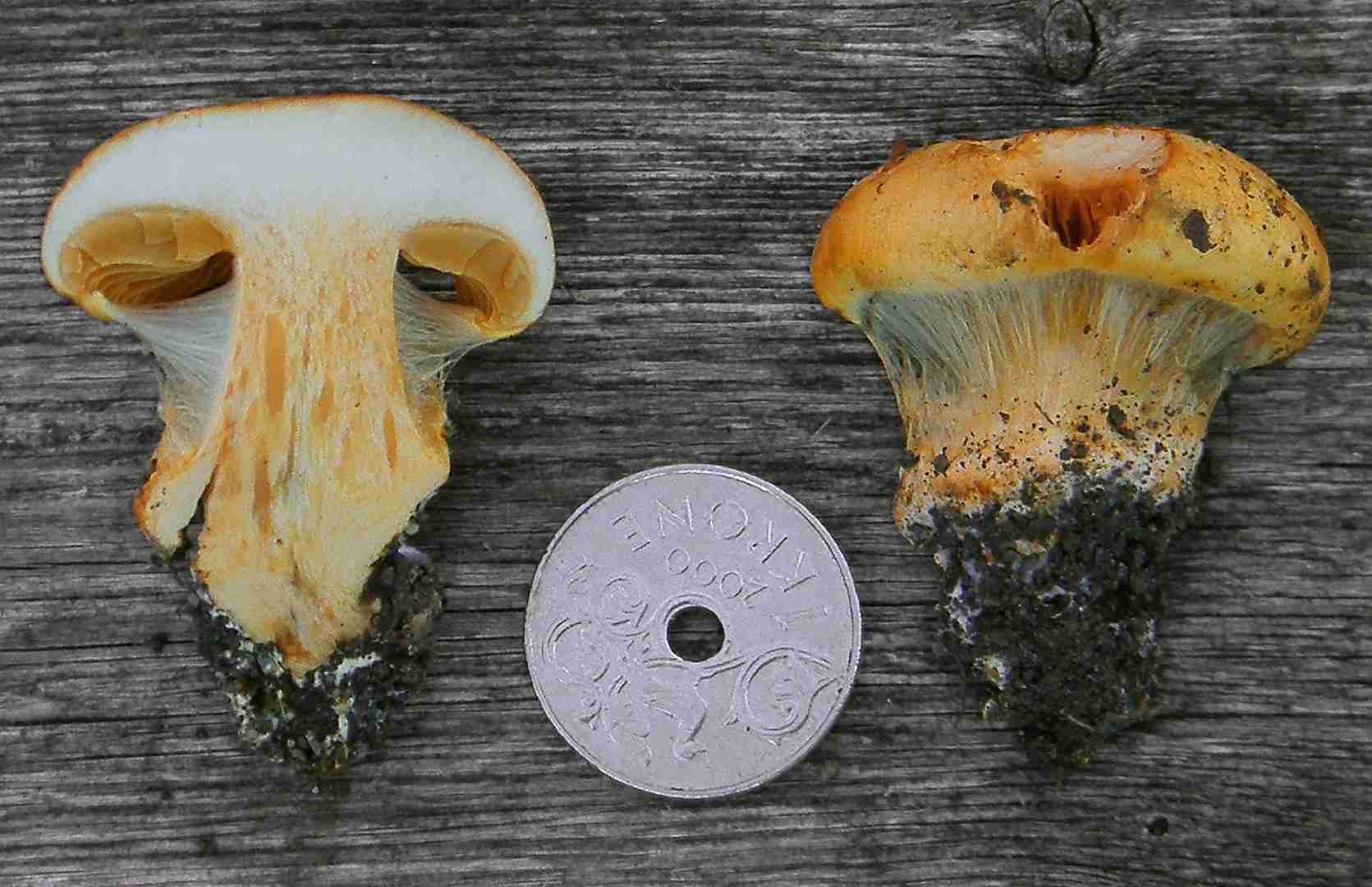
Attached; close; yellow to rusty brown
Gill Attachment
Attached
Stem
Stem 4 - 10 cm long, 3 cm thick; bulbous; buff ocher
Stem Shapes
Bulbous
Stem Surfaces
Smooth to slightly fibrous
Flesh
Pale yellow to whitish
Ring
With Ring Zone
Spore Print Color
Rusty brown
Odor
Mildly fruity or reminiscent of potatoes.
Body Color
BrownYellowOrange
Growth Form
Scattered, Gregarious
Nutrient Gathering
Mycorrhizal
Substrate
On soil
You can find Saffron stainer by these plants
Oaks, Pines, Spruces
Occurence Habitats
Deciduous Woodland
Endangered Species
No
Scientific Classification of Saffron stainer
Phylum
Club fungi
Class
Mushroom-forming fungi
Order
Gilled fungi
Family
Cortinariaceae
Genus
Cortinar
Toxicity and Edibility of Saffron stainer
Is Saffron stainer Toxic?
Toxicity information is not available for this mushroom. Always consult with an expert before consuming any wild mushrooms.