Cortinarius mussivus
Cortinarius mussivus
A species of Cortinar.
Cortinarius mussivus is a member of an extensive and varied genus, recognized for its characteristic cobweb-like partial veil. Commonly encountered in forested environments, it establishes a intimate connection with trees by forming mutualistic relationships with their root systems. This particular species stands out due to its striking coloration and possesses a unique cap and gill formation, which are key features for its recognition.
In This Article
Attributes of Cortinarius mussivus
Cap Diameter
3 - 11 cm
Height
5 - 7 cm
Cap
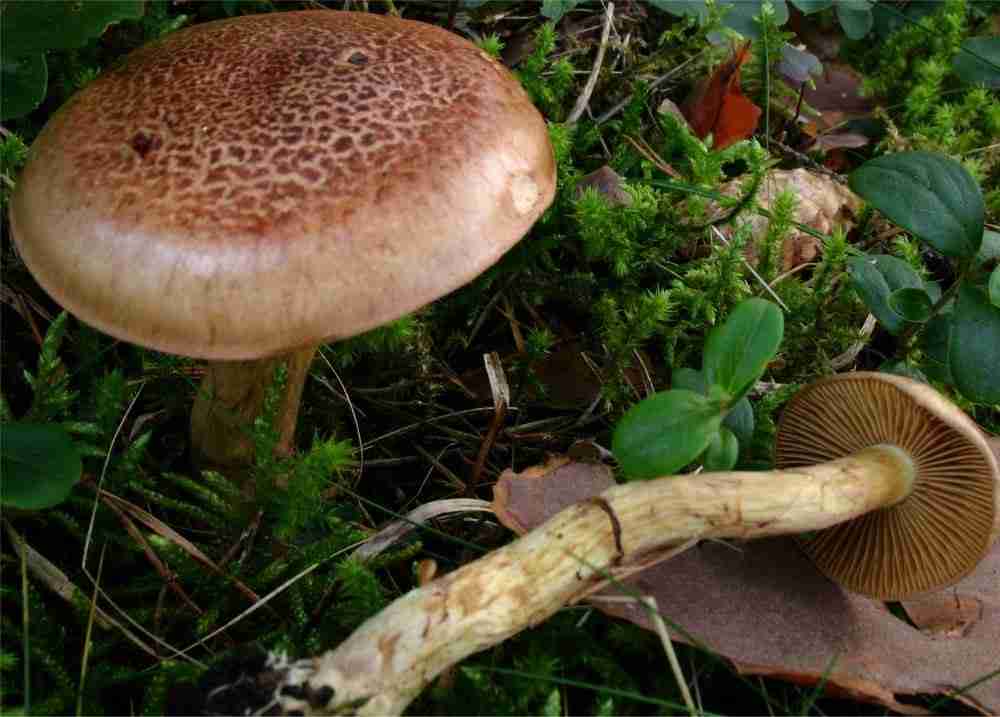
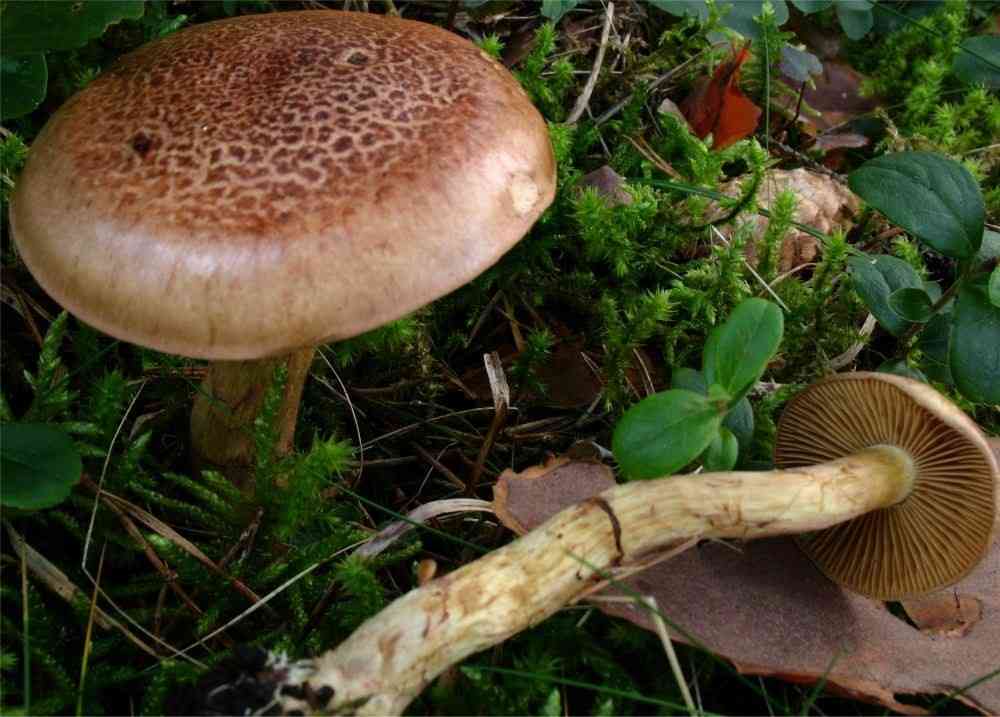
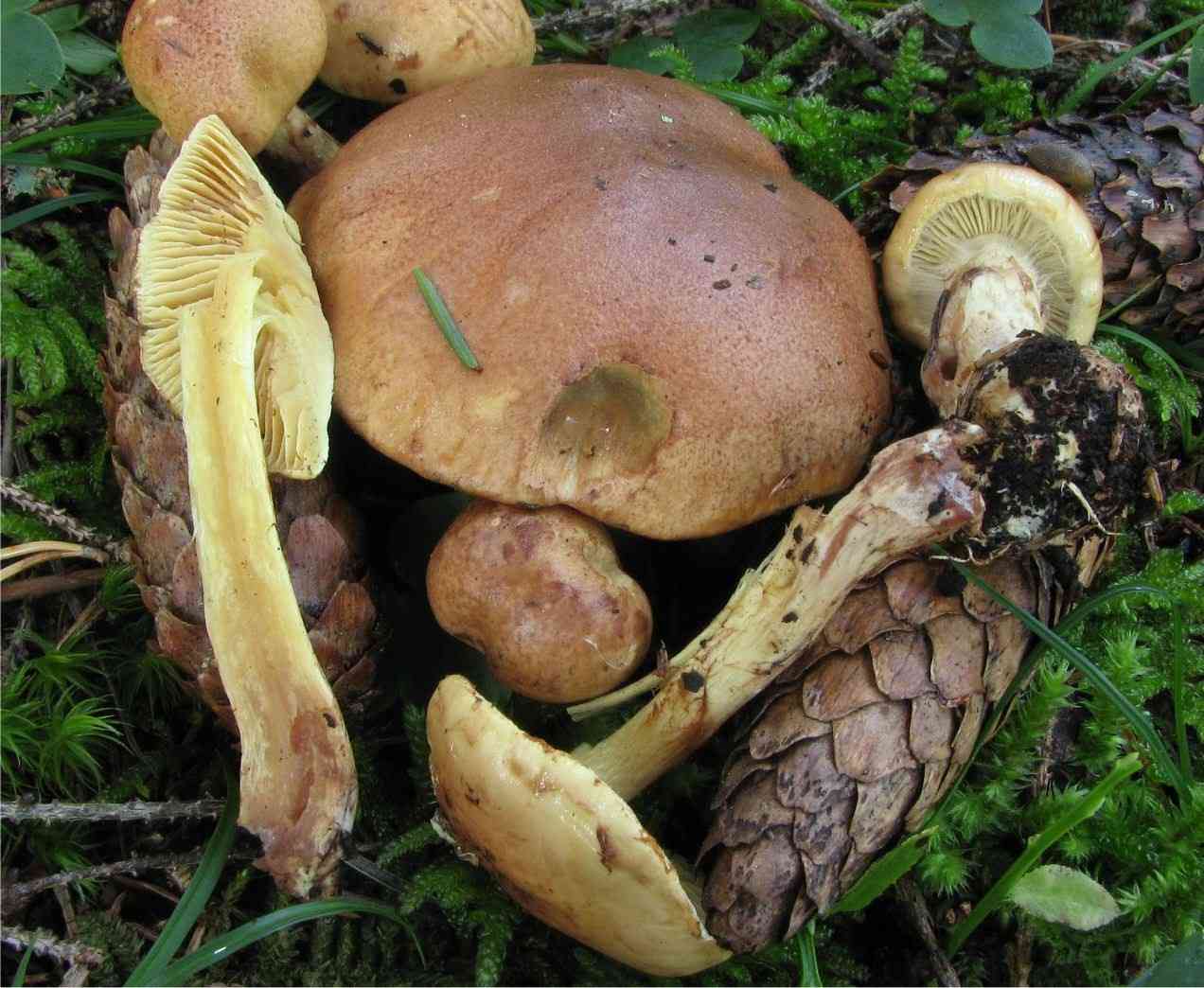
Cap 3 - 8 cm across; hemispherical to flat; yellow-olive to reddish-brown; surface with scaly
Cap Shape
Convex, Depressed
Cap Surfaces
Slimy or slightly sticky, Fibrillose-scaly
Gills
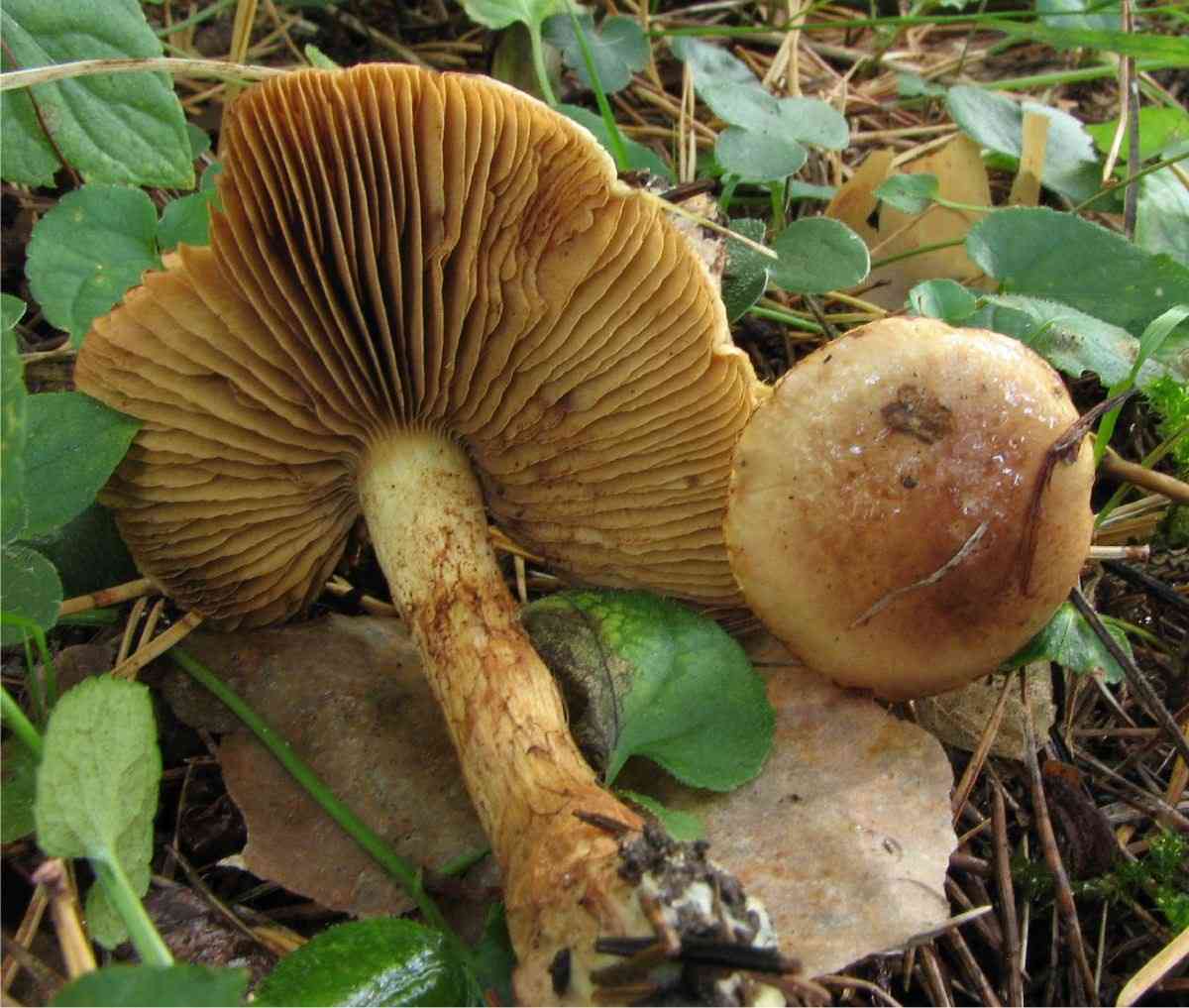
Decurrent; broad; greenish yellow to brownish yellow
Stem
Stem 5 - 7 cm long, 1 - 2.5 cm thick; cylindrical, cuneate; whitish, yellowish, brown
Stem Shapes
Club Shaped
Flesh
Yellow, brown
Ring
With Ring Zone
Spore Print Color
Rusty brown
Odor
Unpleasant, foul-smelling.
Body Color
GreenYellowPink
Flesh Bruises
The flesh or milk does not discolor when bruised or cut.
Growth Form
Solitary, Scattered, Gregarious
Nutrient Gathering
Mycorrhizal
Substrate
On soil
You can find Cortinarius mussivus by these plants
Pines, Spruces, Willows
Species Status
Not common
Scientific Classification of Cortinarius mussivus
Phylum
Club fungi
Class
Mushroom-forming fungi
Order
Gilled fungi
Family
Cortinariaceae
Genus
Cortinar
Toxicity and Edibility of Cortinarius mussivus
Is Cortinarius mussivus Toxic?
Toxicity information is not available for this mushroom. Always consult with an expert before consuming any wild mushrooms.

