Earthy webcap
Cortinarius hinnuleus
A species of Cortinar.
The moldy, earthy scent of the *Cortinarius bolaris* is what gives it its common name. Its brownish cap has a smooth texture. While resembling many brown webcaps, it has a slight distinction due to its preference for moist environments near poplar or willow trees.
In This Article
Attributes of Earthy webcap
Cap Diameter
3 - 6 cm
Height
4 - 12 cm
Cap
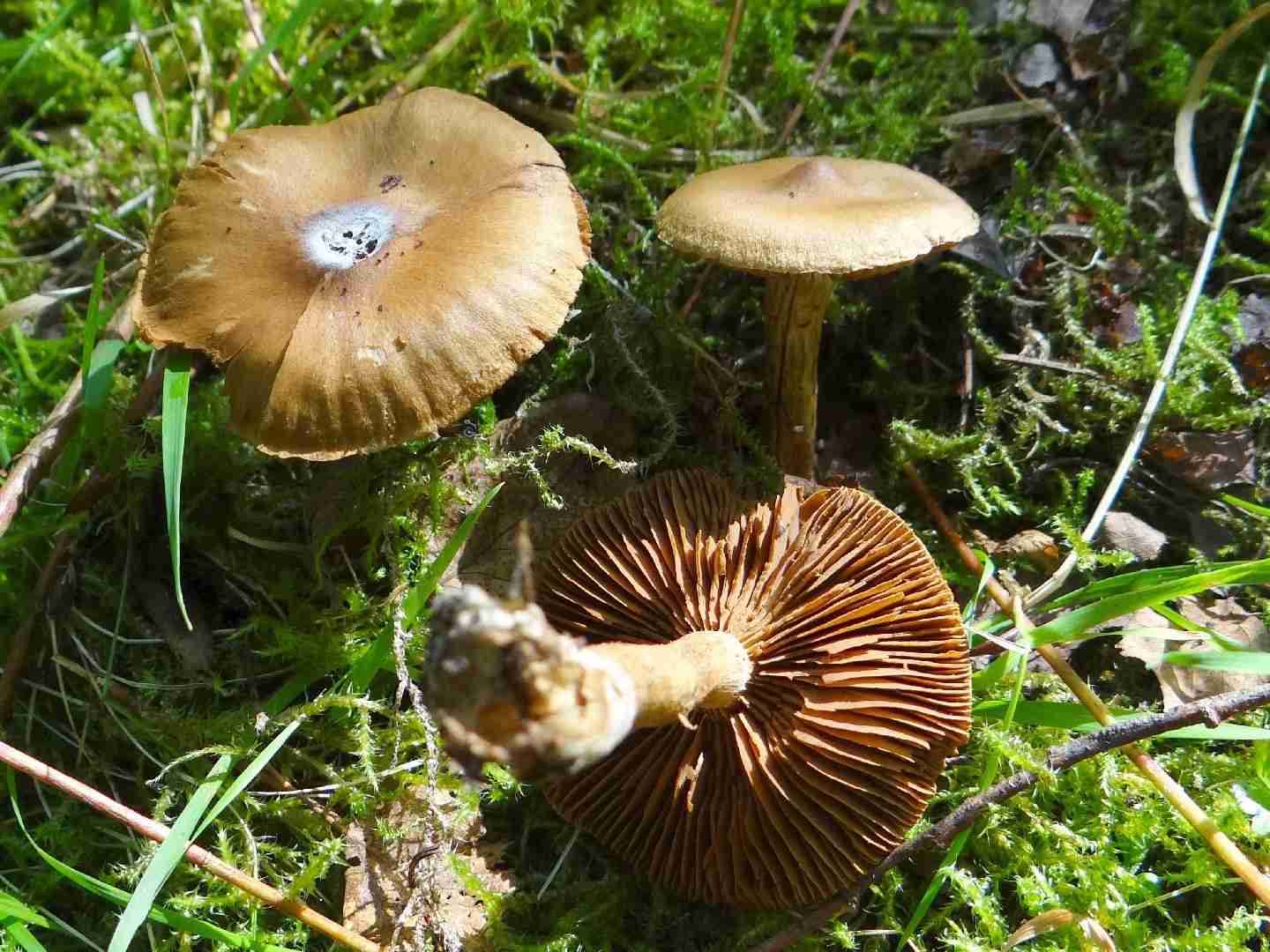
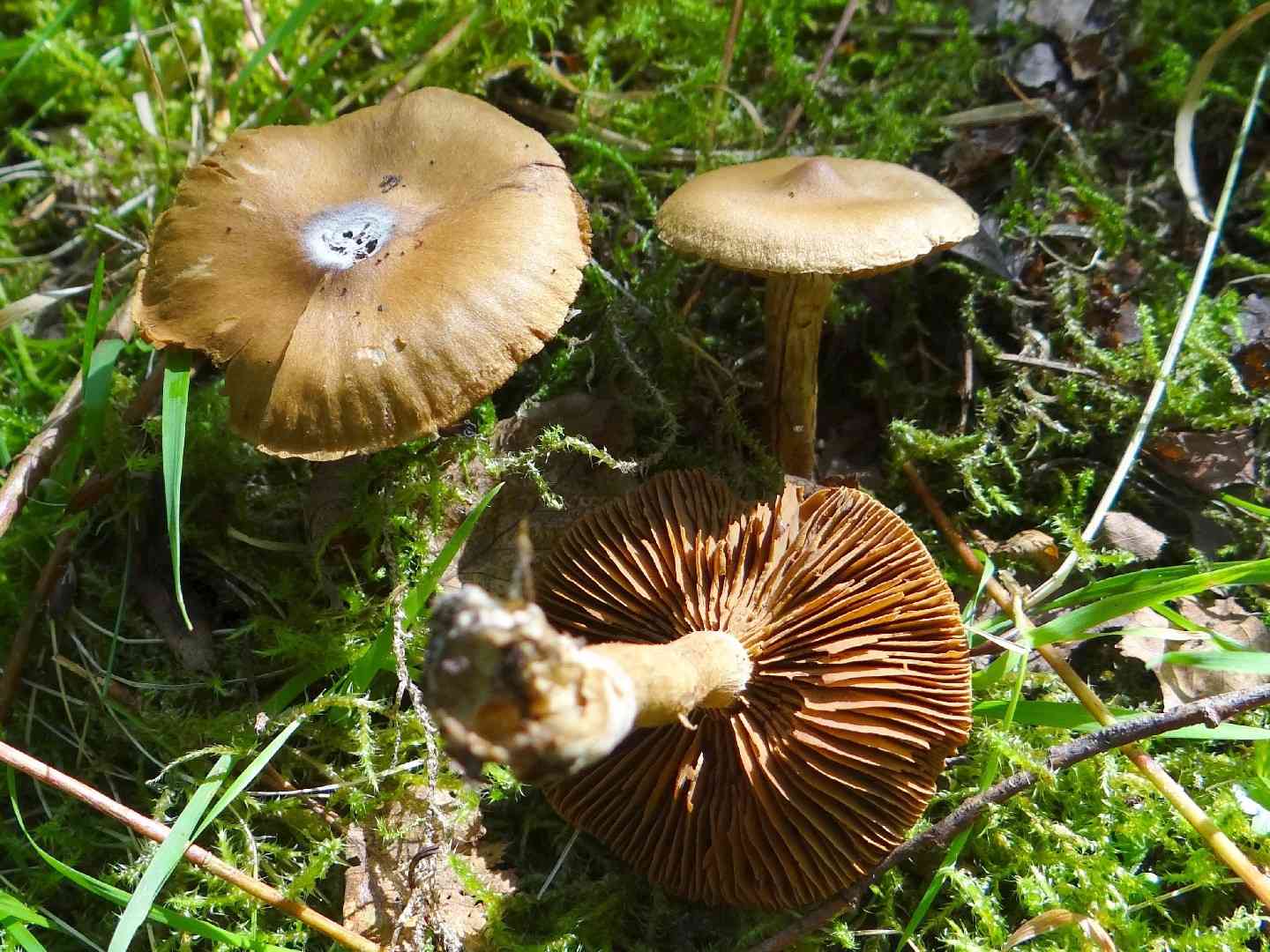
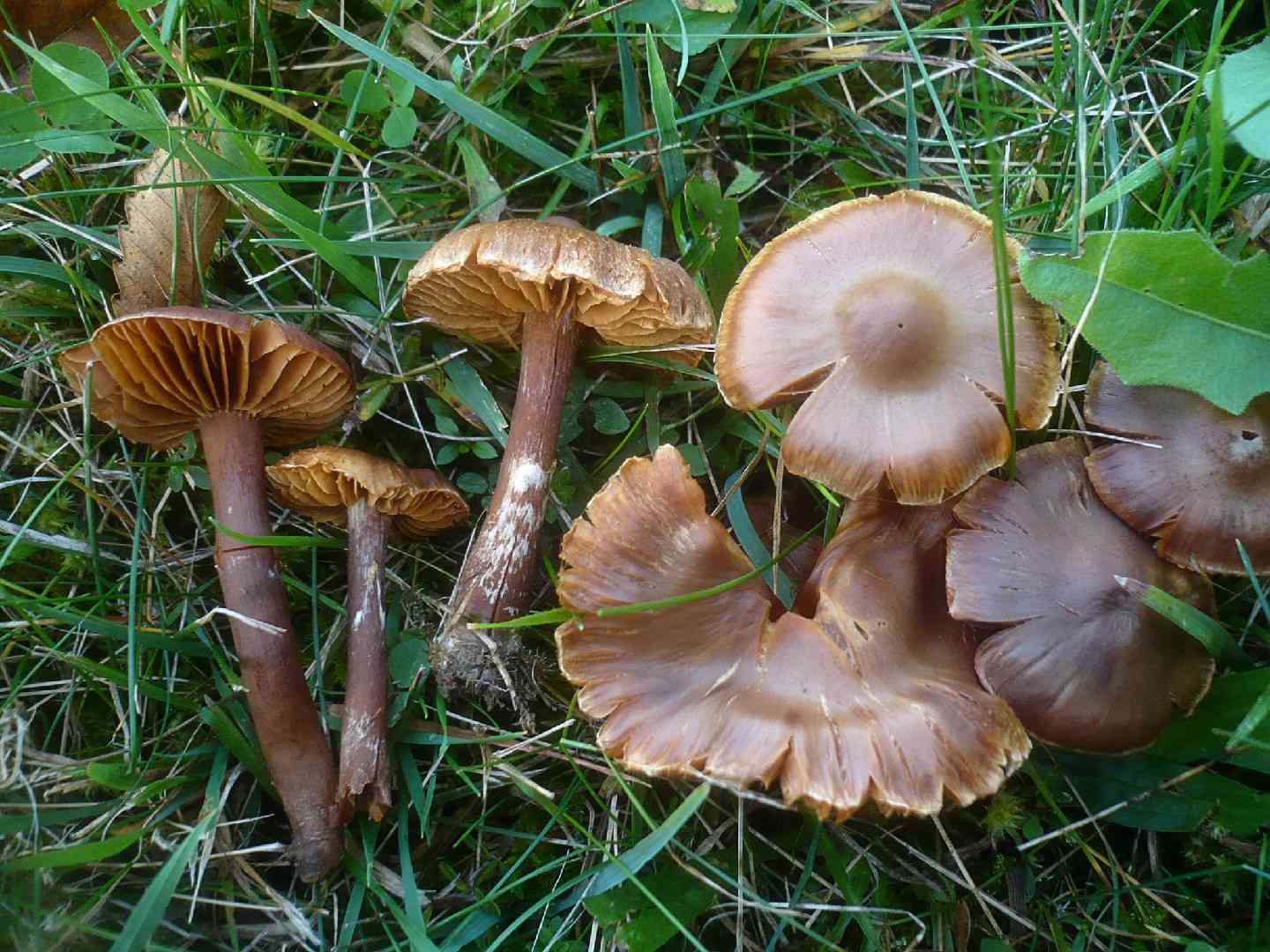
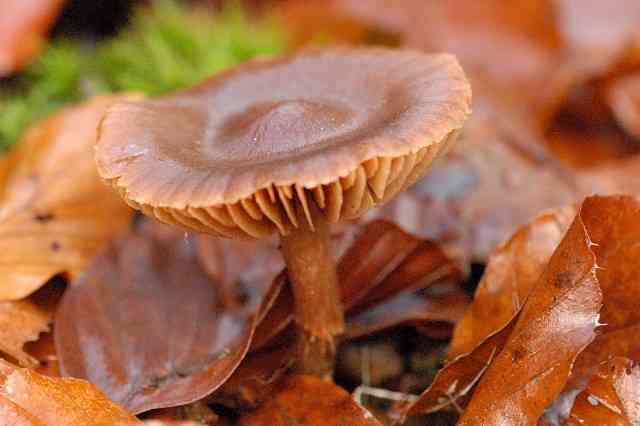
2.5 - 6 cm across; bell shaped, hygrophanous; ochre brown; pale margin is covered in a whitish cobwebby veil
Cap Shape
Bell-shaped, Central Bump
Cap Surfaces
Fibrillose-scaly
Gills
Adnate; crowded; pale buff
Gill Attachment
Attached
Stem
5 - 12 mm diameter and 3 - 10 cm tall; mid brown; lower part covered in white silky veil remnants
Stem Shapes
Cylindrical
Stem Surfaces
Smooth to slightly fibrous
Flesh
White tinged with brown
Ring
With Ring Zone
Spore Print Color
Rusty brown
Odor
Subtle radish-like scent.
Body Color
Brown
Flesh Bruises
The flesh or milk does not discolor when bruised or cut.
Growth Form
Scattered, Gregarious
Nutrient Gathering
Mycorrhizal
Substrate
On soil
You can find Earthy webcap by these plants
Oaks, Spruces, Pines
Occurence Habitats
Deciduous Woodland
Species Status
Occasional in Britain and Ireland
Endangered Species
No
Scientific Classification of Earthy webcap
Phylum
Club fungi
Class
Mushroom-forming fungi
Order
Gilled fungi
Family
Cortinariaceae
Genus
Cortinar
Toxicity and Edibility of Earthy webcap
Is Earthy webcap Toxic?
Toxicity information is not available for this mushroom. Always consult with an expert before consuming any wild mushrooms.

