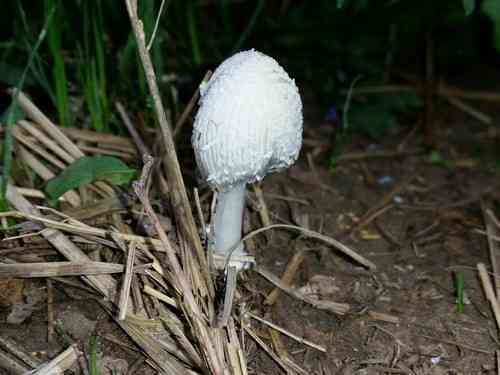
Snowy inkcap
Coprinopsis nivea
A species of Coprinopsis.
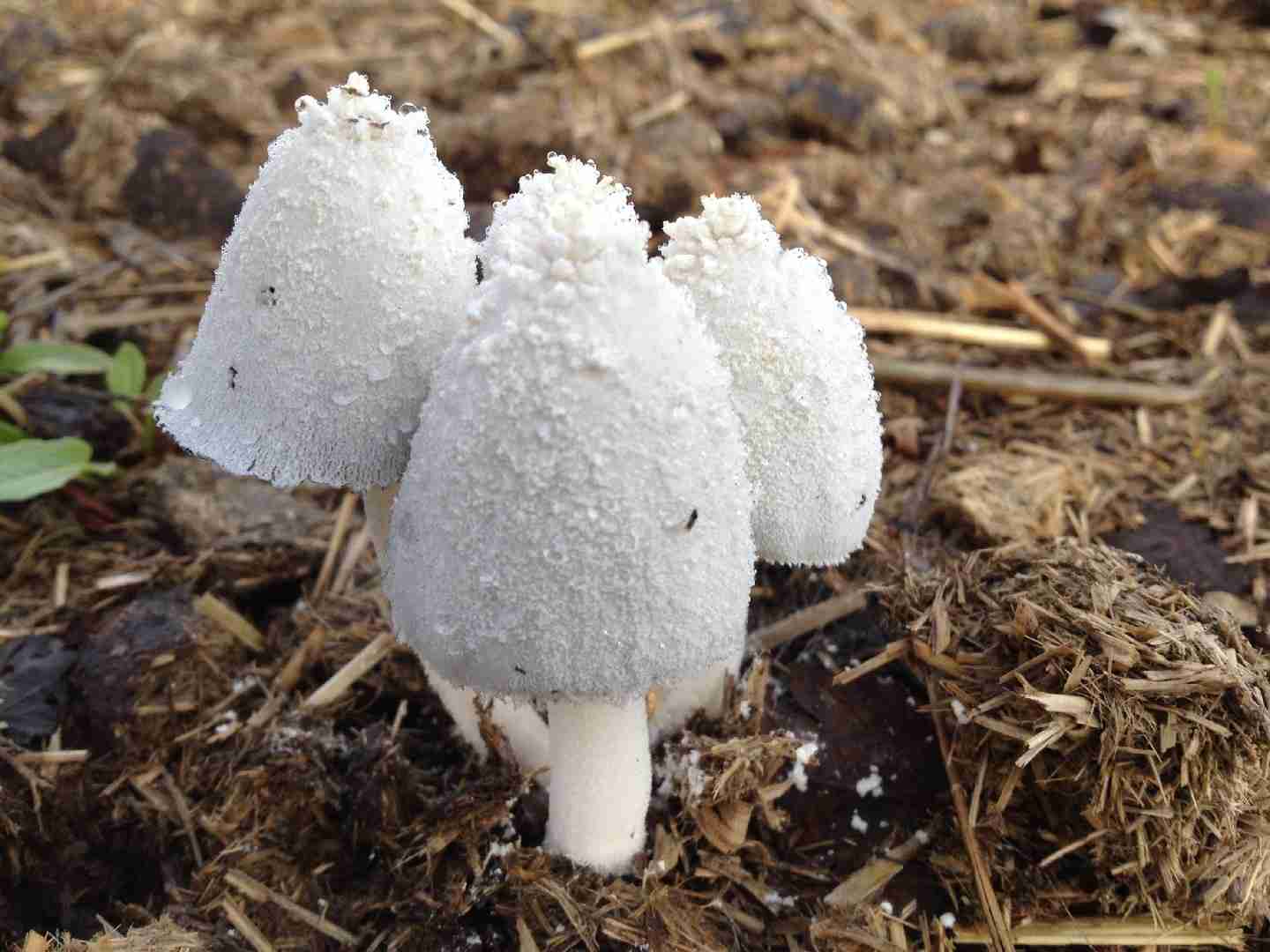
Encountering a snowy inkcap (Coprinopsis nivea) often means you're also in close proximity to a significant quantity of animal waste! Should the presence of farm animal droppings not dissuade you from consuming these fungi, their inherent toxicity certainly will. This species belongs to a group well-known for containing poisonous mushrooms. It is best appreciated visually and at a safe distance.
In This Article
Attributes of Snowy inkcap
Cap Diameter
1 - 3.5 cm
Height
4 - 10 cm
Cap
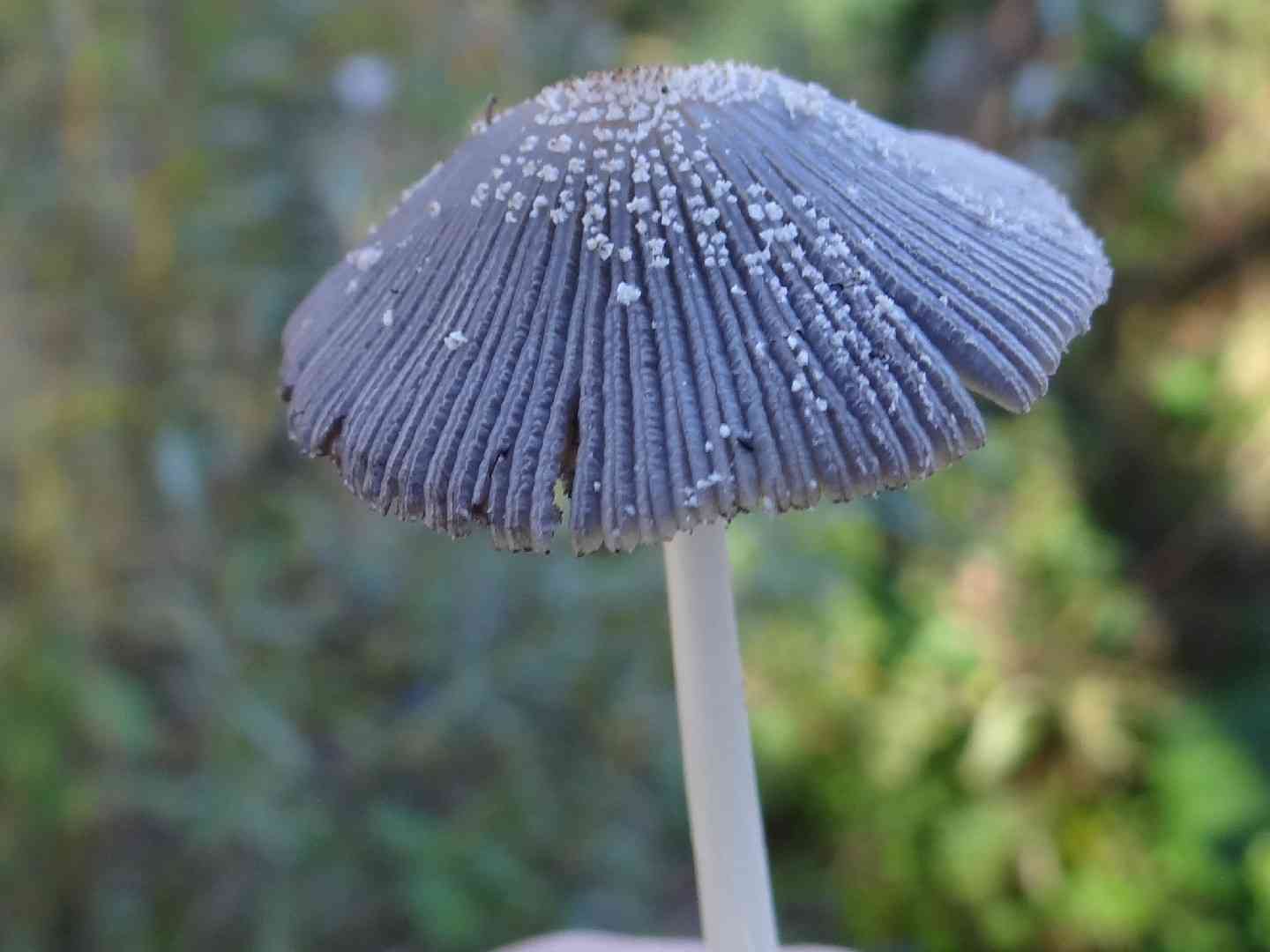
Cap 1 - 3.5 cm across; broadly conic; white, ash-grey; margin incurved, weakly striate
Cap Shape
Bell-shaped, Central Bump
Cap Surfaces
Warted, Visible lines or stripes
Gills
Free to narrowly attached; crowded; white
Gill Attachment
Free to Attached
Stem
Stem 9 cm long, 4 - 7 mm thick; cylindrical, slight thickening at the base; white; covered in cottony fibres
Stem Shapes
Cylindrical
Stem Surfaces
Fibrillose
Flesh
Fibrous; white; unchanging
Ring
Ringless
Spore Print Color
Black
Odor
Mild, indistinct mushroom smell.
Body Color
GrayWhite
Flesh Bruises
The flesh or milk does not discolor when bruised or cut.
Growth Form
Solitary, Scattered, Gregarious
Nutrient Gathering
Saprophytic
Substrate
On animal dung
You can find Snowy inkcap by these plants
Firs, Spruces
Occurence Habitats
Disturbed Lands
Species Status
Infrequent
Endangered Species
No
Scientific Classification of Snowy inkcap
Phylum
Club fungi
Class
Mushroom-forming fungi
Order
Gilled fungi
Family
Coprinaceae
Genus
Coprinopsis
Toxicity and Edibility of Snowy inkcap
Is Snowy inkcap Toxic?
Toxicity information is not available for this mushroom. Always consult with an expert before consuming any wild mushrooms.