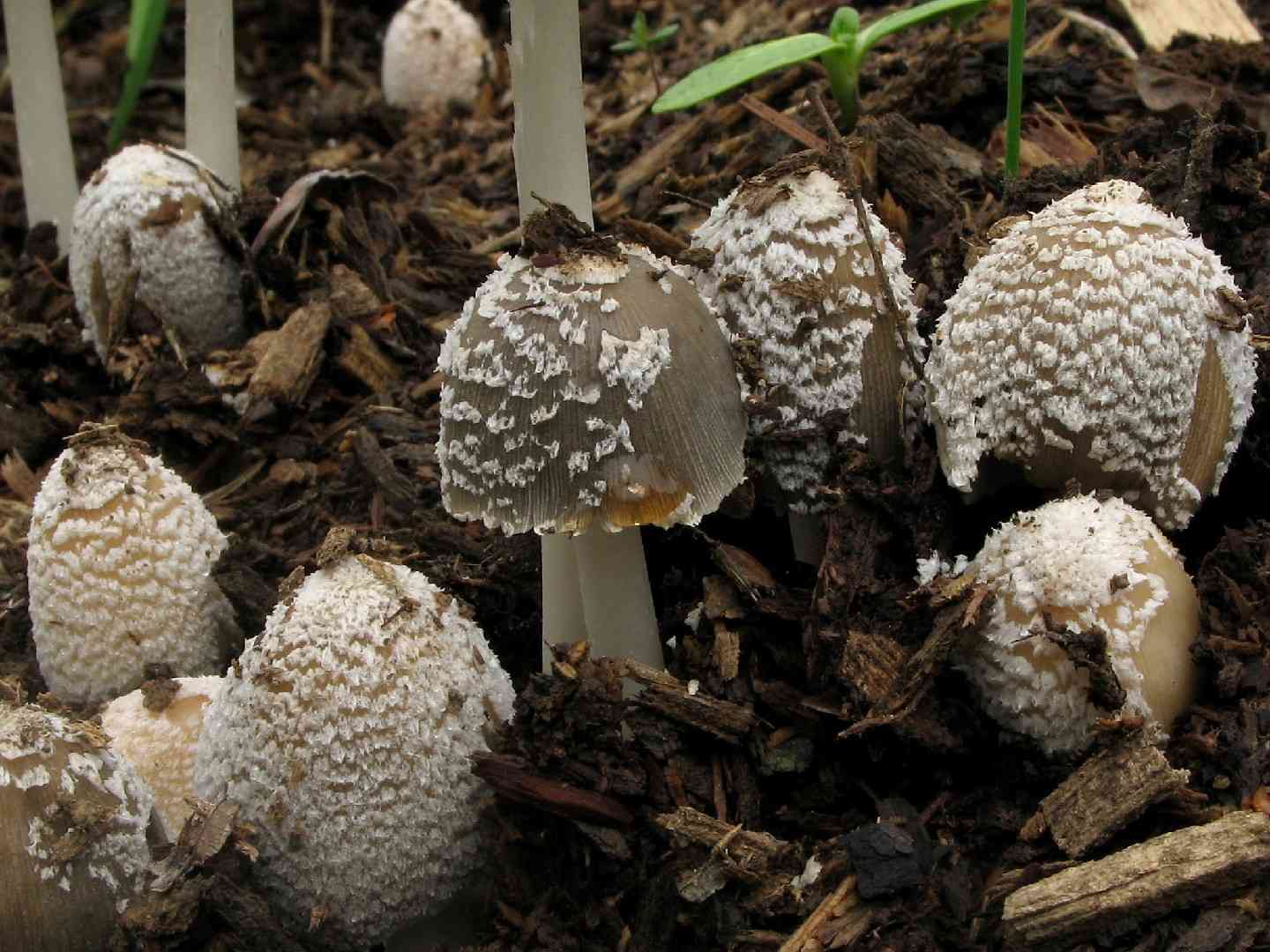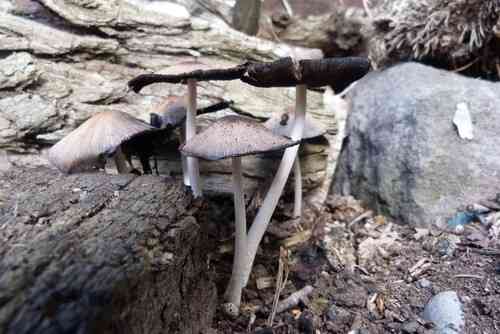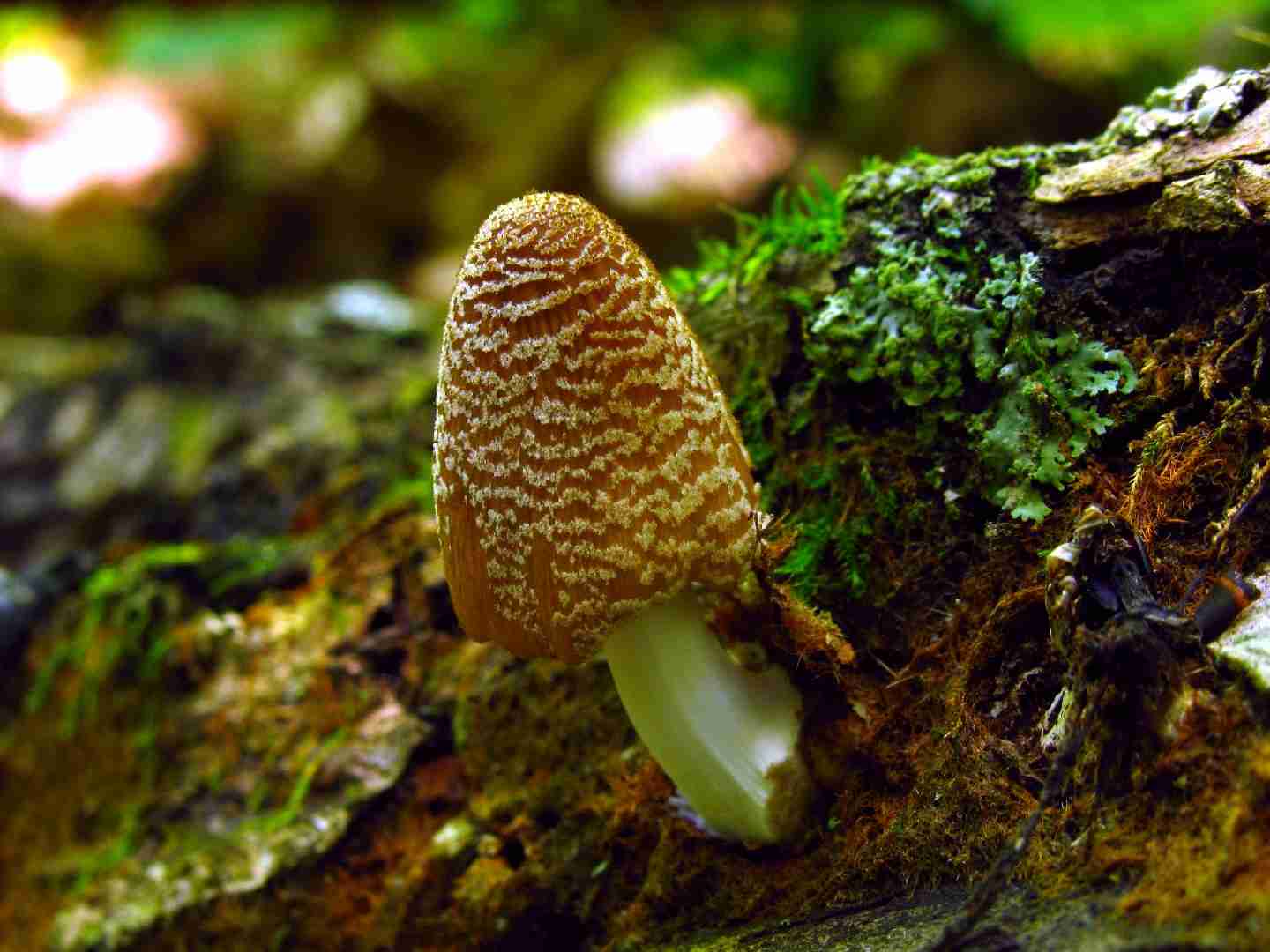
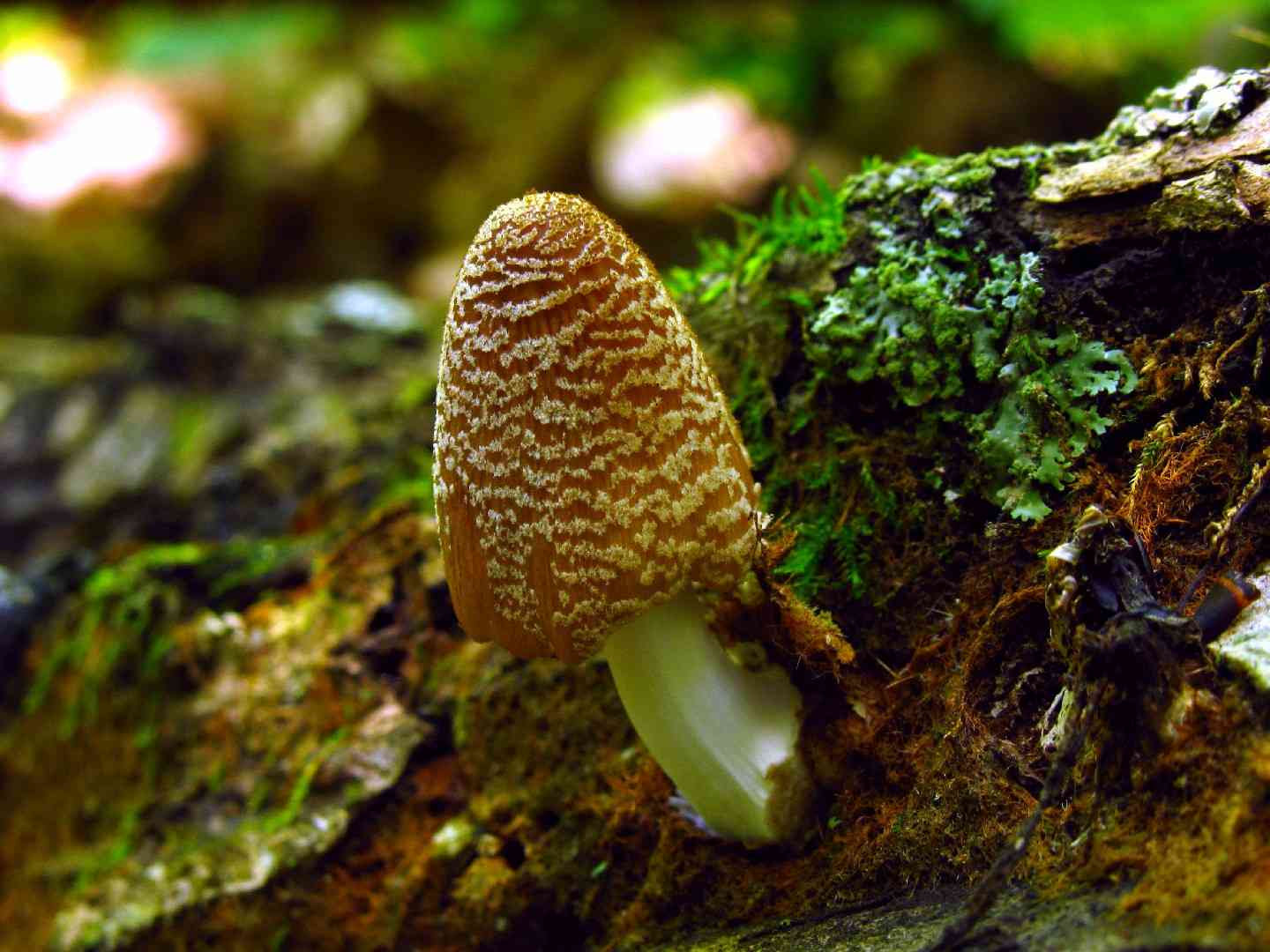
Firerug inkcap
Coprinellus domesticus
A species of Coprinellus. Also known as Trooping inkcap.
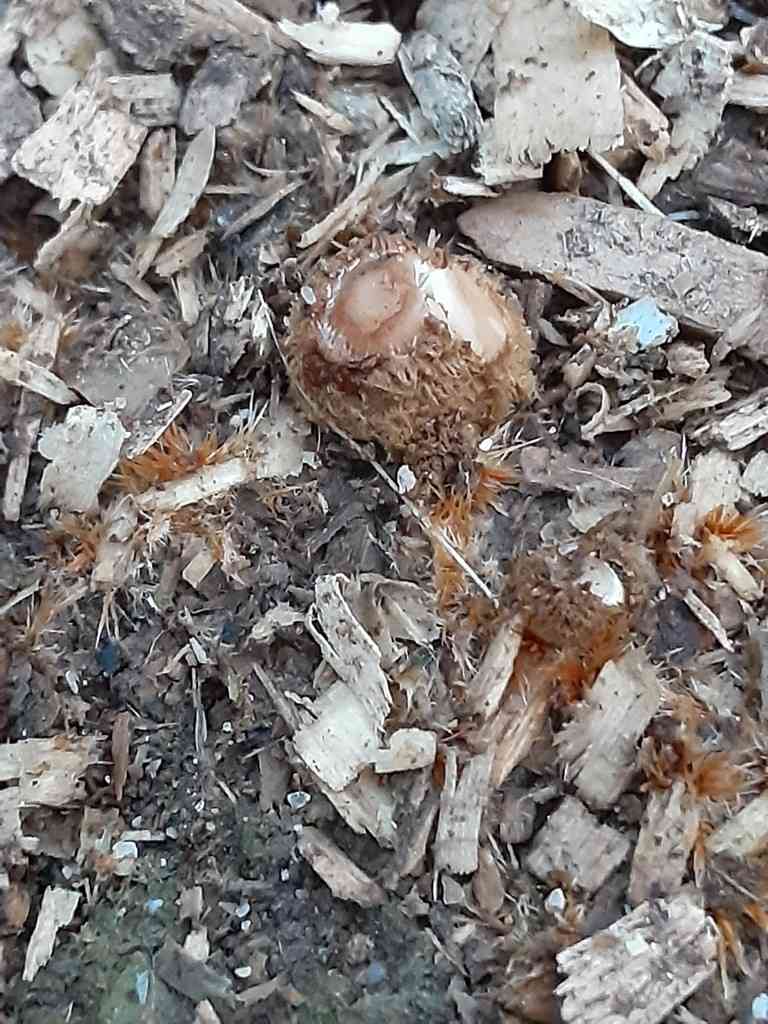
The *Coprinellus domesticus*, charmingly referred to as the firerug inkcap, derives its name from a striking characteristic. This particular fungus is commonly found in association with a visible, surface-level mycelial growth, an ozonium. For *Coprinellus domesticus*, this ozonium presents as a vibrant, fuzzy orange mat, hence the firerug moniker. Its natural range extends across temperate regions throughout a significant portion of Europe and various areas of North America.
In This Article
Attributes of Firerug inkcap
Cap Diameter
2 - 8 cm
Height
4 - 12 cm
Cap
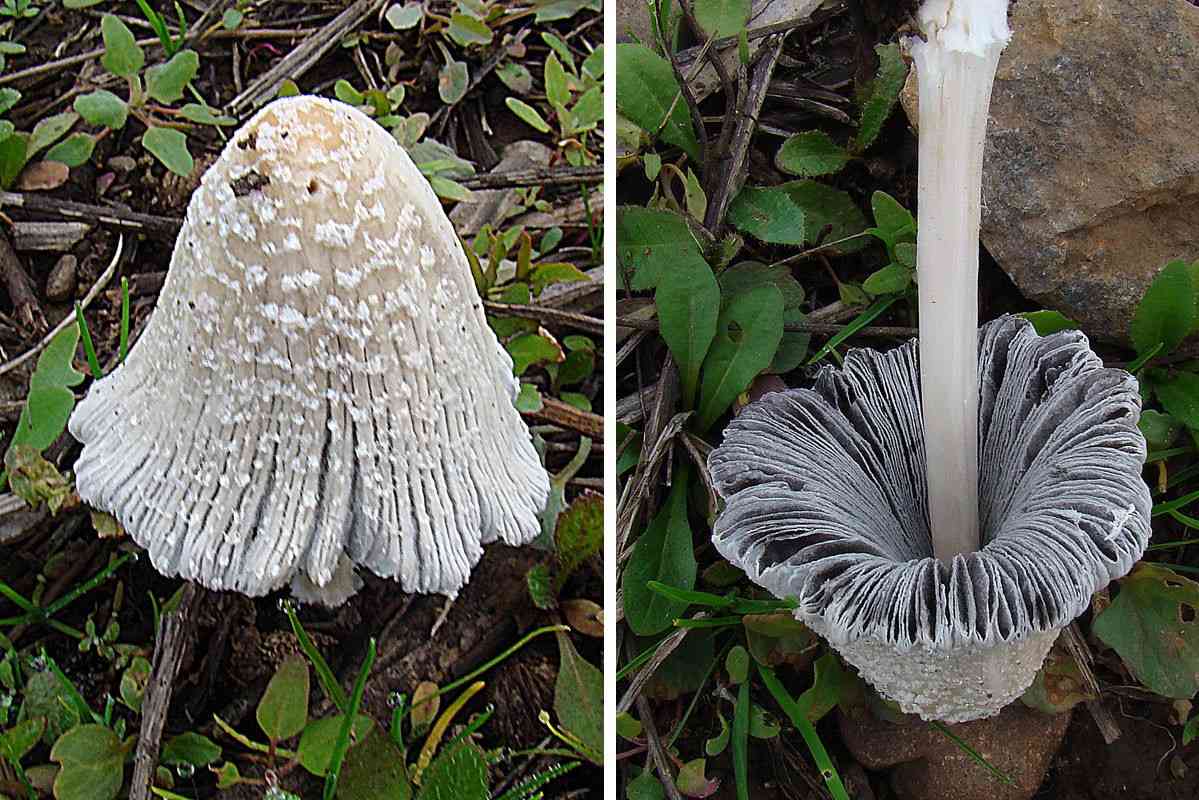
Cap 7 cm across; oval, convex, conical; ocher or buff to tan; with striate or shallowly fluted, mealy scales
Cap Shape
Convex, Bell-shaped
Cap Surfaces
Fibrillose-scaly, Visible lines or stripes
Gills
Attached, free; close; whitish to black
Gill Attachment
Free to Attached
Stem
Stem 4 - 10 cm long, 1 cm thick; white; surface smooth
Stem Shapes
Cylindrical
Stem Surfaces
Smooth
Flesh
Very thin; fragile; white; unchanging
Ring
Ringless
Spore Print Color
Black
Odor
Mildly mushroomy but not distinctive.
Body Color
BrownGrayWhite
Flesh Bruises
The flesh or milk does not discolor when bruised or cut.
Growth Form
Gregarious
Nutrient Gathering
Saprophytic
Substrate
Dead Woods
You can find Firerug inkcap by these plants
European beech, Willows
Occurence Habitats
Deciduous Woodland
Species Status
Widely distributed
Endangered Species
No
Scientific Classification of Firerug inkcap
Phylum
Club fungi
Class
Mushroom-forming fungi
Order
Gilled fungi
Family
Coprinaceae
Genus
Coprinellus
Toxicity and Edibility of Firerug inkcap
Is Firerug inkcap Toxic?
The Firerug inkcap is poisonous, consuming it can cause various symptoms. It's advisable to avoid this fungus.