Piggyback shanklet
Collybia cirrhata
A species of Collybia.
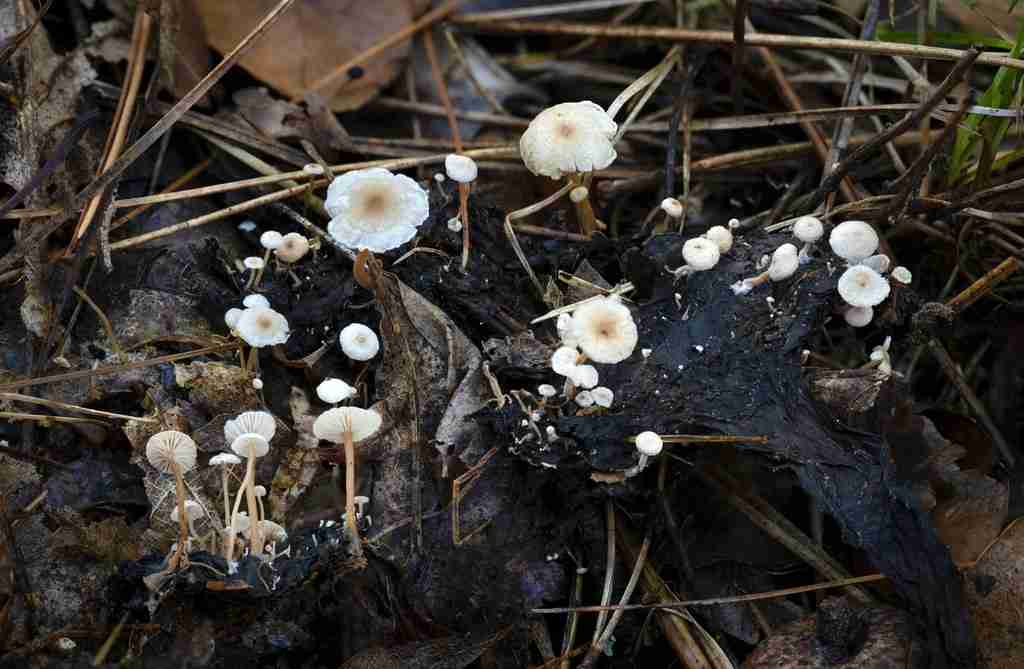
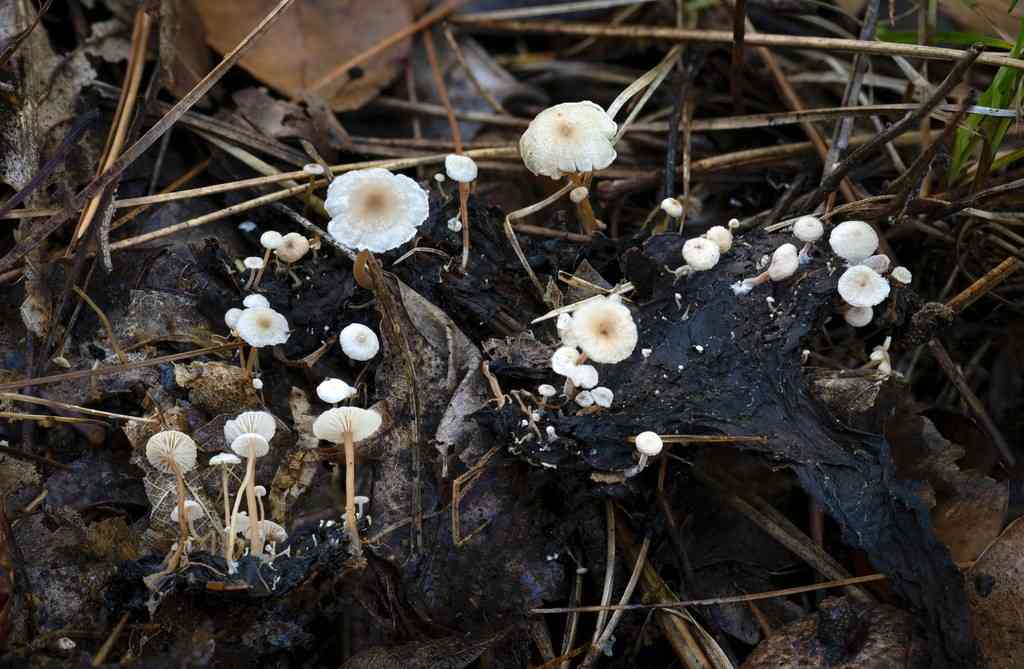
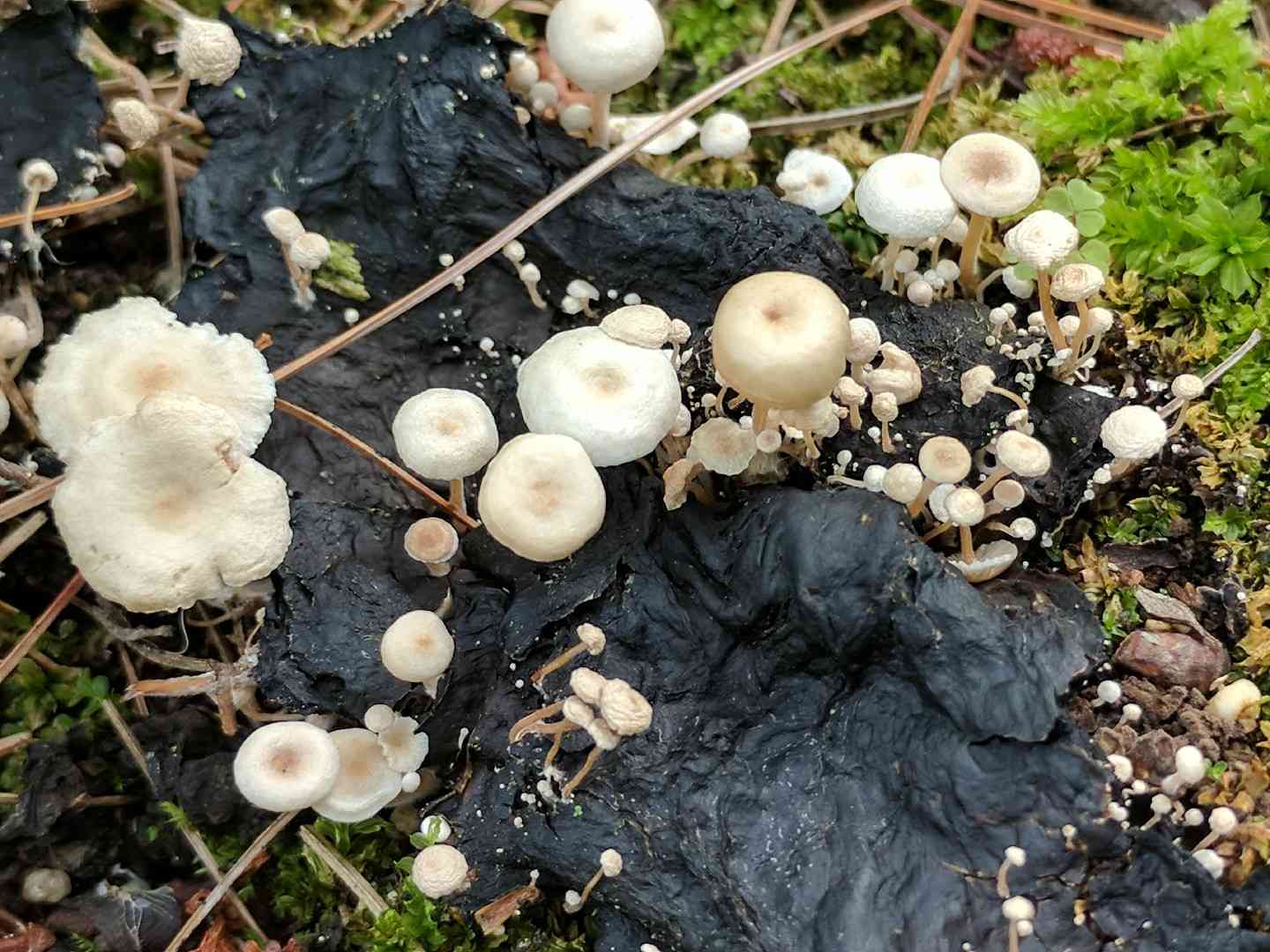
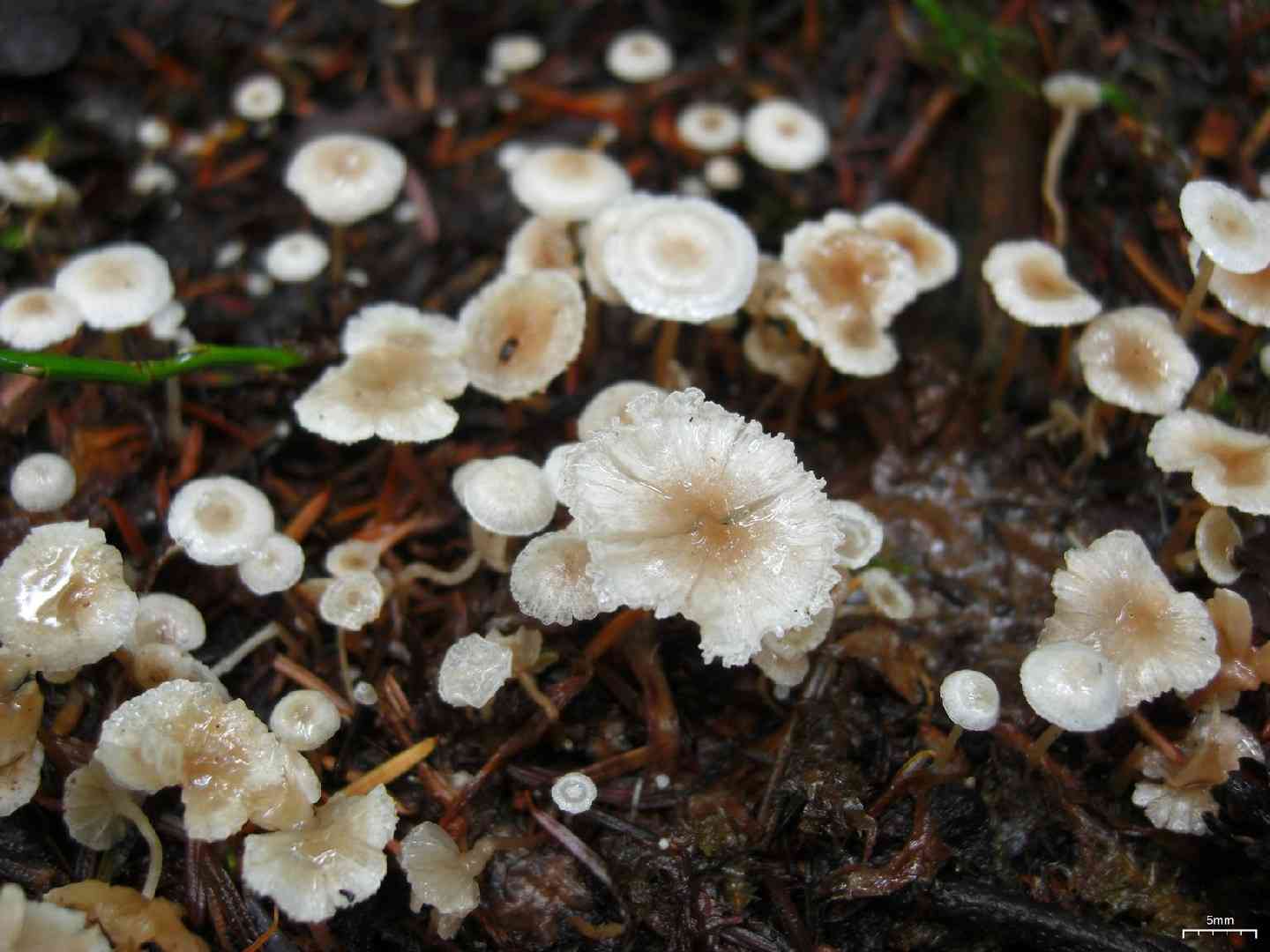
The piggyback shanklet, a diminutive species, commonly thrives on decomposing wood within woodland environments. Its defining features include a slender stem and a cap whose coloration can vary, though it typically exhibits a darker central region. This mushroom is observable across different seasons, favoring moist conditions. Piggyback shanklets are instrumental in the decomposition of organic material, thus enriching the nutrient cycling of forest ecosystems.
In This Article
Attributes of Piggyback shanklet
Cap Diameter
3 - 11 mm
Height
1 - 3 cm
Cap Shape
Convex, Flat, Depressed
Cap Surfaces
Smooth, Visible lines or stripes
Gill Attachment
Attached
Stem Shapes
Cylindrical
Stem Surfaces
Smooth to slightly fibrous
Ring
Ringless
Spore Print Color
White
Odor
Mildly mushroomy but not distinctive
Flesh Bruises
The flesh or milk does not discolor when bruised or cut.
Growth Form
Gregarious
Nutrient Gathering
Saprophytic
Substrate
On mushrooms
You can find Piggyback shanklet by these plants
Pines, Spruces, Norway spruce
Occurence Habitats
Deciduous Woodland, Coniferous Woodland, Mixed Woodland
Scientific Classification of Piggyback shanklet
Phylum
Club fungi
Class
Mushroom-forming fungi
Order
Gilled fungi
Family
Pale-spore mushrooms
Genus
Collybia
Toxicity and Edibility of Piggyback shanklet
Is Piggyback shanklet Toxic?
Toxicity information is not available for this mushroom. Always consult with an expert before consuming any wild mushrooms.

