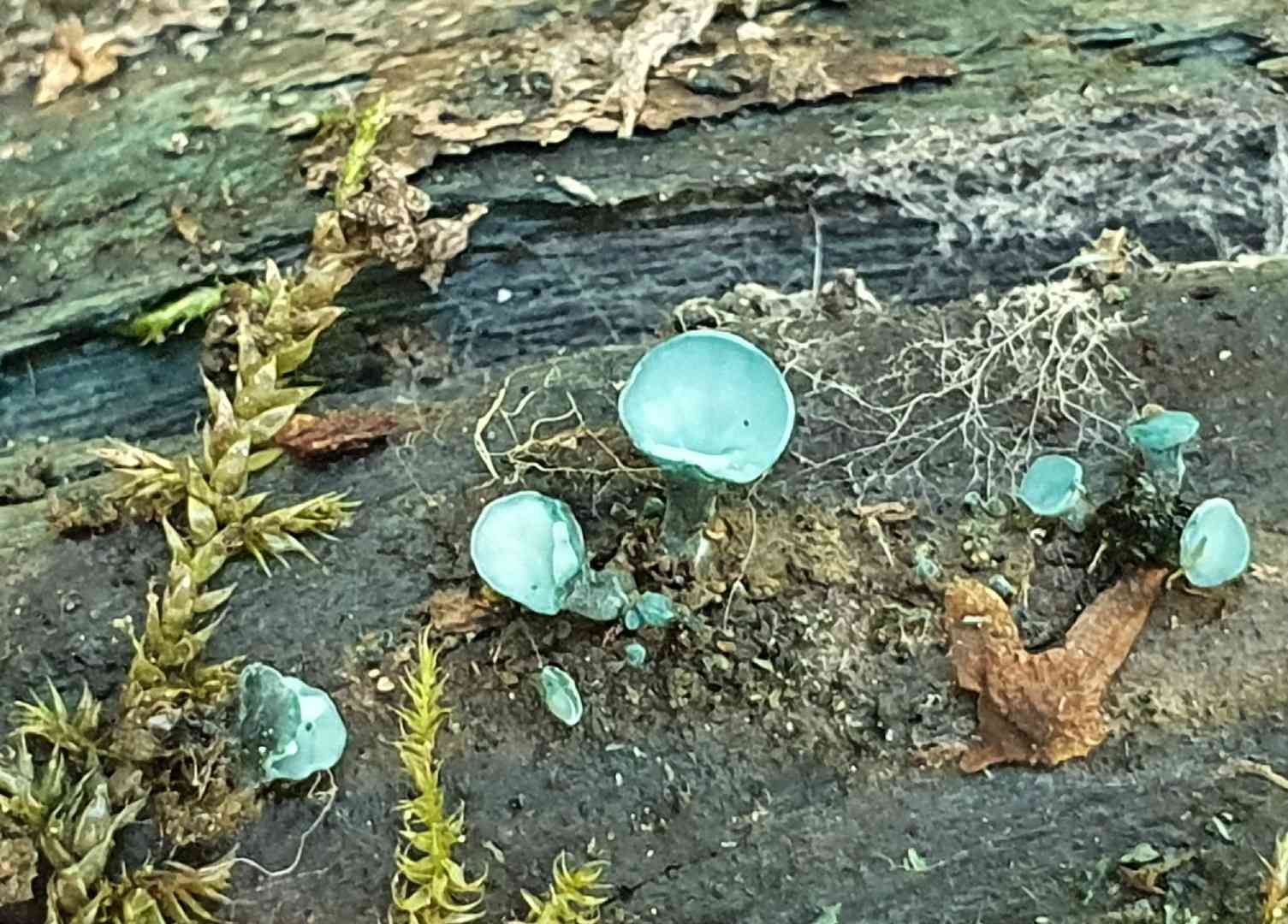
Green wood-cup
Chlorociboria aeruginascens
A species of Chlorociboria. Also known as Blue-green wood stain, Green elfcup.
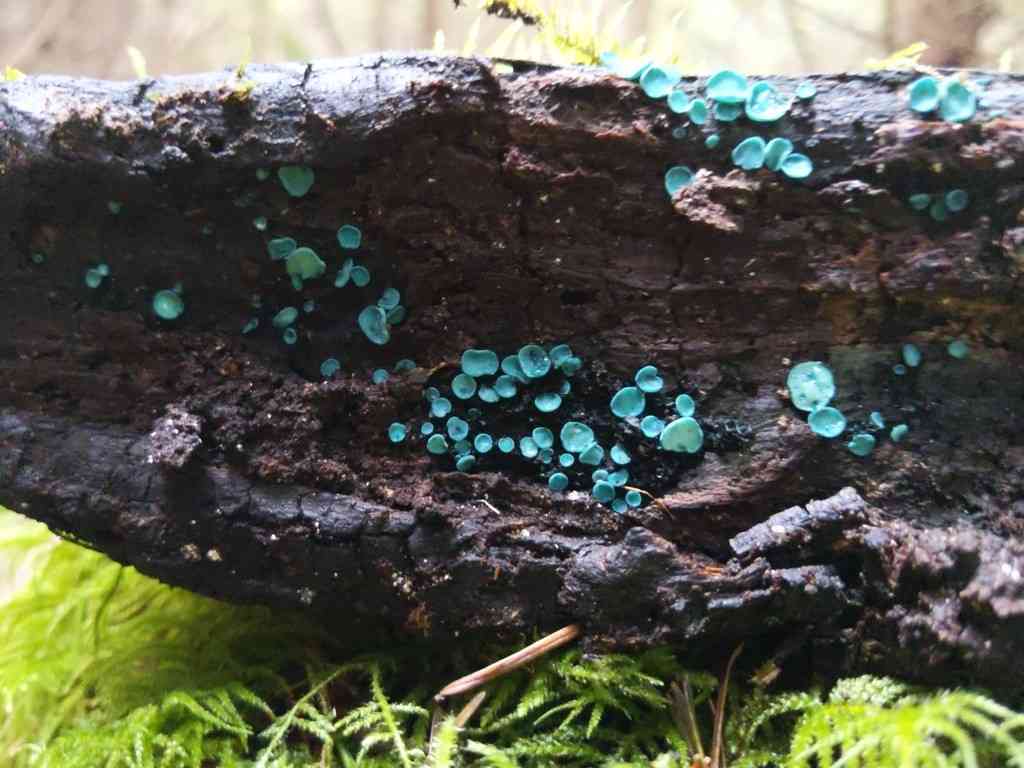
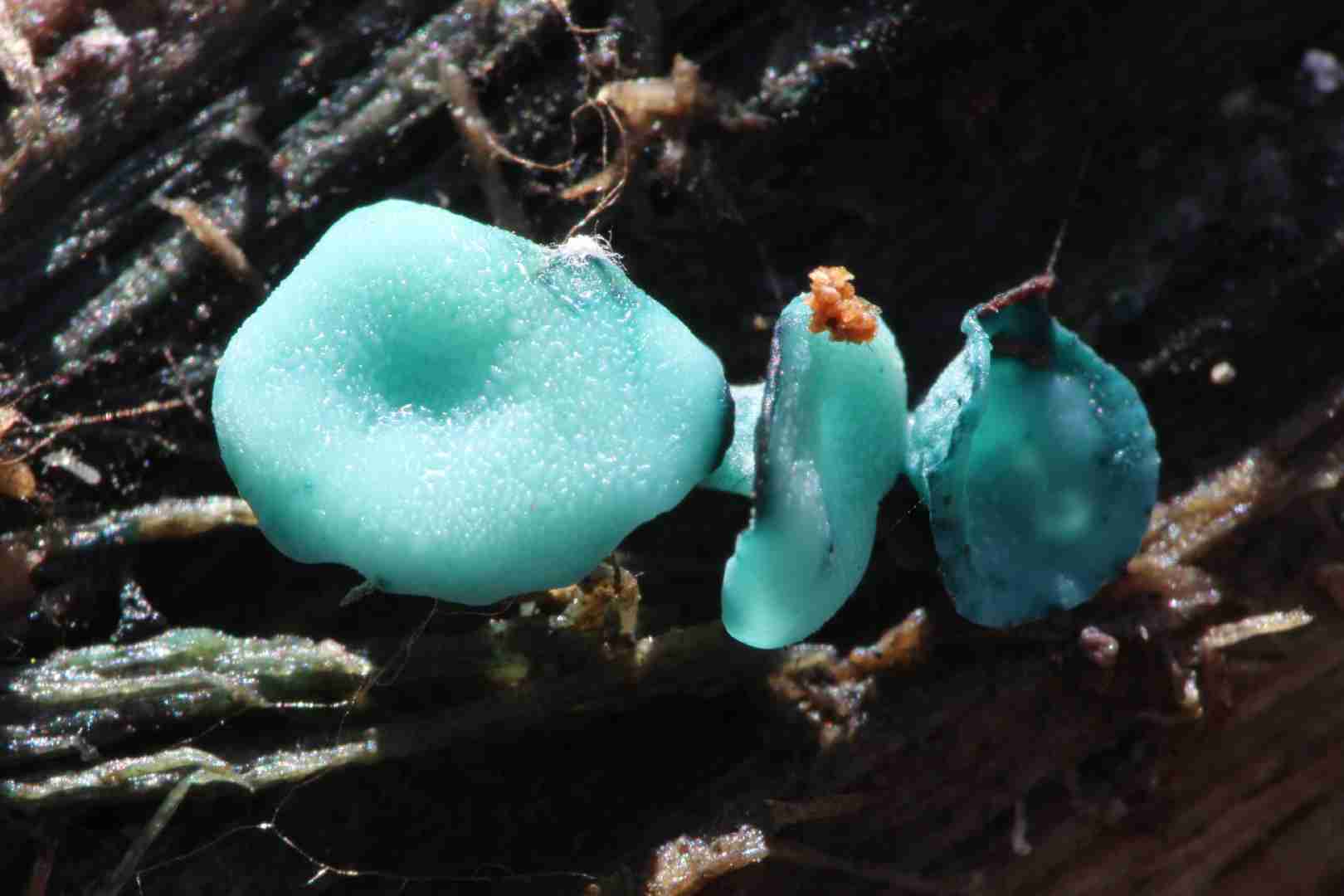
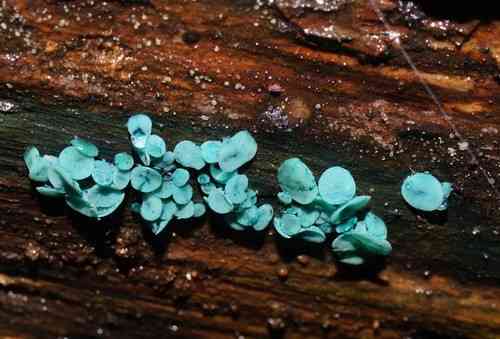
The green elfcup is remarkable primarily for its unusual blue-green hue. This fungus produces small blue mushrooms only occasionally, yet its very presence imbues its woody host with a distinct blue or green stain throughout the year. For centuries, this infected wood has been prized and utilized in decorative woodworking, such as English Tunbridge ware and Italian intarsia inlay.
In This Article
Attributes of Green wood-cup
Cap Diameter
2 - 5 mm
Height
3 - 33 mm
Cap
2 - 5 mm across; cup-shaped, disc-shaped; blue-green; bald; wavy edges
Stem
Stem 1 - 2 mm long; tiny, may be central or somewhat off-center; blue-green; bald
Flesh
Thin; cortex and interior both colored
Spore Print Color
White
Odor
Faintly fungoid with no unique characteristics.
Body Color
GreenBlue
Flesh Bruises
The flesh or milk does not discolor when bruised or cut.
Growth Form
Scattered
Nutrient Gathering
Saprophytic
Substrate
Dead Woods
You can find Green wood-cup by these plants
Coast live oak, Willows, Oaks
Occurence Habitats
Deciduous Woodland, Coniferous Woodland, Mixed Woodland
Species Status
Widely distributed in North America.
Endangered Species
No
Scientific Classification of Green wood-cup
Phylum
Sac fungi
Class
Leotiomycetes
Order
Helotiales
Family
Chlorociboriaceae
Genus
Chlorociboria
Toxicity and Edibility of Green wood-cup
Is Green wood-cup Toxic?
Toxicity information is not available for this mushroom. Always consult with an expert before consuming any wild mushrooms.