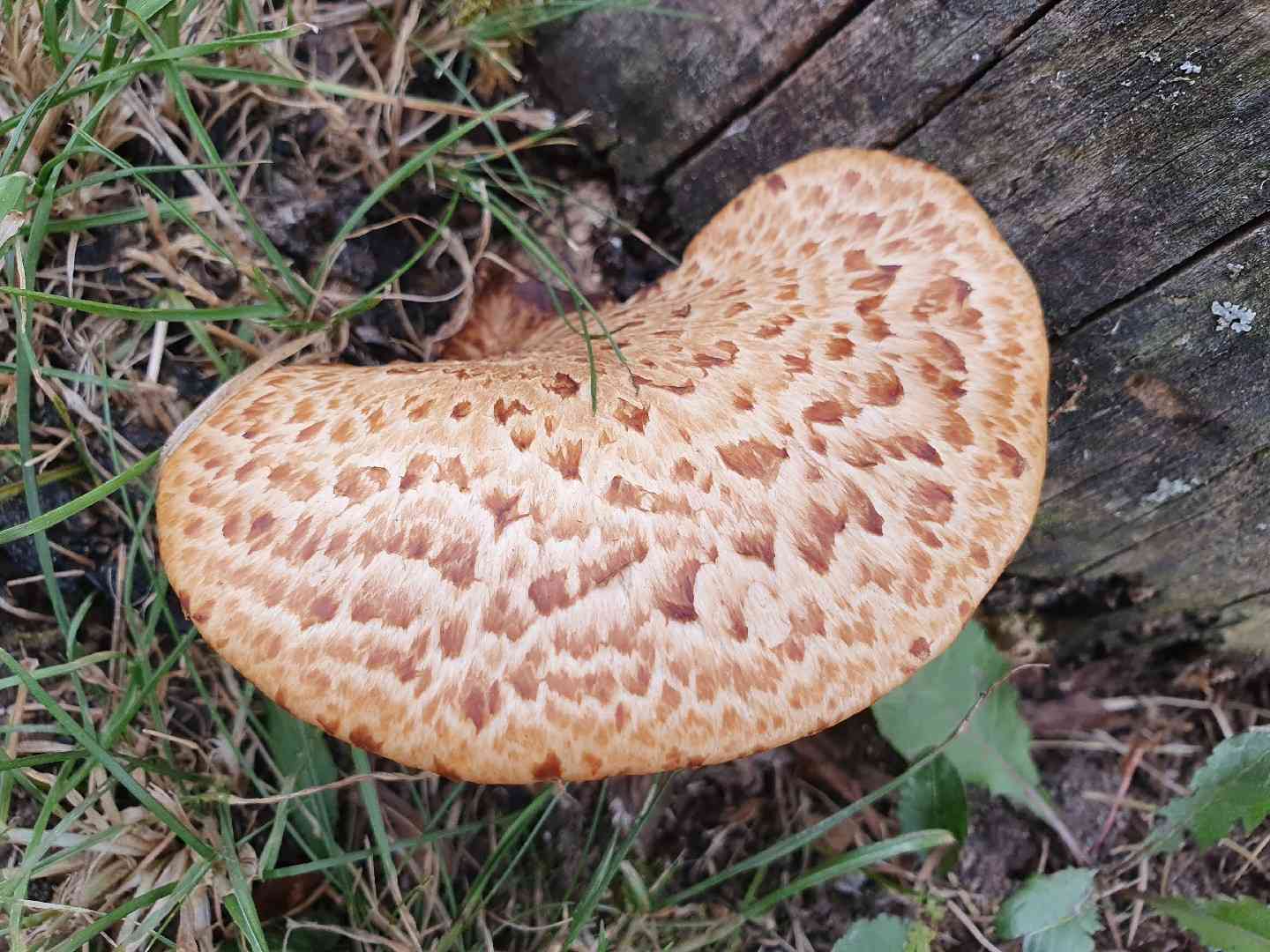
Dryad's saddle
Cerioporus squamosus
A species of Cerioporus.
Polyporus squamosus, commonly known as dryad's saddle, is a well-recognized species among those who forage for morels in the spring. It stands out due to its considerable dimensions, prominent scale-like patterns, and a distinctive aroma reminiscent of watermelon. Like its fungal relatives within the bracket fungi group, dryad's saddle can be utilized in paper production. For this application, younger specimens are preferable as their fibers are finer and more uniform.
In This Article
Attributes of Dryad's saddle
Cap Diameter
5 - 30 cm
Height
5 - 10 cm
Cap
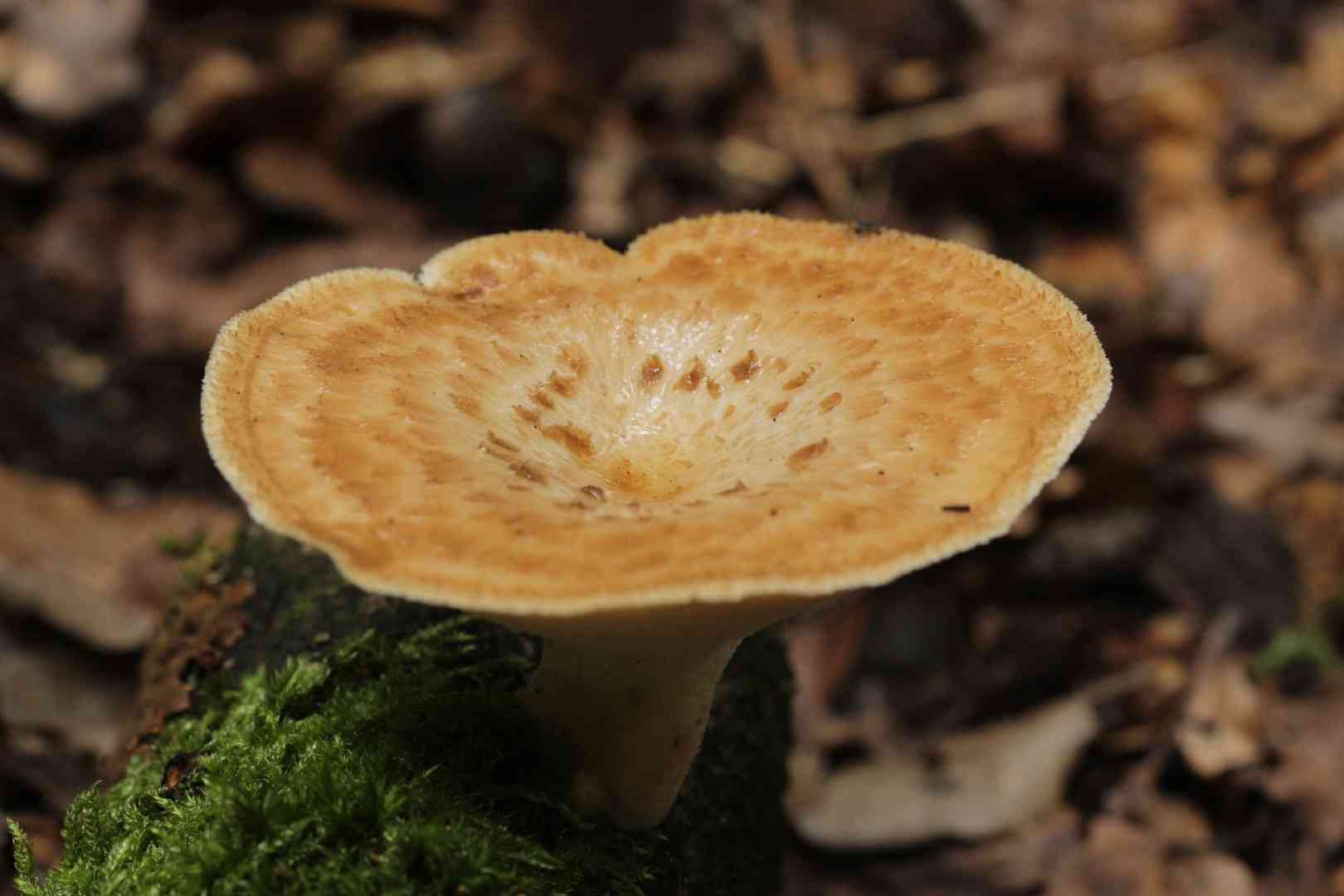
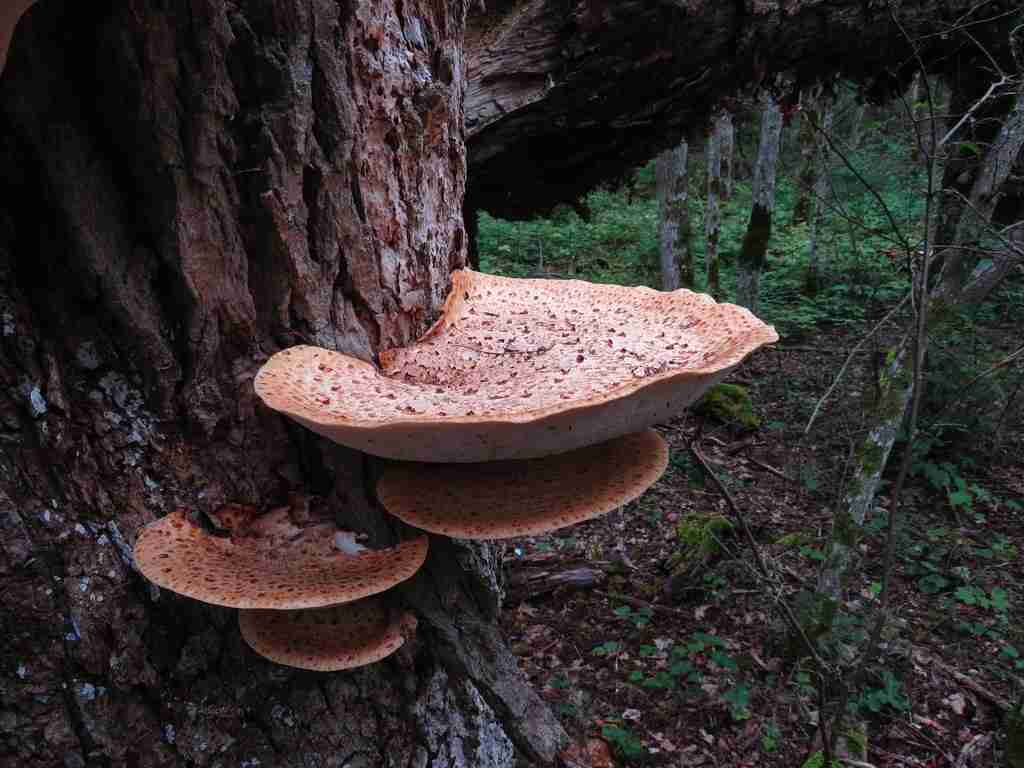
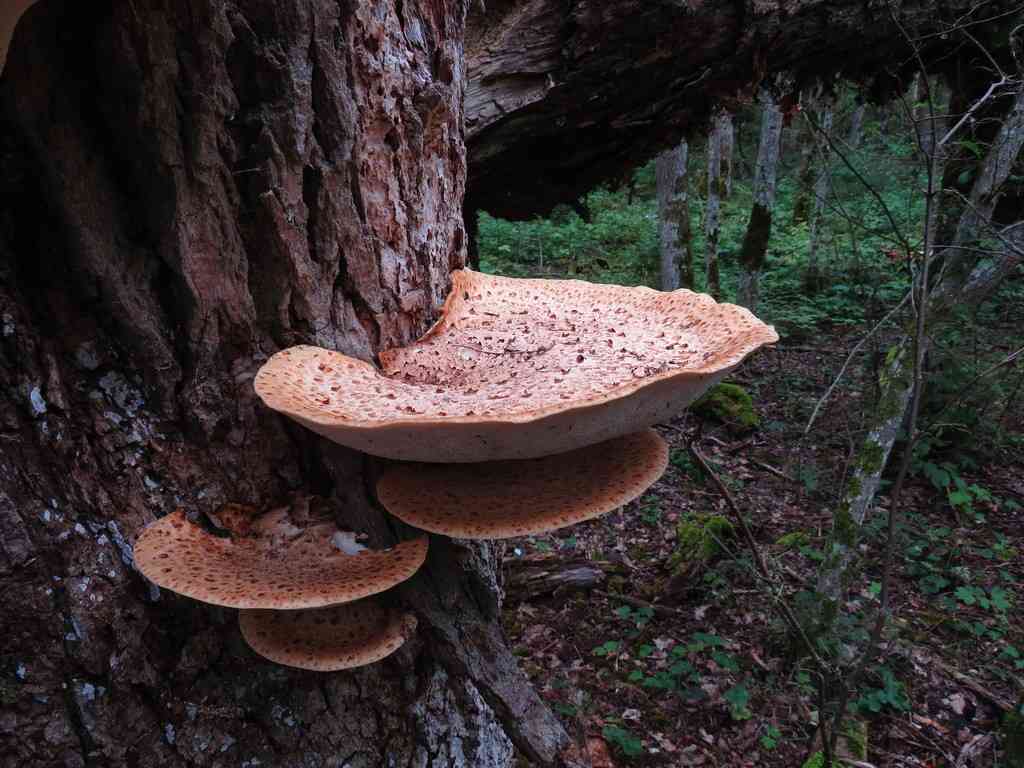
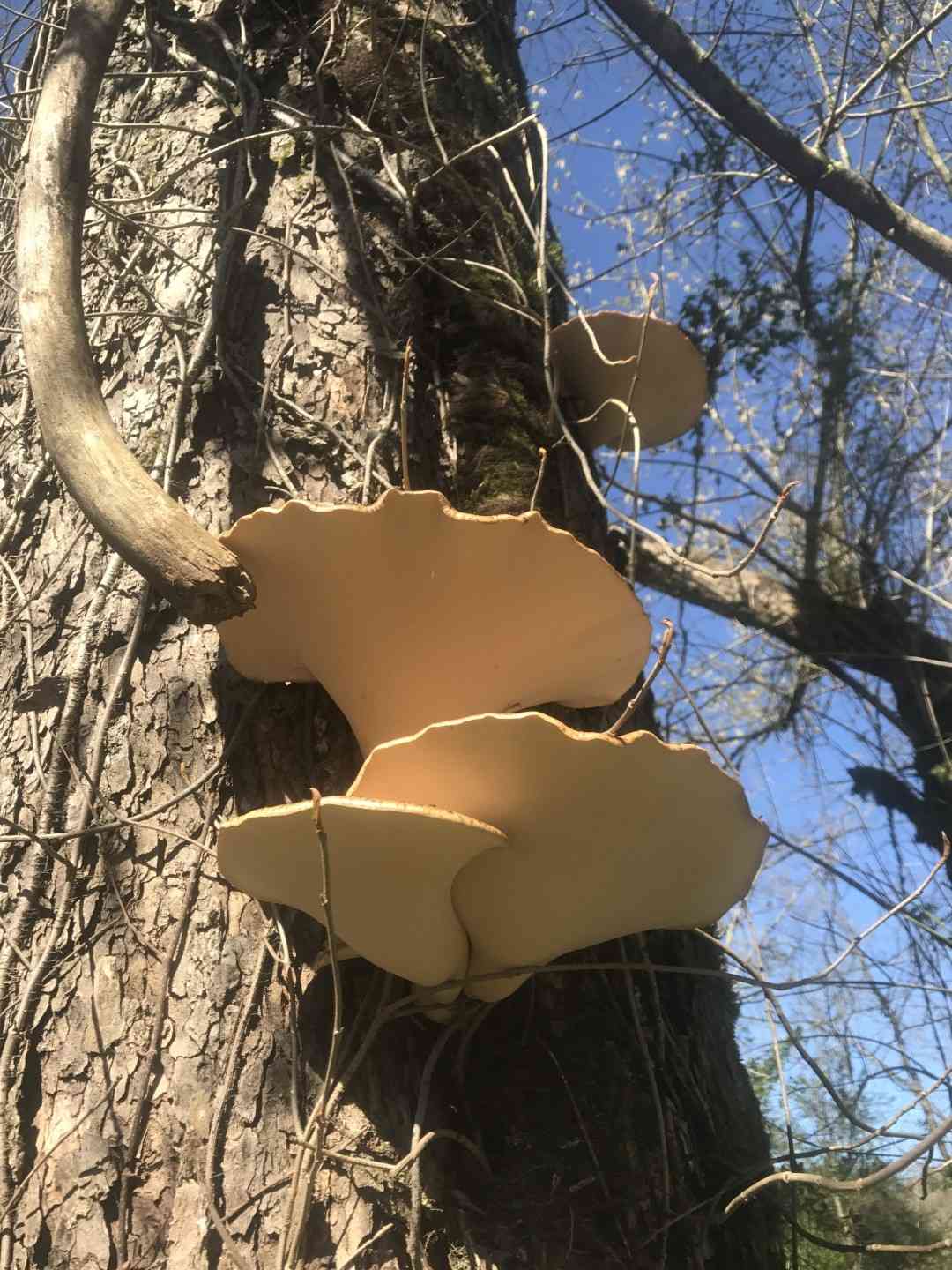
5 - 30 cm across, 1 - 4 cm thick; semicircular, fan-shaped, broadly convex; light tan to creamy yellowish; dry; thin margin incurved
Cap Shape
Flat
Cap Surfaces
Fibrillose-scaly
Gill Attachment
Decurrent
Stem
2 - 8 cm long, 1 - 4 cm thick; off-center, lateral; whitish; with dark brown to black tomentum
Stem Shapes
Cylindrical
Stem Surfaces
Smooth to slightly fibrous
Flesh
Thick; soft soon becoming corky and tough; white, unchanging when sliced
Ring
Ringless
Spore Print Color
White
Odor
Mild, somewhat fruity when young; typically mushroomy.
Body Color
BrownBlackYellowBronzeCream
Flesh Bruises
The flesh or milk does not discolor when bruised or cut.
Growth Form
Solitary, Gregarious, Clustered
Nutrient Gathering
Saprophytic, Parasitic
Substrate
Wood of Living Trees, Dead Woods
You can find Dryad's saddle by these plants
Box elder, Silver maple, American sycamore, Ashes, Elms
Occurence Habitats
Deciduous Woodland
Species Status
Widely distributed in North America
Endangered Species
No
Scientific Classification of Dryad's saddle
Phylum
Club fungi
Class
Mushroom-forming fungi
Order
Shelf fungi
Family
Polyporaceae
Genus
Cerioporus
Toxicity and Edibility of Dryad's saddle
Is Dryad's saddle Toxic?
Toxicity information is not available for this mushroom. Always consult with an expert before consuming any wild mushrooms.