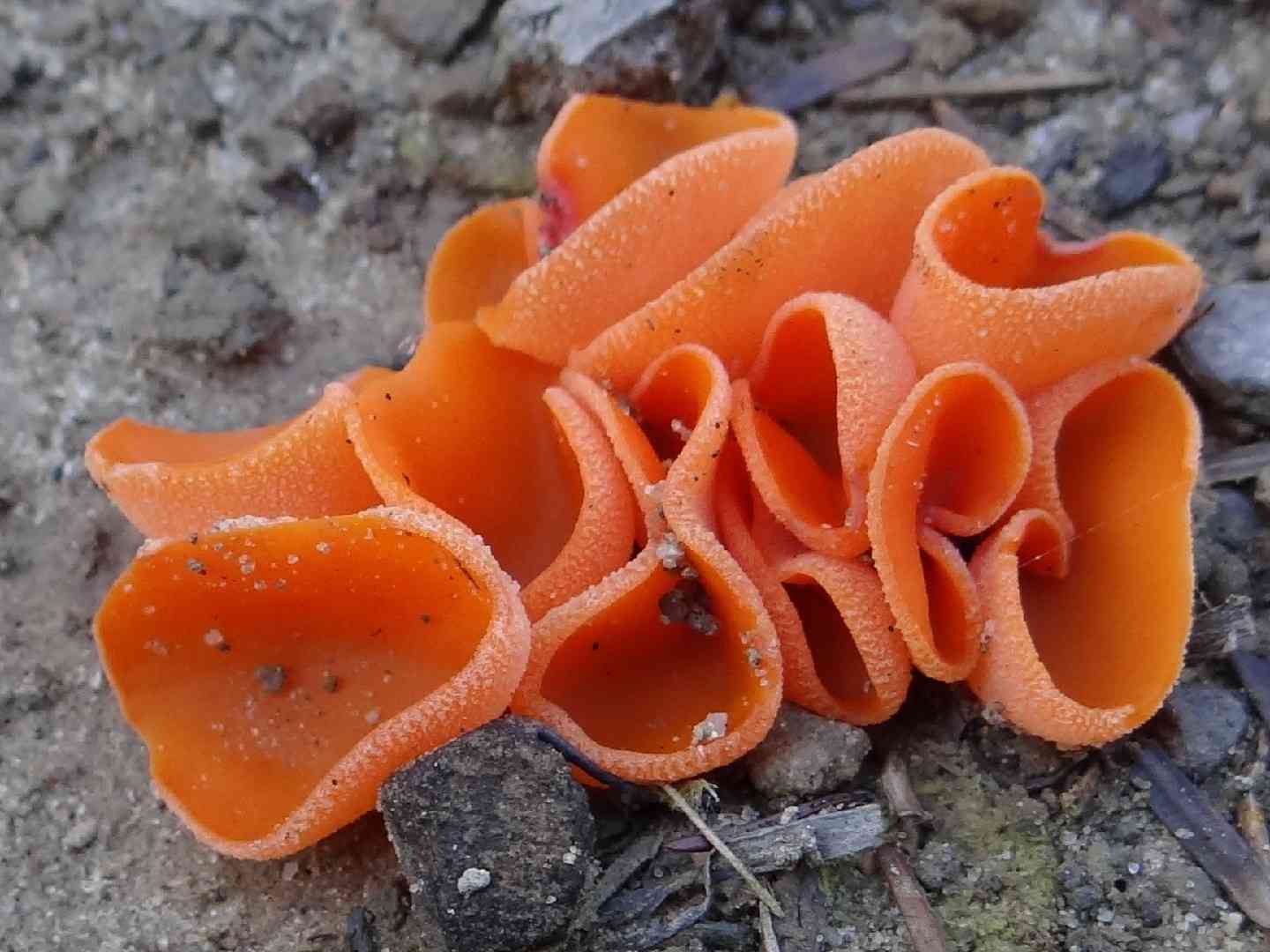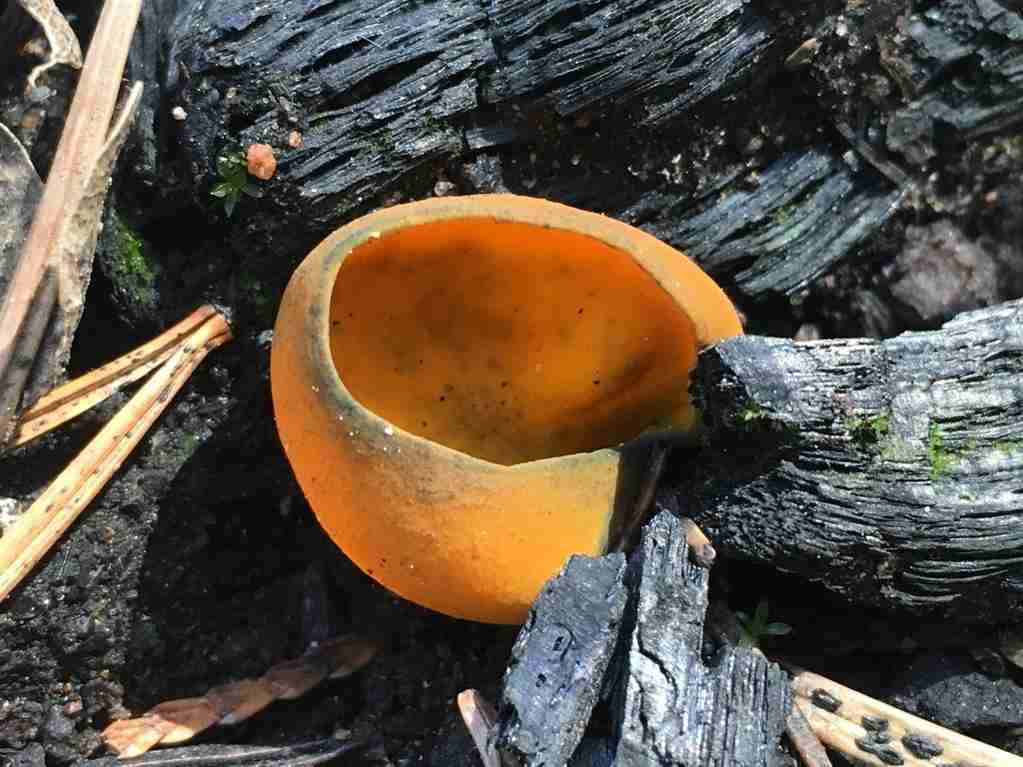
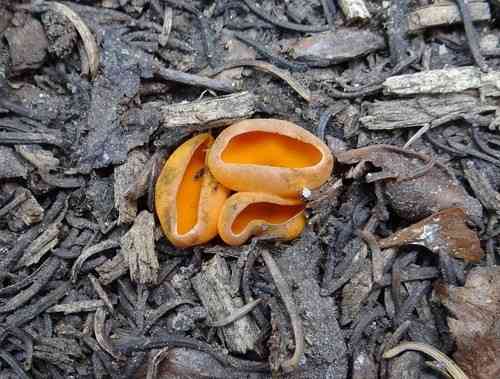
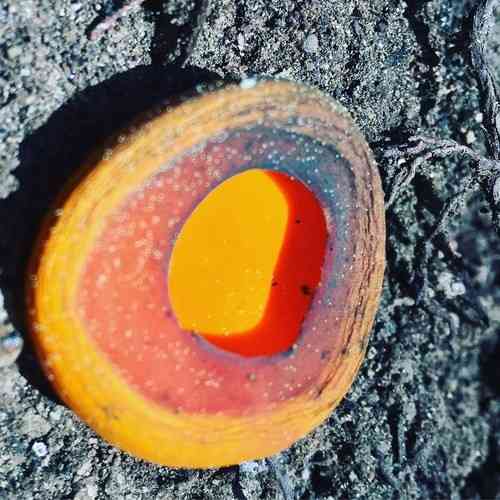
Spring orange peel fungus
Caloscypha fulgens
A species of Caloscypha. Also known as Golden cup.
Also known as orange peel fungus, this vivid, uniquely colored fungus emerges in the springtime. It presents itself with cup-shaped fruiting bodies in brilliant hues, making them easily noticeable against the backdrop of the forest floor. Spring orange peel fungus typically thrives on decomposing wood, particularly within coniferous forests. These eye-catching fungi play an important role in the ecosystem by aiding in the decomposition of dead vegetation.
In This Article
Attributes of Spring orange peel fungus
Cap Diameter
2 - 5 cm
Height
1 - 2.5 cm
Cap
2 - 5 cm across; cup- to saucer-shaped; outer surface turning olive to blue-green; inner surface smooth, outer surface matt and slightly dullerand; bruising and discoloring blue to green
Stem
A very short stem may be present
Flesh
1 - 2 mm thick; orangish
Spore Print Color
White
Odor
Mild, not particularly noteworthy.
Body Color
GreenBlueOrange
Flesh Bruises
The flesh or milk does not discolor when bruised or cut.
Growth Form
Scattered, Gregarious
Nutrient Gathering
Parasitic
Substrate
On soil, Leaf or Needle Litter
You can find Spring orange peel fungus by these plants
Firs, Ashes
Occurence Habitats
Coniferous Woodland
Species Status
Much more common from the Rocky Mountains westward
Endangered Species
No
Scientific Classification of Spring orange peel fungus
Phylum
Sac fungi
Class
Pezizomycetes
Order
Pezizales
Family
Caloscyphaceae
Genus
Caloscypha
Toxicity and Edibility of Spring orange peel fungus
Is Spring orange peel fungus Toxic?
Toxicity information is not available for this mushroom. Always consult with an expert before consuming any wild mushrooms.