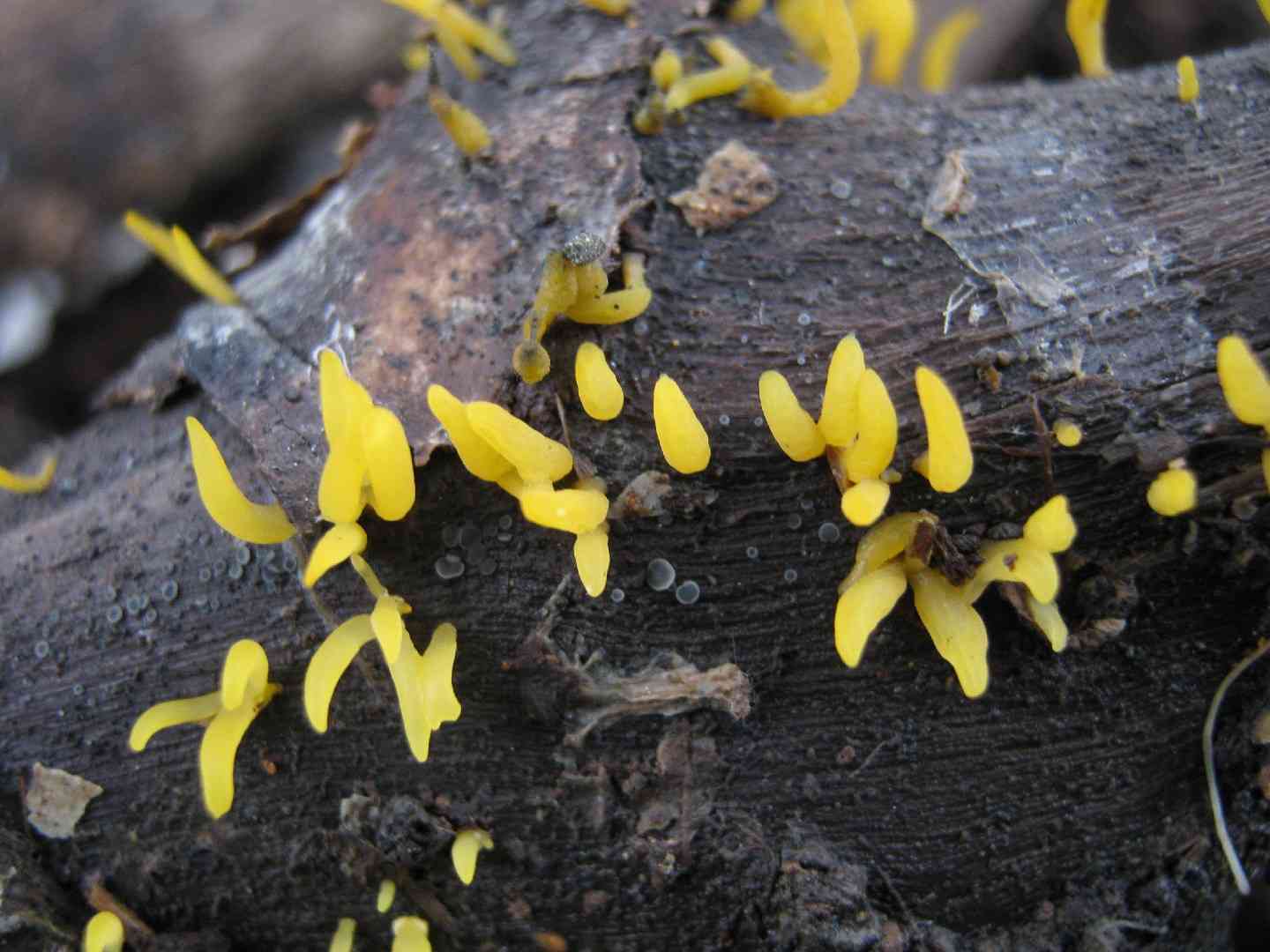
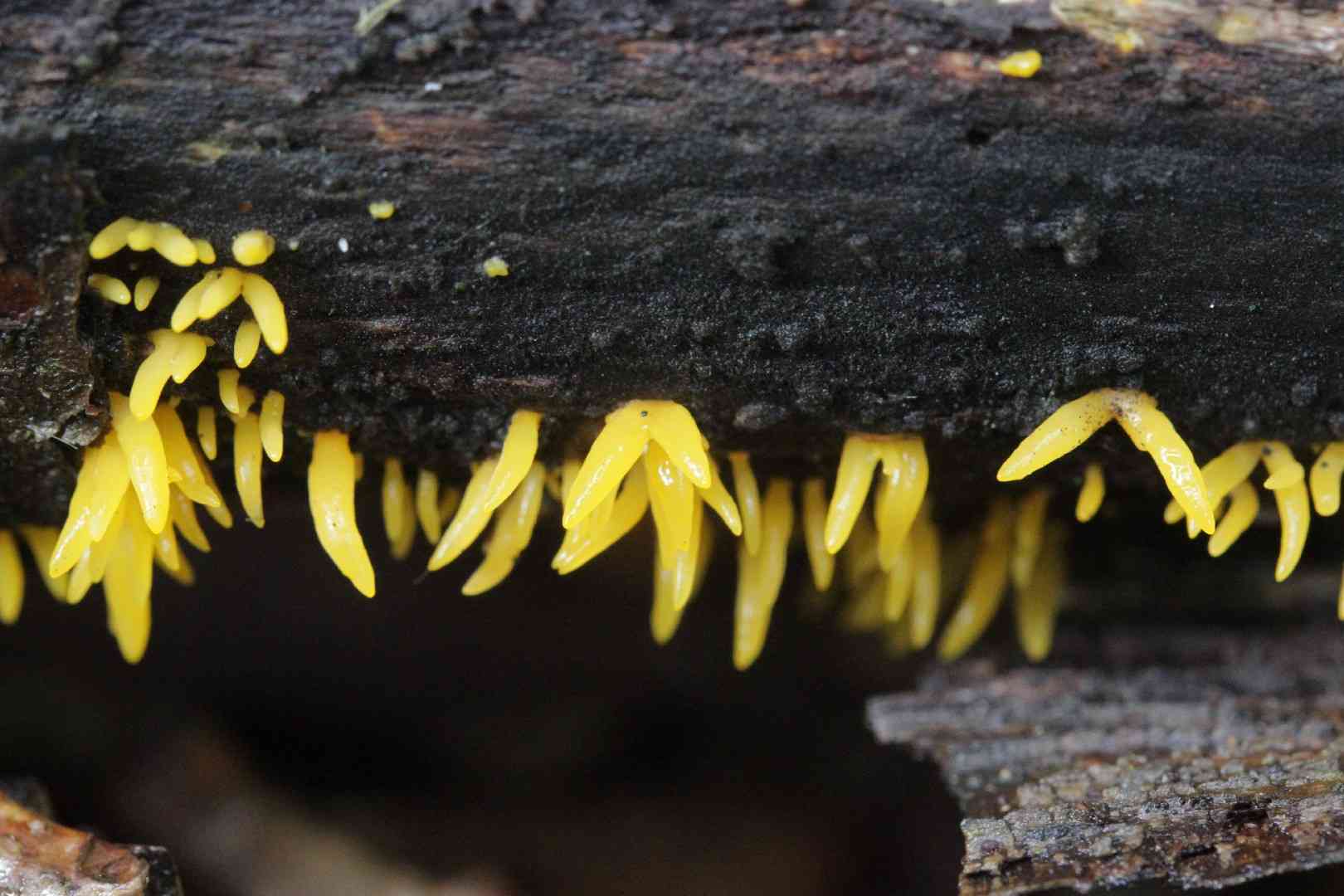
Small stagshorn
Calocera cornea
A species of Calocera.
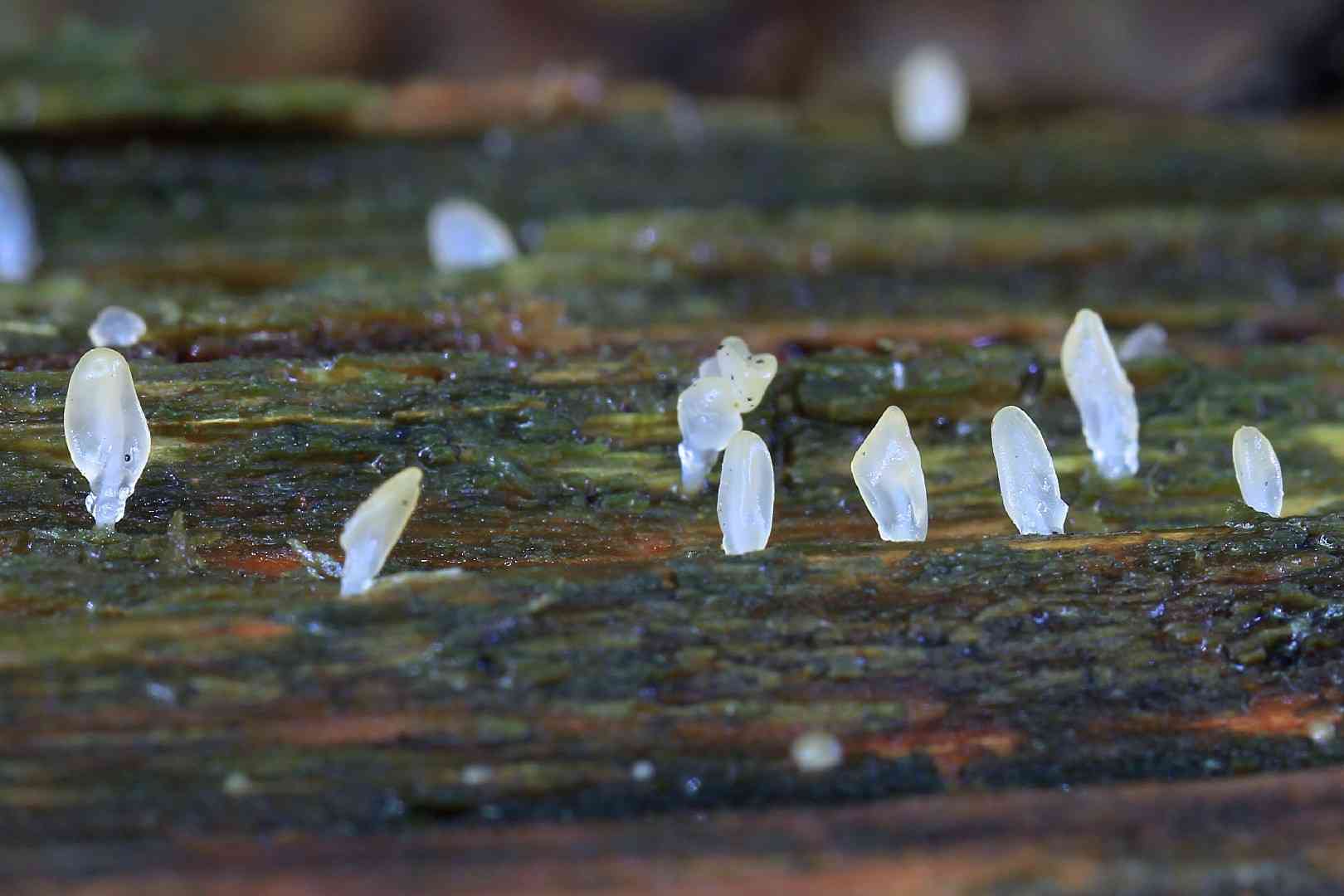
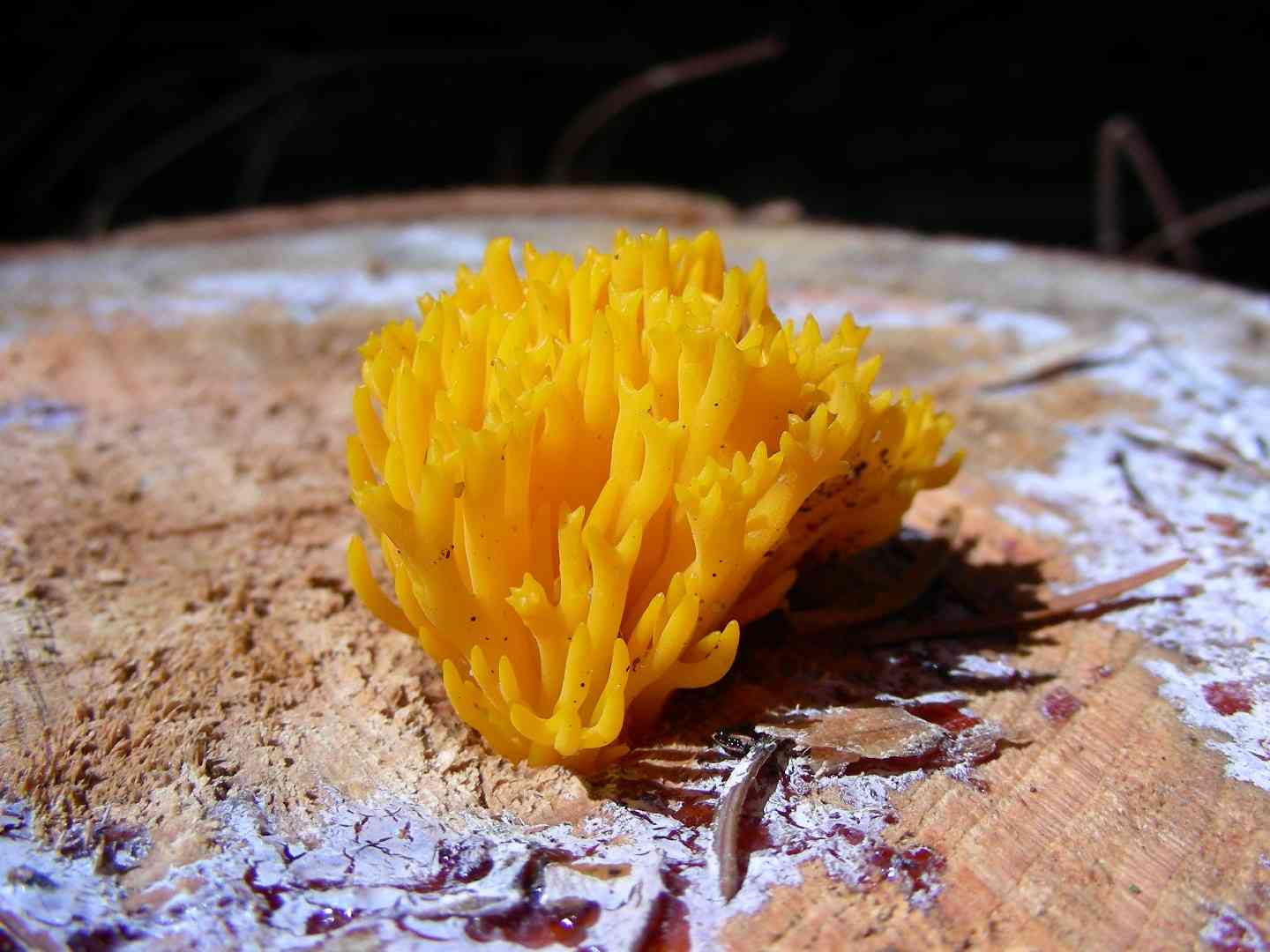
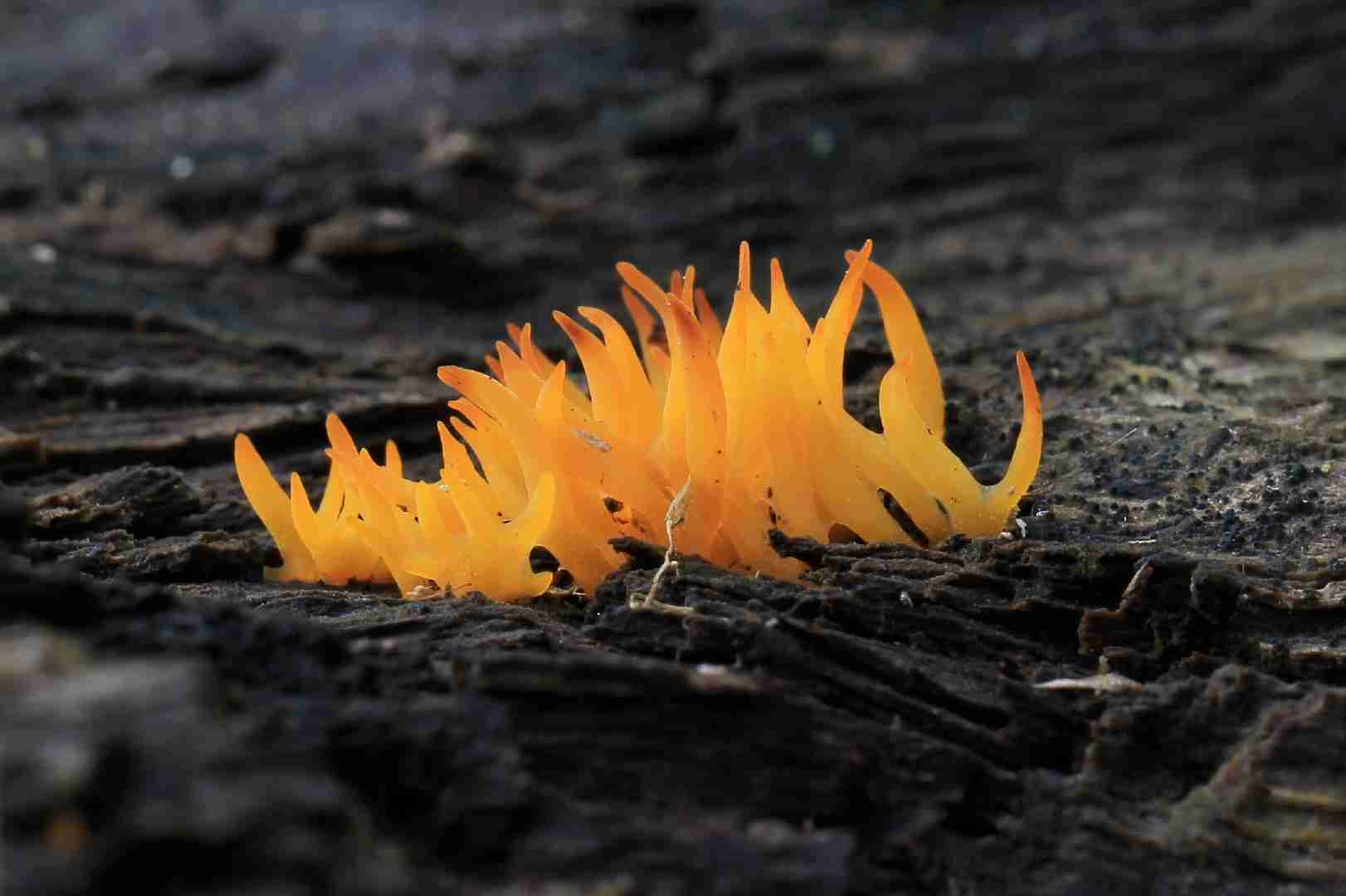
The diminutive stagshorn, a gelatinous fungus, often escapes notice because of its small stature, though it can be observed year-round. This moisture-dependent fungus emerges swiftly following significant rainfall. Even if it appears lifeless and desiccated, it will rehydrate and recover its form when saturated by rain.
In This Article
Attributes of Small stagshorn
Cap Diameter
1 - 2 mm
Height
5 - 20 mm
Cap
1 - 2 mm dia
Stem
About 1.8 cm high and 2 mm thick; cylindric, with a rounded to sharpened apex; orange to orangish yellow; bald, slick
Flesh
Firm, gelatinous; yellow
Ring
Ringless
Spore Print Color
White
Odor
Mildly mushroomy but not distinctive.
Body Color
BrownYellowOrange
Flesh Bruises
The flesh or milk does not discolor when bruised or cut.
Growth Form
Scattered, Gregarious
Nutrient Gathering
Saprophytic
Substrate
Dead Woods
You can find Small stagshorn by these plants
Oaks, European beech
Occurence Habitats
Deciduous Woodland
Species Status
Widely distributed
Endangered Species
No
Scientific Classification of Small stagshorn
Phylum
Club fungi
Class
Dacrymycetes
Order
Dacrymycetales
Family
Jelly fungi
Genus
Calocera
Toxicity and Edibility of Small stagshorn
Is Small stagshorn Toxic?
Toxicity information is not available for this mushroom. Always consult with an expert before consuming any wild mushrooms.