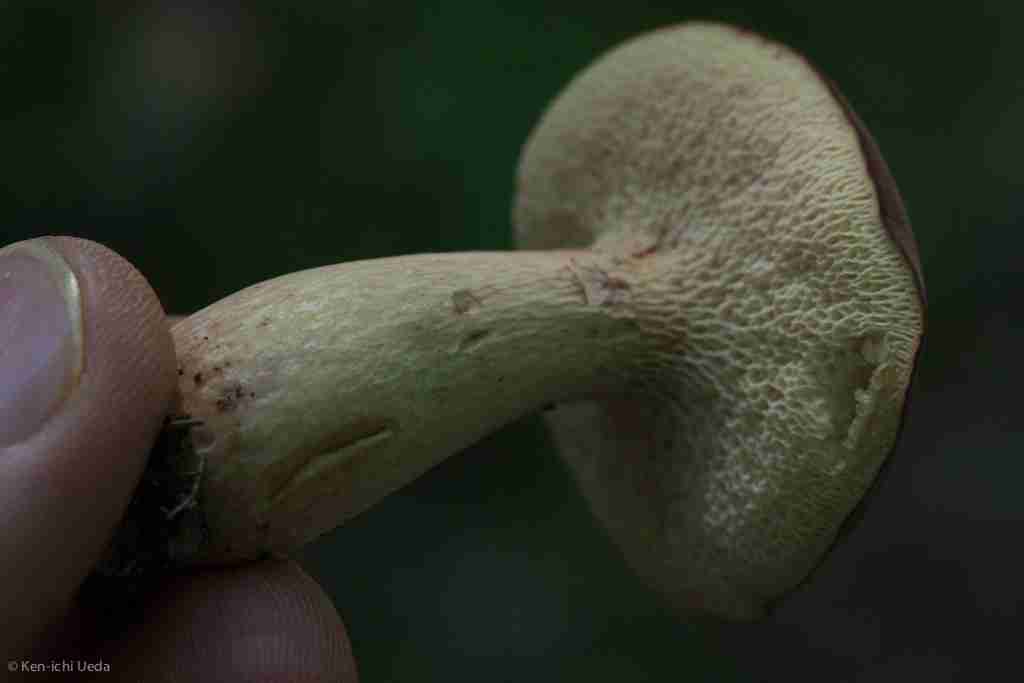
Bothia castanella
Bothia castanella
A species of Bothia.
Bothia castanella belongs to a recognizable mushroom lineage known for the porous, sponge-like undersides of their caps. These fungi commonly feature thick stalks and caps that vary in shade, frequently exhibiting muted, soil-like hues. Primarily inhabiting forests, Bothia castanella establishes mutually beneficial connections with trees, aiding in maintaining woodland vitality through nutrient cycling.
In This Article
Attributes of Bothia castanella
Cap Diameter
3 - 6 cm
Height
4 - 7 cm
Cap
Cap 3.5 - 6 cm across; convex to flat; medium brown to dark brown
Cap Shape
Convex, Flat
Cap Surfaces
Fibrillose-scaly, Velvety
Stem
Stem 3 - 5 cm long, 5 - 8 mm thick; equal; dull yellow, brown
Stem Shapes
Club Shaped
Stem Surfaces
With Reticulum
Flesh
Whitish, pale yellow; unchanging when sliced
Ring
Ringless
Spore Print Color
Dull yellow
Odor
Mild, indistinct mushroom-like aroma.
Body Color
BrownYellow
Flesh Bruises
The flesh or milk does not discolor when bruised or cut.
Growth Form
Solitary, Scattered, Gregarious
Nutrient Gathering
Mycorrhizal
Substrate
On soil
You can find Bothia castanella by these plants
Oaks, Pines, Spruces
Occurence Habitats
Deciduous Woodland
Species Status
Widely distributed
Endangered Species
No
Scientific Classification of Bothia castanella
Phylum
Club fungi
Class
Mushroom-forming fungi
Order
Boletes and allies
Family
Boletes
Genus
Bothia
Toxicity and Edibility of Bothia castanella
Is Bothia castanella Toxic?
Toxicity information is not available for this mushroom. Always consult with an expert before consuming any wild mushrooms.

