Smith's bolete
Boletus smithii
A species of Boletus.
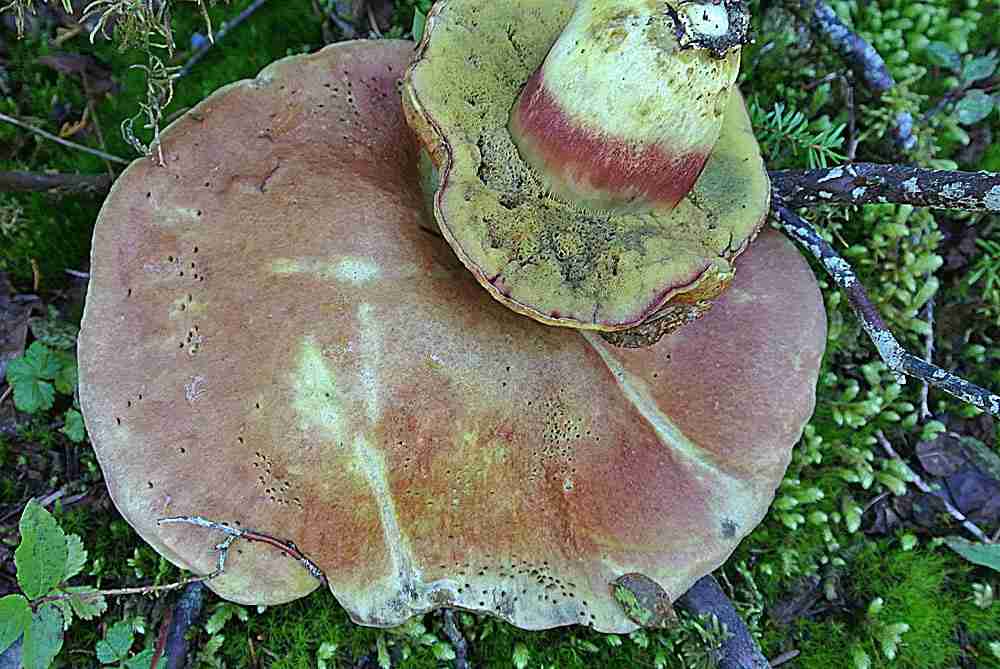
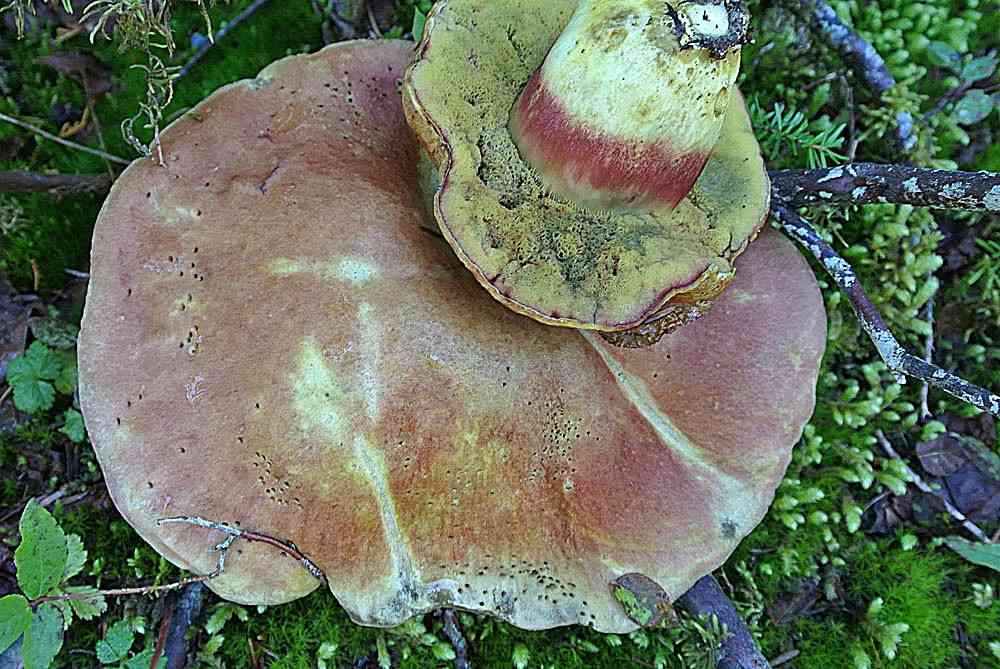
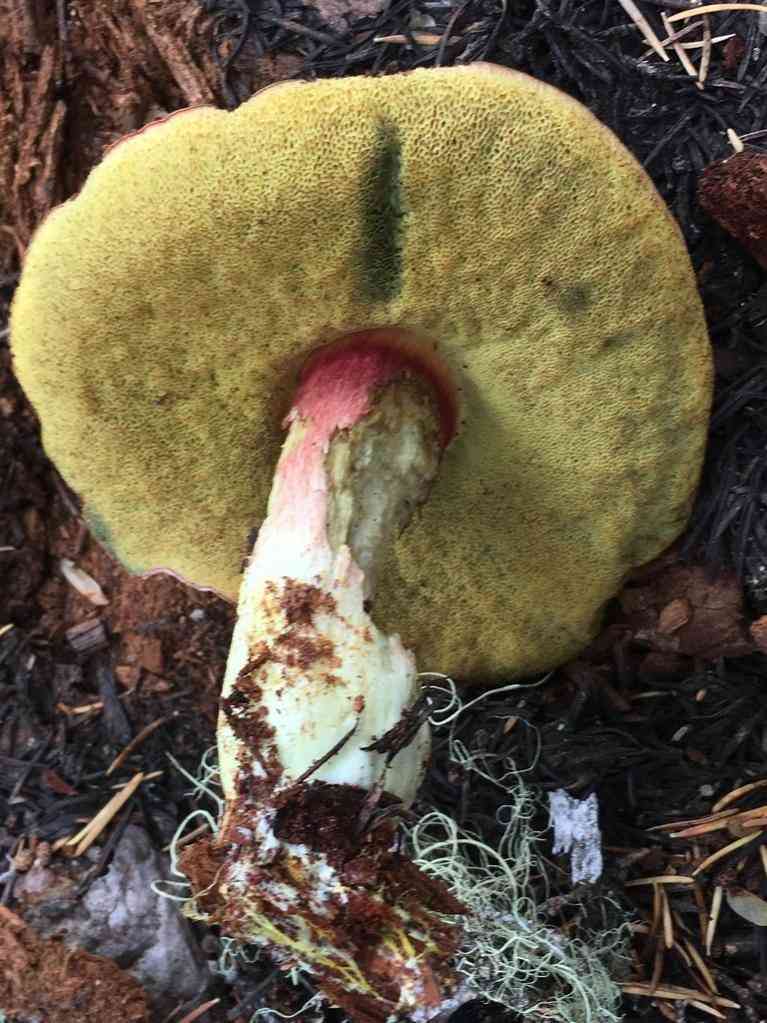
Smith's bolete mushroom emerges in autumn within woodlands comprising both coniferous and deciduous trees. When the pores beneath its cap are damaged, they develop a blue discoloration. Occasionally, the cap's exterior begins as a yellowish hue but transitions to a wine-red shade with age. Its genus, Boletus, is aptly named as it translates to lump.
In This Article
Attributes of Smith's bolete
Cap Diameter
7 - 15 cm
Height
7 - 18 cm
Cap
Cap 7 - 15 cm across; convex; wine-red, cream-yellow, tan-buff, grey-brown; margin incurved, decurved, wavy
Cap Shape
Convex, Depressed
Cap Surfaces
Fibrillose-scaly
Stem
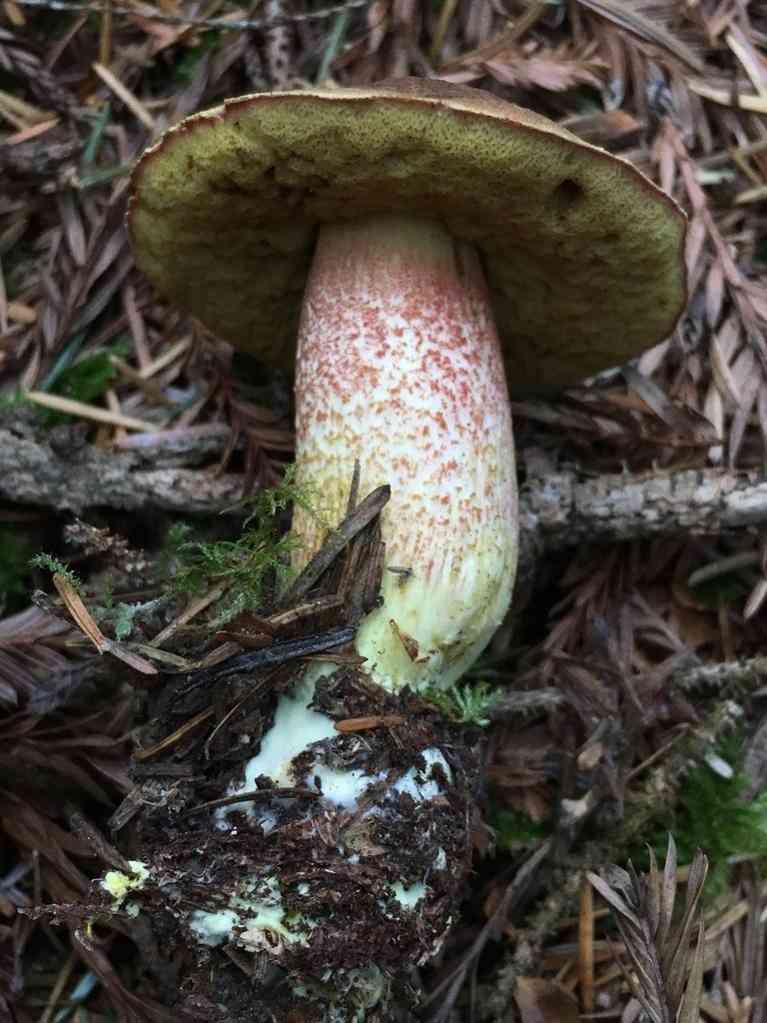
Stem 7 - 15 cm long, 3.5 - 7 cm thick; subclavate; reddish, cream-yellow; with apex minutely tomentose; bluing erratically when cut
Stem Shapes
Club Shaped
Stem Surfaces
Smooth to slightly fibrous
Flesh
Yellowish or slightly reddish; turns blue when exposed
Ring
Ringless
Spore Print Color
Olive-brown
Odor
Mild and not distinctive.
Body Color
BrownYellowRedWhiteCream
Flesh Bruises
Discolor to blue
Growth Form
Solitary, Scattered
Nutrient Gathering
Mycorrhizal
Substrate
On soil
You can find Smith's bolete by these plants
Pines, Spruces, Firs
Occurence Habitats
Mixed Woodland
Endangered Species
No
Scientific Classification of Smith's bolete
Phylum
Club fungi
Class
Mushroom-forming fungi
Order
Boletes and allies
Family
Boletes
Genus
Boletus
Toxicity and Edibility of Smith's bolete
Is Smith's bolete Toxic?
Toxicity information is not available for this mushroom. Always consult with an expert before consuming any wild mushrooms.

